


Note: This work is part of our new interns program.
Written by Capucine Robilliard
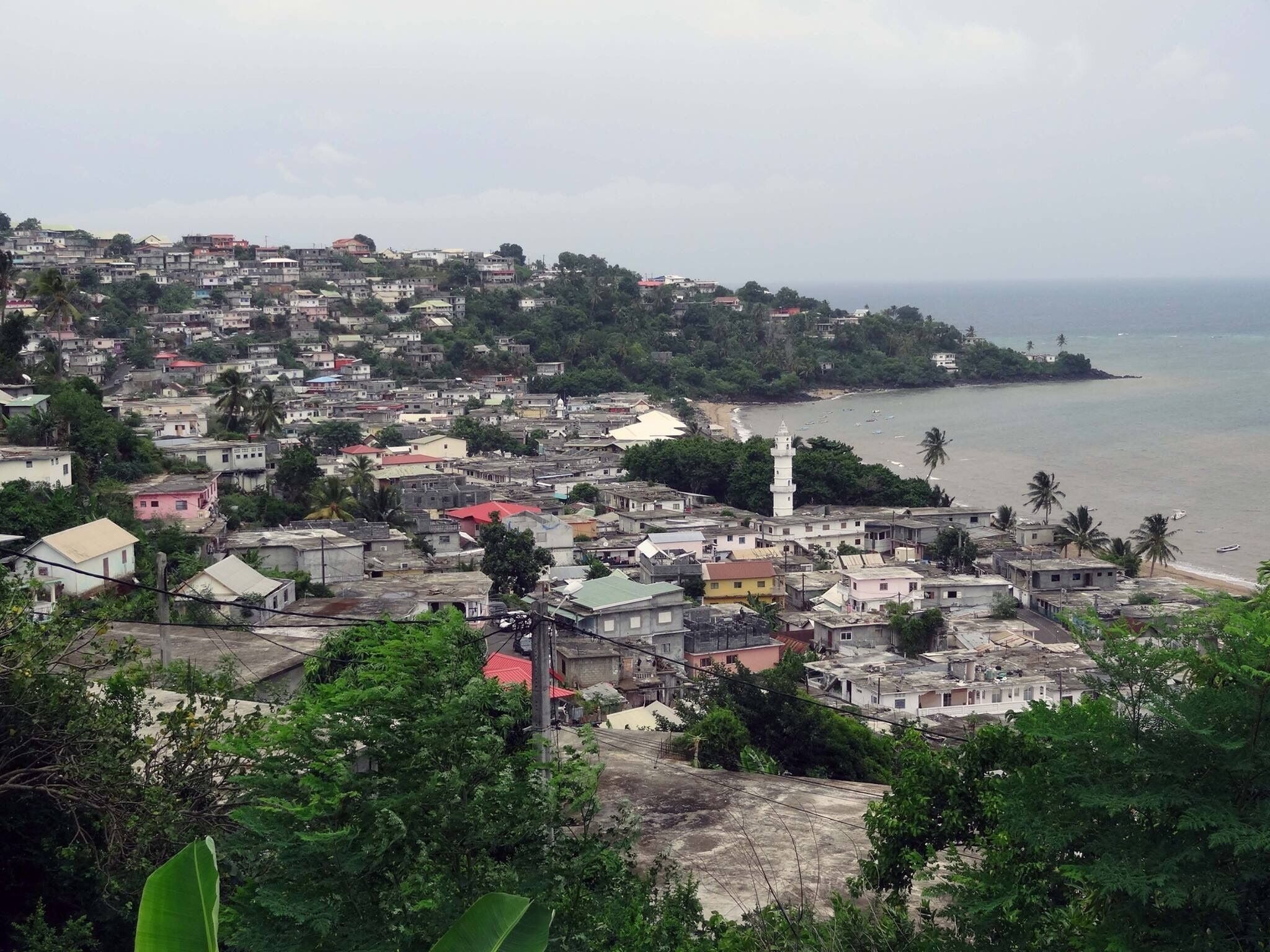
Mayotte, a French overseas department in the Comoros archipelago in the Indian Ocean, is marked by deep social inequality, rapid demographic growth, and sustained migration. These pressures, combined with shortages in school infrastructure, have placed the education system under severe strain. However, structural pressure alone does not explain why thousands of children remain excluded from education. The exclusion of migrant children is not accidental; it is produced through legal, administrative, and political choices at both national and local levels.
French policies on nationality, immigration, and housing have progressively restricted migrants’ rights, with indirect but serious consequences for schooling. At the municipal level, discriminatory enrolment practices and reluctance to expand infrastructure have further reinforced exclusion. Public rhetoric that frames migration as the main cause of Mayotte’s difficulties has also contributed to a hostile environment in which migrants’ rights are more easily undermined. This article argues that restrictive national policies and local administrative barriers have created a self-reinforcing system in which migrant children are denied effective access to education despite formal legal protections.
The exclusion of migrant children is not merely a by-product of the island’s structural inequalities. Mayotte has long been governed through differentiated legal regimes, particularly in relation to immigration and nationality. The 1995 Balladur visa attempted to restrict movement from the neighbouring Comoros, which had become independent in 1975, and it remains central to debates about migration in the archipelago (Tchokothe 2018). Despite this policy, Mayotte’s population continued to grow, placing further pressure on public infrastructure.
The French state later introduced measures that limited the effects of birthright citizenship in Mayotte. In 2006, specific mechanisms were established to limit paternity declarations by French fathers of children born to irregular Comorian mothers (Collectif Migrants Mayotte 2008). More recent reforms have further tightened access to French nationality for children born in Mayotte by imposing stricter residence requirements on parents (Human Rights Watch 2025a). These measures do not directly concern school enrolment, but they contribute to a wider climate of insecurity for migrant families.
This insecurity has significant consequences for education. Parents without regular status may fear enrolling their children when immigration controls and arrests are reported near municipal offices or schools (Human Rights Watch 2025a). Children who grow up with uncertain legal status may also experience anxiety about their future, especially as access to higher education and adult life becomes more complicated once they reach the age of majority (Human Rights Watch 2025a). Although schooling should be accessible to all children regardless of their parents’ administrative situation, legal precarity can make families less likely to approach public institutions.
Housing and migration-control policies have further disrupted children’s access to education. The state has used laws facilitating the evacuation and demolition of informal and unsanitary housing, and Operation Wuambushu in 2023 intensified the vulnerability of already fragile children (UNICEF 2023). Some families with regular status were offered temporary emergency accommodation, but this was often located far from their children’s schools. Families were therefore forced to choose between rehousing and continuity of schooling. Families in an irregular situation often received no rehousing or support for re-enrolment, and some were reportedly apprehended or placed in detention during these operations. The destruction of homes had serious consequences for children’s stability, schooling, and mental health (UNICEF 2023).
The Défenseur des droits has argued that measures undertaken by the French state have failed to reduce immigration while disproportionately restricting children’s rights. It also stressed that children living in Mayotte, regardless of nationality, residence, living conditions, origin, or their parents’ administrative status, have the same rights under the Convention on the Rights of the Child as children in mainland France (Défenseur des droits 2020).
Restrictive national policies have been accompanied by exclusion at the municipal level, particularly through school enrolment procedures. Child protection services have argued that municipalities use arbitrary administrative barriers to justify their inability to provide schooling to all children (Human Rights Watch 2025a). Although the French education system requires a specific set of documents for school enrolment, municipalities in Mayotte have reportedly requested additional documentation (Human Rights Watch 2025a). Local officials have acknowledged that these practices were used to manage enrolment numbers (Human Rights Watch 2025a).
These administrative barriers have disproportionately affected migrant families and asylum seekers. The Chambre régionale des comptes found that some excessive documentation requirements were imposed only on children whose parents were not EU nationals. It concluded that “most municipalities impose highly discriminatory enrolment conditions” and that these conditions, while helping to regulate capacity constraints, contributed to between 3,000 and 5,000 children not benefiting from compulsory education (Chambre régionale des comptes 2025).
Infrastructure shortages are often explained through poverty, underinvestment, or demographic pressure. However, the president of the Chambre régionale des comptes stated that the crisis was “not a problem of public funding” (Lauret 2025). Since 2016, €207 million had reportedly been allocated by the state for the construction and rehabilitation of schools in Mayotte, yet only around half of that funding had been used by mayors (Lauret 2025). While local authorities have faced technical and engineering difficulties, the Cour des comptes has also pointed to reluctance to invest in infrastructure perceived as primarily benefiting migrants or encouraging further migration (Cour des comptes 2022).
As a result, local authorities have relied on alternating school schedules, overcrowded classrooms, itinerant classes, and restrictive enrolment practices. Migration has often served as a scapegoat, obscuring the role of both state and local authorities in producing and maintaining the education crisis. According to the Défenseur des droits, social tensions in Mayotte are so intense that discussions about strengthening the rights of foreign nationals who are likely to remain on the island often receive little support (Défenseur des droits 2020). What emerges is a cycle of political deflection and public hostility: migration is blamed for underinvestment, while this blame reinforces the very inaction that deepens exclusion.
This hostile environment has also affected the safety of migrants and asylum seekers. Human Rights Watch reported that asylum seekers in Mayotte may face physical violence, including serious assaults after release from detention (Human Rights Watch 2025c). Some residents’ collectives have also obstructed access to administrative offices. From October 2024 to May 2025, members of the Collectif pour la Défense des Intérêts de Mayotte 2018 blockaded entrances to the prefecture’s offices in Mamoudzou, preventing people from accessing procedures for residence permits and asylum claims (Human Rights Watch 2025c). The prefecture did not immediately remove the blockade, reportedly because of its symbolic weight and concerns about backlash if force were used (Human Rights Watch 2025c).
The blockade had serious consequences for migrants and their families. People who could not lodge asylum claims or submit regularisation requests were left in prolonged administrative uncertainty (Human Rights Watch 2025c). For children, this meant greater vulnerability, increased instability, and further barriers to regular school attendance. The right to education was therefore affected not only by formal school policy, but also by the wider political and administrative environment surrounding migrant families.
The exclusion of migrant children from education in Mayotte is not accidental. It is the result of an interaction between restrictive national policies, exclusionary local governance, and public narratives that frame migration as the source of the island’s difficulties. National laws on nationality, migration control, and housing generate precarity and fear, while municipal practices turn enrolment procedures into instruments of selection and exclusion. These responsibilities are then obscured through narratives that place the blame on migrants themselves.
The consequences are both immediate and long-term. Children lose access to schooling, families become trapped in administrative insecurity, and social tensions deepen. Mayotte’s education crisis therefore reflects more than a shortage of classrooms. It reveals a broader contradiction: France presents itself as a defender of human rights, yet within one of its own overseas departments, migrant children continue to face serious barriers to one of the most fundamental rights of all — the right to education.
Reference List
Chambre régionale des comptes. 2025. L’école primaire : d’immenses défis pour les communes de Mayotte. Chambre régionale des comptes. https://program-evaluation.ccomptes.fr/sites/default/files/2025-06/ROD2-RPT—cole-primaire—-Mayotte-et-ses-r–ponses.pdf
Collectif Migrants Mayotte. 2008. La nationalité française à Mayotte. Collectif Migrants Outre-mer. https://www.migrantsoutremer.org/IMG/pdf/cahier-mom-1_natio-mayotte.pdf
Cour des comptes. 2022. Quel développement pour Mayotte? Mieux répondre aux défis de la démographique, de la départementalisation et des attentes des Mahorais. Cour des comptes. https://www.ccomptes.fr/fr/documents/60490
Défenseur des droits. 2020. Établir Mayotte dans ses droits: Constats et recommandations du Défenseur des droits faisant suite au déplacement d’une délégation de ses services à Mayotte les 2 et 3 octobre 2019. Défenseur des droits. https://www.defenseurdesdroits.fr/sites/default/files/2023-07/ddd_rapport_mayotte_2020_20200211.pdf
Human Rights Watch. 2025a. Exceptional Failure: France’s Persistent Education Shortcomings in Mayotte. Human Rights Watch. https://www.hrw.org/report/2025/11/18/exceptional-failure/frances-persistent-education-shortcomings-in-mayotte
Human Rights Watch. 2025b. “France: Many Children in Overseas Territory Lack Education.” Human Rights Watch. https://www.hrw.org/news/2025/06/19/france-many-children-in-overseas-territory-lack-education/
Human Rights Watch. 2025c. “France: Overseas Territory’s Education Barriers.” Human Rights Watch. https://www.hrw.org/news/2025/11/18/france-overseas-territorys-education-barriers/
Lauret, T. 2025. “École à Mayotte: ‘pas un problème d’argent public’ selon la CRC.” Zinfos974. https://www.zinfos974.com/ecole-a-mayotte-pas-un-probleme-dargent-public-selon-la-crc/
Tchokothe, R. A. 2018. “‘Balladur Visa’ or ‘Visa of Death’? Questioning ‘Migration’ to Europe via the Comoros Archipelago.” University of Vienna. https://www.researchgate.net/publication/342561986_Balladur_Visa_or_Visa_of_Death_Questioning_’Migration’_to_Europe_via_the_Comoros_Archipelago
UNICEF. 2023. Synthèse du rapport: Grandir dans les Outre-mer: État des lieux des droits de l’enfant. UNICEF. https://www.unicef.fr/wp-content/uploads/2023/11/Synthese-du-rapport-Grandir-dans-les-Outre-mer.pdf