What to know about Venezuela’s new opposition leader  

What to know about Venezuela’s new opposition leader  

María Corina Machado is the leader of the Venezuelan opposition. She has a background in engineering and public administration, but has been involved in politics for two decades.  

Ideologically, Machado supports the liberal doctrine. She plans to reduce the involvement of the State in public policies and believes in the free market’s ability to create wealth and employment (Santaeulalia, 2023). She supports the separation between the State and the Church, and the decriminalization of abortion, the use of Marijuana, and gay marriage (Ibid.). Concerning foreign policies, she wants Venezuela to partake in numerous multilateral organizations (Ibid.). Internally, she wants to build a more self-sufficient country where the petro-state and oil industries impact significantly less the population’s daily lives (Ibid.). She is both against Chavez and Maduro, and refused to join political endeavors with them as it would represent a means to legitimize the regime (Ibid.). She founded Vente Venezuela, a political party dissolving the dichotomy of “left” and “right” (Vente Venezuela, 2014). In the early days, her proposals appealed to Venezuelan emigrants and members of the upper classes, but, in recent years, people from different economic backgrounds have attended her rallies, including traditional pro-chauvinism groups as the disillusion with the government seeped horizontally and vertically into the population (Santaeulalia, 2023).  

Machado’s first role was in 2010 when she was elected as the State of Miranda’s representative (Financial Times, 2018). Two years later, she came third in the election to lead the opposition. In 2014, she was removed from the position for, allegedly, violating two articles of the Constitution, after accepting the “substitute ambassador role” at the Organization of American States, OAS (Venezuela opposition congresswoman’s mandate revoked, 2014). According to international newspapers, pro-Maduro representatives, who had the majority of the national assembly, made such claims. In the same year, she appeared on the global political stage for her role during the protests called La Salita, where demonstrators were attacked with tear gas and 43 people were killed (El Pais, 2024). Machado joined the riots in support of Leopoldo Lopez, a politician who got arrested and charged with military crimes. She spoke against the Madurian government and invited the Venezuelan people to engage in nonviolent disobedience (Gelvis, 2016). Moreover, she highlighted how the Madurian regime employed police and state violence- torture, abuse, and killings- against civilians who joined manifestations (Ibid.).  Her early years were characterized by fighting for political transparency and she founded Súmate, a vote-motoring NGO association (Georgetown Americas Institute, 2024). It aims to defend and protect citizens’ rights as established in the country’s Constitution, and it promotes democratic participation (Ibid.). In 2004, the organization played an essential role in organizing the recall referendum against Chavez (Ibid.).  

From 2014 to 2021, she took a break from governmental roles and worked as a broadcaster and political commentator (Murolo, 2014). In 2022, she affirmed her intention to participate in the presidential primaries.  She spoke in favour of manual voting and against the technical assistance of the National Electoral Council (Redacción Runrun.es, 2023). Her political run was characterized by tension with the government when the latter disqualified Machado from political enterprises for 15 years for allegedly approval of sanctions during the Venezuelan crises and support of  Juan Guaidó’s crimes (Rodríguez, 2023). Machado received international support. The ban was approved in January 2024, three months after winning the primaries (Le Monde, 2024). Edmundo Urrutia became her replacement.  

Machado continues to be de facto the leader of the opposition, as her support for Urrutia is essential to maintaining the majority of the pools.  

The presidential election took place in July 2024 and both the factions claimed to have won. Maduro and his party got 51% of the votes; however, international bodies and the opposition criticized the CNE for its lack of transparency (Pozzebon, 2024). Machado stated that Urrutia received 70% of the votes (Machado, 2024). She, also, spoke out against Maduro’s attempts to maintain authority over the country which passed through unfair political moves (Ibid.). Machado was forced to quit the presidential run and several opposition team members were forced to live in the Argentinian Embassy in Caracas (Ibid.). Machado attacked Maduro for electoral fraud as he claimed the win but lost in all 24 states. Despite the hoax, the Venezuelan Court announced Maduro as the country’s next president at the end of August (Il mandato di arresto contro Edmundo González Urrutia, 2024), and political opponents were forced to flee the country and hide. Urrutia asked Spain for protection (Barbarena, 2024); Machado was forced to hide (Machado, 2024).  


REFERENCES 

 Barberena, R. C. (2024, December 12). España anunció la concesión de asilo al opositor venezolano Edmundo González. France 24; FRANCE 24. https://www.france24.com/es/am%C3%A9rica-latina/20241220-espa%C3%B1a-anunci%C3%B3-la-concesi%C3%B3n-de-asilo-al-opositor-venezolano-edmundo-gonz%C3%A1lez 

 EL PAÍS. (2024). VENEZUELA | ¿Quién es María Corina Machado? | EL PAÍS. YouTube. https://www.youtube.com/watch?v=tJZ5LCXHsSw 

Financial Times Times. (2018). Venezuela’s opposition claims majority. 

 https://www.ft.com/content/064cc06a-cb30-11df-95c0-00144feab49a 

 Le Monde. (2024, January 27). Venezuela’s Supreme Court disqualifies opposition leader from running for president. Le Monde.fr; Le Monde. 

 Gelvis, R. L. (2016, May 31). María Corina Machado: En Venezuela se vive bajo una dictadura militarista.https://web.archive.org/web/20170406110425/http://www.panorama.com.ve/politicayeconomia/Maria-Corina-Machado-En-Venezuela-se-vive-bajo-una-dictadura-militarista–20160531-0115.html 

 Machado, M. C. (2024, August 1). I Can Prove Maduro Got Trounced. WSJ; The Wall Street Journal. https://www.wsj.com/articles/i-can-prove-maduro-got-trounced-venezuela-election-stolen-772d66a0 

 Murolo,l. (2014, September 22). María Corina Machado estará “Contigo” todos los martes en RCR 750 AM. La Region.  

Santaeulalia, I. (2023, October 1). María Corina Machado, the Venezuelan Margaret Thatcher.El PAÍS English. https://english.elpais.com/international/2023-10-01/maria-corina-machado-the-venezuelan-margaret-thatcher.html 

 Il mandato di arresto contro Edmundo González Urrutia. (2024, September 3). Il Post. https://www.ilpost.it/2024/09/03/venezuela-mandato-arresto-edmundo-gonzalez/ 

 Pozzebon, J. Y., Tara John, Stefano. (2024, July 29). Both Venezuela strongman Nicolas Maduro and opposition claim election win, as US voices “serious concern.” CNN. https://edition.cnn.com/2024/07/29/americas/venezuela-election-maduro-winner-intl-hnk/index.html 

 Rodríguez, R. (2023, June 30). Contraloría inhabilita a María Corina Machado por 15 años, dice José Brito. Efecto Cocuyo. https://efectococuyo.com/politica/contraloria-inhabilita-a-maria-corina-machado-por-15-anos-dice-jose-brito/ 

 Redacción Runrun.es. (2023). María Corina Machado insiste en primarias sin CNE: “La gente no es pendeja.” Runrun.es: En Defensa de Tus Derechos Humanos; Runrunes. https://runrun.es/noticias/495043/maria-corina-machado-insiste-en-primarias-sin-cne-la-gente-no-es-pendeja/ 

Venezuela opposition congresswoman’s mandate revoked. (2014, March 25). BBC News. https://www.bbc.com/news/world-latin-america-26726282 

 Vente Venezuela. (2014). https://www.ventevenezuela.org/nuestros-ideales-2/ 

Challenges in Venezuela’s Education System

Introduction 

The Venezuelan education system is structured into four main levels, ranging from early childhood education to higher education, with the aim of ensuring the comprehensive education of students. Education in Venezuela is free and compulsory up to secondary school, as established by the 1999 Constitution. The system comprises early childhood education (for children aged 3 to 5), basic education (for children aged 6 to 12), and secondary education, which can be either general or technical, catering to students aged 12 to 18. 

In recent years, the Venezuelan government has implemented several initiatives to expand access to education, such as the “Misiones Bolivarianas“, which aim to combat illiteracy and provide education for adults and marginalised populations. Despite these efforts, the system faces significant challenges, including the economic crisis, which impacts the quality of education, school infrastructure, and the retention of qualified teachers. 

Higher education is offered at universities and technical institutes, with a variety of programmes ranging from undergraduate to postgraduate degrees in various fields of knowledge. Universities such as the Central University of Venezuela (UCV) are important references in the country’s educational landscape. 

Evolution of Venezuelan educational policies 

Beginning in 1999, with the new Constitution and the government of Hugo Chávez, education was recognised as a fundamental human right and a national priority. The government launched seven initiatives known as “Misiones Educativas” (Table 1), aimed at combating illiteracy and expanding access to education in rural areas and for historically marginalised populations (Peters, 2021). 

Table 1. Missiones Educativas (2003-2007) 

Misión Robinson I  2003 
Misión Robinson II  2003 
Misión Ribas  2003 
Misión Sucre  2003 
Misión Cultura  2004 
Misión Ciencia  2006 
Misión Alma Mater  2007 

Source: author’s elaboration. 

The “Misiones Educativas”, combined with other public policies such as the Programa de Alimentacion Escolar (PAE), have led to an expansion of access to education. According to United Nations Educational, Scientific and Cultural Organization (UNESCO), the gross enrolment rate in primary education rose from around 85% in 1999 to over 95% by the mid-2000s. In secondary education, the enrolment rate also increased, rising from approximately 40% in 1999 to around 70% in 2015. 

Regarding the literacy rate, Venezuela was declared free of illiteracy by UNESCO in 2005, based on the “Mission Robinson” programme, which was a massive literacy campaign that reached millions of people. The government reported having taught more than 1.5 million people to read and write between 2003 and 2005. 

In parallel with the reduction in illiteracy rates and the expansion of education, there has also been an effort to improve student nutrition and support school attendance through the “Programa de Alimentacion Escolar” (PAE). According to data from the World Bank and the Food and Agriculture Organization of the United Nations (FAO), millions of children have benefited from this programme, although the economic crisis has hampered its continued implementation in recent years. 

Finally, the Venezuelan government has significantly increased public investment in education. According to UNESCO data, education spending as a percentage of GDP increased from 3.8% in 1999 to approximately 6.9% in 2013. This has placed Venezuela among the Latin American countries that invest the most in education as a percentage of Gross Domestic Product (GDP)1. 

Challenges in Venezuela’s Education System 

Despite significant progress, Venezuelan education has faced critical challenges, especially in the last two decades, due to a turbulent political and economic context. Four key issues can be highlighted: Deterioration of Educational Quality, Exodus of Teachers, Deficient School Infrastructure, and Regional Inequality. 

The expansion of access to education has not been accompanied by a qualitative improvement, with Venezuelan students performing poorly in international assessments. According to the OECD, although Venezuela does not regularly participate in PISA (Programme for International Student Assessment), regional indicators point to unsatisfactory results in basic skills such as reading, mathematics, and science. 

In addition to poor quality, many schools face a shortage of teaching materials and inadequate infrastructure, which directly impacts the quality of learning. Finally, the completion rate has also been a challenge. According to the National Institute of Statistics (INE) and UNESCO, the secondary school completion rate has remained around 50-60% over the past two decades, indicating difficulties in student retention. 

Another challenge for Venezuelan education relates to the low salaries and working conditions of teachers. Combined with the ongoing economic crisis, this has led to an exodus of education professionals. Hyperinflation has eroded teachers’ salaries, leaving many with insufficient income to cover basic needs. 

The third challenge is the deficient school infrastructure, with many schools in Venezuela in poor condition due to a lack of maintenance and inadequate facilities. According to UNESCO, more than 50% of public schools face serious problems, such as lack of clean water, electricity, and adequate sanitation facilities. Finally, these challenges affect urban and rural areas differently. Schools in rural areas often lack qualified teachers and basic infrastructure, further exacerbating inequality. Data from National Institute of Statistics (INE) Venezuela shows that enrolment and school completion rates are much lower in rural areas compared to urban areas. 

Conclusion 

While Venezuela has made significant strides in expanding access to education, particularly through the implementation of various educational missions and public policies, the country’s education system continues to face serious challenges. The increase in enrolment rates and the successful reduction of illiteracy are notable achievements, yet these gains are overshadowed by issues such as deteriorating educational quality, teacher shortages, inadequate school infrastructure, and regional inequalities.  

The economic crisis, particularly hyperinflation, has severely impacted teachers’ salaries and working conditions, leading to an exodus of qualified professionals and further exacerbating the country’s educational crisis. These challenges must be addressed through sustained investment in education, improvements in infrastructure, and policies that support the retention of teachers if Venezuela is to fully realize the potential of its educational system and ensure equitable access to quality education for all its citizens. 

References 

Food and Agriculture Organization of the United Nations (FAO). “Venezuela.” News, May 20, 2016. Accessed September 2, 2024. https://www.fao.org/venezuela/noticias/detail-events/en/c/345111/. 

Garcia Zea, Daniel. “Brain Drains in Venezuela: The Scope of the Human Capital Crisis.” Human Resource Development International 23, no. 2 (2020): 188-195. 

Gonzales, Ignacio. “Venezuela’s Education System.” The Borgen Project, 2019. https://borgenproject.org/venezuelas-education-system/. 

Peters, S. 2021. “The Education System of Venezuela.” In The Education Systems of the Americas, edited by S. Jornitz and M. Parreira do Amaral. Global Education Systems. Cham: Springer. https://doi.org/10.1007/978-3-319-93443-3_15-1. 

UNESCO. “Venezuela.” 2024. https://en.unesco.org/countries/venezuela. 

UNESCO Institute for Statistics. “Venezuela.”  2024. http://uis.unesco.org/en/country/ve. 

World Bank. Education in Venezuela. 2024. https://www.worldbank.org/en/country/venezuela/publication/education. 


Desafíos educacionales en México: Acceso a la educación donde la igualdad y la discriminación se profundizan, y la violencia inunda el espacio social.

México se enfrenta a una crisis educacional; es bien sabido por la sociedad mexicana que muchas cosas faltan dentro del sistema educacional. Además de la OECD (Organización para la Cooperación Económica y el Desarrollo) demandando mejores instituciones para atender a la realidad educacional del país, ha habido mucha presión de otras instituciones para atender a este problema. Es un país en desarrollo que depende económicamente de otros países en una sociedad donde la corrupción y el narcotráfico forman parte de una realidad que ha sido normalizada. 

Los mayores problemas en la educación mexicana tienen que ver con la mala calidad, cobertura insuficiente en algunos niveles, y altas tasas de abandono en niveles más allá de la educación primaria. Por ejemplo, México es un país que tiene una gran diversidad cultural, así como asuntos socioeconómicos que han creado una gran brecha entre clases sociales. Esta realidad ha forzado a niños a abandonar el colegio y ayudar a sus familias, en algunos casos, forzados a trabajar con cárteles rompiendo la dinámica educacional para jóvenes, lo cual es problemático debido al hecho de que la compleción de la educación secundaria es un requisito mínimo para la mayoría del mercado laboral. 44% de jóvenes adultos abandonaron la escuela antes de completar la educación secundaria, en comparación con el 14% de los países socios de la OECD. Este artículo destaca cuatro desafíos mayores para la educación que se aprecian en México. 

Fuente: https://medium.com/a-remarkable-education/mexicos-rural-school-teachers-have-little-and-give-lots-a5e218344a80


Cobertura educacional y diversidad

Uno de los desafíos principales es que México no garantiza la educación a la mayoría de los ciudadanos. Con el 43.9% de la población sumida en la pobreza, se ha convertido un desafío para las personas que viven en zonas marginadas acceder a la educación debido a la falta de transporte, materiales y problemas de salud. 

La mayoría de las comunidades indígenas a menudo deben viajar durante horas para llegar a la escuela más cercana, destacando el problema de que no ha habido suficientes escuelas construidas en estas áreas rurales, poniendo a sus habitantes en desventaja dado que tienen que abandonar sus comunidades y enfrentarse a grandes dificultades para extender su educación.

Ya que la educación pública está financiada por el Estado federal, el presupuesto atribuido a los estados no es siempre coherente con las necesidades de cada uno. Por ejemplo, un estado con menor infraestructura y alta demanda en libros tiene un menor presupuesto que otro ubicado en el centro de una ciudad lo cual profundiza la desigualdad en la educación entre estados de cara a sus respectivas necesidades o consideraciones. Por ejemplo, los estados de Baja California y México contribuyen el 40% del total del presupuesto en educación a través de financiación estatal, siendo un claro ejemplo de desigualdad presupuestaria. 


Fuente: https://www.eleconomista.com.mx/politica/Educacion-en-Mexico-insuficiente-desigual-y-la-calidad-es-dificil-de-medir-20181225-0028.html

Desigualdad de género y de la comunidad indígena  

La cultura Mexicana, especialmente en los lugares más marginados, está ligada a la creencia de que las mujeres deben limitarse a sus hogares y a cuidar a los niños, así como a otras tareas del hogar, por lo que las niñas mexicanas tienen más predisposición que los niños a abandonar la escuela y por subsiguiente rechazando el acceso a los niveles más básicos de educación así como a los más avanzados. El matrimonio infantil todavía es una costumbre en la mayoría de las comunidades mexicanas, y el 83% de las niñas que contraen matrimonio abandonan el colegio. 

También existe desigualdad en el acceso a la educación para las comunidades indígenas, en donde el sistema y programas no están diseñados para sus costumbres o incluso lenguaje. Algunos de los cursos impartidos ni siquiera se ajustan a sus estilos de vida, ya que no toman en consideración de dónde vienen.  

Fuente: https://www.e-consulta.com/nota/2020-09-14/virales/sabes-donde-puedes-descargar-los-libros-de-la-sep

Gestión dentro del sistema educacional  

Escuelas en México están organizadas en públicas y privadas. Las públicas están basadas en la autoridad estatal y administradores escolares, pero las decisiones no involucran a las partes interesadas como los padres y los estudiantes. Existe una institución llama SEP (Secretariado de Educación Publica) que establece las pautas sobre escuelas públicas, y se caracteriza por una falta de transparencia y toma de responsabilidad para la correcta aplicación de los recursos económicos, limitando el acceso a la información y al análisis del desarrollo en las escuelas públicas.  

Padres y profesores llevan tiempo protestando contra la institución y exigiendo una investigación debido a la venta de plazas y actos de corrupción. La venta de plazas consiste en la acción de un profesor que vende su posición a otra persona a cambio de dinero, debido a la ineficiencia en el registro para acceder como profesor a escuelas públicas y la corrupción del sistema que permite esta práctica. 

En algunos casos, estas personas no están cualificados para enseñar. Profesores que aspiran a ser asistentes de los directores, directores, asesores técnicos pedagógicos, y supervisores en general entienden que hay tres maneras de alcanzarlo. Comprando la plaza. Por influencia. O por medio del favor político del actual superior.


Fuente: https://cnnespanol.cnn.com/radio/2019/05/23/educacion-hay-cada-vez-mas-alumnos-en-escuelas-publicas/


Falta de recursos o inversion en infraestructura educacional  

Colegios ubicados en áreas marginadas e incluso escuelas públicas que se encuentran en la ciudad presentan condiciones e infraestructura desfavorables, lo cual disminuye el bienestar y las oportunidades de conocimiento denegando el derecho a la educación de calidad para los estudiantes. Tampoco hay encuestas realizadas por los colegios, profesores y alumni en indicaciones básicos de educación para mejorar la infraestructura basadas en los déficits identificados. Esto impacta negativamente en los estudiantes para crecer con su nivel educacional y crea una barrera más diferenciada entre centros públicos y privados. 

Otro ejemplo es la falta de aulas para estudiantes, especialmente en escuelas en áreas rurales con mayoría indígena y que presentan un mayor número de estudiantes que aulas.

En términos de materiales de aprendizaje, sólo un 43.3% de escuelas cuentan con bibliotecas o espacios con libros escolares mientras que sólo el 22% de escuelas indígenas cuentan con estos elementos. Y esto se puede observar no sólo en escuelas públicas, pero también puede sorprender que al menos un tercio de todos los centros privados en México no disponen de una biblioteca.  

Esto representa un gran desafío para niños y jóvenes para poder aprender en ausencia de los materiales básicos para la educación y les dificulta evolucionar en su educación si no hay acceso a las tecnologías en el mundo globalizado en el que vivimos, donde el 1.7% de ellos tienen acceso a Internet y sólo el 7% tienen un ordenador. 

El sistema educativo de México no puede desarrollarse y fortalecerse si continúa teniendo individuos corruptos trabajando dentro del sistema educativo. Además, la diferencia de educación entre centros públicos y privados, rurales y urbanos, crea más obstáculos respecto del acceso y la calidad de la educación. Esto producirá más desigualdad entre individuos en la sociedad mexicana. 

Podemos ver diferencias claras entre los presupuestos que está siendo expandido en algunos estados en comparación con otros que se encuentran más próximos a la ciudad. Sin embargo, acceso a las tecnologías y materiales para todo el mundo sin importar el entorno es esencial. México deberá continuar evaluando estos asuntos para poder mostrar mejores resultados con la comunidad internacional asó como con la obligación que tiene con sus ciudadanos para garantizar el acceso a la educación gratuita y de calidad para todos. 

Written by Ivel Sestopal

Featured image by La Voz de La Frontera 

Bibliografía

OECD (2022), “Mexico”, in Education at a Glance 2022: OECD Indicators, OECD Publishing, Paris. 

CONEVAL (2020). Medición de la Pobreza. 

Santibanez, L., Vernez, G., Razquin, P. (2005). Education in Mexico: Challenges and Opportunities. 

International Community Foundation. (2022). 4 Barriers to quality educatoin in the Mexico School System. 

Mejia Guevara, I., Giorguli Saucedo, S. (2014). Public Educatoin in Mexico: Is all the spending for the benefit of children?

 Noticias Reportero. (2021) Corrupción en la SEP, ascensos al mejos postor.   

Miranda Lopez, F. (2018). Infraestructura escolar en México: brechas traslapadas, esfuerzos y límites de la política pública. Perfiles educativos, 40(161), 32-52. 

Los desafíos educativos en Ecuador

El sistéma de educación del Ecuador ha experimentado una serie de reformas e inversiones significativas que han mejorado el acceso a y la calidad de la educación. Sin embargo, hay obstáculos dominantes que el Ecuador debe superar. Este artículo abordará algunos de los desafíos del Ecuador en la actualidad.  

La calidad de la educación 

A pesar de las importantes mejoras en el acceso a la educación primaria y secundaria en el Ecuador, los resultados de la educación muestran brechas considerables asociadas a la ubicación géográfica, a la condición socioeconómica y a la identitad étnica. 1 Por ejemplo, entre las poblaciones negra e indígena, la educación conseguida llega a 3 o 4 años menos que el promedio naciónal -7,3 años. 2 Los índices de abandono escolar de la enseñanza superior permanecen altos, pese a las importantes mejoras en sus tasas brutas de matriculación. 3 Esto puede ser debido a los bajos niveles de preparación académica  de algunos estudiantes o a prolongados programas de enseñanza superior, que duran más de cinco años, y, por lo tanto, pueden cansar a los estudiantes, lo que resulta en mayores índices de abandon escolar.4 Además, las escuelas son a menudo abarrotadas y los profesores son abrumados por el número de estudiantes por aula.5  

Los índices de analfabetismo han mejorado, pero siguen siendo altos dentro de la población indígena así como también por las personas de ascendencia africana, en comparación con los índices de analfabetismo conectados a la población mestiza.6 El Programa para la Evaluación Internacional de las Competencias de los Adultos de la OCDE ha emprendido la Evaluación de las Competencias de los Adultos, que ha mostrado que menos de 1 de cada 10 adultos son competentes al Nivel de Alfabetización 3 o  a un nivel más alto en el Ecuador.7 La evaluación ha también recalcado que el Ecuador es uno de los países con las mayores proporciones de adultos (71,2 %) que han logrado el Nivel de Alfabetización 1 o un nivel más bajo, tenendo una habilidad de lectura básica. 8 La expansión de la oferta educativa es actualmente desigual ya que, en las zonas rurales, las poblaciones indígenas y la comunidad negra a menudo se quedan atrás. 9 

El absentismo y las frecuentes huelgas de los profesores afectan las tasas de retención escolar y la calidad de la educación. 10 Las huelgas de los profesores principalmente afectan las escuelas primarias y secundarias. En 2003, un articúlo expuso que, en las áreas más pobres, un promedio de nueve escuelas por mes se desperdician a causa de las huelgas y del absentismo de los profesores. 11 A finales de 2003, las escuelas públicas fueron cerradas por dos meses por una huelga de los profesores sobre un incremento salarial.12 Aunque no hay evaluaciones actuales para comprobar el impacto de estas huelgas, ellas representan un tema importante que Ecuador debe abordar.13 

Las Escuelas del Milenio (EDM) es uno de los proyectos gubernamentales más significativos para  mejorar la educación pública. Cada escuela tiene pizarras digitales, cocinas, áreas recreativas, comedores, laboratorios de ciencias, bibliotecas virtuales y laboratorios informáticos con internet de banda ancha.14 Aunque se trata de un logro excelente del gobierno para mejorar la educación pública, los profesores consideran que estos recursos no se utilizan efficazmente a causa de la falta de capacitación para los profesores y, en algunos casos, de profesores.15 

Pobreza y discriminación en la educación 

La pobreza es enormemente perjudicial para el acceso al aprendizaje y las oportunidades de los estudiantes. Ella afecta factores como la salud y el bienestar del estudiante, la alfabetización y el desarrollo del lenguaje, el acceso a los recursos físicos y materiales, y el nivel de movilidad. 16 Actualmente, existen regiones en el Ecuador, particularmente en las áreas rurales, donde el 50 % de los niños, niñas y adolescentes viven en hogares pobres sin acceso a agua potable, saneamiento, o centros sanitarios.17 El 35% de los ecuatorianos residentes en zonas rurales viven en viviendas hacinadas. 18 

Los índices de abandono escolar siguen siendo un problema, ya que los dos grupos más vulnerables son las adolescentes embarazadas y las poblaciones indígenas, que tienen las tasas  más bajas de finalización de estudios secundarios. 19 Con respecto al acoso y a la violencia en la escuela, casi un tercio de los niños, niñas y adolescentes sufren tratos violentos o castigos disciplinarios. Esto aumenta de manera alarmante entre los niños y niñas mestizos e indígenas, de los cuales el 42 % sufre estas formas de violencia. 20 Los niños afroecuatorianos son a menudo objeto de discriminación en el acceso a la educación, y, en algunos casos, los padres están obligados ilegalmente a pagar una suma de dinero para matricular a sus hijos en una escuela pública “gratuita”. 21 Los niños de familias de bajos ingresos, principalmente afroecuatorianos e indígenas, abandonan la escuela para brindar apoyo financiero a sus familias.22  

Las escuelas públicas en las zonas urbanas a menudo presentan condiciones que dificultan el aprendizaje, como el gran tamaño de las clases y la escasez del personal docente.23 Solo hay un profesor por cada nivel- compuesto por 50 a 60 estudiantes. A veces no hay suficientes aulas para cada nivel de grado, así que los niños de diferentes grados aprenden en la misma aula. 24  

Violencia sexual en la educación 

Entre 2015 y 2017, hubo 4 584 denuncias de abuso sexual en las escuelas ecuatorianas, y los profesores fueron registrados como los principales agresores.25 Tres de cada diez adolescentes en América Latina han sufrido acoso sexual en la escuela, y 1,1 milliones de chicas en la región han sufrido alguna forma de violencia sexual. 26 

Aunque Ecuador ha tomado importantes medidas para manejar el problema y accelerar la justicia desde 2017, las políticas y los protocolos no son adequatemente aplicados en muchas escuelas. 27 Human Rights Watch ha encontrado que los profesores, el personal escolar, los conserjes y los conductores de buses escolares están entre los que cometen actos de violencia sexual contra niños y niñas de todas las edades, incluidos los niños y niñas con discapacidades, tanto en las escuelas públicas como en las privadas.28 Ecuador a declarado una política de tolerancia cero, exigiendo a los profesores, consejeros escolares y otro personal que denuncien los casos de violencia sexual de los que son al corriente en un plazo de 24 horas. Human Rights Watch ha encontrado graves lagunas en la aplicación de esta política y en el cumplimiento de su protocolo vinculante.29  

Traducido en español por Eliana Riggi del artículo en inglés.

Featured Image from Broken Chalk. 


Bibliografía  

Angel-Urdinola, D. F., & Vera Jibaja, P. (2018, May 29). Achievements and challenges of Ecuador’s education sector in the 21st Century. SSRN. 

Budge, Kathleen & Parrett William. (2016). How Does Poverty Influence Learning? 

Coral, Martinez Catalina & Martinez, Cecilia Carmen. (2021). Sexual Violence against girls in schools as a public health issue.

Castellano, J. M., Stefos, E., & Goodrich, L. G. W. (2017). The educational and social profile of the indigenous People of Ecuador: A Multidimensional Analysis

Education – un.org. (2004). 

Fajardo-Dack M Tammy. (2016). Teacher Disempowerment in the Education System of Ecuador. 

Human Rights Watch. (2020). Ecuador: High Levels of Sexual Violence in Schools 

Skills Matter: Additional Results From The Survey Of Adult Skills Ecuador – OECD. (2018, April).

Torrez, M. R. (n.d.). Real options for policy and practice in Ecuador

Villafuerte, J., Perez, L., Boyes, E., Mena, L., Pinoargote, J., Riera, A. R., Soledispa, E., & Delgado, D. (2018). Challenges of the basic education system in Ecuador; the voices of the future teachers.


Educational Challenges in Poland: A Deepening Crisis

Written by Aneta Orlowska

The state of education in Poland has reached a critical point, with concerns mounting over the future of the country’s schooling system. Recent research and surveys conducted by various organisations shed light on the challenges faced by Polish schools and the urgent need for action to address these issues.

According to a survey by the Polish Teachers’ Union (ZNP), the situation in schools is rapidly deteriorating, and its impact will be felt by everyone involved. The survey aims to draw attention to the problems plaguing the education system and highlight the need for immediate intervention. While amendments to education laws have been proposed, they do not adequately address the underlying issues.

One of the primary concerns highlighted by the ZNP is the severe shortage of teachers. It is estimated that there will be a shortfall of 25,000 to 30,000 teachers this year alone, but the actual number of deficiencies is expected to reach a staggering 55,000. This shortage has far-reaching consequences, affecting the quality of education and the overall learning experience for students. Classrooms are overcrowded, leaving teachers with limited time and resources to provide individual attention to students. This, in turn, hampers the students’ ability to learn and thrive academically.

The picket organised by the Polish Teachers’ Union on September 1 in front of the Ministry of Education and Science aims to express strong dissatisfaction with the current state of education in Poland. The main focus of the protest is the recently passed amendment to the educational law, which grants parents greater control over the activities of non-governmental organizations (NGOs) in schools. This amendment has sparked concerns among teachers and educators regarding its potential impact on the autonomy and quality of education.

Furthermore, the picket also serves as a platform to address broader issues that affect the education system in Poland, such as inadequate funding, overcrowded classrooms, and the lack of resources for students and teachers. By taking part in this protest, the Polish Teachers’ Union hopes to raise awareness and initiate a dialogue with the government and other stakeholders to bring about positive changes in the education sector. Krzysztof Baszczyński, Vice President of the Polish Teachers’ Union, emphasises the need for dialogue and collaboration to improve the situation. The picket seeks to engage NGOs and other stakeholders to join forces in finding solutions that prioritise remuneration, the core curriculum, and working conditions. The participation of NGOs in the protest is crucial, as they play a vital role in shaping the learning environment and supporting educational initiatives. The amendment to the educational law, which may hinder the access of NGOs to schools, is a cause for concern as it limits the resources and support available to students

Critics argue that the amendment to the educational law may further hinder the access of NGOs to schools, leading many directors to question the value of their involvement. The fear of potential repercussions from authorities may discourage schools from collaborating with NGOs, further limiting the resources and support available to students.

The concerns raised by the Polish Teachers’ Union are not limited to the amendment to the educational law. They also encompass the broader issues of staffing shortages, working conditions, and the quality of education. The union estimates that the current vacancies represent only a fraction of the actual need for teachers. The situation is exacerbated by the fact that young people are increasingly discouraged from pursuing a career in education due to unattractive salaries and working conditions.

While the government emphasises the increase in educational subsidies, critics argue that these increases are not sufficient to address the ongoing challenges. They also contend that the difference between the government’s claims and the actual situation highlights the urgent need for comprehensive reforms and increased investment in education. This disconnect between words and actions has significant consequences, as it perpetuates educational inequality and hampers social mobility. It is crucial for policymakers to acknowledge the seriousness of the situation and take decisive measures to bridge this gap. By implementing substantial reforms and allocating ample resources to education, we can pave the way for a brighter future and ensure equal opportunities for all learners, regardless of their socio-economic background.

The crisis in Polish schools is not limited to staffing shortages. In fact, the situation goes beyond just a lack of teachers and educators. The survey conducted by SW Research for rp.pl reveals a deep and widespread dissatisfaction among the public with the government’s education policy. It is clear that there are significant concerns regarding the quality of education and the scarcity of resources available to students and schools alike. This survey serves as a stark reminder that the current education system is in dire need of comprehensive and effective reforms. It is crucial for the government and policymakers to take immediate action to address these pressing issues and ensure a better future for the education system in Poland.

In addition to the shortage of teachers and concerns about education policy, other problems plague the Polish education system. These include inadequate access to mental health support, the politicisation of the curriculum, the lack of resources for extracurricular activities, and the pressing need for comprehensive career counselling. Students and recent graduates stress the need for a more balanced and well-rounded education that not only focuses on academic subjects but also includes practical life skills such as financial literacy, critical thinking, and problem-solving. They believe that this kind of education will better equip them to navigate the complexities of the modern world and prepare them for success in their future endeavours.

Refugee students in Poland face additional challenges within the education system. Language barriers, cultural differences, and limited access to support services make it difficult for students to fully integrate and succeed academically. Many refugee students have experienced interrupted education and trauma, which further complicates their educational journey. There is a need for targeted initiatives and resources to address the specific needs of refugee students and ensure their smooth transition into the Polish education system.

The educational challenges in Poland are undeniable, and urgent action is needed to prevent further deterioration. The government, in collaboration with educational stakeholders, must prioritise addressing the shortage of teachers, improving working conditions, and ensuring access to quality education for all students. Only through a concerted effort to address these challenges can Poland’s education system regain its strength and provide a solid foundation for the future generations.

To overcome these challenges, it is crucial for the government to allocate more resources to education and increase funding for teacher salaries and professional development programmes. Additionally, the government should establish mechanisms to attract and retain qualified teachers, such as offering attractive incentives and improving working conditions. Moreover, there is a need for comprehensive educational reforms that prioritise the holistic development of students.

References

Cover image “Presentation for 6th and 7th graders (Poland)” via Flickr

مستقبل التعليم في ظل الأزمات السياسية في السودان

مستقبل التعليم في ظل الأزمات السياسية في السودان

مصدر الصورة:

https://www.independentarabia.com/node/172496/

تأثرت بعض المدارس والجامعات مباشرة بالقصف بالأسلحة الثقيلة. في ١٨ أبريل ٢٠٢٣، قُتل ثلاثة طلاب نتيجة سقوط قذيفة بالقرب من منزلهم في منطقة شرق النيل. ومن المقرر أن يتقدم عثمان عبد المنعم، ١٧ عاما، لامتحانات الثانوية العامة في العاشر من يونيو المقبل، وفق ما أعلنته وزارة التربية والتعليم في السودان, لكنه وضع كتيباته وكتبه جانبًا وبدأ يتابع باهتمام الحرب التي اندلعت قبل عشرة أيام. بين الجيش السوداني وقوات الدعم السريع في الخرطوم.

أصيب بالقلق والخوف من صوت الأسلحة الثقيلة والرصاص الذي اخترق سقوف وجدران المنازل وأدى إلى مقتل عدد من أقرانه. يصلي عثمان إلى الله لإنهاء الحرب ويقول إن هذا الوضع لا يبشر بأن التقويم الأكاديمي سيستمر كما هو مخطط له.

لا تختلف حالة عثمان عن حالة أكثر من ٥٠٠ ألف طالب وطالبة سيجلسون لامتحانات الشهادة السودانية هذا العام. لقد تخلوا عن دفاتر ملاحظاتهم بعد أن شاهدوا على شاشات التلفزيون ووسائل الإعلام المختلفة الحرائق والجثث ملقاة على الأرض، ويخشون نفس المصير، حسبما قال المتحدث باسم لجنة المعلمين’, سامي الباقر ل «Middle East»

وأضاف، أن “السنة الدراسية ستتأثر إذا استمرت الحرب بين الجيش وقوات الدعم السريع لفترة بعد عيد الفطر.” “سيتأثر العام الدراسي لأنه الموعد المقرر لجلوس بعض الفصول للامتحانات النهائية”، مشيرًا إلى أنه من المقرر أن يكون العام الدراسي ١٨٠ يومًا, لكنها بدأت متأخرة ٥٠ يوما بعد تعليقها لمدة ٣٠ يوما بسبب إضراب المعلمين.

وأشار إلى الجهود المبذولة لتعويض ٨٠ يوما التي ضاعت بزيادة ساعات الدراسة خلال النهار وجعل السبت يوما دراسيا وليس عطلة, بالإضافة إلى تمديد العام الدراسي لمدة ١٥ يومًا إضافيًا، وقال: “إذا استمرت الحرب بين الطرفين، يصبح العلاج مستحيلًا, لذلك تصبح السنة الدراسة غير معتمدة دوليا.

وأشار إلى الجهود المبذولة لتعويض ٨٠ يوما التي ضاعت بزيادة ساعات الدراسة خلال النهار وجعل السبت يوما دراسيا وليس عطلة, بالإضافة إلى تمديد العام الدراسي لمدة ١٥ يومًا إضافيًا، وقال: “إذا استمرت الحرب بين الطرفين، يصبح العلاج مستحيلًا, لذلك تصبح السنة الدراسة غير معتمدة دوليا.

إلا أن مدير التعليم الثانوي في وزارة التربية عبد الكريم حسن, وقال الشرق الأوسط إن العام الدراسي لن يتأثر بالحرب بين طرفي النزاع لأنه تم تعديل التقويم بحيث تكون امتحانات الثانوية العامة الذي عقد في العاشر من يونيو المقبل. ومع ذلك، لم يحدد عدد الطلاب الذين سيجلسون للامتحانات لأن الوزارة لم تنته من عدها. وتابع، “في العام الماضي، جلس حوالي ٥٠٠ ألف طالب وطالبة، وعادة ما يكون عدد من يجلسون أكثر من العام السابق,” مشيرا إلى أن طلاب السنة الأولى والثانية سيجلسون للامتحانات النهائية في ١٣ مايو، مشيرا إلى صعوبة إدراج المدارس التي تأثرت.

وقال مدير الإدارة العامة للتعليم للمرحلة الأساسية بولاية الخرطوم محمد حمدون البشير، إن التقويم الأكاديمي قد انتهى، وامتحان التعليم الأساسي, والتي تشمل المرحلتين الابتدائية والمتوسطة، تبقى ومن المقرر أن تبدأ في الخامس من الشهر المقبل، وامتحانات الشهادة الابتدائية في ٢٢ من نفس الشهر. وأضاف البشير، “قبل اندلاع الحرب بين الأطراف المتصارعة, وتقوم إدارة القياس والتقويم التربوي في الوزارة بتنفيذ الإجراءات النهائية لإدخال بيانات الطلبة الذين يفحصون الشهادة الابتدائية, ولكن تم إيقافه بسبب الأحداث الجارية.”

تشير منظمة الأمم المتحدة للطفولة (اليونيسيف) إلى أن أكثر من ٧ ملايين طفل يحتاجون إلى التعليم المنتظم، بالإضافة إلى حاجة أكثر من ٨ ملايين طفل إلى المساعدة الإنسانية. وقال الخبير التربوي أحمد مصطفى لالشرق الأوسط إن الرؤية لم تتضح بعد حول مصير العام الدراسي، ولكن إذا استمرت الحرب بين الجيش وقوات الدعم السريع، فإن, وسيؤثر حتما على العام الدراسي وعلى كل الشعب السوداني، ودعا طرفي النزاع إلى الجلوس للحوار.

هيام مختار

Empowering Armenia: A Positive Shift in Education Amidst Challenges

Written by Aneta Orlowska

Armenia, a nation located in the South Caucasus, is experiencing a period of transformation in its educational landscape. In recent years, a combination of technological advancements, international collaborations, and dedicated local initiatives has brought about significant progress. This momentum is especially important as Armenia faces challenges such as an influx of refugees and the need for uninterrupted education. In this article, we will explore the advancements Armenia is making in education and the promising developments that indicate a brighter future for the nation.

Starlink’s Impact: Bridging Educational Divides

One catalyst for change is the arrival of Starlink, SpaceX’s satellite internet constellation project. This initiative is set to revolutionize education in Armenia by bringing high-speed, low-latency internet to remote areas. It aims to address the connectivity gap that has hindered educational access for many. The impact of this initiative is profound, particularly in rural regions where students have faced limitations in accessing online resources, participating in virtual classrooms, and engaging in distance learning.

With the advent of Starlink, students in remote areas now have the same opportunities as their urban counterparts. The newfound connectivity facilitates access to online libraries, research materials, and educational platforms, thereby broadening their knowledge horizons. Virtual classrooms enable interaction with teachers and students globally, fostering a global perspective and cultural exchange.

Furthermore, the low-latency internet provided by Starlink facilitates real-time collaboration, making distance learning more interactive and engaging. Students can ask questions, seek clarification, and receive immediate feedback, thereby enhancing their understanding and retention of the material. The arrival of Starlink signifies a significant leap forward, affirming that technology can bridge educational gaps and create a more equitable learning environment.

Energy-Efficiency Initiatives: A Green Commitment to Education

Armenia is taking steps to prioritize education by implementing energy efficiency initiatives. The European Investment Bank (EIB) and the European Union (EU) are collaborating to provide a €25 million loan for energy efficiency renovations in Yerevan’s polyclinics and kindergartens. This initiative aligns with the EU’s Economic and Investment Plan for the Eastern Partnership, with a focus on the flagship project “Investing in a green Yerevan – energy efficiency and green buses.”

The project goes beyond infrastructure improvements and aims to improve the quality of life for patients, healthcare staff, kindergarten children, and teachers. The renovations include upgrading building envelopes, replacing windows, and installing energy-efficient systems. By prioritizing green practices, not only does this initiative reduce energy consumption and CO2 emissions, but it also creates an environment that promotes learning and well-being.

UNESCO’s Support: Nurturing Educational Continuity for Refugees

Armenia’s resilience is further highlighted by its response to the influx of refugees, particularly from the Karabakh region. Recognizing the urgent need for educational support, Armenia officially sought UNESCO’s assistance, specifically in maintaining educational continuity for displaced pupils. UNESCO’s Director-General, Audrey Azoulay, promptly responded, emphasizing the organization’s commitment to education.

In collaboration with national authorities, UNESCO is developing a comprehensive plan of action. This plan focuses on ensuring optimal learning conditions, providing access to remedial or catch-up programs, and offering psychosocial support to help displaced students cope with the challenges they face. The commitment to maintaining educational continuity for refugee children reflects Armenia’s dedication to providing a stable and nurturing environment even in the face of adversity.

Teach For Armenia: A Beacon of Educational Transformation

Amidst these challenges and transformations, Teach For Armenia emerges as a beacon of hope. This nonprofit organization envisions a future where all children, regardless of socioeconomic circumstances, have access to an excellent education. With a mission to catalyze a nationwide movement of impact-driven leaders, Teach For Armenia operates the Seroond initiative, a transformation model for public schools in Armenia.

Seroond embodies a holistic approach to education, recognizing that traditional systems may not fully address the diverse needs of students. By prioritizing social-emotional learning alongside academic success, Seroond aims to create a more equitable and effective education system. The program’s focus on individualized learning plans, family support, and a holistic learning environment aligns with Armenia’s commitment to fostering well-rounded and resilient individuals.

Conclusion: A Bright Horizon for Armenian Education

Armenia’s educational landscape is undergoing a positive metamorphosis, propelled by technological innovations, international collaborations, and dedicated local initiatives. Starlink’s arrival brings connectivity to remote areas, leveling the educational playing field. Energy efficiency projects underscore Armenia’s commitment to creating conducive learning environments. UNESCO’s support for refugee education and Teach For Armenia’s transformative initiatives demonstrate the nation’s resilience and dedication to shaping a brighter future through education.

As Armenia continues to navigate challenges, the collective efforts of individuals, organizations, and international collaborations illuminate a path toward a more inclusive, connected, and resilient educational landscape. The progress made in recent times paints a picture of hope and determination—a testament to the transformative power of education in building a better future for Armenia and its children.

The commitment to education in Armenia serves as a beacon of hope, inspiring generations to overcome adversity, embrace knowledge, and contribute to the development of a prosperous society. It is through education that Armenia’s children can find the tools they need to build a brighter future, break the cycle of conflict, and foster peace and stability in the region. With continued support and investment in education, Armenia can overcome its challenges and create a society where every child has the opportunity to thrive and reach their full potential. Together, we can ensure that education remains a cornerstone of progress and a catalyst for positive change in Armenia.

References

Cover Image: “Water Supply and Sanitation Sector Project in Armenia” by Asian Development Bank via Flickr

Detention of Ismet Ozcelik Extended by 10 Months

By Aneta Orlowska

The case of Ismet Ozcelik, a Turkish national, has once again highlighted the concerns surrounding justice and the legal profession in Turkey. Ozcelik, an academic who has been held in detention since 2017 on alleged links to a cleric blamed for a 2016 coup attempt, was due for release from prison. However, his departure has been extended by an additional ten months, raising questions about the fairness and independence of the Turkish legal system.

Ozcelik, along with Turgay Karaman, a school principal, was deported from Malaysia to Turkey in 2017, where they were accused of ties to the network of Fethullah Gulen. The Gulen movement, led by an influential Islamic cleric, Fethullah Gulen, aims to provide devout Muslims with the necessary secular education for success in contemporary society while also emphasising the importance of traditional religious teachings. The movement promotes a tolerant form of Islam, highlighting values such as altruism, modesty, hard work, and education (Pew Research Center, 2010).

Since the failed coup attempt, the Turkish government has detained and jailed tens of thousands of people, pending trial, on suspicion of involvement with Gulen’s network. Human rights organizations have criticized this widespread crackdown for its impact on the rule of law and the right to a fair trial.

One of the key pieces of evidence used against Ozcelik was the allegation that he had used a mobile app called Bylock, which Turkish authorities claimed was used exclusively by Gulen’s followers. However, the European Court of Human Rights (ECtHR) has clarified that using Bylock cannot serve as reasonable suspicion for arrest or evidence for a conviction. Despite this, Ozcelik’s requests for an expert panel examination to contest the claims against him were denied, violating the principle of equality of arms in the legal process.

In addition to the Bylock allegation, Ozcelik’s participation in a protest and his social media posts criticizing the government’s actions were presented as evidence of his alleged membership in an armed terrorist organization. The UN Human Rights Committee and the ECtHR have emphasized protecting the fundamental rights to peaceful protest and freedom of expression. They have stated that these activities should not be criminalized without concrete evidence of involvement in illegal or terrorist activities.

Another contentious aspect of the case is the involvement of a private education company, Polat A.S., with which Ozcelik was a shareholder. Turkish authorities accused the company of being a front for carrying out alleged terrorist activities. However, critics argue that no concrete evidence substantiates this claim. Polat A.S. was a legally incorporated company operating under Turkish law and with a license from the Ministry of Education. Using such legal activities as grounds for criminal conviction raises concerns about the validity of the charges against Ozcelik.

The extension of Ozcelik’s detention by ten months has raised further concerns about the erosion of justice and the stifling of the legal profession in Turkey. Human rights defenders and legal experts have consistently expressed worries about arbitrary detention and the use of terrorism charges against individuals who exercise their rights to freedom of expression and peaceful protest.

The case of Ismet Ozcelik and others like him underscores the need for Turkey to uphold fundamental principles of justice, independence, and respect for human rights. International bodies, including the United Nations, have called for the release of detainees like Ozcelik and have highlighted the importance of providing effective remedies for those who have suffered violations of their rights.

As the detention of Ismet Ozcelik continues, it remains a stark reminder of the challenges facing the Turkish legal system and the urgent need for reforms to protect the rights and freedoms of all individuals.

Note: This article is based on available information and does not constitute legal advice or an official statement of the events described.

REFERENCES
  • Initiative, T. A. L. (2023, July 30). How having “the wrong” dish led to imprisonment for terrorism. The Arrested Lawyers Initiative is a volunteer organisation to defend the defenders. https://arrestedlawyers.org/2023/07/28/how-having-the-wrong-dish-led-to-imprisonment-for-terrorism/
  • İsmet Ozcelik. Tenkil Memorial. (n.d.). https://tenkilmemorial.org/en/tenkil-veritabani/ismet-ozcelik/
  • Miles, T. (2019, May 29). Turkey was told by U.N. to free and compensate gulen-linked detainees. Reuters. https://www.reuters.com/article/us-turkey-un-idUSKCN1SZ1RD
  • Scf. (2023, November 9). Man imprisoned on Gülen links to spend ten more months behind bars for making prayer beads. Stockholm Center for Freedom. https://stockholmcf.org/man-imprisoned-on-gulen-links-to-spend-10-more-months-behind-bars-for-making-prayer-beads/
  • Turkish Minute. (2023, November 9). Man imprisoned on Gülen links to spend 10 more months behind bars for making prayer beads. https://www.turkishminute.com/2023/11/09/man-imprisoned-on-gulen-link-to-spend-10-more-months-behind-bars-for-making-prayer-beads/
  • The United Nations Human Rights Committee has decided that Turkey is unfair. Justice Square. (n.d.). https://www.justicesquare.com/uncategorized/the-united-nations-human-rights-committee-has-decided-that-turkey-is-unfair/
  • Çetin, T. (2019, June 5). Un asks Turkey to release i̇smet özçelik and Turgay Karaman immediately. BoldMedya. https://boldmedya.com/2019/06/02/un-asks-turkey-to-release-immediately-ismet-ozcelik-and-turgay-karaman/

Educational Challenges in the British Virgin Islands

Flag of the British Virgin Islands

Education in the British Virgin Islands (BVI) has been marred by various challenges that have significantly impacted both students and teachers. These challenges encompass issues related to school infrastructure, teacher shortages, limited resources, inadequate funding, and the need for educational reform. This article delves into the educational challenges faced by the BVI, provides a historical context of education in the territory, and offers in-depth analysis of the impact and potential solutions to these issues.

Background: Development of Education in the British Virgin Islands

The development of education in the BVI can be traced back to the mid-19th century when the first government-supported schools were established. These schools aimed to provide basic education to the local population. Over the years, the BVI has made significant strides in expanding educational opportunities and ensuring access to quality education for all residents. However, the educational system has faced persistent challenges that have hindered its progress.

While the BVI has made efforts to provide accessible and quality education to its residents, the education system still faces significant challenges. The territory’s small size and limited resources pose inherent constraints. Additionally, the geographical dispersion of the islands further complicates the delivery of education services. These factors, coupled with historical underinvestment in education, have resulted in a system struggling to meet the needs of its students and teachers.

Infrastructure Challenges: Deteriorating School Facilities

One of the major challenges faced by schools in the BVI is the deteriorating condition of their facilities. Many schools suffer from inadequate electrical and internet infrastructure, poor ventilation systems leading to mouldy air conditioning units, and insufficient waste disposal accommodations. These infrastructure deficiencies have persisted for a long time and have had a detrimental impact on the learning environment for both teachers and students.

The poor state of school facilities has wide-ranging implications for education in the BVI. Inadequate infrastructure hampers the delivery of quality education and creates an unfavourable learning environment. Uncomfortable classrooms, lack of proper ventilation, and unreliable internet connectivity hinder effective teaching and learning. Moreover, the lack of proper waste disposal facilities not only poses health and environmental hazards but also affects the overall cleanliness and hygiene of the schools, thus impacting the well-being of students and teachers.

group of children pose for photo
Virgin Islands School Children, Roadtown, Tortola. Image via Flickr by @cowboysolo.

Wider Impact: Challenges Beyond a Single School

The challenges faced by the BVI’s education system extend beyond a single school. The Joyce Samuel Primary School, for example, experienced delays in its opening due to incomplete repairs. Teachers from various schools have reported issues such as excessive heat, mould, overflowing trash cans, overgrown grass, equipment shortages, internet problems, and electrical failures. These challenges are particularly concerning considering the hardships that students have already endured due to the aftermath of Hurricane Irma and the ongoing Covid-19 pandemic.

The cumulative impact of these challenges has been detrimental to the quality of education in the BVI. Students and teachers are forced to navigate substandard learning environments, hindering academic progress and overall well-being. The constant disruptions caused by infrastructure deficiencies and other related challenges further exacerbate the difficulties faced by students, impeding their ability to thrive and reach their full potential.

Government Response: Mixed Reactions and Funding Constraints

The government’s response to the educational challenges has been met with mixed reactions. Premier Dr. Natalio Wheatley attributed the problems to communication gaps, stating that he was not fully aware of the extent of the issues. However, the Teachers Union President, Sean Henry, contradicted this claim, asserting that the government has been neglecting these problems for an extended period. The situation is further exacerbated by a lack of sufficient funding, which has been a persistent issue even before Hurricane Irma struck in 2017. The hurricane worsened the existing problems, and the subsequent recovery efforts did not provide adequate funding to address the extensive damages suffered by the educational infrastructure.

The government’s limited financial resources have constrained its ability to adequately address the educational challenges. Prioritizing and allocating sufficient funding for education is crucial for implementing meaningful reforms and addressing infrastructure deficiencies. However, competing priorities and budgetary constraints have made it difficult for the government to allocate the necessary resources to meet the needs of the educational system.

Consequences: Impact on Behaviour and Teacher Shortages

The challenges faced by the BVI’s education system have far-reaching consequences. Inadequate facilities and learning environments contribute to behavioural problems among students, making it difficult for teachers to maintain discipline and create an effective learning environment. Minister Sharie de Castro has publicly acknowledged instances of extreme misconduct in schools, including fights, weapon possession, and drug and alcohol use. Uncomfortable classrooms and subpar facilities not only hamper effective teaching and learning but also contribute to a shortage of teachers in the territory.

The shortage of qualified teachers is a critical issue that further compounds the challenges faced by the BVI’s education system. Low salaries, limited career advancement opportunities, and challenging working conditions have contributed to teachers leaving the profession or seeking employment opportunities elsewhere. The departure of experienced teachers and the difficulty in attracting new teachers have created a significant gap in the education workforce, impacting the quality of education provided to students.

School Girls, Roadtown, Tortola. Image via Flickr by @cowboysolo.

Addressing the Challenges: Prioritizing Education and Funding

To overcome the educational challenges in the BVI, it is crucial for the government to prioritize education and allocate sufficient funding. Investment in school infrastructure is paramount to providing safe and conducive learning environments for students. Adequate funding should be allocated to address the infrastructure deficiencies, such as electrical and internet infrastructure, ventilation systems, waste disposal accommodations, and the provision of necessary resources for teachers.

In addition to infrastructure improvements, the government must focus on addressing teacher shortages. Competitive remuneration packages, professional development opportunities, and improved working conditions can help attract and retain qualified teachers. Furthermore, targeted recruitment strategies, including partnerships with educational institutions, can help bridge the gap in teacher supply.

Collaboration and Long-Term Solutions

The challenges faced by the BVI’s education system require collaboration among government entities, schools, teachers, and other stakeholders. Effective communication channels should be established to ensure that concerns are promptly addressed, and resources are allocated efficiently. Stakeholder engagement and input should be sought to develop and implement comprehensive plans for improving the educational system. Collective action is essential to finding long-term solutions that will provide a better education for the students of the British Virgin Islands.

Long-term solutions should focus on holistic educational reform, including curriculum enhancements, teacher professional development, and the integration of technology in the learning process. The government should actively engage with teachers, parents, and students to identify areas for improvement and develop evidence-based policies and strategies. Regular assessment and monitoring mechanisms should be implemented to track progress and make necessary adjustments.

Conclusion: Prioritizing Education for a Brighter Future

The British Virgin Islands has a unique opportunity to transform its educational landscape and provide quality education to all its students. By prioritizing education, investing in infrastructure, supporting teachers, and fostering a culture of excellence, the BVI can overcome its current challenges and create a brighter future for its students. Education is the key to unlocking the potential of individuals and driving the progress of a nation, and it is crucial that the BVI prioritizes the well-being and development of its future generations.

In conclusion, the educational challenges faced by the BVI are multifaceted and require comprehensive solutions. By addressing infrastructure deficiencies, tackling teacher shortages, and allocating sufficient funding, the BVI can pave the way for a brighter future for its students. It is imperative for all stakeholders, including the government, schools, teachers, and the community, to work together to overcome these challenges and provide a quality education that empowers the territory’s students to thrive and contribute to the growth and development of the British Virgin Islands.


References:

Beacon, B. (2023, September 26). Editorial: As school resumes, students deserve better – the BVI beacon. The BVI Beacon – “The light that comes from wisdom never goes out.” https://www.bvibeacon.com/editorial-as-school-resumes-students-deserve-better/

Beacon, T. B. (2023, May 12). Virgin islands delegation attends Education Forum – the BVI beacon. The BVI Beacon – “The light that comes from wisdom never goes out.” https://www.bvibeacon.com/virgin-islands-delegation-attends-education-forum/

ESHS sit-in: Officials unhappy over lack of communication. Virgin Islands Platinum News … BVI Daily News You Can Count On. (n.d.). https://www.bviplatinum.com/news.php?articleid=34915

ESHS teachers protest longstanding issues at school. BVI News. (2023, September 18). https://bvinews.com/eshs-teachers-protest-longstanding-issues-at-school/

Haynes, K. (2023, June 8). Teacher vacancies are alarmingly high – will this impact new school year?. 284 Media – News from the BVI. https://www.284media.com/local/2023/06/08/teacher-vacancies-are-alarmingly-high-will-this-impact-new-school-year/

Kampa, D. (2023, September 20). Students head back to class – the BVI beacon. The BVI Beacon – “The light that comes from wisdom never goes out.” https://www.bvibeacon.com/students-head-back-to-class-2/

Non-state actors in education. British Virgin Islands | NON-STATE ACTORS IN EDUCATION | Education Profiles. (n.d.). https://education-profiles.org/latin-america-and-the-caribbean/british-virgin-islands/~non-state-actors-in-education

Remarks by acting chief education officer at educators professional day: Government of the Virgin Islands. Remarks by Acting Chief Education Officer at Educators Professional Day | Government of the Virgin Islands. (n.d.). https://bvi.gov.vg/media-centre/remarks-acting-chief-education-officer-educators-professional-day

Statement from the Ministry of Education in response to industrial action at the elmore stoutt high school: Government of the Virgin Islands. Statement From the Ministry of Education in Response to Industrial Action at The Elmore Stoutt High School | Government of the Virgin Islands. (n.d.). https://bvi.gov.vg/media-centre/statement-ministry-education-response-industrial-action-elmore-stoutt-high-school

The parents of the quintuplets were arrested due to membership in the Gülen movement.

The Gülen Movement: Promoting Education and Human Rights

The Gülen Movement, named after its founder, Fethullah Gülen, is an influential cluster of religious, educational, and social organisations. Founded in the late 1960s in Turkey, the movement aims to provide faithful Muslims with a modern education while emphasising traditional religious teachings. With a network of schools and centres in over 100 countries, the movement has significantly contributed to education and intercultural dialogue worldwide.

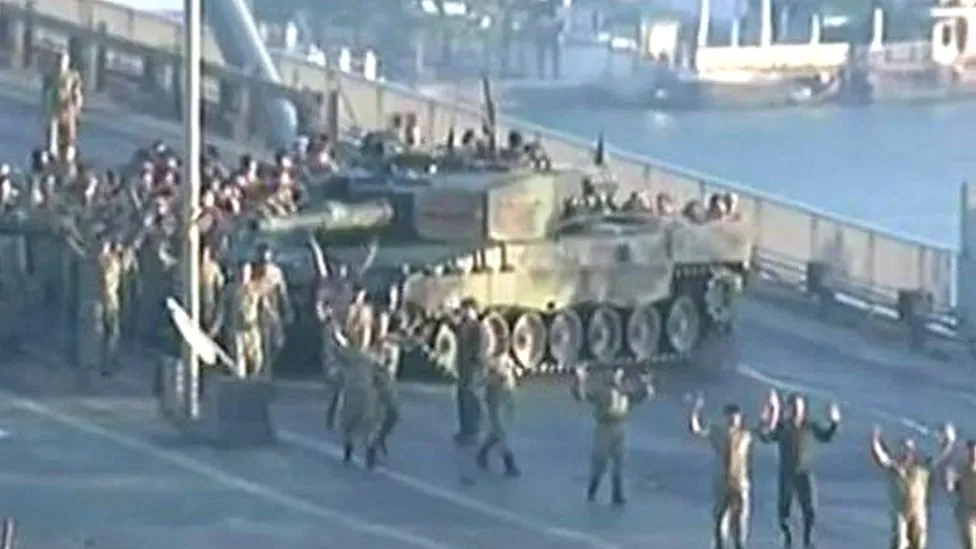
The movement gained international attention in the aftermath of the failed coup attempt on July 15, 2015, in Turkey. The coup attempt, attached to a faction within the Turkish military, led to a turbulent period in the country. In the wake of the coup, many individuals associated with the Gülen Movement, including educationists and teachers, faced severe repercussions.

Soldiers with their hands up on Istanbul's Bosporus Bridge

Source: https://www.bbc.com/news/world-europe-36855846

Following the coup attempt, educationists and teachers associated with the Gülen Movement became targets of government crackdowns. Thousands of educators were dismissed under a state of emergency decrees (KHK), leaving them without job security and facing social stigma. The government accused them of being members of a terrorist organisation, specifically the Gülen movement, and subjected them to legal proceedings.

One notable case in this context is the decision of the European Court of Human Rights (EHRC) regarding teacher Yalcinkaya. The EHRC recognised that Yalcinkaya’s dismissal from her teaching position violated her rights to freedom of expression and association. This decision shed light on the challenges faced by educators associated with the Gülen Movement and highlighted the need to safeguard human rights after the coup attempt.

Source: https://www.turkishminute.com/2023/09/11/ecthr-soon-announce-decision-turkish-teacher-convicted-of-gulen-link/

It is important to note that accusations against the parents of the quintuplets and their siblings, Abdülkadir and Nurcan Arslan, who were arrested and subsequently imprisoned, are not considered crimes in any part of the world. It was stated that Abdülkadir Arslan worked at a private teaching institution previously closed by a decree law, and his wife was a housewife. The couple was accused of being members of the Gülen movement, resulting in their separation from their children. This situation raises concerns about the well-being of the children and the impact of parental absence on their development. Furthermore, one of the children has a health problem, which adds to the complexity of their situation. The absence of their parents and the challenges they face as a result of the coup attempt have undoubtedly affected their overall well-being and access to necessary medical care.

Despite these difficulties, some people in Turkey have shown support for the family through social media platforms. By raising awareness and advocating for their rights, individuals have come together to provide assistance and solidarity to the quintuplets and their siblings. This support demonstrates the power of social media in mobilising communities to address the challenges faced by individuals affected by the aftermath of the coup attempt.

The Gülen Movement’s commitment to education has been a cornerstone of its efforts. The movement has established numerous educational institutions worldwide, focusing on providing a comprehensive education that combines modern subjects with an emphasis on religious values. These Gülen-inspired schools have been successful in countries such as Germany, where they cater to Turkish immigrants and their offspring. The movement’s educational agenda aims to equip students with the skills and knowledge necessary to thrive in the modern world while maintaining a solid connection to their religious heritage.

However, the educational initiatives of the Gülen Movement have faced significant challenges after the failed coup attempt. The government’s crackdown on the movement’s members and institutions has resulted in the closure of many Gülen-inspired schools and educational centres. The dismissal of teachers and educationists associated with the movement has disrupted the education of countless students who relied on these institutions for their learning.

The impact of the coup attempt and subsequent government actions on the education sector goes beyond the closure of schools. The stigmatisation and persecution of educators associated with the Gülen Movement have created an atmosphere of fear and insecurity within the education community. Teachers, once respected and valued for their dedication to education, now find themselves marginalised and targeted. This not only hampers the progress of education but also undermines the fundamental principles of human rights and freedom of expression.

The plight of the quintuplets and their sibling, left without their parents due to their alleged affiliation with the Gülen Movement, highlights the human cost of the political turmoil in Turkey. Separated from their loved ones, these children face an uncertain future and the challenges of growing up without parental guidance. The emotional and psychological impact of their situation cannot be underestimated, particularly considering that one of the children has a health problem that requires extra care and support.

Source: https://www.turkishminute.com/2023/10/04/turkish-court-send-parents-of-6-to-prison-on-gulen-charges-conviction/

In such difficult circumstances, social media has become a powerful tool for mobilising support and raising awareness. People from all walks of life, both within and outside Turkey, have used social media platforms to express solidarity with the quintuplets and their siblings. Through hashtags and online campaigns, individuals have shared their concerns, donated resources, and advocated for their rights. This outpouring of support demonstrates the potential of social media to galvanise communities and bring attention to pressing human rights issues.

In conclusion, the Gülen Movement, focusing on education and intercultural dialogue, has significantly contributed to society globally. However, the movement and its members have faced challenges and human rights issues in the aftermath of the failed coup attempt in Turkey. It is crucial to recognise the impact on educationists and teachers associated with the movement, the separation of families, and the importance of safeguarding human rights in such circumstances. The support individuals show through social media platforms highlights the resilience and solidarity among communities in times of adversity. As the international community grapples with the aftermath of political turmoil, it is vital to prioritise human rights and ensure that education remains a fundamental right for all children, irrespective of their parents’ affiliations.