Broken Chalk proudly presents the seventh edition of “Education Monitor: Around the Globe” between the 16th and 30th of June, 2023. Broken Chalk aims with this letter to increase public awareness of Educational problems, challenges, and violations in the scope of the world. This newsletter is unique. This is a weekly newsletter in which we attempt to monitor and convey educational news from around the world in a concise manner. This monitor will be published biweekly with the effort of our young and enthusiastic team.
You can contribute to our work if you like. If you witness any violations in the scope of education, you can write the comment part of this post. Broken Chalk will try to address the issue in its next monitor edition.
Broken Chalk Platform, in March 2019, was founded by a group of educators abroad who experienced and have been experiencing severe human rights violations in Turkey and had to ask for asylum currently in several countries.
These education volunteers also suffered greatly and started their new lives in their new countries without human rights violations. They gained respect just because they were considered human beings in those countries. However, they left one part of their minds and hearts in their homeland. They assigned themselves a new duty, and the human rights violations they left behind had to be announced to the World. A group of education volunteers who came together for this purpose started their activities under the Broken Chalk platform’s umbrella. However, the Broken Chalk platform was not enough to serve their aims. Therefore, they completed their official establishment as a Human Rights Foundation in October 2020.
Broken Chalk is now much more than a platform, and we have reviewed and enlarged our vision and mission within this framework. Violations of rights would be the first in our agenda in the field of Education all over the World. At the point we reached today, Broken Chalk opened its door to all individuals from all across the globe, from all professions, and to all individuals who say or can say ‘I also want to stand against violations of human rights in Education for our future and whole humanity, where our generations grow up together.’
Education is essential because it can help us eliminate the evils from society, introduce, and increase the good. We want to draw the public’s and stakeholders’ attention to the fact that Education is in danger in several different parts of the World. The attacks are wide-reaching, from the bombing of schools to the murder of students and teachers. Raping and sexual violence, arbitrary arrests, and forced recruitment also occurred, instigated by armed groups. Attacks on Education harm the students and teachers but also affect the communities in the short and long term.
We invite all individuals who want to stop human rights violations in Education to become Volunteers at Broken Chalk.
The Philippines, a developing country in Southeast Asia with a population of over 100 million people, has a long history of colonization, with Spain being the first colonial power to arrive in the country in 1521. The Spanish colonial period lasted for over 300 years, during which the country’s education system was heavily influenced by the Catholic Church. The Spanish government established schools that primarily catered to the Spanish elite, and education was mainly focused on religious instruction.
After the Spanish-American War in 1898, the Philippines was ceded to the United States. The American colonial period brought significant changes to the country’s education system, with the government introducing a public school system that aimed to provide education to all Filipinos. The American government established public schools that followed an English-language curriculum, which aimed to prepare Filipinos for the workforce and eventually lead to their assimilation into American society.
The Philippine education system underwent further changes after the country gained independence in 1946. The government implemented reforms that aimed to make education accessible to all Filipinos, regardless of their socioeconomic status. The 1987 Philippine Constitution states that “the State shall protect and promote the right of all citizens to quality education at all levels and shall take appropriate steps to make such education accessible to all.”
Despite efforts to make education a key priority in the country since independence in 1946, the Philippine education system continues to face significant challenges that prevent many Filipinos from accessing education.
Ongoing class of Teacher Mercedita Guese at Lawang Bato Elementary School with her students using notebooks provided by the city government and worktexts developed by Department of Education, local school board and Synergeia Foundation. Photo by Congwingatchalian
Poverty
Poverty has long been a pervasive and intractable challenge in the Philippines, and education remains one of the most critical casualties of this social malady. The Philippine Statistics Authority has reported that approximately 16.7 million Filipinos live below the poverty line, with many of them struggling to make ends meet on a daily basis. Consequently, education becomes an unaffordable luxury for many families, especially those living in the most impoverished communities. The inability to send their children to school forces them to work instead, perpetuating the cycle of poverty for generations.
In recent years, the Philippine government has launched several initiatives aimed at addressing the problem of poverty and its impact on education. One such program is the Pantawid Pamilyang Pilipino Program (4Ps), which provides cash transfers to poor families to help them meet their basic needs, including education expenses such as school supplies, uniforms, and transportation costs. The program has been successful in increasing school enrollment and reducing dropout rates in poor communities across the country.
The 4Ps program has been the subject of much research, and several studies have shown its effectiveness in improving access to education for impoverished families. For instance, a study by Montilla et.al. (2019) found that the program had a positive impact on school participation, with a significant increase in the number of children enrolled in school. The study also noted that the program had helped to reduce dropout rates, particularly among girls.
Another study by Howlett et.al. (2018) looked at the impact of the 4Ps program on the education outcomes of children living in poor communities. The study found that the program had a positive effect on both school enrollment and attendance, with children from beneficiary households having higher rates of school attendance than their counterparts from non-beneficiary households. The study also showed that the program had a significant impact on children’s nutritional status, as it helped families to afford healthier food options.
Despite the success of the 4Ps program, however, some experts argue that cash transfers alone are not enough to address the root causes of poverty. They emphasize the need for more comprehensive poverty reduction strategies, such as creating more job opportunities and improving social services. According to a study by Ibon Foundation (2019), poverty reduction in the Philippines requires a multi-dimensional approach that includes investment in education, healthcare, and social services, as well as policies that support job creation and income growth.
One example of a comprehensive poverty reduction strategy is the Sustainable Livelihood Program (SLP), which is implemented by the Department of Social Welfare and Development (DSWD). The SLP aims to provide sustainable livelihood opportunities to poor households, enabling them to increase their income and improve their standard of living. The program offers various forms of assistance, including skills training, micro-enterprise development, and access to credit facilities.
A study by the International Labor Organization (ILO) (2018) found that the SLP had a positive impact on poverty reduction and employment creation in the Philippines. The study noted that the program had helped to increase household income, improve food security, and reduce the incidence of child labor in beneficiary households. The study also highlighted the importance of partnership between the government and the private sector in creating sustainable livelihood opportunities.
Combined with the above, it is easy to see that poverty remains a major obstacle to education in the Philippines, with millions of families struggling to afford basic necessities, let alone the cost of education. While cash transfer programs such as the 4Ps have proven effective in increasing school enrollment and reducing dropout rates, they are not enough to address the root causes of poverty. To achieve sustainable poverty reduction, a more comprehensive approach is needed, which includes strategies to create more job opportunities, improve social services, and support education and skills development. By addressing poverty in a multi-dimensional manner, the country can ensure that all its citizens have equal an equal right to education.
Ongoing armed conflicts
The ongoing armed conflict in some parts of the Philippines has created many challenges in the education sector. In particular, the situation has greatly impacted the lives of many children, making it difficult for them to continue their studies. With schools being forced to close and students being displaced, the government has recognized the need for alternative education systems that can provide access to education to those who have been affected by the conflict.
One of the measures implemented by the government to address this issue is the Alternative Learning System (ALS). The ALS is a non-formal education system designed to provide basic education and skills training to out-of-school youth and adults who have not completed their primary or secondary education. The program is designed to reach marginalized communities, including those affected by armed conflict, who may not have access to traditional formal education.
The ALS program has been successful in providing educational opportunities to those who have been affected by the armed conflict. For example, in 2021, the ALS program reached over 900,000 learners, providing them with access to basic education and skills training. Furthermore, the program has also been successful in improving the literacy rate in the Philippines, particularly in areas affected by the conflict.
One of the reasons why the ALS program has been successful is that it has been able to adapt to the unique challenges faced by learners in conflict-affected areas. For example, the program has developed modules that are designed to be delivered in a modular format, making it easier for learners to access education even if they have to relocate due to conflict.
In addition to the ALS program, there are also other initiatives that have been implemented to address the education challenges faced by those affected by the armed conflict in the Philippines. For example, the United Nations Children’s Fund (UNICEF) has implemented a program that aims to improve access to quality education for children affected by the conflict. This program includes initiatives such as providing temporary learning spaces, training teachers, and providing learning materials to students.
The UNICEF program has been successful in improving access to education for children affected by the conflict. For example, in 2021, the program provided temporary learning spaces to over 18,000 learners, enabling them to continue their studies despite the conflict.
Moreover, international organizations such as the Global Partnership for Education (GPE) and the World Bank have also recognized the importance of education in conflict-affected areas. These organizations have provided funding for education programs in the Philippines, enabling the government to improve access to education and skills training for those affected by the conflict.
For instance, the GPE provided a grant of $20.9 million to the Philippines in 2019 to support the implementation of its education sector plan. The grant aims to improve access to quality education for all, including those affected by the conflict.
Additionally, the World Bank has also provided funding to support the education sector in the Philippines. In 2020, the World Bank approved a $300 million loan to support the government’s efforts to improve the quality of education and increase access to education for all, including those affected by the conflict.
In conclusion, the armed conflict in some parts of the Philippines has greatly impacted the education sector, making it challenging for children to continue their studies. The government has implemented the Alternative Learning System, which provides non-formal education to out-of-school youth, including those affected by armed conflict. The ALS program aims to provide marginalized communities with access to education and skills training, helping them to rebuild their lives and communities. Additionally, international organizations such as UNICEF, GPE, and the World Bank have also recognized the importance of education in conflict-affected areas and have provided funding to support education programs in the Philippines. These initiatives are critical in providing educational opportunities to those affected by the conflict, enabling them to rebuild their lives and communities.
Children in school uniforms attend a class. Photo by Ron Lach.
Lack of resources and infrastructure
Another important issue facing the education system in the Philippines is the lack of resources and infrastructure in many schools, especially in rural areas. This challenge is widespread and affects a significant number of schools in the country.
According to a report by the Department of Education, around 5,000 schools in the Philippines have no access to electricity, while 10,000 have no access to potable water. This lack of basic amenities puts students and teachers at a significant disadvantage, affecting the quality of education they receive. In addition, many schools lack adequate classrooms, textbooks, and teaching materials, making it challenging for students to learn effectively. This challenge is not only limited to rural areas but is also present in urban areas.
The lack of resources and infrastructure in schools affects the quality of education that students receive. Without proper facilities, students may not be able to attend classes regularly, or they may be distracted by external factors, making it difficult for them to concentrate on their studies. The lack of textbooks and teaching materials also hinders the learning process, as students may not have access to the necessary information to understand the concepts taught in class.
To address this issue, the Philippine government has invested in infrastructure projects to improve schools’ facilities. For example, the government has constructed classrooms, provided electricity, and installed water systems in schools that lacked these amenities. In addition, the Department of Education has implemented the K-12 program, which aims to provide students with a quality education that is globally competitive. The program includes initiatives such as the provision of free textbooks, school facilities, and teacher training.
In recent years, the government has also implemented several programs aimed at improving access to education in remote areas. The above-mentioned Alternative Learning System (ALS), aiming to provide basic literacy and numeracy skills, as well as functional and life skills to its learners, for example, provides non-formal education to out-of-school youths and adults who cannot attend formal schooling. This program is vital in ensuring that every Filipino has access to basic education.
However, despite these efforts, some experts argue that the government’s efforts are insufficient to address the scale of the problem. They highlight the need for greater investment in education, particularly in rural areas, to ensure that every child has access to quality education. According to a study by the Philippine Institute for Development Studies (PIDS), there is a strong correlation between education and poverty reduction. The study found that increasing access to education can lead to better employment opportunities and higher income levels, ultimately leading to poverty reduction.
Moreover, the lack of resources and infrastructure in schools is not only limited to the Philippines but is also a common problem in other developing countries. For example, in sub-Saharan Africa, nearly 30 million children of primary school age are not in school, and many of those in school face similar challenges to those faced by students in the Philippines. These challenges include lack of access to basic amenities such as electricity, water, and adequate classrooms.
To conclude, the lack of resources and infrastructure in schools is a significant challenge facing education in the Philippines, particularly in rural areas. While the government has implemented several initiatives to address this issue, there is still a need for greater investment in education to ensure that every child has access to quality education. Providing access to education is vital in ensuring that every Filipino has the opportunity to reach their full potential and contribute to the development of the country.
COVID-19
The COVID-19 pandemic has undoubtedly brought numerous challenges to the education system of the Philippines, affecting not only students but also teachers, parents, and educational institutions. In March 2020, the Philippine government ordered the closure of schools to curb the spread of the virus. As a result, millions of students had to shift to online or distance learning, which was a struggle for those without access to technology or reliable internet connection.
One of the major issues that the pandemic has exposed is the digital divide. The digital divide refers to the gap between those who have access to digital technologies and those who do not. In the context of education, the digital divide means that students who lack access to technology and the internet are at a disadvantage compared to those who have them. According to a survey conducted by the Department of Education in July 2020, only 64% of the students who responded had access to a smartphone, while 55% had access to a laptop or desktop computer. This means that a significant portion of the student population is left out of the digital learning experience.
To address the digital divide and the challenges posed by the pandemic, the Department of Education has implemented various distance learning programs. One of these is DepEd TV, a program that provides televised lessons to students in grades 1 to 10. DepEd TV was launched in October 2020 and is aired on free-to-air television channels. The program aims to provide alternative modes of learning for students who do not have access to the internet or digital devices. The lessons cover various subjects, such as English, Math, Science, and Filipino.
Another program that the Department of Education has implemented is DepEd Commons, an online platform that provides free access to digital resources for teachers and students. The platform contains thousands of learning materials, such as lesson plans, videos, and quizzes. Teachers can use the platform to create their own digital lessons, while students can access the materials to supplement their learning. DepEd Commons was launched in 2019 but gained more significance during the pandemic when traditional classroom teaching became challenging.
Apart from these initiatives, the government has also partnered with telecommunication companies to provide free internet access to public school teachers and students. In May 2020, the Department of Education signed a memorandum of agreement with Globe Telecom and Smart Communications to provide free internet access to public school teachers and students until the end of the year. The initiative aimed to ensure that teachers and students have access to online resources and can participate in online classes.
While these initiatives are commendable, some experts argue that the government’s response to the pandemic has been inadequate, particularly in addressing the needs of marginalized communities. According to a study by the Philippine Institute for Development Studies, only 14% of students in the poorest households have access to a computer or tablet, while 16% have access to the internet. The study also found that only 27% of students in rural areas have access to the internet, compared to 47% in urban areas. This shows that students from marginalized communities are at a greater disadvantage when it comes to online learning.
To address this issue, experts suggest that the government should provide laptops and tablets to students who lack access to technology. The Department of Education has recognized this need and has launched a laptop and tablet program for public school teachers and non-teaching personnel. Under the program, the government will provide laptops and tablets to eligible teachers and non-teaching personnel to support their work in distance learning. However, some argue that the program should be expanded to include students who lack access to technology.
The COVID-19 pandemic has exposed the digital divide in the Philippine education system, with many students lacking access to technology and the internet. The government has implemented various initiatives, such as DepEd TV and DepEd Commons, but experts suggest that more needs to be done, particularly for marginalized communities. Providing laptops and tablets to students without access to technology is a crucial step towards creating a more equitable and inclusive learning environment.
Conclusion
In conclusion, the challenges facing the education sector in the Philippines are complex and multifaceted, ranging from poverty to armed conflict, lack of resources and infrastructure, and the digital divide. Addressing these challenges will require a comprehensive and multi-dimensional approach, including strategies to create more job opportunities, improve social services, and support education and skills development, as well as providing alternative learning opportunities in conflict-affected areas and investing in education infrastructure. Bridging the digital divide is also essential, particularly in light of the COVID-19 pandemic. By ensuring that all Filipinos have equal access to education, the country can unlock the full potential of its people and contribute to sustainable development. The government, supported by international organizations and the private sector, must continue to prioritize education and invest in its future.
References
Montilla, M. M., Delavin, E. A., Villanueva, R. M., & Turco, R. A. (2015). Pantawid pamilyang Pilipino program (4Ps): Assistance to pupil’s education. Asia Pacific Journal of Education, Arts, and Sciences, 2 (3), 1-5.
Howlett, M., Ramesh, M., & Saguin, K. (2018). Diffusion of CCTs from Latin America to Asia: the Philippine 4Ps case. Revista de Administração Pública, 52, 264-284.
Diokno, M. S. I. (2021). Learning in a Time of Pandemic. COVID-19: EveryWoman’s Feminist Response and Recovery Plan, 67.
Bayod, R., & Bayod, C. (2020). Laying the groundworks for education of children in the new normal: The case of DepEd Southern Mindanao. Eubios Journal of Asian and International Bioethics, 30(8), 443-449.
Toquero, C. M. (2020). Challenges and opportunities for higher education amid the COVID-19 pandemic: The Philippine context. Pedagogical Research, 5(4).
Orleans, A. V. (2007). The condition of secondary school physics education in the Philippines: Recent developments and remaining challenges for substantive improvements. The Australian educational researcher, 34(1), 33-54.
Barrot, J. S., Llenares, I. I., & Del Rosario, L. S. (2021). Students’ online learning challenges during the pandemic and how they cope with them: The case of the Philippines. Education and information technologies, 26(6), 7321-7338.
Ethiopia is a country in East Africa with a population of over 100 million people. The country has made significant progress in expanding access to education over the past few decades. However, despite these efforts, the education system in Ethiopia faces several challenges, which have hindered its ability to provide quality education to all students. In this article, we will explore some of the major challenges facing the education system in Ethiopia.
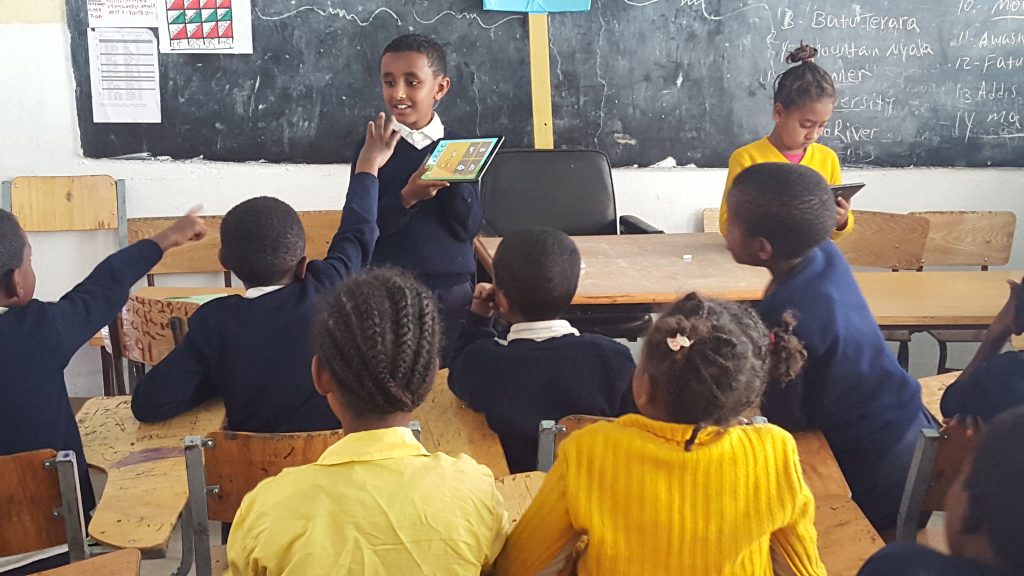
Children engaging with apps and tablets. Photo by Beyond Access.
Access to Education
Access to education is a major challenge in Ethiopia, particularly in rural areas. The country has made significant progress in expanding access to education, with primary school enrollment rates increasing from 20% in 1991 to over 90% in recent years. However, access to education remains limited in rural areas, where schools are often underfunded and understaffed, and students may have to travel long distances to attend school.
To address this challenge, the Ethiopian government has introduced policies aimed at expanding access to education in rural areas. For example, the government has introduced programs to build more schools in rural areas, provide free textbooks to students, and provide school meals to students.
Inflexibility of the curriculum
As researchers in the field of special needs and inclusive education advocate the rights of children with special needs to education, the curriculum that should be adopted should be inclusive by specifying minimum requirements for all learners. The special educational, social, emotional, and physical needs of learners will be addressed if the curriculum developers consider children with disability during its design and development. Curriculum adaptations do not only benefit students with disabilities, but also facilitate successful learning for all learners in acquiring mastery of context. For many students with disabilities and for many without the key to success in the classroom lies in having appropriate adaptations, accommodations and modifications made to the instruction and other classroom activities.
However, research findings show that in some instances, curriculum is further found to be inflexible, especially with regard to the design and management of timetables. For instance, the timetables most often do not take care of Children with disability yet. In ideal situations, a child with special needs might need more time to accomplish the same assignment that can be done by a non- disabled person.
Children with disability could not receive quality education. This in turn indicates the extent to which our training institutions have deep-rooted problems . Teachers were not well trained in such way that they could teach those students who have a different ability and background. Being proficient in Braille and sign language were not sufficient and organized for in-service trainees. Even those teachers who have trained in special needs and inclusive education were not well equipped in skills of Braille and sign.
Quality training is one of basic ingredients for quality inclusive education. However, teachers’ training has basic problems in educating children according to their specific needs. Children with disability were not receiving quality education. For this, poor teachers’ training and shortage of trained teachers reciprocally have contributed to the delivery of poor quality education for Children with Disability. Though there were few teachers who have been graduated in special needs and inclusive education, the training in which they have passed did not enable them to be efficient in teaching.
Language
Ethiopia being a multilingual nation faces many challenges in terms of communication which directly affects the education system and curriculum at large. The educational policy seems to be snared in the ideology of ethnic politics that was formally introduced in 1991, with the support of Ethiopian’s constitution after TPLF took power.
This new policy envisaged an education system that made students multilingual but the local languages are to be offered only on the basis of parental preference. The policy states that English language is to be offered from Grade 1 while Ethiopia’s Federal Working Language, like Amharic , is only to be offered after grade 3 and based on the preferences of parents.
Despite the above measures on the language barrier, regional states have retained power in dictating what language students should use in schools. However after Grade 9 the medium will be strictly English. This has been authorized by the Federal Ministry of Education. In related development, the council of Ministers passed a decision that is believed to make universities more autonomous by authorizing and generating their own income and provide multi-faceted service to the public.
Young Women Students on the Boulevard – Axum (Aksum) – Ethiopia. Photo by Adam Jones.
Ignorance of stakeholders about children’s right to education
As it is believed, stakeholders of education are parents, children in schools, teachers, school principals and supervisors, experts, and officers in the education system. However, there is such discrepancy among stakeholders of education regarding the right of children with disability to education. Whereas, others stakeholders could not recognize the right of children to education fully. The inaccessibility of Education Bureau itself, insufficient budget allocation and unavailability sign language interpreters in schools could be evidence to the extent to which the education system was ignorant of the right of children with disability to education.
Quality of Education
Another major challenge facing the education system in Ethiopia is the quality of education. While the country has made significant progress in expanding access to education, the quality of education remains low, particularly in rural areas. Students in Ethiopia often struggle with basic literacy and numeracy skills, and the country’s education system has been criticized for being rote-based and lacking in creativity.
To address this challenge, the Ethiopian government has introduced policies aimed at improving the quality of education. For example, the government has introduced policies aimed at improving the training and professional development of teachers, promoting the use of technology in education, and improving the curriculum.
However, these efforts have faced challenges, including a lack of resources and infrastructure to support these initiatives.
Infrastructure Gap
The infrastructure gap is another significant challenge facing the education system in Ethiopia. More than 85% of Ethiopians live in rural areas where the infrastructure is not yet well constructed. As a result, houses are dispersed, schools are far-flung, and the topography is full of blockages. Pathways from home to schools are cliffy. With all these, children with motor and visual disabilities particularly have encountered difficulty primarily to go school to the worst to integrate themselves with non-disabled children in school activities.
Infrastructure together with pathways to classroom, offices, guidance, and counselors challenged students with disabilities not to come to school and not to have active participation in the learning process as well. Less restricted environment could enhance the realization of inclusion of Children with Disability. To the opposite of the above fact, however, most pathways are cliffy, ridge and sloppy. To jump such ways was a difficult task for students with physical and visual disabilities as most of the participants of FGD were of the same mind.
Many schools in Ethiopia lack basic infrastructure, such as classrooms, libraries, and toilets. This infrastructure gap can have a significant impact on the quality of education, with overcrowded classrooms and inadequate facilities hindering students’ ability to learn.
Personnel in the education system pointed out that buildings in most mainstream schools were not constructed with people with disabilities in mind. As it was clearly indicated in the findings, the poor infrastructure together with pathways to classroom, offices, guidance, and counselors, challenged students with disabilities not to come to school and not to have active participation in the learning process as well. Entirely, the primary schools had full of up and down topography, the inclusion of children with mobility impairment had been at its challenge. As a result, the observable fact was that provision of infrastructure seems challenging for the implementers.
To address this challenge, the Ethiopian government has introduced policies aimed at improving the infrastructure in schools. For example, the government has introduced programs to build more schools, renovate existing schools, and provide basic infrastructure, such as toilets and water supply, to schools. However, infrastructure development in Ethiopia faces challenges, including limited resources and inadequate funding for infrastructure development.
Shortage of teachers in special needs education
Teachers, who are trained in special needs, could facilitate the implementation of inclusion of children with disability. To do this, their number should be enough to provide professional support for general education teachers and students with disabilities themselves. However, to contrary, the country is not able to train special needs and inclusive education teachers adequately to meet the demand. Factors that hindered the implementation of inclusive education were the inadequacy of teachers who have trained in special needs and inclusive education. To ensure the realization of inclusion of children with disability, either the general education teachers should have training or special needs and inclusive education teachers should assist them in the classroom.
Ethiopians are agrarians; there is job allotment among householders. As a result, the one looks after the cattle, the other harvests, still the other collects firewood, even the other may fetch water. With all these, hunting schools that have special classes, taking and returning the child with disabilities to these schools subsequently, is a task that might have no owner . Therefore, the only harsh choice was to hide their child with disability at home.
In the towns, though there are abundant commercial schools, since hiring special needs and inclusive education teachers is costly, and not to enroll children with disability has legal impeachment, they enroll the children with disability and ‘dump’ them without any special support in their compounds. Significantly, the insufficient number of teachers of special needs and inclusive education has hampered the integration of children with disability in to the regular schools.
The shortage of trained and qualified teachers is another significant challenge facing the education system in Ethiopia. The country has a shortage of teachers, particularly in rural areas, where many teachers are untrained and lack the necessary qualifications to teach effectively.
To address this challenge, the Ethiopian government has introduced policies aimed at increasing the number of trained teachers in the country. For example, the government has introduced policies aimed at recruiting more teachers, providing training and professional development for teachers, and improving the salaries and working conditions of teachers.
Most Ethiopians are weak in their income to educate their children. According to previous research done as per the references, the economic factor could be another factor to educate their children and mostly children with disability in the regular school. Most parents of children in every family member in Ethiopian rural areas have economic engagement. For instance, some are shepherds, some others are farmers, still others collect firewood, and there are also others who accomplish home activities. However, when disability happens to one of those family members, he/she will be dependent on the rest to get daily food. With all this, taking that disabled child to school would be another burden to the family. Then, the choice of the family had to be either to sit the child at home or give for charity organization.
Since disability is a common and heart-breaking phenomenon, it further impoverishes families in need. As a result, not only lack of awareness and the negative attitude of the family, but living from hand-to-mouth caused the society as a whole to hinder children with disability from being included in regular school.
Curriculum Development
The curriculum is a crucial aspect of the education system and plays a significant role in shaping the learning outcomes of students. However, the Ethiopian curriculum has faced criticisms for being outdated, rigid, and lacking relevance to the needs of students and the country’s economy.
To address this challenge, based on the report from ENA, a state owned media, the council of ministers did see undesirable shortcomings of the ongoing system and believed that it did not encourage indigenous knowledge, did not encourage innovation and technology. Thus the Ethiopian government has introduced policies aimed at revising and updating the curriculum. On this not the prime minister of that time Hon. Abiy Ahmed’s cabinet believed that the new curriculum and training policy will bring about changes in terms of addressing the problems from the old system.
The government has introduced a new curriculum framework that emphasizes competency-based education, problem-solving, and critical thinking skills. This new curriculum policy introduced a 6-2-4 system, six years in elementary education, two years of junior school education and four years of high school education.
The new curriculum framework also emphasizes the development of vocational and entrepreneurial skills, which are seen as critical to addressing the country’s unemployment challenges. However, the implementation of the new curriculum framework has faced challenges, including a lack of resources and infrastructure to support the new approach.
Lack of guideline to implement inclusive education
Beyond doubt, teachers and schools at grassroots level, and education heads at the top together require guidelines to let them see how to implement inclusive education. However, issuing the document was not a simple task for Ethiopian education system. One of inclusive policy documents is having prepared a guideline of inclusive education to implement it effectively. Subsequently, if no guideline which leads how to implement inclusive education, the process would be subjected to personal interpretation. The above evidence indicates the extent to which experts and school supervisors were not clear about guideline and strategic plan. The strategic plan may help the education system to check and balance the goal that they were supposed to achieve with the plan that they had already scheduled. If the country had guideline of inclusive education, it would help stakeholders of education to demystify the wrong perception that the stakeholders possessed and would give them clear direction about the implementation of inclusive education.
Ethiopia is one of the multi-ethnic nations in Africa. As a result, the country is exercising multilingual curriculum. No matter how the country has multi-ethnic groups, issuing guidelines of inclusive education would not be costly when it is compared with the benefits that it could bring quality, equity and social justice in our education system. More than its cost, lack of commitment among political leaders has also delayed the endorsement of inclusive guidelines. Although the country had designed strategic plan of special needs and inclusive education system in 2006 and 2012, this was meant for the purpose of country relief, unfortunately it did not work for all the regions.
Inadequate provision of adapted school materials
Despite measures to adopt an inclusive education policy for all groups, school directors were not willing to include children with disability in the regular schools with reason of shortage of adapted materials. From the previous studies done, it is not only lack of awareness that prevailed among school administration but also shortage of adapted teaching material for students with disabilities. Hence, education experts and school supervisors in common remarked poor provision of special needs equipment as a main challenge to implement inclusion.
Further, The Ministry of Education and Regional Education Bureaus did not develop a mechanism which could enable them to monitor the schools that have/have not registered a child with disability. At the same time, the bureaus have budget insufficiency. As a result, they could not facilitate even those few schools with slate and stylus, Braille, paper, Braille textbooks, hearing aids, sign language books, wheelchairs and other adapted and modified materials with explanation of budgetary problems. As a result, insufficient provision of adapted school materials has been identified as one of challenges of inclusion of children with disability in to the regular schools. Owing to this fact, students with visual impairment were obliged to learn with no Braille. School supervision reports also tell as the group was attending lessons by listening. Children with hearing impairment had also school attendance with their physical presence
Conclusion
In conclusion, Ethiopia faces significant challenges in its education system, including limited access to education, low quality of education, infrastructure gaps, teacher shortages, and outdated curriculum. While the government has introduced policies aimed at addressing these challenges, there is a need for more concerted efforts to improve the education system in the country. This could include increased investment in education, improved teacher training and support, better infrastructure development, and more relevant and up-to-date curriculum development.
As the reports of the Ministry of Education of Ethiopia, more people affected in the educational system of the country are children with disability who have no access to education yet. Even the majority of those children with disability, who had access to education, were in a fuzzy educational setting. With this, the mode of education to educate children with disability is not marked out clearly. As a result, the education system has faced challenges to achieve EFA. To ensure inclusion, therefore, identifying the barriers and suggest panacea has a paramount importance to reverse the situation. Theoretically, ecology of human development guided the study to investigate challenges that Ethiopia faced to implement inclusive education. By addressing these challenges, Ethiopia can work towards providing quality education to all its citizens and improving its socio-economic prospects.
References:
United Nations Development Programme (2019). Ethiopia: Education. Retrieved from http://www.et.undp.org/content/ethiopia/en/home/countryinfo.html
World Bank (2021). Education in Ethiopia. Retrieved from https://www.worldbank.org/en/country/ethiopia/brief/education-in-ethiopia
GEBEYEHU, A. M. (2017). Quality of Education in Ethiopia: From the Perspective of Learners, Teachers and Parents. Journal of Education and Practice, 8(10), 76-85.
World Bank (2018). Ethiopia Education Sector Development Program V: 2015-2020. Retrieved from http://documents.worldbank.org/curated/en/180601551693773672/Ethiopia-Education-Sector-Development-Program-V-2015-2020
Ethiopian Ministry of Education (2015). Education Sector Development Plan V: 2015-2020. Retrieved from https://www.moe.gov.et/web/guest/-/education-sector-development-plan-v-2015-2020
African Development Bank Group (2018). Ethiopia Country Strategy Paper 2016-2020. Retrieved from https://www.afdb.org/en/documents/document/ethiopia-country-strategy-paper-2016-2020-106665
International Labour Organization (2016). Youth Employment in Ethiopia: An Overview. Retrieved from https://www.ilo.org/wcmsp5/groups/public/—ed_emp/documents/publication/wcms_528826.pdf
The World Factbook (2021). Ethiopia. Retrieved from https://www.cia.gov/the-world-factbook/countries/ethiopia/
Tessema, W. K. (2019). The Ethiopian Education System: Current Trends and Future Directions. International Journal of Innovative Research and Development, 8(12), 76-84.
Mohammed, A. (2018). Challenges and Prospects of Education in Ethiopia: A Literature Review. Journal of Education and Practice, 9(1), 21-26
Broken Chalk is a non-profit organisation with one main goal – To protect human rights in education. The organisation started with a website and articles and is currently working on multiple projects, each aiming to fight human rights violations in the educational sphere. As the UPR is related to human rights violations, inequalities, human trafficking, and other violations, Broken Chalk prepares this article for the fourth Cycle and the specific country – the Congo.
During the last Cycle, the delegation put forward 194 recommendations. The Republic of Congo supported 188 recommendations, and the rest they noted. At the adoption of its UPR outcome at Human Rights Council 40 in March 2019 (an increase of 15% concerning the 2nd cycle). Supported recommendations related to Legal and general framework of implementation, universal and cross-cutting issues, civil and political rights, economic, social, and cultural rights, women’s rights, and rights of other vulnerable groups and persons.
The Republic of Congo (Congo) – not to be confused with the Democratic Republic of Congo – is sparsely populated, with over half its population concentrated in the two largest cities and almost half its population under 18 (World Bank, 2019). Child rights in Congo (also known as Congo-Brazzaville) are improving, with good access to education and many legal mechanisms to protect child rights. Significant concerns remain as children who labour, girls, and indigenous children continue to experience serious rights violations and often have difficulty meeting their basic needs.
Education is one of the human rights that guarantee the continuity of generations and the steadiness of development and is one of the best tools for breaking the poverty cycle, as it is the basic building block for the building and renaissance of societies. The challenges of education for a country that recently gained its independence (2011) – the world’s newest nation, and occupies 2nd place on the (Fragile States Index) are extremely difficult and complex.
Agok Primary School, Abyei. Photo by Global Care.
What are the challenges for South Sudan?
In South Sudan, 70% of children aged between 6 and 17 have never set foot in a classroom. Only 10% of children complete primary education – one of the worst completion rates in the world. Shockingly, a girl in South Sudan is more likely to die in childbirth than to complete primary education.
A lack of quality teaching staff and inadequate school buildings are challenges that added to extreme poverty, as families desperately work for the next meal.
This is compounded by the violence and unrest militia groups bring to these poor communities. Thousands of young people join militia groups every year in the absence of any other source of livelihood, creating a vicious cycle of destruction.
Educational System
Unlike the previous educational system of regional Southern Sudan—which was modelled after the system used in the Republic of Sudan since 1990—the current educational system of the Republic of South Sudan follows the (8 + 4 + 4) system (similar to Kenya). Primary education consists of eight years, four years of secondary education, and four years of university instruction.
The primary language at all levels is English, as compared to the Republic of Sudan, where the language of instruction is Arabic. In 2007, South Sudan adopted English as the official language of communication. There is a severe shortage of English teachers and English-speaking teachers in the scientific and technical fields.
Education Development Plan
In 2010, South Sudan Development Plan (2011-13), through its two ministries of education, organized a conference titled the “The Education Reconstruction Development Forum.” The conference, intended to create a national dialogue about the fundamental problems in South Sudan’s educational infrastructure, did not have the intended effect “South Sudan Development Plan (2011-13)”. However, a persistent situation in South Sudan is a significant gender gap between teachers and students. The fact that the majority of teachers are male, with a near absence of female teachers further marginalizes female students, in particular.
Furthermore, a high school student-to-teacher ratio of 300 to 1 means that learning necessarily takes place in overcrowded classes. The lack of support staff such as librarians, school counsellors, and psychologists, which are staples in many educational systems and especially relevant for children with special needs, is evident as well. South Sudan also lacks modern technology, such as computers, for both teachers and students, from primary to university levels.
Challenges in the transportation system
Educational inequalities persist along rural and urban lines. For one, all 120 secondary schools are in South Sudan’s towns. Students from rural regions who want to obtain a secondary education must take on high transportation costs, which prevent some students from even trying. This challenge compounds upon others. Many rural South Sudanese families engage in cattle-keeping, for example, which forces school-aged children to migrate according to seasonal variations and economic pressures.
Challenges in Educational Facilities
Many school buildings have been decimated. In 2013, tensions between two major politicians spurred fighting between the Dinka and Nuer ethnic tribes. Thousands were killed and more than two million were displaced during the two-year civil war that followed. In the midst of this, 800 school buildings were destroyed. While 6,000 remained usable, almost all of them were stripped of vital educational resources and infrastructure. “Anywhere else, they wouldn’t be called schools. It’s a tree and a blackboard,” (UNICEF’s chief of education in South Sudan told NPR in 2016.)
Crowded primary classroom in South Sudan, where teacher-student ratios far outstrip international norms and there is little hope for individualized support, inclusive practices, or quality education. Photo by Windle Trust International.
A key question was asked of many targeted participants; “Since the independence of South Sudan, what do you view as the most pressing problem (s) in the educational system?”
Participant responses to the key question posed by the interviewer as below:
Participant
Participant Responses
News Reporter
“One of the greatest problems affecting our new country today is the continued problems and rivalries between the different tribes which has included severe violence and which has forced the government to pay a lot of money to police, security, and military forces. These problems are so severe that it is not unusual for the government to come to a complete standstill daily to the point that nothing functions in the country, not the transportation system, not the stores and markets, and not the schools. To me, the tribal problems, if not resolved, will bring this country down. I feel very bad for the children because, at times, no one seems to care for them, and many of them are likely to wander in life with no sense of contributing to their existence”.
Minister of Education Representative #1
“The major problem in the South Sudanese educational system is that we have no buildings for our students and teachers (Overcrowded Facilities). We, the government, keep telling them to be patient, but they want everything right away. This is a new country with other important priorities like our health care system, our refugee problem, our continuing problems with Sudan, and the mental health of the people affected by the war. Many of the citizens of our country have much emotional scarring from a war that traumatized everyone. They should consider themselves fortunate that we want to help them. Many of the people are illiterate, especially the parents of the children, and do not understand our mission as the new government. The President is trying very hard”
Minister of Education Representative #2
“In our state and village, we keep being promised money to build our schools as the children are missing their right to free education. Everyone has the right under Article 26 of the Universal Declaration of Human Rights to education, and so do the children of South Sudan. First, the people from the north, the Sudanese government betrayed us and never cared about our education in the South, and now, it sometimes feels that our current government does not care. How can children learn when the schools are made of foliage and the teachers don’t get paid, or the children have to sit on the floor with no books, and are often sick?”
To discuss educational challenges in South Sudan.
Recommendation for the educational system development in South Sudan needs enormous help:
‘Returnee’ schools be given immediate assistance, according to the priorities set by school management and education authorities
Agencies support schools outside Juba (the capital of South Sudan) to relieve the congestion in Juba town and provide boarding facilities to attract female students.
Agencies work with education authorities to establish policies to address quality and huge gender gaps in enrolment and attainment.
Support is provided to develop and procure English-language textbooks and provide intensive language training.
Literacy programs be targeted at adults who missed out on education to make them aware of its value and why they should send their children, including girls, to school
Conclusions
The results of our observations that the current educational system in South Sudan continues to be in crisis mode, and perhaps even more so now that the country is in a civil war. Irrespective of age and role in education, the participants cited continued political strife, mistrust in the government and a chaotic economic system as contributing to the failure of education. The absence of a reliable transportation system also directly impacts the educational system in South Sudan; youth are dependent on transportation to get to school. Other problems voiced by the participants include the absence of school buildings, and the lack of basic resources such as books, teaching supplies, and computers. Overall, the needs are considerable for this new nation and are the result of a lack of economic resources in families; corruption and graft among school employees and administrators; the marginalization of female students and teachers; and a denial of basic human rights including the right to a continuous education.
References
Care, G. (2023, July 24). South Sudan Project. Retrieved from Global Care Organization: https://www.globalcare.org/project/south-sudan/
Delegal, J. (2019). 8 FACTS ABOUT EDUCATION IN SOUTH SUDAN. The Borgen Project.
G., B. (2011). Education in Southern Sudan: Investing in a better future. London, England: Center for Universal Education, Brookings Institute.
John Kuek, R. J. (2014). HUNGER FOR AN EDUCATION: A RESEARCH ESSAY ON THE CASE OF SOUTH SUDAN AND THE VOICES OF ITS PEOPLE. Forum for International Research in Education, 22-31.
WIKIPEDIA. (2023, July 26). South Sudan. Retrieved from WIKIPEDIA website: https://en.wikipedia.org/wiki/South_Sudan
This report drafted by Broken Chalk contributes to the fourth cycle of the Universal Periodic Review for Jordan. This report focuses exclusively on human rights issues in the field of education in Jordan.
In the previous UPR cycle, Jordan received 226 recommendations, and it supported 149 recommendations. Some of these recommendations focused on the Sustainable Development Goal of “Quality Education”.
This report first explores the main issues in the educational field in Jordan, reflecting on the recommendations Jordan received in the 3rd cycle UN UPR review in 2018 and its progress since. Finally, Broken Chalk offers some recommendations to Jordan on further improving human rights in the educational field.
As per the letter by the High Commissioner to the Foreigner Minister, issues were raised explicitly for the right to education, which included making education accessible, particularly by ratifying human rights instruments, making education culturally acceptable, preventing marginalisation, making education accessible for those students in remote areas, promote tolerance and respect for religious diversity, emphasis to be laid on non-discrimination focusing on inclusivity in education, particularly for women and other minority groups and persons with disabilities and ensuring educational rights are guaranteed to refugee children.
Jordan has continued its commitment to the right to education through the Jordan Declaration on Inclusion and Diversity in Education.
Broken Chalk has drafted the following report as a stakeholder contribution to the 4th cycle of the 45th session of the Universal Periodic Review [UPR]. As Broken Chalk’s primary focus as an organisation is to combat human rights violations within the educational sphere, this report and the following recommendations will be related to the Right to Education.
During the previous Cycle of the UPR, Monaco has supported 72 out of 113 received recommendations, noted 35, and has not expressed its position on six other recommendations. Five suggestions are directly concerned with the Right to Education, and Monaco has supported all of them. Recommendation 76.31 urges Monaco to take action to ensure equal access to education. Recommendation 76.34 advocates for strengthening access to education at all levels for girls and young women. Recommendation 76.35 refers to integrating deaf-mute and visually impaired persons and their specific needs into the Monegasque educational system. Last but not least, recommendations 76.32 and 76.33 advise Monaco to take further legal measures to strengthen the right to education for children who are not Monegasque citizens and to guarantee access to education for all children, irrespective of their nationality.
The Permanent Representative of Monaco to the United Nations Office at Geneva, Carole Lanteri, has expressed deep commitment and attachment to the promotion and protection of human rights and the Universal Periodic Review and has noted equal access to education and care for all children who live in Monaco, without any discrimination based on gender or age.
Broken Chalk is an Amsterdam-based non-profit human rights organisation focusing on the global development of human rights and education. By submitting this report, Broken Chalk hopes to contribute to the 44th Session of the Universal Periodic Review (UPR) and further the efforts made by the Federal Republic of Nigeria to structure its education sector continually and positively.
In its third UPR cycle, the Federal Republic of Nigeria received 290 recommendations, supporting 230 and noting 60.
Education in the Federal Republic of Nigeria faces many challenges. One of the most pressing issues is the learning crisis, with 3 out of four children in primary school unable to read. As stated by UNICEF, there is an alarming rate of school dropout, with one in five children out of school in the world being from the Federal Republic of Nigeria. Children are affected by the Boko Haram insurgency as well as gender biases.
Broken Chalk is a non-profit NGO with one main goal to protect human rights in the world of education. The organization investigates and reports education rights violations worldwide while advocating and supporting human-rights-focused educational development. By submitting this report, Broken Chalk aims to contribute to the 45th Session of the Universal Periodic Review (UPR) of Belize with a focus on the education sector, encouraging the country to continue its improvement efforts and providing further insight into how to overcome current challenges and deficiencies regarding human rights in education.
Belize’s average Human Development Index value throughout that time period was 0.668 points, with a low of 0.613 points in 1990 and a high of 0.722 points in 2016. The most recent value is 0.683 points from 2021. [1] The Index, which includes factors such as life expectancy, education, and per capita income, placed Belize in the high human development category, with a ranking of 103 out of 189 countries and territories. [2]
Belize’s population is projected to be around 1400,000 people, with a slightly higher proportion of rural (55%) than urban (45%) residents and an equal proportion of males and females. The majority of the population, 65.8%, is between the ages of 15 and 64, with another 29.2% between the ages of 0 and 14, and those 65 and above accounting for the remaining 5%. [3]
Mestizos/Hispanics make up 47.9% of Belize’s population and the majority of residents in the Corozal, Orange Walk, Cayo, and Stann Creek districts, according to the country’s 2010 Census. Creoles are the second largest ethnic group, accounting for 25.9% of the population in the Belize District. The Maya (Ketchi, Mopan, and Yucatec) make up 11.3% of the population and are the majority group in the Toledo District, while Garifunas, East Indians, and Mennonites make up 6.1%, 3.9%, and 3.6% of the overall population, respectively. [3]
Despite its diversity, Belize has maintained a stable parliamentary democracy without serious ethnic or religious conflict and there has been numerous and peaceful transitions of power between the country’s two major political parties since its independence from Great Britain in 1981. [3]
References [1] Global Economy https://www.theglobaleconomy.com/Belize/human_development/#:~:text=Human%20Development %20Index%20(0%20%2D%201)&text=For%20that%20indicato %2C%20we%20provide,from%202021 %20is%200.683%20points. [2] IOM https://publications.iom.int/books/belize-needs-assessment-migration-governance [3] The Belize Education Sector Plan 2021-2025 https://www.moecst.gov.bz/wp-content/uploads/2022/02/The-Belize-Education-Sector-Plan-2021-2025_MoECST.pdf
Broken Chalk is a non-profit organisation with one main goal – To protect human rights in education. The organisation has a website and articles and is currently working on multiple projects, each aiming to fight human rights violations in the educational sphere. This report drafted by Broken Chalk contributes to the fourth cycle of the Universal Periodic Review (UPR) for China, focusing exclusively on China’s human rights issues in education.
During the 3rd Cycle of the Universal Periodic Review for China in November 2018, China received 346 recommendations and supported 284. Twelve per cent of these supported recommendations relate to the 4th Sustainable Development Goal, Quality Education. These recommendations in the 3rd UPR Cycle will be the basis on which Broken Chalk discusses the progress of human rights issues related to education in China. This report from Broken Chalk will also suggest some recommendations for these educational issues as part of the 4th cycle of the Universal Periodic Review for China.
We use cookies on our website to give you the most relevant experience by remembering your preferences and repeat visits. By clicking “Accept All”, you consent to the use of ALL the cookies. However, you may visit "Cookie Settings" to provide a controlled consent.
This website uses cookies to improve your experience while you navigate through the website. Out of these, the cookies that are categorized as necessary are stored on your browser as they are essential for the working of basic functionalities of the website. We also use third-party cookies that help us analyze and understand how you use this website. These cookies will be stored in your browser only with your consent. You also have the option to opt-out of these cookies. But opting out of some of these cookies may affect your browsing experience.
Necessary cookies are absolutely essential for the website to function properly. These cookies ensure basic functionalities and security features of the website, anonymously.
Cookie
Duration
Description
cookielawinfo-checkbox-analytics
11 months
This cookie is set by GDPR Cookie Consent plugin. The cookie is used to store the user consent for the cookies in the category "Analytics".
cookielawinfo-checkbox-functional
11 months
The cookie is set by GDPR cookie consent to record the user consent for the cookies in the category "Functional".
cookielawinfo-checkbox-necessary
11 months
This cookie is set by GDPR Cookie Consent plugin. The cookies is used to store the user consent for the cookies in the category "Necessary".
cookielawinfo-checkbox-others
11 months
This cookie is set by GDPR Cookie Consent plugin. The cookie is used to store the user consent for the cookies in the category "Other.
cookielawinfo-checkbox-performance
11 months
This cookie is set by GDPR Cookie Consent plugin. The cookie is used to store the user consent for the cookies in the category "Performance".
viewed_cookie_policy
11 months
The cookie is set by the GDPR Cookie Consent plugin and is used to store whether or not user has consented to the use of cookies. It does not store any personal data.
Functional cookies help to perform certain functionalities like sharing the content of the website on social media platforms, collect feedbacks, and other third-party features.
Performance cookies are used to understand and analyze the key performance indexes of the website which helps in delivering a better user experience for the visitors.
Analytical cookies are used to understand how visitors interact with the website. These cookies help provide information on metrics the number of visitors, bounce rate, traffic source, etc.
Advertisement cookies are used to provide visitors with relevant ads and marketing campaigns. These cookies track visitors across websites and collect information to provide customized ads.