Educational Challenges In Indonesia

By Leticia Cox

One-third of Indonesia’s population are children- around 85 million, the fourth largest of any country in the world.

Education provides humankind with information, knowledge, skills and ethics to know, understand and respect our duties towards society, families and nation, and helps us progress further.

Education is a way of life where one can learn and share knowledge with others. “Education is the great engine of personal development. It is through education that the daughter of a peasant can become a doctor, that the son of a mine worker can become the head of the mine, that a child of farm workers can become the president of a great nation,” said former South African president Nelson Mandela.

In Indonesia, like in most parts of the world, children must attend twelve years of compulsory education, which consists of primary (grades 1–6), junior secondary (grades 7–9), senior secondary (grades 10–12), and higher education.

Youth can choose between state-run, nonsectarian public schools supervised by the Ministry of National Education (Kemdiknas) or private or semi-private religious (Islamic, Christian, Catholic, and Buddhist) schools managed and financed by the Ministry of Religious Affairs.

Over two years into the COVID-19 pandemic, students and educators in Indonesia and around the world are still grappling with a massive learning crisis. A June 2022 report by UNICEF, UNESCO, the World Bank and others uncovers an estimated 70 per cent of 10-year-olds globally are unable to understand a simple written text, up from 57 per cent before the pandemic.man in white dress shirt sitting on brown wooden bench
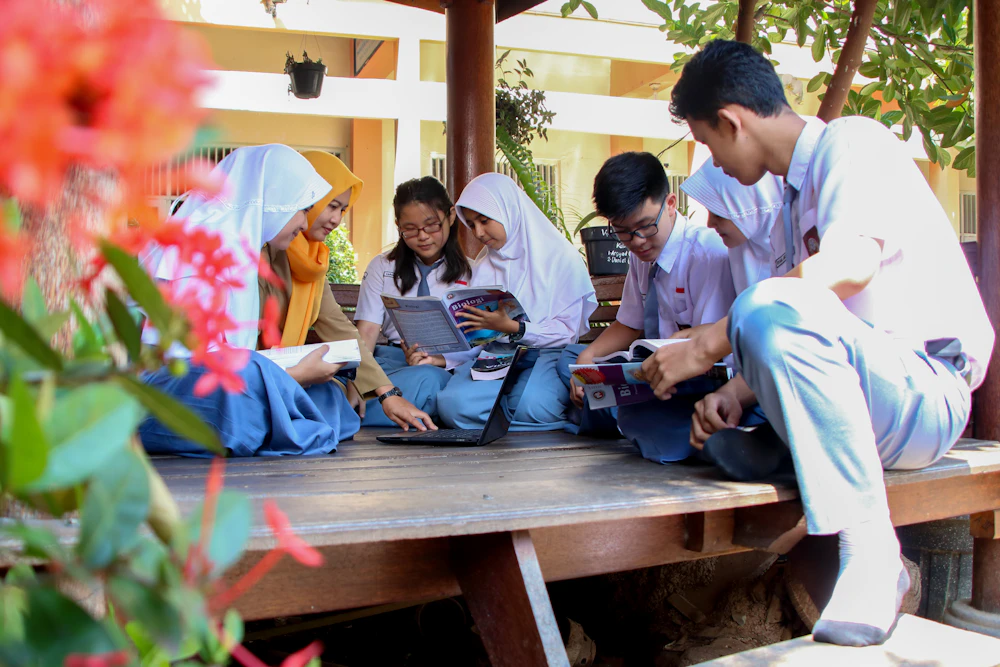
Photo by Ed Us on Unsplash

Covid-19 Aftermath. 

Learning in Indonesia was already below curriculum expectations before the onset of COVID-19, with wide disparities by gender, region, disability, and other marginalization dimensions. Most students tested were performing two grade levels below their current grades. For example, grade 5 students, on average, were reading at the grade 3 level.

According to conducted research and surveys in the field, one of the reasons was the absence of clear educational goals before the learning activities were carried out, which caused students and educators not to know what ‘goals’ would be produced so that they do not have a clear picture in the educational process. In some areas of the country, there is evidence of an increase in the percentage of early-grade students who cannot read.

The vast school closures and job loss due to COVID-19 have worsened the situation. Underperformance is more acute for children in vulnerable situations, including children from low-income households, children with disabilities and children living in under-developed parts of the country, which are most at risk of school exclusion.

Even before the pandemic, child marriage was an issue in some poorer areas. Evidence shows that child marriages have surged during the pandemic as low-income families are looking to reduce their economic burden.

Child labour is now more likely to occur in the home or support the household’s livelihood (e.g., farming and fishing) as lockdown measures restricted employment opportunities.

Indonesian children with disabilities face considerable challenges. Research has shown that the disability of both children and parents is affecting their learning and the likelihood of returning to school.

Poor Educational Facilities and Infrastructure

Poor school facilities and infrastructure quality are also part of Indonesia’s education challenges.Seventy-five per cent of Indonesia’s schools are in disaster risk areas; the nearly 800,000-square mile country is exposed to large earthquakes, tsunamis, high winds, volcanoes, landslides, and floods.

Uneven access to the internet, and discrepancy in teacher qualifications and education quality, appeared as the biggest challenges in implementing distance learning. Remote learning for young children and the diversity of the country’s digital access levels cause further inequalities for marginalized children.

Low Quality of Teachers

One of the core causes of the poor quality of education in Indonesia is the low quality of teachers due to the teacher recruitment process, which does not focus on selecting professional education personnel but instead on meeting the demands of civil servants.

Most teachers do not have adequate professionalism to carry out their duties as stated in Article 39 of Law No. 20 of 2003, namely planning lessons, implementing lessons, assessing learning outcomes, mentoring, conducting training, conducting research and performing community service.

As part of the civil servant recruitment process, the teacher recruitment process generally does not pay attention to the work skills required of a professional teacher.

In a recent survey, teachers in the educational system who took the Teacher Competency Test (UKG), which measures competency in learning and understanding the subjects taught, did not even meet the minimum score.

The survey also shows that teachers who are educated below the standard set by the government are pretty high, namely 64.09% for junior high school, 61.5% for high school and 10.14% for vocational school.

The teaching profession requires complex work skills. Teachers must be able to teach effectively and have high commitment and motivation to educate their students.

Meanwhile, teacher recruitment in the civil servant recruitment system generally prioritizes nationalism and general knowledge and not teaching competence.

Prospective teachers with the highest scores on the essential competency selection will participate in a written section that examines their learning management skills and knowledge of the subjects they teach. There is no way of knowing the competence of a professional teacher through a written general knowledge test.

In general, the recruitment of teachers in the civil servant process can’t select the best prospective teachers- the system prioritizes nationalism and general knowledge, not teaching.

In education, the “calling” or passion is essential to becoming an educator since it is closely related to their love of the knowledge taught to students and their enthusiasm to explore students’ potential. Being a good teacher is challenging if it isn’t your calling.

Written By Leticia Cox

References 

https://ijble.com/index.php/journal/article/view/64/71 

https://www.unicef.org/eap/media/9326/file/Sit An – Indonesia case study.pdf 

https://www.unicef.org/indonesia/education-and-adolescents

https://www.intechopen.com/chapters/81594 

https://jakartaglobe.id/news/poor-quality-of-education-casts-shadow-on-indonesias-future-job-market

Cover Photo by Husniati Salma on Unsplash

Kamile Wayit, an Uyghur student from China detained after posting a video

In November 2022, peaceful protests, referred to as “white paper protests”, sparked in multiple locations in China due to a fatal lockdown fire on 24 November 2022 and China’s zero-COVID policy in general. The fire had caused the death of at least ten people. In recent years, the Chinese authorities carried out widespread and systematic human rights violations and targeted Uyghur students, scholars, and other members of the Uyghur cultural elite in Artush.[1] Since 2017, 386 known cases of Uyghurs have been interned, disappeared, or imprisoned.

This Article goes into more depth about the case of Kamile Wayit and the urgent call for her release. 

The detention of Kamile Wayit

Kamile Wayit is a 19-year-old Uyghur Muslim and college student living in Henan, China. On 12 December 2022, Kamile was taken by the local Artush city police and detained after she had returned from Artush (Xinjiang), her hometown, for a winter break. According to Kamile’s brother, U.S.-based Kewser Wayit, she was targeted because of a video she posted online regarding the white paper protests. On 2 February 2023, Kewser Wayit called on and demanded that the Chinese authorities release his sister immediately and let her speak to him. He stated that his sister is “innocent and committed no crime.”[2] As of now, Kamile has been in detention since December 2022. Moreover, she is not allowed to have any contact with her family or to have a lawyer of choice. Moreover, Kamile may be subjected to torture and other ill-treatment. 

Urgent call for Kamile’s release

The grounds for Kamile’s detention are unclear, and Kamile’s arrest raises issues regarding the Freedom of Discrimination and the Freedom of Opinion and Expression. Therefore, Kamile should be released immediately unless there is sufficient, credible and admissible evidence that she has committed an internationally recognised criminal offence. Moreover, pending her release, Kamile’s whereabouts should be released, and she should be allowed regular access to her family and a lawyer of her choice. Lastly, pending her release, it should be ensured that Kamile has access to adequate medical care and is not subjected to torture and other ill-treatment. 

Take action!

Amnesty International, a non-governmental organisation standing up for international human rights, has called for action in the form of writing an appeal or signing a petition. By registering an appeal or signing the petition, you can help Kamile and try to protect her well-being. Please go to China: Uyghur student detained for posting protest video: Kamile Wayit – Amnesty International to see the model letter for writing an appeal, or go to Link to sign the petition.

Conclusion

This article discussed the targeting of Uyghur students, scholars, and other members of the Uyghur cultural elite in Artush, with particular attention to the case of Kamile Wayit, like Amnesty International, Broken Chalk calls for action and the urgent need for Kamile’s release.

Furthermore, Broken Chalk calls on the government of China to immediately release all those detained and sentenced for their ethnicity, religion, or peaceful exercise of their fundamental human rights. In addition, Broken Chalk calls on the international community to urgently condemn the Chinese government’s unconscionable persecution of Uyghur Intellectuals.


Written by Asha Ouni

[1] UHRP, “Detained and Disappeared: Intellectuals Under Assault in the Uyghur Homeland”, March 2019, available at: Microsoft Word – UHRP_Intellectuals Report Update 3.docx (accessed on 12/04/2023).

[2] RFA, “U.S.-based Uyghur man calls on China to release his 19-year-old sister”, Jane Tang for RFA Mandarin, 26/01/2023, available at: US-based Uyghur man calls on China to release his 19-year-old sister — Radio Free Asia (rfa.org) (accessed on 12/04/2023).

Education Monitor: Around The Globe Week 11&12 2023

Broken Chalk proudly presents the first edition of “Education Monitor: Around the Globe”. Broken Chalk aims with this letter to increase public awareness of  Educational problems, challenges and violations in the scope of the world. This newsletter is unique. This is a weekly newsletter in which we attempt to monitor and convey educational news from around the world in a concise manner. This monitor will be published biweekly with the effort of our young and enthusiastic team.

You can contribute to our work if you like. If you witness any violations in the scope of education, you can write the comment part of this post. Broken Chalk will try to address the issue in its next monitor edition.

Edcuation Monitor Around the Globe Week_11_12_2023

To Download it as pdf : EducationMonitor: Around the Globe Week_11_12_2023 

Interview with Melek Kaymaz

Melek Kaymaz is a refugee from Turkey and currently works as a math teacher in an international high school in Amsterdam.  At the school she teaches math in Dutch to mavo, havo and vwo students.


How did you end up in the Netherlands?

Melek fled Turkey with her husband. Before coming to the Netherlands, they lived in Iraq for three years, where Melek worked as a math teacher. When Melek became pregnant, they knew that returning to Turkey and staying in Iraq were no longer options. They wanted to do something for their daughter, for a better future. At first, they had no idea where they could go, as Melek explained, “We didn’t have a visa for a European country, nor a ‘green card’ to move to the United States.” After spending some time researching their possibilities on the Internet, they found out that the Netherlands is a country where refugees are welcome, where they can receive help and where they are free. “Freedom, that is very important to me, that is why we came to the Netherlands”. Now Melek and her husband have been living in the Netherlands for five years.

“This step was huge, and, in the beginning, I had a very hard time adjusting, I had no idea what it meant to live in the Netherlands. I did not know the language yet and did not know anything about the Dutch culture.” Her husband and Melek also came to the Netherlands on their own, as they have no relatives or acquaintances living in the Netherlands.


Why did you become a math teacher?

“When I was little, it was not my dream to become a math teacher. Later in life I had to make a choice, which direction I wanted to go in. I knew I love math. I see math as a kind of game or a puzzle that I want to solve. In addition, I also knew that I like to teach math to other people. Often, I had to explain things to my brothers or my family and I actually liked doing this. Therefore, the choice to become a math teacher was a very good choice”.


What challenges have you encountered?

When Melek and her husband came to the Netherlands, they had to start from scratch. They had no idea about the Dutch language or culture. In an AZC in Amsterdam, Melek taught herself the basics of the Dutch language using a book she could get there. She ended up living for 10 months in the AZC with her husband and her just-born daughter. Now she lives in a house with her family in Southeast Amsterdam. To improve her Dutch, she took a free course offered by the municipality of Amsterdam. She also completed the “Orientation Track Status holders for the Classroom” (Oriëntatietraject Statushouders voor de Klas) at the Hogeschool van Amsterdam. This track not only helped her master the Dutch language, but also taught her about the Dutch education system and enabled her to get an internship at a secondary school.


Now she is still working at the same school as a math teacher. This process sounds easier than it was. Melek told us that she found it incredibly difficult to find a teaching job. For example, she applied for more than 40 schools of which only 5 schools responded. In the end, she could choose between two schools. She was very sad that some schools had not responded at all. “I’m different, I get that, but I do expect a response, especially since the Netherlands has a teacher shortage.”


Melek felt that Dutch people did not trust her at first. “They are afraid of other people, they do not believe you at first, but once you gain their trust, then it is good and they are very nice and sweet.”


What differences are there between the Turkish and Dutch education systems?

“Dutch education is a little different than the Turkish one.” For example, Melek explained to us that schools in Turkey also have different levels. But the difference is the ages at which the children change levels. For example, elementary school in Turkey is also eight years, but children in the Netherlands go to high school at an earlier age. Because of this, Melek got the feeling that Dutch children that are just starting high school are a bit childish. What Melek did notice is that Dutch children are much more independent. ‘The kids here are much more active. In Turkey, the teacher has to be 100 percent active, and students only follow what is said. “In the Netherlands, children work independently on assignments without the teacher having to explain everything.” Another difference is that in the Netherlands there are many more different types of schools, such as public, private or Christian schools. In Turkey, there is only one type of school.


Looking at the future

Even though Melek misses her family and friends in Turkey and her culture, she is still happy with her choice to come to the Netherlands. Her family and friends fortunately visit her from time to time but she herself cannot go back to Turkey. The most important thing for her is the freedom she has in the Netherlands. Melek would like to communicate to other refugees that in the beginning it is a very difficult step to come to the Netherlands and become a teacher here, but you should never give up and always do your best. It gets easier and easier with time.

.


Written by Georgette Schönberger

In Turkey: 47 people detained for helping the families of under arrest.

Humanitarian protection given to the families of prisoners, accused of anti-terrorism, should not be seen as a form of support for terrorism.

According to the Turkish Media outlets; 47 people were detained because they provided financial aid to the relatives of those imprisoned in Izmir and distributed aid sent from abroad to families in need. The money and jewellery in the houses of these people and 2 F series American dollars were also seized on the grounds that they were evidence of ‘organization’.

Within the scope of the investigation carried out by the İzmir Chief Public Prosecutor’s Office, 40 houses were raided in İzmir, İstanbul, Ankara, Samsun and Muğla and 47 of the 54 people for whom arrest warrants were issued were detained.

During the searches conducted at the addresses, 180 thousand 305 Turkish liras ( around 8 thousand 900 Euros), 400 euros, 4 thousand 900 dollars, 47 jewellery items, numerous documents containing information on organizational activities and financial distribution within the organization, and two “F” series 1 US dollars were seized.

It was stated that those detained were people who provided financial assistance to members of the Gülen community and that they handed over the money sent from abroad to families in need of help.

In the statement made by the İzmir Police, it was announced that the aid was provided in three ways: cardless transactions from ATMs, cargo and hand.

Humanitarian protection should be given to the prisoner of anti-terrorism and the prisoner’s family members during these difficult times.  Humanitarian protection given to the families of prisoners, accused of anti-terrorism, should not be seen as a form of support for terrorism. Awareness among society and the decision makers within the country that even prisoners are entitled to “rights” despite the crimes that they are accused of having committed.

The Universal Declaration of Human Rights clearly states under Article 3 that individuals have a right to life, liberty and security. Under Article 9 no one shall be subject to arbitrary arrest, detention or exile. In Turkey, individuals’ rights are being restricted under the veil of anti-terrorism laws. This escalating repression of rights and political agenda that is taking over has sustained heavy blows on Turkish society.


What happened after 15th July 2016 in Turkey?(1)

Turkey has a broad definition of terrorism includes crimes against the constitutional order and allows the criminalization of expressions that justify, praise or incite people to use coercion or violent methods employed by a terrorist organization.

While the number of investigations on terrorism-related allegations was 55,058 in 2014 and 36,425 in 2015, they continually rose following a failed coup on July 15, 2016, when 155.014 investigations were launched that year alone. In 2017 the number of investigations launched on terrorism-related allegations rose to a record number of 457,423, to 444,342 in 2018, to 310,954 in 2019, 208,833 in 2020 and 191,964 in 2021, totalling 1,768,530 in the 2016-2021 period. (

Following the coup attempt, the Turkish government launched a massive crackdown on non-loyalist citizens, particularly members of the faith-based Gülen movement, under the pretext of an anti-coup fight.

The Turkish government accuses the Gülen movement of masterminding the failed coup, yet the movement strongly denies any involvement in the failed putsch.


1 https://stockholmcf.org/more-than-2-million-terrorism-investigations-launched-in-turkey-following-failed-coup-official-data/

Impact of anti-terrorism laws on sick children – A Turkish perspective

Turkey is bound by several regional and international declarations which require the State to ensure and protect human rights and fundamental rights. However, in practice, there is a serious deficit of the same. This can especially be seen through the draconian measures implemented through the counter-terrorism measures, also known as the anti-terrorism laws in Turkey. While in theory, these laws seem to meet human rights standards, a closer look at their implementation shows an undue curtailment of human rights by these Turkish laws.


According to the Turkish constitution, any prisoner who has a child with severe illness has a right to take care of the kids. But the prisoners accused under anti-terrorism law cannot care for their children.[1] This especially poses a problem since it can be seen as a violation of the rights of the children guaranteed under the Constitution of Turkey[2] nor does it ensure that equality is guaranteed[3] as measures taken for the sake of children are not seen as a violation of equality.


Multiple cases have indicated that the rights of children have been violated such as the case of Nurefsan Ketenci a differently abled girl who was pressured to leave her school due to her father being accused under the anti-terrorism laws. The family were living as refugees in Germany due to the lack of support received from the government, especially in the case of the sick girl.[4]


Selman Çalışkan was denied proper and timely treatment abroad due to the travel ban issued to his mother by the Turkish authorities and his father who was a prisoner accused of anti-terrorism.[5]


Similarly the case of Ahmet Burhan Atac where his father too was a prisoner accused under the anti-terrorism law. The arbitrary detention of the father denying him to be with his son at least during the treatment process coupled with the travel ban issued to his mother as well as arbitrary detention, made him receive treatment in the absence of both his parents and there was a delay in the treatment due to the abuse in the judicial systems.[6]


Kübra Kuzan was diagnosed with a brain stem tumour at the age of four. The only wish of the family was for their daughter to overcome this severe illness with their father. The prosecutor did not even allow father Ertuğrul Kuzan to see his painful daughter. After a long time, when a short leave came, it was too late. The innocent girl could not recognize her father.


Mehmet Erdoğan, the 6-year-old son of Rasih Erdoğan, an English teacher with a statutory decree, who has been imprisoned for 2.5 years in Kahramanmaraş, could not be awakened after an operation due to a cyst on his arm and passed away longing for his father in the hospital in Ankara, where he was being treated.


İbrahim Kılcan was a child with muscle disease and a heart transplant. It was her only wish to see her teacher father, İrfan Oğuz Kılcan, who was arrested after he was expelled by statutory decree. After receiving treatment, İbrahim passed away longing for his father, whom he could not see after he was arrested.


Hamza Travac, 27 months old, was a 98% disabled baby. He died in Trabzon due to a lung infection. His father, Hasan Travac, who has been imprisoned in Giresun for 28 months, could not attend the funeral of Hamza, whom he could not be with when he was born.


Hakan Dağdeviren is an 11-year-old boy diagnosed with leukaemia whose parents are imprisoned as part of a crackdown in Turkey targeting followers of the faith-based Gülen movement. Hakan needs his parents to be able to battle his disease.


Berk Görmez, a 14-year-old disabled son of a Turkish couple, who was dismissed by a government decree under the rule of emergency, lost his life. Berk’s father Bekir Görmez has not been permitted to visit him for the last 17 months despite his and his mother’s severe health problems.


Bilal Burak, his 17-year-old congenitally disabled son, whose father was imprisoned, passed away. The arrested father was able to attend the funeral of his son Bilal Burak, who was buried, with his hands cuffed.


The above-mentioned children are some of the many children who had to undergo severe treatment for their illnesses.[7] These children had to do so in the absence of one or both parents since they were prisoners and were not allowed to be with their children during this difficult period. A lot of these children have since passed away without being able to see their parents since the parent(s) were not given any form of release from prison to be with the ailing child.


Currently, Gulten Sayin is a prisoner accused of anti-terrorism and her son, Yusuf Kerim Sayın, is currently suffering from cancer. She is only allowed to visit her son at the hospital for half a day since no steps have been taken by the Ministry of Justice for her release or no arrangement has been made where she can spend sufficient time caring for her child during this painful period.[8] This case is currently garnering huge attention not just from the public but also from renowned leaders from within the country and seeks for the government to make a change in the Constitution for such exceptional cases. Her husband has complained against Turkey with the UN Committee on the Rights of the Child with the assistance of international human rights lawyers David Matas and Sarah Teich. The accused in this case was the primary caregiver and has not been provided with the requested compassionate leave to care for her son.


RECOMMENDATIONS

There should be an increase in the internal capacity of the country to address such issues and take immediate and effective steps, especially in the case of arbitrary detention or a travel ban which adversely affects a third party particularly vulnerable groups such as a sick child of a prisoner accused of anti-terrorism.

Humanitarian protection should be given to the prisoner of anti-terrorism and the prisoner’s family members during this difficult time of being physically present for the child and not finding ways to further burden the child. Humanitarian protection given to the prisoner accused of anti-terrorism should not be seen as a form of support for terrorism. Awareness among society and the decision makers within the country that even prisoners are entitled to “rights” despite the crimes that they are accused of having committed.

Adequate remedies need to be put in place at all international, regional and local levels to ensure that in future when situations such as these do arise there is a proper plan of action to prevent unnecessary legal issues and hindrances and have a swift movement to ensure that the other stakeholders such as the sick child are not impacted by the gaping human rights shortcomings seen in the anti-terrorism measures implemented by a country.

An emphasis needs to be laid on the right to privacy and family life, health-related rights, especially in the case of sick children who become innocent victims in the abuse of the system that takes place when human rights law needs to be ensured in the case of prisoners. We need to have an effective and transparent mechanism which can be laid out by international organizations and can then be incorporated as a law by concerned countries. This could potentially reduce the State’s inclination to loosely invoke national security or project the prisoner accused of anti-terrorism being there for his or her sick child as an issue that goes against the State’s national interest.

Lastly, access to human rights experts to expedite such cases should be an option given to prisoners accused of anti-terrorism.

The Universal Declaration of Human Rights clearly states under Article 3 that individuals have a right to life, liberty and security. Under Article 9 no one shall be subject to arbitrary arrest, detention or exile. In Turkey, individuals’ rights are being restricted under the veil of anti-terrorism laws. This escalating repression of rights and political agenda that is taking over has sustained heavy blows on Turkish society.

Written by

Caren Thomas

The above article is submitted to the United Nations for the Call for inputs: Global Study on the Impact of Counter-Terrorism Measures on Civil Society and Civic Space

Here is the submitted report

The_impacts_of_anti-terror_laws_on_the_sick_children_whose_parents_are_accused_by_the_law_in_Turkey_(1)

Sources

  1. Ahmet Burhan Atac: The Story of the Child Who Got Killed Collectively* – Broken Chalk
  2. Disabled girl forced to leave special needs school due to father’s links to Gülen movement dies – Stockholm Center for Freedom
  3. Jailed mother reunites with a son suffering from cancer for half a day – Stockholm Center for Freedom
  4. Kübra Kuzan
  5. [Update] Mother of young cancer patient about to lose an eye: My child will die without seeing his father – Stockholm Center for Freedom
  6. Mehmet Erdoğan
  7. İbrahim Kılcan
  8. Hamza Travaç
  9. Boy struggling with leukaemia needs jailed parents’ support, grandfather says – Stockholm Center for Freedom
  10. 14-year-old disabled Berk dies in absence of his father who is in prison over alleged Gülen links – Stockholm Center for Freedom
  11. Bilal Burak Bozbay
  12. Uğurcan Gençtürk

[1] Law No. 5275 – 17.4, 17.6

[2] Article  41, Constitution of Turkey

[3] Article 10, Constitution of Turkey

[4] Disabled girl forced to leave special needs school due to father’s links to Gülen movement dies, Stockholm Center for freedom, https://stockholmcf.org/disabled-girl-forced-to-leave-special-needs-school-due-to-fathers-links-to-gulen-movement-dies/ July 26th, 2021.

[5] Mother of young cancer patient about to lose an eye: My child will die without seeing his father, Stockholm Center for freedom, https://stockholmcf.org/paralyzed-6-year-old-fights-brain-cancer-without-his-jailed-fathers-support/ July 8th, 2020.

[6] Ahmet Burhan Atac: The Story of the Child Who Got Killed Collectively, Broken Chalk https://brokenchalk.org/ahmet-burhan-atac-the-story-of-the-child-who-got-killed-collectively/

[7] bitenhayatlar.com, stockholmmcf.org

[8] Jailed mother reunites with son suffering from cancer for half a day, Stockholm Center for freedom, https://stockholmcf.org/jailed-mother-reunites-with-son-suffering-from-cancer-for-half-a-day/ January, 27th 2023.

The Life of Halime Gulsu: The Heavenly Teacher Murdered in Prison

Halime Gülsu – Turkey’s failing prison system led to the tragic death of a unique soul. A book review of The Life of Halime Gülsu: The Heavenly Teacher Murdered in Prison (2022)

by Vivien Kretz

How can prisoners not be sentenced to death but still be murdered?

How do civilians pay for their lives? Questions like this arise when thinking about the fate of Halime Gülsu.

Written by Zeynep Kayadelen and published by the US human rights organization Advocates of Silenced Turkey (AST), the book, titled “Halime Gülsu: The Heavenly Teacher Murdered in Prison,” is based on the accounts of Gülsu’s cellmates who witnessed her final moments as well as friends and family. She died as an inmate in a prison ward in the Mersin province in Turkey due to insufficient access to medical aid.

Halime Gülsu’s story was now reconstructed by Advocates of Silenced Turkey (AST), a Turkish NGO. Author Zeynep Kayadelen incites her work with a preface: “We have died many times” (Kayadelen 2022, 9). The hopelessness peaks through her words. She dedicates this work of literature to those who have died from painful deaths fighting for a cause they cared about.

In her heartfelt novel, Kayadelen touches on the saddening fate of Halime Gülsu, a dedicated teacher who taught in Turkey and was a part of the Hizmet movement. This movement is influenced by the ideas and goals of scholar Fethullah Gulen. The Hizmet movement is dedicated towards a freer, more equal, and more sustainable Turkey.

Gülsu was a highly devoted teacher. She taught her students during her working hours and supported them when many of them were persecuted by the Turkish regime.

Turkey’s regime worked against those affiliated with Hizmet and those who were part of the movement. Gülsu and most of her friends were in a difficult situation. She felt watched for her every step. She knew that the regime was after her and that they did not mean well to her. Kayadelen described it as: “If their oppression was a fire, their animosity was the wind raging it up”. However, Gülsu refused to give in and declined the opportunity to leave the country. Much of her family lived in Canada, so she often could go abroad to see her family. However, she was a very proud Turkish citizen and chose to stay to defend herself against the regime. It is stressed multiple times throughout the book that she saw herself as a citizen of Turkey and decided to fight for a promising future for her country. However, the leaders of the regime disagreed with this.

On February 20th, 2018, Gülsu was arrested for being part of the Hizmet movement. Her arrest caught her by surprise. Gülsu knew she was being watched but did not expect to be arrested and incarcerated.

After Mersin’s Anti-Terror Special Forces team had crammed through her entire apartment and pulled everything apart, they handcuffed her and took her to Tarsus prison.

Gülsu was not healthy. She suffered from chronic lupus erythematosus, an autoimmune disease, and required daily and weekly medication to treat her illness.


When the Turkish forces ripped the teacher out of her home, she quickly grabbed her daily medication and medical records to take with her. Unfortunately, Gülsu forgot to take her weekly medicine during her arrest.

Once Gülsu arrived at the prison, she asked for her medical documents, which stated that she was sick and needed her weekly medicine and medical aid, but her medical records were nowhere to be found. Gülsu found herself in a terrifying and life-threatening situation.

She was put in an overcrowded cell with other women. The cell was made for ten people with ten beds, and when she entered it, it was already at double its capacity.

Some of the prisoners had babies but were taken from them. Female prisoners were forced to send their young children home because they could not care for them in prison.

Gülsu experienced everything first-hand: the routines, the uncertainties, and the other prisoners’ stories, but not for long. Three months after her arrest, Gülsu died from medical negligence.

Gülsu did not receive access to her weekly medicine or was ever granted medical treatment for her chronic lupus illness. Her condition worsened, and she developed growths and lumps- she was in terrible agony.

Gülsu got weaker and weaker by the day. When her brother finally was able to deliver the medication to her, it was already too late. Gülsu couldn’t cope with the pain, and the aggressive illness had progressed too far. According to inmates and family accounts, Gülsu became aware of her final days.

After weeks of suffering, Gülsu was finally allowed to go to a hospital, but it was too late. After she returned to the prison, her inmates, who had become caring friends, had to carry her as she was too weak to walk –they looked after, fed Gülsu and prayed for her.

Sadly, on April 2018, at 3:10, she died alone in a prison corridor. “Like an empty cocoon, her dried-up body was left behind, just lying there “, wrote Kayadelenin in her book.

The author Kayadelen narrates the book in a first-person perspective, which makes it easier for the reader to emphasize what the teacher must have gone through during her difficult time in prison.

Kayadelen’s book is a beautiful reading experience with a personal insight into what Gülsu experienced during her final days. Through multiple interviews with people who work at the prison and those affiliated with Gülsu, the organization gathered the tales about her time in prison and created a strong background for a story told with heart.

Kayadelen’s work is a strong voice against all human rights violations in Turkish prisons. Advocates of Silenced Turkey did an excellent job giving a tiny piece of justice to Halime Gülsu, “the heavenly teacher”.

The book can be purchased here: The Life of Halime Gulsu: The Heavenly Teacher Murdered in Prison: Kayadelen, Zeynep, Girdap, Hafza, Korku, Ummu, Nazif, Muhsin, Y., E., W., Barbara, Hur, Hande, Silenced Turkey, Advocates of, Publishing, AST: 9798365685956: Amazon.com: Books

Press Release: International Women’s Day 2023

8th March 2023

Happy International Women’s Day!

A day dedicated to celebrating women’s achievements worldwide, raising awareness of the challenges women face, and determining ways of achieving gender equality. This year the theme is Women in Education, Technology, and innovation, for which the Broken Chalk women’s team manage to make a video to commemorate the day, to raise awareness of the challenges women still face in education, and to identify the gaps and solutions for achieving gender equality. Gender equity is the process of being fair to women and men. Women have continued to pursue professional education and careers, but not without barriers. To ensure fairness, methods and efforts must be available to help women across the globe against any social, political, or cultural disadvantages they might face.


Article 28 of the Convention on the Rights of the Child recognizes equal opportunities and compulsory and available primary education for all. To this day, 129 million girls are still not going to school, although more girls have access to education than ever before. The enjoyment of women’s right to quality education is still affected by multiple gender-based barriers, such as wrong stereotypes, child marriage and pregnancy, poverty, or gender-based violence. Although gender-equitable education systems build prosperity for the whole country, poor families often prioritise boys when investing in education. However, education for young girls will also enhance their countries’ social and economic well-being, as they are more likely to invest in and prioritize their children’s education because of the value of schooling.


Girls’ education goes beyond entering school: it is necessary to ensure a safe learning environment that enables girls to complete their learning and acquire the knowledge and skills needed to compete in the labour market. However, in some countries, schools still do not meet safety, hygiene and sanitation requirements or the same teaching practices creating gender gaps in learning.

Our team reflected on the ongoing education challenges women still face in their countries of origin and as possible solutions. In the so-called “Global North,” girls’ access to education is not conditioned by gender but stereotypes still play a role in relegating women to the humanities instead of science subjects. In some countries such as Italy injustices and discrimination in access to the labour market still occur. On the other hand, on the African continent, poverty plays a crucial role in access to education. One of the main concerns is the fact that for many girls, education is put on hold: there is no continuity. This is the case in Kenya, where crises caused by drought and famine challenge the durability of girls’ education. Girls also drop out of school due to early pregnancies and marriages. In Uganda and Mozambique, this phenomenon is very much present: society must become more sensitive to the importance of sending girls to school for social development. Also, in some Asian countries like Indonesia child marriage is still a cause for which women are stopping school and focusing on taking care of the children and the household. Although the government is acting to implement policies that improve the quality of Indonesian girls’ education, what needs to be spread is public awareness of the values and importance of education for girls. Investing in girls’ schooling transforms communities, countries, and the world. It strengthens economies and reduces inequality. Another challenge women may face is the case of Turkiye, where female university students still face strip searches by police officers.


As always, it is Broken Chalk’s mission to spread knowledge about the importance of education in actualizing human rights. This year Broken Chalk will focus on improving girls’ access to education and raising awareness about the positive impact that female education has on society in general as well as on economic and social well-being. Because women’s rights are human rights, we will continue to support efforts to achieve gender equality across all domains, not just education. Gender equity improves opportunities for all and allows people to pursue their dreams despite gender. Equity leads to equality.


Happy International Women’s Day!

Signed by

Broken Chalk

 International_Womens_Day_2023_Press_Release_Eng

EDUCATION DAY RECAP SERIES III

Lastly, there is no better way to end this recap series than with Thunderbird’s school of Global Management’s bold, One Hundred Million Learners  Initiative.

This initiative has a vision to provide education to a hundred million people across the word. Their aim is to offer online, global education from world-class accredited institutions in 40 different languages to learners across the globe, at no cost to the learner.

It is estimated that by 2035, there will be over 470 million people demanding higher education, this is over double the current amount. Thunderbird believes that we have a solution to keep up with the demand for higher education, at our fingertips. Digital education is an accessible way to provide education and the necessary skillset to people around the world.

Source: Thunderbird University

Their online classes have three educational levels:
1) Foundational program: Content for learners with any level of education.
2) Intermediate program: Content at the high school or undergraduate education level.
3) Advanced courses: Content at the graduate education level.
Moreover, their degrees can be applied in the real world professional space. Their classes offer the individual to go though rigorous testing to transform the beginner level diploma, with extra classes, to a professional degree.

It has been a great source of positivity attending this event on Education Week. Accessibility remains one of the main obstacles to education worldwide. This initiative will greatly impact how we view and receive education.

Learn more at: https://thunderbird.asu.edu/alumni/engagement/support-100M-learners

EDUCATION DAY RECAP SERIES II

Moving on to the next theme, Placemaking plays an important part in our society. Placemaking is rooted in community participation. This event discussed the work of Placemaking in Mexico, Brazil and Nepal. On January 26th 2023, several Placemakers shared their work and spoke about the importance of being physically involved and represented in building in our communities.

Placemaking Mexico

Placemaking Mexico introduced the concept of Colour Courts. This projects involved areas in Mexico which could be utilized as a playing court to encourage the community to participate and socialise with one another. The concept was to redesign unused or stagnant spaces to introduce a new lively dynamic to the nearing neighbourhood.

Placemaking is not just about the concept of design, it is about “community” designs of shared spaces. It is about involving people in designing and personalising their community and their public space. In two months, Placemaking Mexico had repainted 9 courts in 7 states in Mexico. In total, over 63 thousand people benefitted from this remodelling. The project design focused on accessibility, community contact and LQC actions which involve the needs of the community.

Source: https://www.theemptysquare.org/stories/basketcolor-project

However, Placemaking is not exactly an easy construction project. Indeed, there were a few challenges that they  faced when designing the courts. Mainly, the biggest challenge was the accessibility of the area that needed to be redesigned. This is because the courts may be in remote, dangerous or swampy areas. In fact, one court was entirely swamped.

Another challenge was the necessity for the designs to reflect the community’s needs. For instance, Placemaking Mexico had to take into account the intentions of designing the courts. Transforming a former parking lot to a play court activates the community and feeds liveliness into the community as the court is not only a physical transformation but also a communal and sentimental transformation.

Placemaking Nepal

Placemaking Nepal is a collective of Placemakers such as architects, artists, planners and researchers. Their goal is to design equitable shared places for the community. Placemaking Nepal stated that we often focus on the hardware parts of the spaces. They are a relatively new branch of Placemaking which tries its best to spread awareness on Placemaking through seminars and activities that involve their communities.

One of their most successful campaigns was the Women in the City Walkshop.

The concept of this Walkshop stems from the fact that men and women share their physical spaces in the community, but each have their unique challenges, intentions and opportunities. This campaign involved women walking in the cities of Nepal, to raise awareness on how their societies utilise their public spaces. Whether it be a bus stop, the cross road or a parking lot, we can see the different perception men and women have in these shared spaces. For example, it was highly reported by women in the Walkshop that the perception of the lack of safety in public spaces and mobilities such as in bus stops heavily impacts women’s perceptions and socioeconomic opportunities as safety is a prerequisite for them when transporting to work.

The campaign was successful in garnering  positive discourse and awareness, from both men and women, on how their communities are affected by accessibility in day to day transportation , whether by foot or a vehicle.

Source: Instagram/PlacemakingNepal

Placemaking Brazil.

Placemaking and tactical urbanism are not largely recognized by the people in Brazil, as people are struggling to be a part of a large country which perpetuates the historical inequality they face. It is important to state that Brazilian people are tactical and pragmatic in facing their harsh reality. The culture of governing their space faces may issues such as the climate and the housing crisis. One goal of Placemaking Brazil is to mobilize tactical urbanism and to popularize engaging the community in designing their communal space. Another goal is to bring back the dialogue of urbanism and space designing in governing and the Brazilian culture.

Source: https://somoscidade.com.br/2022/10/placemaking-lugares-vibrantes-sao-feitos-com-e-para-as-pessoas/

In one of their projects, Placemaking Brazil proposed to local governments to occupy and host activities in abandoned public spaces in Brazil. The aim was to engage and activate the community around these abandoned spaces. It was essential to be creative in the activities that they hosted to involve as many people as they could, and equally as important was inviting the local community, universities and the Placemakers to share their thoughts and express their needs and wants of their community. Placemaking Brazil firmly believes that hosting these communal activities which encourage people to share their ideas had aided in starting a larger conversation with different governments to activate other abandoned places such as historical sites and old train terminals.

In the humanitarian spirit of Placemaking and community building, as issue Placemaking Brazil is tackling is the homeless’ accessibility to water. With the full support of local governments, they were able to provide drinking water in neighborhoods where homelessness is prevalent. As many people still live in the slums of Brazil, access to clean water is crucial to their livelihoods. Placemaking Brazil sought the opportunity to provide a clear flow of water in some neighborhoods and other larger cities.

It must be said that our human rights are very tangible when we examine our day to day lives. Our need for a healthy, lively and growing communities is essential for our development as human beings.