Oktatási kihívások Moldovában

A Románia és Ukrajna között fekvő kis ország, Európa egyik legszegényebb országa, amelyet függetlenségének három évtizede alatt korrupció, oligarchia és polarizáció sújtott, a Moldovai Köztársaságot általában figyelmen kívül hagyják, vagy legalábbis nemzetközi szinten. Az utazási bloggerek által készített YouTube-videók, amelyek megpróbálják szenzációként feltüntetni az úti célt, olyan címeket viselnek, mint „Senki sem látogatja ezt az országot … Tudja meg, miért”, „Utazás Európa »legrosszabb« országába” és „Utazás az országba, amelyet mindenki megpróbál elhagyni”. Ez addig volt így, amíg az ukrajnai háború hatékonyan fel nem helyezte Moldovát a térképre, és fel nem hívta rá a nemzetközi közönség figyelmét.


A határon túli konfliktus arra kényszerítette Moldovát, hogy elgondolkodjon saját biztonságáról és az országot fenyegető potenciális veszélyekről. Sokan azt találgatták, hogy Moldova lehet a következő, amely orosz támadás alá kerülhet, egyfajta csavaros, imperialista dominóreakcióban. És bár ez a jóslat eddig nem igazolódott be, Moldova kétségtelenül megrázkódott a háború miatt, gazdaságát erősen megviselte, és belső konfliktusokat szított. Ez a destabilizált helyzet a társadalom minden aspektusát kihívás elé állította, beleértve az oktatást is, amely amúgy is problémás állapotban volt, és sok kívánnivalót hagyott maga után.

Jeswin Thomas fotó a Unsplash

Történelmi háttér

A Moldovai Köztársaságban az oktatás, és különösen a felsőoktatás története viszonylag fiatal. 1918-ban Besszarábia (a régió, amely nagyrészt Moldova mai területének felel meg) Nagy-Romániához került. És míg az újonnan integrálódott régiókban az általános iskolázottság és az írni-olvasni tudók aránya igen eltérő volt, Besszarábiában volt a legalacsonyabb, annak ellenére, hogy a 19. század végén, a cári közigazgatás idején erőfeszítéseket tettek az elemi közoktatási rendszer létrehozására és bővítésére.


A román politikai elit a nemzeti integrációra és a kulturális egységesítésre irányította erőfeszítéseit, beleértve az iskolák dekolonizációját és „románosítását”. Ez negatívan hatott az etnikai kisebbségek iskoláztatására, akik több mint egynegyedét tették ki, mivel a román hatóságokat aggasztotta a román társadalom etnikai heterogenitása, és gyakran gyanúsították az etnikai kisebbségeket felforgatással és hűtlenséggel.


1940 június 28-ika után Besszarábia a Szovjetunió része lett. A szovjet időszak alatt történt a moldovai oktatás fejlődésének nagy része. A tanfolyamok tartalmát, a tanulmányi programokat, a tanítási módszereket és a felvételi politikát közvetlenül a már létező szovjet köztársaságokból vették át. A szovjet időszak előtti akadémiai hagyományok hiánya megkönnyítette ezt a folyamatot. A professzorok és tudósok más szovjet köztársaságokból, különösen Oroszországból és Ukrajnából vándoroltak be, ami egyrészt emelte az oktatási színvonalat, másrészt elősegítette az orosz nyelv használatát, ami az oktatás uralkodó nyelvévé vált.

A Moldovai Köztársaság 1991. augusztus 27-én kikiáltotta függetlenségét, ami radikális politikai, gazdasági és társadalmi változások kezdetét jelentette, amelyek az oktatási rendszernek is alkalmazkodnia kellett. Ez egy sor kihívással és akadállyal találkozott, amelyek Moldova erőfeszítései és a függetlensége óta végrehajtott oktatási reformok ellenére továbbra is fennállnak.

Oktatási kihívások

Moldovában a tanulók több mint fele csak részben ért az olvasáshoz, a matematikához vagy a természettudományokhoz. A moldovai diákok elmaradnak a szomszédos országok társaiktól. A PISA 2018-as felmérés eredményei a következőket mutatják:

  • A diákok 57%-a ért el legalább 2. szintű olvasási készséget (OECD-átlag: 77%).
  • A diákok 1%-a volt kiemelkedő teljesítményű olvasásból (OECD-átlag: 9%) • A diákok 50%-a érte el a 2. vagy magasabb szintet matematikából (OECD-átlag: 76%).
  • A tanulók 2%-a ért el 5-ös vagy magasabb szintet matematikából (OECD-átlag:

11%).

  • A moldovai diákok 57%-a érte el a 2. vagy magasabb szintet természettudományokból (OECD-átlag: 78%).
  • A tanulók 1%-a volt a természettudományok terén csúcstartó (OECD-átlag: 7%).

Az iskolalátogatási arányok magasak az általános és a középfokú oktatásban, viszont a vidéki gyerekek a többieknél nagyobb valószínűséggel maradnak ki a tanórákból. Ez általában azért történik, mert a szülők úgy gondolják a gyerekeknek fontos házimunkát végezni és felelősséget vállalni a háztartásban. A roma gyermekek iskolalátogatási aránya minden oktatási szinten sokkal alacsonyabb, mivel e gyermekek egy részét soha nem íratták be, vagy sokkal később íratták be őket, mint kellett volna, vagy kimaradtak. Továbbá a roma gyermekeknek csak 20 százaléka jár óvodába, szemben a nem roma gyermekek 80 százalékával.

A társadalmi-gazdasági szempontból előnyös helyzetű diákok 102 ponttal jobban teljesítettek olvasásban, mint a hátrányos helyzetűek a 2018-as PISA-felmérésen, ami nagyobb különbség, mint a két csoport közötti átlagos különbség (89 pont) az OECDországok között. Sok diák, különösen a hátrányos helyzetűek közül, alacsonyabb ambíciókkal rendelkeznek, mint az iskolai teljesítményük alapján várható lenne: minden harmadik hátrányos helyzetű diák és minden tizedik előnyös helyzetű diák arra számít, hogy nem fejezi be a felsőoktatást.

A társadalmi normák és a sztereotip nemi szerepek nagymértékben befolyásolják az oktatást és a további szakmai eredményeket. Az iskolaelhagyás arány például magasabb a fiúk körében, mint a lányoknál, ami valószínűleg annak köszönhető, hogy a férfiak és a fiúk nemi szerepüket kenyérkeresőként és gazdasági ellátóként látják. Bár általában véve a nemek közötti különbség az oktatásban viszonylag kicsi, a roma nők körében az iskolázottsági szint továbbra is alacsony. Végül, de nem utolsósorban, a nemi szerepek és a társadalmi nyomás hatására a lányok inkább a bölcsészettudományokhoz kapcsolódó szakirányokat választják (filológia, politikatudomány, társadalomtudományok, szociális segítségnyújtás stb.), amelyek általában kevésbé jól fizetettek.

A fogyatékkal élő diákok helyzete sem könnyű, akik továbbra is kirekesztéssel szembesülnek. A moldovai oktatási intézmények többsége nem felel meg az inkluzív oktatási normáknak. Hiányoznak az akadálymentes iskolaépületek és -létesítmények, hiányzik a képzés a tanárok és a személyzet inkluzív oktatásra való felkészítése, valamint a fogyatékkal élőkkel szembeni negatív sztereotípiák és előítéletek formájában jelentkező társadalmi akadályok.

Ezenkívül sok moldovai iskolában hiányoznak az alapvető struktúrák, mind például a szaniterek. Különösen a falvakban, az illemhelyek általában az épületen kívül találhatók, és nem rendelkeznek a szükséges higiéniai, biztonságos és/vagy a nemi szempontokat figyelembe vevő feltételekkel.

A moldovai oktatási rendszer súlyos munkaerőhiánytól is szenved. A hátrányos helyzetű iskolába beiratkozott diákok 43%-a és a hátrányos helyzetű iskolába beiratkozott diákok 28%-a olyan iskolába jár, amelynek igazgatója arról számolt be, hogy az iskola oktatási kapacitását – legalábbis bizonyos mértékig – a tanári személyzet hiánya akadályozza. A pedagógus végzettségűeknek csak legfeljebb egynegyede választotta az oktatási pályát. Az alacsony fizetések és az, hogy nem akarnak vidéki területre költözni, ahol a legsúlyosabb a hiány, a fő okok közé tartoznak.

A gyerekek egy Beslan-i iskolában járnak. Fotó a United Nations Development Programme in Europe.

COVID-19

A COVID-19 járvány még inkább rávilágított az előnyös és hátrányos helyzetű diákcsoportok közötti különbségekre és egyenlőtlenségekre. Mivel az internetpenetráció 2019-ben 79,9% körül volt Moldovában (ami jóval alacsonyabb, mint a 2019-es 90%-os uniós penetrációs arány), körülbelül 16 000 diák (az összes tanuló 4,8%-a) és 3000 tanár (az összes tanuló 10,6%-a) maradt IKT-technológiához (laptop, táblagép vagy internethozzáférés) való hozzáférés nélkül, így nem volt lehetőségük az oktatás megtartására vagy fogadására. A leginkább érintett kategóriák a vidéki területeken élők, a családok az alacsonyabb iskolai végzettségűek és az alacsony jövedelmű háztartások. A megfelelő felszerelés, például számítógép vagy internetkapcsolat hiánya, valamint a szülők körében tapasztalható magas írástudatlansági arány további akadályokat gördített a roma gyermekek távoktatásból való részesülése elé. A fogyatékkal élő gyermekek is további kihívásokkal szembesültek, mivel nehezebbnek bizonyult a távoktatáshoz szükséges támogatás biztosítása.

Az oktatás és a határon túli háború

Az ukrajnai orosz invázió kezdete óta Moldova és Lengyelország fogadta be a lakosság számához képest a legtöbb menekültet. Az ukrán menekültek hirtelen érkezése óriási nyomást gyakorolt a moldovai oktatási rendszerre, hogy befogadja az oktatásra vágyó több százezer gyermeket. A menekültek beáramlására válaszul az Oktatási és Kutatási Minisztérium olyan szabályozást vezetett be, amely lehetővé teszi a menekültek bevonását és integrálását a nemzeti oktatási rendszerbe. Ez a nyitott menekültpolitika azonban tovább terhelte az amúgy is törékeny oktatási rendszert. A hatalmas oktatási igények túlterhelik az ország oktatási kapacitását, tekintettel a tanárhiányra, a nyelvi akadályokra, a mentális egészségügyi segítség és erőforrások iránti igényre stb.


Következtetés

Moldovát, ezt a kicsi és gyakran figyelmen kívül hagyott európai országot a határon túli konfliktus a figyelem középpontjába helyezte. Az ország jelentős oktatási kihívásokkal néz szembe. A diákok több mint fele küzd az olyan alapkészségekkel, mint az olvasás, a matematika és a természettudományok, és lemarad a szomszédos országok mögött. Az egyenlőtlenségek aggodalomra adnak okot, a vidéki közösségek és az etnikai kisebbségek gyermekei kimaradnak az oktatásból, a hátrányos helyzetű diákok pedig alacsonyabb elvárásokkal szembesülnek. 2020-ban a COVID-19 világjárvány súlyosbította a helyzetet, feltárva a digitális szakadékot. Jelenleg az ukrajnai konfliktus menekültek beáramlását hozta magával, ami még nagyobb terhet rak Moldova amúgy is törékeny oktatási rendszerére.

Moldova válaszúthoz érkezett saját jövőjét és oktatási rendszerének jövőjét illetően, mivel a kettő szorosan összefügg. Jól képzett és képzett munkaerő nélkül Moldova mint nemzet jövője borúsan néz ki. Ha nem kezelik a városi és vidéki területek közötti

egyenlőtlenségeket, valamint egyes kisebbségi csoportok marginalizálódását, az ország a szegénység és a kirekesztés körforgásának fennmaradását kockáztatja, ami akadályozhatja a társadalmi kohéziót és a stabilitást.

A Moldovai Köztársaság jelenleg kétségtelenül ijesztő kihívásokkal néz szembe. Mégis, elszántsággal és együttműködéssel, államként hatalmában áll egy rugalmas oktatási rendszer kiépítése, amely felszabadítaná a fiatalok potenciálját, hogy szebb jövőt építhessenek maguknak.

Hivatkozások

  1. Bald and bankrupt (2019). Nobody Visits This Country…Find Out Why. YouTube.

https://www.youtube.com/watch?v=wnDxHTaeNX0&list=PLqWdYjn21PdEO19u10zTJCrNazOK q6gf6&index=2

  1. Bischof, L. and Tofan, A. (2018). “Moldova: Institutions Under Stress—The Past, the Present and the Future of Moldova’s Higher Education System”. In: Huisman, J., Smolentseva, A. and

Froumin, I. (eds) 25 Years of Transformations of Higher Education Systems in Post-Soviet Countries. Reform and Continuity, 311-337. London: Palgrave Macmillan.

  1. Education Cannot Wait – Moldova. ECW in Moldova. Available at:

https://www.educationcannotwait.org/our-investments/where-we-work/moldova. Consulted on July 24 2023.

  1. Matt and Julia (2022). Traveling to the Country Everyone is Trying to Leave. YouTube. https://www.youtube.com/watch?v=mrc1ihZ4Iac&t=711s
  2. Negură, P. (2018). “Ce lecții tragem din școlarizarea minorităților din Basarabia interbelică ?”. In: Cioroianu, A. (ed.) Un Centenar și mai multe teme pentru acasă, 105-116. Iași: POLIROM.
  3. Negură, P. and Cușco, A. (2021). “Public Education in Romania and Moldova, 19-20th

Centuries: Modernization, Political Mobilization, and Nation-Building. An Introduction.”, Plural. History, Culture, Society, 9(1): 5-10.

  1. OECD – Programme for International Student Assessment (PISA) Results from Pisa 2018. Country Note. Moldova. Available at:

https://gpseducation.oecd.org/CountryProfile?primaryCountry=MDA&treshold=10&topic=PI. Consulted on July 24 2023.

  1. UN (2020). “Education and COVID-19 in the Republic of Moldova: Grasping the opportunity the learning crisis presents to build a more resilient education system”.
  2. UNFPA (2022). “Moldova lags behind in achieving gender equality in all spheres of life according to the UN Moldova Country Gender Assessment” Available at: https://moldova.unfpa.org/en/news/moldova-lags-behind-achieving-gender-equality-allspheres-life-according-un-moldova-country. Consulted on July 24 2023.
  3. UNICEF – Moldova. Education. Available at: https://www.unicef.org/moldova/en/what-wedo/education. Consulted on July 24 2023.
  4. Yes Theory (2022). Traveling to the “Worst” Country in Europe. YouTube. https://www.youtube.com/watch?v=_T2Avd3tFHc



CHANGAMOTO ZA ELIMU NCHINI ETHIOPIA

Imeandikwa Na Joseph Kamanga

Ilitafsiriwa Na Faith Galgalo

Ethiopia ni nchi katika Afrika Mashariki yenye idadi ya watu zaidi ya milioni 100. Nchi hii imepiga hatua kubwa katika kupanua upatikanaji wa elimu katika miongo ya hivi karibuni. Hata hivyo, licha ya juhudi hizi, mfumo wa elimu nchini Ethiopia unakabiliwa na changamoto kadhaa ambazo zimezuia uwezo wake wa kutoa elimu bora kwa wanafunzi wote. Katika makala hii, tutachunguza baadhi ya changamoto kuu zinazokumba mfumo wa elimu nchini Ethiopia.


Watoto wanaohusika na programu na vidonge. Picha na Beyond Access.

UPATIKANAJI WA ELIMU

Upatikanaji wa elimu ni changamoto kubwa nchini Ethiopia, hasa katika maeneo ya vijijini. Ingawa nchi imepiga hatua kubwa katika kupanua upatikanaji wa elimu, ambapo kiwango cha uandikishaji wa shule za msingi kimeongezeka kutoka 20% mwaka 1991 hadi zaidi ya 90% katika miaka ya hivi karibuni, bado kuna changamoto katika maeneo ya vijijini. Shule nyingi katika maeneo haya hukosa ufadhili wa kutosha, zina uhaba wa walimu, na mara nyingi wanafunzi hulazimika kusafiri umbali mrefu ili kufika shuleni.

Ili kukabiliana na changamoto hii, serikali ya Ethiopia imeanzisha sera mbalimbali za kupanua upatikanaji wa elimu katika maeneo ya vijijini. Kwa mfano, serikali imeanzisha programu za kujenga shule zaidi vijijini, kugawa vitabu vya kiada bure kwa wanafunzi, na kutoa chakula shuleni kwa wanafunzi.

Kutokuweza Kurekebisha Mtaala

Watafiti katika uwanja wa mahitaji maalum na elimu jumuishi wanapokuwa wakitetea haki ya watoto wenye mahitaji maalum ya kupata elimu, mtaala unaopaswa kupitishwa unapaswa kuwa jumuishi kwa kubainisha mahitaji ya msingi kwa wanafunzi wote. Mahitaji maalum ya kielimu, kijamii, kihisia, na kimwili ya wanafunzi yatashughulikiwa iwapo watunzi wa mtaala watazingatia watoto wenye ulemavu wakati wa kubuni na kuendeleza mtaala. Marekebisho ya mtaala hayawanufaishi tu wanafunzi wenye ulemavu bali pia huchangia katika kujifunza kwa mafanikio kwa wanafunzi wote katika kupata ujuzi wa muktadha.

Kwa wanafunzi wengi wenye ulemavu na hata kwa wasio na ulemavu, ufunguo wa mafanikio darasani unategemea upatikanaji wa marekebisho, mazingira rafiki, na mabadiliko sahihi katika ufundishaji na shughuli nyingine za darasani. Hata hivyo, matokeo ya utafiti yanaonyesha kuwa katika baadhi ya matukio, mtaala unapatikana kuwa mgumu kubadilika, hasa katika suala la muundo na usimamizi wa ratiba za masomo. Kwa mfano, mara nyingi ratiba za masomo hazizingatii mahitaji ya watoto wenye ulemavu. Katika hali bora, mtoto mwenye mahitaji maalum anaweza kuhitaji muda zaidi kukamilisha kazi ile ile ambayo inaweza kufanywa kwa haraka na mtu asiye na ulemavu.

Kutokana na changamoto hizo, watoto wenye ulemavu hawapati elimu bora. Hali hii inaashiria ukubwa wa matatizo yaliyojikita ndani ya taasisi zetu za mafunzo. Walimu hawajafundishwa ipasavyo ili waweze kufundisha wanafunzi wenye uwezo na asili tofauti. Uwezo wa kusoma maandishi ya Braille na kutumia lugha ya alama haukuwa wa kutosha, na hakukuwa na mpango madhubuti wa kuwajengea ujuzi walimu walioko kazini. Hata walimu waliopitia mafunzo ya mahitaji maalum na elimu jumuishi hawakuwa wamepewa ujuzi wa kutosha wa kutumia Braille na lugha ya alama.

Mafunzo bora ya walimu ni moja ya nguzo kuu za elimu jumuishi yenye ubora. Hata hivyo, mafunzo ya walimu yanakabiliwa na changamoto za msingi katika kuwawezesha kufundisha watoto kulingana na mahitaji yao maalum. Kutokana na hili, mafunzo duni ya walimu na uhaba wa walimu waliofunzwa ipasavyo vimechangia katika utoaji wa elimu duni kwa watoto wenye ulemavu. Ingawa kuna walimu wachache waliomaliza masomo katika mahitaji maalum na elimu jumuishi, mafunzo waliyopitia hayakuwapa weledi wa kutosha katika ufundishaji.

Lugha

Ethiopia, ikiwa taifa lenye lugha nyingi, inakabiliwa na changamoto nyingi za mawasiliano ambazo huathiri moja kwa moja mfumo wa elimu na mtaala kwa ujumla. Sera ya elimu inaonekana kuwa imefungwa katika itikadi ya siasa za kikabila, ambazo zilianzishwa rasmi mwaka wa 1991 kwa msaada wa katiba ya Ethiopia baada ya TPLF kushika madaraka.

Sera hii mpya ilitarajia mfumo wa elimu ambao ungewafanya wanafunzi kuwa na ujuzi wa lugha nyingi, lakini lugha za kienyeji zingetolewa tu kwa msingi wa mapendekezo ya wazazi. Sera hiyo inasema kuwa lugha ya Kiingereza inapaswa kufundishwa kuanzia Darasa la 1, huku Lugha ya Kazi ya Shirikisho la Ethiopia, kama vile Kiamhari, ikitolewa tu baada ya Darasa la 3 na kwa msingi wa mapendekezo ya wazazi.

Licha ya hatua hizi za kushughulikia changamoto ya lugha, majimbo ya kikanda yameendelea kuwa na mamlaka ya kuamua ni lugha gani wanafunzi wanapaswa kutumia shuleni. Hata hivyo, baada ya Darasa la 9, lugha ya kufundishia itakuwa Kiingereza pekee. Hili limeidhinishwa na Wizara ya Elimu ya Shirikisho.

Katika maendeleo yanayohusiana, Baraza la Mawaziri lilipitisha uamuzi unaoaminika kutoa uhuru zaidi kwa vyuo vikuu kwa kuwaruhusu kujipatia mapato yao wenyewe na kutoa huduma mbalimbali kwa umma.

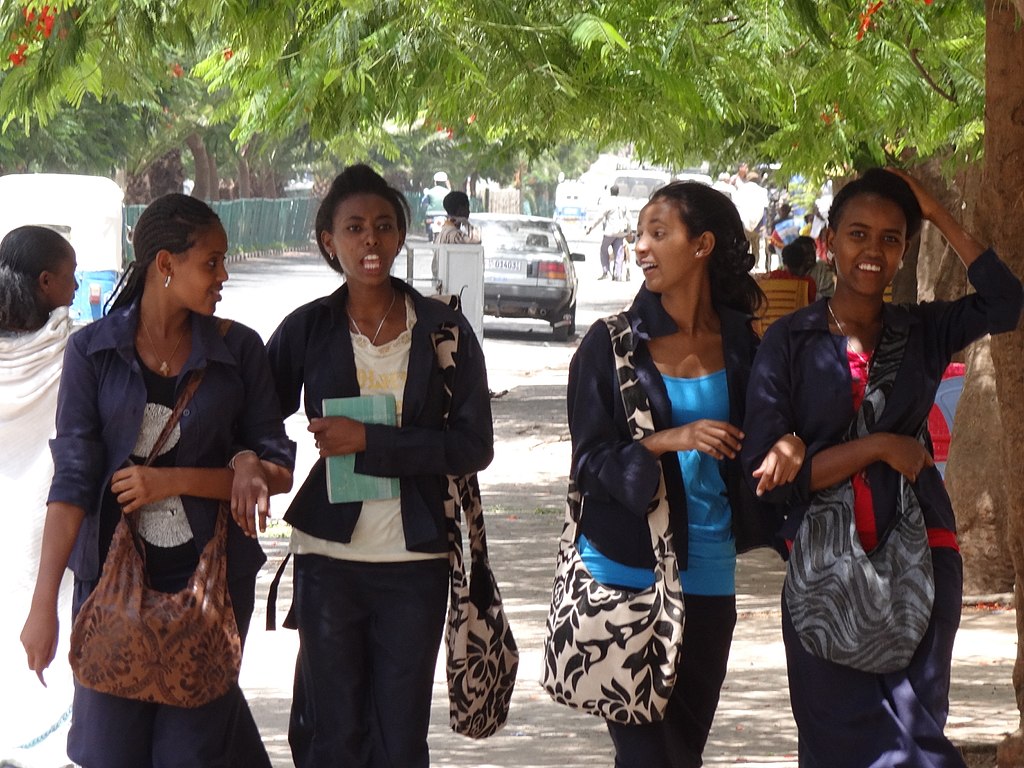
Wanafunzi Wa kike wa Oung Kwenye Boulevard-Axum (Aksum) – Ethiopia. Picha Na Adam Jones.

Kutojua kwa wadau kuhusu haki ya watoto kupata elimu

Kama inavyoaminika, wadau wa elimu ni wazazi, watoto walioko shuleni, walimu, wakuu wa shule na wasimamizi, wataalamu, na maafisa katika mfumo wa elimu. Hata hivyo, kuna tofauti kubwa miongoni mwa wadau wa elimu kuhusu haki ya watoto wenye ulemavu kupata elimu. Wengine wa wadau hawa hawaelewi kikamilifu haki ya watoto kupata elimu. Kutopatikana kwa Ofisi ya Elimu yenyewe, mgawo mdogo wa bajeti, na ukosefu wa wakalimani wa lugha ya alama mashuleni ni ushahidi wa kiwango ambacho mfumo wa elimu haujatambua haki ya watoto wenye ulemavu kupata elimu.

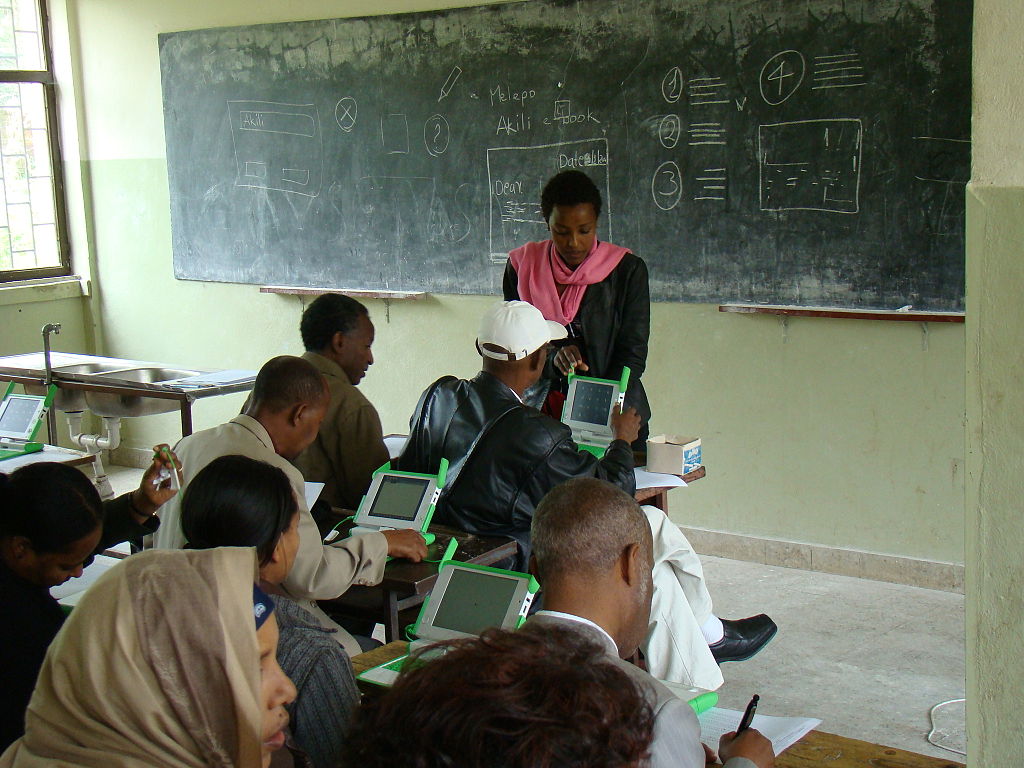
Wanafunzi wa mafunzo ya ualimu juu ya matumizi ya teknolojia. Picha na One Laptop per Child.

Ubora wa Elimu

Changamoto nyingine kubwa inayoikumba sekta ya elimu nchini Ethiopia ni ubora wa elimu. Ingawa nchi imepiga hatua kubwa katika kupanua fursa za elimu, ubora wa elimu bado uko chini, hasa katika maeneo ya vijijini. Wanafunzi nchini Ethiopia mara nyingi hukabiliana na changamoto katika kusoma na kufanya hesabu za msingi, na mfumo wa elimu umekuwa ukikosolewa kwa kutegemea sana kuhifadhi maudhui bila ubunifu.

Ili kukabiliana na changamoto hii, serikali ya Ethiopia imeanzisha sera zinazolenga kuboresha ubora wa elimu. Kwa mfano, serikali imeanzisha sera za kuboresha mafunzo na maendeleo ya kitaaluma kwa walimu, kukuza matumizi ya teknolojia katika elimu, na kuboresha mitaala.

Hata hivyo, juhudi hizi zimekumbwa na changamoto kama vile ukosefu wa rasilimali na miundombinu inayohitajika kuunga mkono mipango hii.

Pengo la Miundombinu

Pengo la miundombinu ni changamoto nyingine kubwa inayoikumba mfumo wa elimu nchini Ethiopia. Zaidi ya 85% ya Waethiopia wanaishi vijijini ambako miundombinu bado haijaimarishwa vizuri. Kwa sababu hii, makazi ya watu yameenea kwa umbali mkubwa, shule ziko mbali, na jiografia ya maeneo haya imejaa vikwazo. Njia kutoka nyumbani hadi shuleni ni za miinuko na zenye miteremko mikali. Kutokana na hali hii, watoto wenye ulemavu wa viungo na kuona wanakabiliwa na changamoto kubwa, si tu ya kufika shuleni bali pia ya kushiriki kikamilifu katika shughuli za shule pamoja na wenzao wasio na ulemavu.

Miundombinu pamoja na njia za kufikia madarasa, ofisi, mwongozo wa wanafunzi, na huduma za ushauri ni changamoto kwa wanafunzi wenye ulemavu, kiasi cha kuwafanya wasihudhurie shule wala kushiriki ipasavyo katika mchakato wa kujifunza. Mazingira yenye vizuizi vichache yanaweza kusaidia kufanikisha ujumuishaji wa watoto wenye ulemavu. Kinyume na hilo, hata hivyo, njia nyingi ni za miinuko, miteremko, na zina mabonde. Kupita kwenye njia hizi ni kazi ngumu kwa wanafunzi wenye ulemavu wa viungo na kuona, jambo ambalo lilidhihirika wazi kwa washiriki wengi wa vikundi vya majadiliano ya kijamii (FGD).

Shule nyingi nchini Ethiopia hazina miundombinu ya msingi kama vile madarasa, maktaba, na vyoo. Pengo hili la miundombinu linaathiri kwa kiasi kikubwa ubora wa elimu, ambapo msongamano wa wanafunzi darasani na uhaba wa vifaa vinavyohitajika unazuia uwezo wa wanafunzi kujifunza ipasavyo.

Wahusika katika sekta ya elimu wamebainisha kuwa majengo mengi ya shule za kawaida hayakujengwa kwa kuzingatia mahitaji ya watu wenye ulemavu. Kama ilivyoonyeshwa wazi katika matokeo ya utafiti, miundombinu duni pamoja na njia za kufikia madarasa, ofisi, mwongozo wa wanafunzi, na huduma za ushauri zimewazuia wanafunzi wenye ulemavu kuhudhuria shule na kushiriki kikamilifu katika mchakato wa kujifunza. Shule za msingi kwa ujumla zina maeneo yenye milima na mabonde mengi, jambo ambalo limekuwa changamoto kubwa kwa ujumuishaji wa watoto wenye ulemavu wa kutembea. Kwa hivyo, hali inayoonekana ni kwamba utoaji wa miundombinu unakuwa changamoto kubwa kwa wale wanaotekeleza sera hizo.

Ili kukabiliana na changamoto hii, serikali ya Ethiopia imeanzisha sera zinazolenga kuboresha miundombinu mashuleni. Kwa mfano, serikali imeanzisha programu za kujenga shule zaidi, kukarabati shule zilizopo, na kutoa miundombinu ya msingi kama vile vyoo na maji shuleni. Hata hivyo, maendeleo ya miundombinu nchini Ethiopia yanakabiliwa na changamoto kama vile rasilimali chache na ufadhili wa kutosha kwa ajili ya maendeleo ya miundombinu.

Pengo la Miundombinu

Pengo la miundombinu ni changamoto nyingine kubwa inayokabili mfumo wa elimu nchini Ethiopia. Zaidi ya 85% ya Waethiopia wanaishi vijijini ambako miundombinu bado haijajengwa ipasavyo. Matokeo yake, nyumba zimetawanyika, shule ziko mbali, na jiografia ina vikwazo vingi. Njia kutoka nyumbani hadi shuleni ni za milima na miinuko. Kutokana na hali hii, watoto wenye ulemavu wa viungo na uoni wamekumbana na changamoto kubwa, hasa ya kufika shuleni na, hata zaidi, kushiriki kikamilifu katika shughuli za shule pamoja na watoto wasio na ulemavu.

Miundombinu ya shule, pamoja na njia za kuingia madarasani, ofisi za walimu, na sehemu za ushauri, zinawakwamisha wanafunzi wenye ulemavu kufika shuleni na kushiriki kikamilifu katika mchakato wa kujifunza. Mazingira yasiyo na vikwazo yanaweza kusaidia kujumuishwa kwa watoto wenye ulemavu. Hata hivyo, kinyume chake, njia nyingi ni za milima, miinuko, na hatari kwa wanafunzi wenye ulemavu wa viungo na uoni. Wengi wa washiriki wa mazungumzo ya vikundi (FGD) walikubaliana kwamba kuvuka njia hizo ni kazi ngumu kwa wanafunzi wenye ulemavu wa kimwili na wa kuona.

Shule nyingi nchini Ethiopia zinakosa miundombinu ya msingi kama madarasa, maktaba, na vyoo. Pengo hili la miundombinu linaathiri sana ubora wa elimu, ambapo madarasa yaliyojaa kupita kiasi na ukosefu wa vifaa vya msingi huathiri uwezo wa wanafunzi kujifunza.

Wafanyakazi wa sekta ya elimu walieleza kuwa majengo mengi ya shule za kawaida hayajajengwa kwa kuzingatia mahitaji ya watu wenye ulemavu. Kama ilivyoonyeshwa katika utafiti, miundombinu duni pamoja na njia za kuingia madarasani, ofisi za walimu, na sehemu za ushauri vimewazuia wanafunzi wenye ulemavu kwenda shule na kushiriki kikamilifu katika mchakato wa kujifunza. Shule za msingi hasa zina miundombinu isiyofaa, na hivyo kujumuishwa kwa watoto wenye ulemavu wa viungo linakuwa jambo gumu. Matokeo yake, changamoto kubwa kwa wale wanaotekeleza sera hizi ni jinsi ya kuboresha miundombinu.

Ili kukabiliana na changamoto hii, serikali ya Ethiopia imeanzisha sera zinazolenga kuboresha miundombinu ya shule, kama vile kujenga shule mpya, kukarabati shule zilizopo, na kutoa miundombinu ya msingi kama vyoo na maji safi shuleni. Hata hivyo, maendeleo ya miundombinu nchini Ethiopia yanakabiliwa na changamoto kama vile uhaba wa rasilimali na ukosefu wa ufadhili wa kutosha kwa maendeleo ya miundombinu.

Uhaba wa Walimu wa Elimu Maalum

Walimu waliopata mafunzo ya elimu maalum wanaweza kusaidia kutekeleza ujumuishaji wa watoto wenye ulemavu. Ili kufanya hivyo, idadi yao inapaswa kuwa ya kutosha ili kutoa msaada wa kitaaluma kwa walimu wa elimu ya jumla na wanafunzi wenye ulemavu. Hata hivyo, kinyume chake, nchi haijaweza kuwafunza walimu wa elimu maalum na ujumuishi kwa kiwango cha kutosha ili kukidhi mahitaji yaliyopo.

Uhaba wa walimu wenye mafunzo ya elimu maalum na ujumuishi ni moja ya changamoto kubwa zinazokwamisha utekelezaji wa elimu jumuishi. Ili kuhakikisha ujumuishaji wa watoto wenye ulemavu, walimu wa elimu ya jumla wanapaswa kupata mafunzo maalum au kusaidiwa na walimu wa elimu maalum darasani.

Katika jamii za vijijini, familia nyingi zina majukumu mbalimbali ya kiuchumi. Kila mtu katika familia ana kazi yake – mmoja anachunga mifugo, mwingine analima, mwingine anakusanya kuni, na mwingine anachota maji. Katika mazingira haya, kutafuta shule yenye madarasa maalum, kumpeleka mtoto mwenye ulemavu huko, na kumrudisha nyumbani kila siku ni kazi isiyo na mwenyewe. Kwa hivyo, uamuzi mgumu unaochukuliwa na familia nyingi ni kumficha mtoto mwenye ulemavu nyumbani.

Katika miji, ingawa kuna shule nyingi za kibiashara, gharama ya kuwaajiri walimu wa elimu maalum ni kubwa. Kwa kuwa kutowasajili watoto wenye ulemavu kunaweza kuwa na athari za kisheria, baadhi ya shule huwajumuisha lakini huwaacha bila msaada wowote maalum.

Ili kukabiliana na changamoto hii, serikali ya Ethiopia imeanzisha sera za kuongeza idadi ya walimu wenye mafunzo maalum. Hii ni pamoja na kuajiri walimu zaidi, kutoa mafunzo na maendeleo ya kitaaluma kwa walimu, pamoja na kuboresha mishahara na mazingira yao ya kazi.

Hitimisho

Kwa kumalizia, Ethiopia inakabiliwa na changamoto kubwa katika sekta ya elimu, ikiwa ni pamoja na upatikanaji mdogo wa elimu, ubora wa elimu duni, pengo la miundombinu, uhaba wa walimu, na mtaala usio wa kisasa. Ingawa serikali imeanzisha sera za kukabiliana na changamoto hizi, bado kunahitajika juhudi za pamoja ili kuboresha mfumo wa elimu nchini.

Hii inaweza kujumuisha uwekezaji zaidi katika elimu, mafunzo na msaada bora kwa walimu, maendeleo ya miundombinu, na kuunda mtaala wa kisasa unaoendana na mahitaji ya wanafunzi na uchumi wa taifa.

Ripoti za Wizara ya Elimu ya Ethiopia zinaonyesha kuwa kundi lililoathirika zaidi katika mfumo wa elimu ni watoto wenye ulemavu, ambao wengi wao bado hawana fursa ya kupata elimu. Hata wale walio na fursa ya kusoma hukutana na mazingira yasiyo rafiki kwao.

Kwa hivyo, ili kuhakikisha ujumuishaji wa kweli, ni muhimu kutambua vikwazo vinavyowakabili watoto wenye ulemavu na kupendekeza suluhisho madhubuti. Kwa kushughulikia changamoto hizi, Ethiopia inaweza kuimarisha ubora wa elimu kwa raia wake wote na kuboresha maendeleo ya kijamii na kiuchumi ya nchi.

References:

United Nations Development Programme (2019) Ethiopia: Education. Retrieved from http://www.et.undp.org/content/ethiopia/en/home/countryinfo.html

World Bank (2021) Education in Ethiopia Retrieved from https://www.worldbank.org/en/country/ethiopia/brief/education-in-ethiopia

GEBEYEHU, A. M. (2017). Quality of Education in Ethiopia: From the Perspective of Learners, Teachers and Parents. Journal of Education and Practice, 8(10), 76-85.

World Bank (2018) Ethiopia Education Sector Development Program V: 2015-2020. Retrieved from http://documents.worldbank.org/curated/en/180601551693773672/Ethiopia-Education-Sector-Development-Program-V-2015-2020

Ethiopian Ministry of Education (2015) Education Sector Development Plan V: 2015-2020. Retrieved from https://www.moe.gov.et/web/guest/-/education-sector-development-plan-v-2015-2020

African Development Bank Group (2018). Ethiopia Country Strategy Paper 2016-2020. Retrieved from https://www.afdb.org/en/documents/document/ethiopia-country-strategy-paper-2016-2020-106665

International Labour Organization (2016) Youth Employment in Ethiopia: An Overview. Retrieved from https://www.ilo.org/wcmsp5/groups/public/—ed_emp/documents/publication/wcms_528826.pdf

The World Factbook (2021) Ethiopia retrieved from https://www.cia.gov/the-world-factbook/countries/ethiopia/

Tessema, W. K. (2019). The Ethiopian Education System: Current Trends and Future Directions. International Journal of Innovative Research and Development, 8(12), 76-84.

Mohammed, A. (2018). Challenges and Prospects of Education in Ethiopia: A Literature Review. Journal of Education and Practice, 9(1), 21-26


Herausforderungen im deutschen Bildungssystem

Deutschland genießt aufgrund seines gut strukturierten und anspruchsvollen Bildungssystems den Ruf, besonders hohe akademische Standards zu haben. Schüler*innen werden auf jeder Stufe ihrer Ausbildung streng bewertet – wer in zwei oder mehr Fächern die Mindestanforderungen nicht erfüllt, muss das gesamte Schuljahr wiederholen, um sicherzustellen, dass die Voraussetzungen für den Aufstieg in die nächste Klassenstufe erfüllt sind. 

Das deutsche Bildungssystem zeichnet sich aus durch hohe Arbeitsplatzsicherheit, kostenlose qualifizierte Lehrkräfte, niedrige Jugendarbeitslosigkeit, an den Lernstilen der Kinder orientierten Unterricht sowie eine positive Einstellung zur handwerklichen Arbeit. Dennoch bestehen weiterhin erhebliche Probleme im Bildungssystem. 


Struktur des Schulsystems 

Deutschland verfügt über ein dreigliedriges Sekundarschulsystem, das Schüler*innen nach der Grundschule nach ihren Fähigkeiten aufteilt. Diese Einteilung bestimmt maßgeblich, ob ein Schüler später Zugang zur Hochschulbildung erhält oder nicht. Das System beginnt mit dem sogenannten „Tracking“ bereits ab der 4. Klasse – ein Zeitpunkt, den viele Kritiker als deutlich zu früh betrachten. 

Mit Ausnahme von Bayern haben die meisten Bundesländer das traditionelle Drei-Säulen-Modell – Gymnasium, Realschule, Hauptschule – aufgegeben. An deren Stelle treten nun integrierte Schulen (alle drei Bildungsgänge kombiniert), teilintegrierte Schulen (z. B. Kombination aus Haupt- und Realschule) und kooperative Modelle (getrennte Bildungsgänge mit gemeinsamer Schule, zumeist ab Klasse 6). 

Das duale System trennt Schüler*innen in jene, die als geeignet für ein Hochschulstudium gelten, und jene, die nach zehn Schuljahren in die berufliche Bildung geleitet werden. Dies führt zu sozialen Ungleichheiten. Viele Jugendliche verlassen das Schulsystem vorzeitig und landen in Maßnahmen zur Berufsvorbereitung anstatt in vollwertiger Ausbildung. Unterschiede in den Lern- und Benotungstechniken der Schüler sowie unterschiedliche Empfehlungen ihrer Grundschullehrer tragen zu den pädagogischen Herausforderungen in Deutschland bei. 

Die Wahl der weiterführenden Schule hat erhebliche Auswirkungen auf den späteren beruflichen Werdegang. Gymnasien bereiten auf das Abitur und ein Studium vor, Realschulen auf technische Berufe oder Ausbildungen mit Zugang zum Gymnasium, während Hauptschulen oft als Bildungsgang für Schüler*innen mit schwächeren Leistungen oder sozialen/Verhaltensproblemen gelten. Das Bildungssystem wird von den einzelnen Bundesländern gestaltet, was zu deutlichen Unterschieden in der Bildungsqualität führt. 


Sozioökonomischer Hintergrund 

In Deutschland ist der Schulerfolg eng mit dem familiären Hintergrund verknüpft – insbesondere Kinder mit Migrationshintergrund sind von strukturellen Ungleichheiten betroffen. Seit Jahrzehnten zeigen Studien, dass Kinder aus sozioökonomisch privilegierten Haushalten regelmäßig bessere Bildungsergebnisse erzielen als Gleichaltrige mit vergleichbarer kognitiver Leistungsfähigkeit. 

Diese Kinder erhalten häufiger Empfehlungen für höhere Schulformen und gelangen öfter an Universitäten. Das Bildungssystem steht daher vor der Herausforderung, Chancengleichheit für alle Kinder zu gewährleisten, unabhängig von Herkunft oder sozialem Status. 

Eine UNICEF-Studie aus dem Jahr 2018 verglich die Bildungsgerechtigkeit in 41 Industrienationen. Deutschland rangierte im Mittelfeld, vor den USA und Australien, jedoch hinter kleineren Volkswirtschaften wie Litauen, Dänemark und dem Spitzenreiter Lettland. 

Kinder aus Migrantenfamilien und einkommensschwachen Haushalten haben in der Regel schlechtere Bildungschancen – besonders im ländlichen Raum, der gegenüber den Städten im Nachteil ist. Kinder aus höheren sozialen Schichten schneiden in der Schule deutlich besser ab, selbst bei gleicher Intelligenz. Sie erhalten häufiger Empfehlungen für das Gymnasium und besuchen später eher Universitäten. 

Kinder aus türkischen, kurdischen oder arabischen Familien, die in Deutschland selbst in zweiter oder dritter Generation oft noch als „Migrantenkinder“ gelten, sind überproportional häufig an Hauptschulen vertreten, was sie einem Teufelskreis der Ausgrenzung aussetzt. 

Migrantinnenkinder besuchen doppelt so häufig Hauptschulen wie Kinder mit vergleichbarem sozioökonomischem Hintergrund ohne Migrationsgeschichte. Trotz einiger Fortschritte bleiben sie an Gymnasien unterrepräsentiert. Insgesamt gelingt es dem deutschen Bildungssystem nur unzureichend, Schülerinnen aus benachteiligten oder religiösen/ethnischen Minderheiten beim sozialen Aufstieg zu unterstützen. 


Diskriminierung und Segregation 

In einigen Berliner Grund- und Sekundarschulen werden Migrantenkinder von ihren deutschstämmigen Mitschüler*innen in gesonderte Klassen unterrichtet – offiziell aufgrund angeblich unzureichender Deutschkenntnisse. Dabei sind ihre Sprachfähigkeiten meist ausreichend für den Regelunterricht. Die Trennung wirkt jedoch als Ersatzkriterium für ethnische Diskriminierung. 

Die Bildung in diesen segregierten Klassen ist oft mangelhaft, verglichen mit dem Regelunterricht. Diese Praxis führt zu Stigmatisierung, verhindert Integration, verstößt gegen Artikel 26 des Internationalen Pakts über bürgerliche und politische Rechte (IPBPR) in Verbindung mit Artikel 2 und stellt eine Form der Diskriminierung dar. 


Fazit 

Das deutsche Bildungssystem ist geprägt von einem leistungsorientierten, differenzierten Ansatz – doch dieser verstärkt in vielen Fällen soziale Ungleichheiten. Frühe Selektion, föderale Unterschiede, soziale Herkunft und strukturelle Diskriminierung erschweren den Zugang zu Bildung, insbesondere für Kinder aus benachteiligten Familien und Migrant*innen. Die Herausforderungen reichen von ungleicher Leistungsbewertung bis hin zu systemischer Segregation. 

Um echte Bildungsgerechtigkeit zu erreichen, braucht es umfassende Reformen und eine kritische Auseinandersetzung mit den impliziten Ausschlussmechanismen des bestehenden Systems. 


Quellen: 

https://www.justiceinitiative.org/voices/hard-look-discrimination-education-germany 

https://www.euractiv.com/section/non-discrimination/news/experts-criticise-inequality-in-german-schools/ 

https://tbinternet.ohchr.org/Treaties/CCPR/Shared%20Documents/DEU/INT_CCPR_NGO_DEU_14668_E.pdf 

https://www.oecd.org/education/policy-outlook/country-profile-Germany-2020.pdf 

https://www.deutschland.de/en/topic/knowledge/educational-equity-in-germany-current-challenges 

Image from https://community.rewire.to/group-of-school-kids-and-teacher-in-classroom/  


Falta de Documentación Oficial 


Figure 1 Inauguración del monumento Dévoués. Foto de la Presidency of the Republic of Benin on Flickr.

Perfil del país
Ubicado en África Occidental, en la costa del Océano Atlántico, la República de Benín (en francés: République du Bénin) obtuvo su independencia del dominio francés en 1960. Benín forma parte de los 15 Estados miembros que conforman la Comunidad Económica de Estados de África Occidental (CEDEAO), un bloque regional cuyo objetivo es promover la cooperación económica entre sus miembros, elevar el nivel de vida y fomentar el desarrollo económico.

Sistema Educativo en Benín
El sistema educativo en Benín sigue el modelo francés: seis años de primaria, cuatro años de secundaria inferior, tres años de secundaria superior y tres años de universidad, lo que constituye el sistema 6-4-3-3 (UNESCO, 2023). La educación en Benín ha sido gratuita durante 17 años. La Constitución, bajo la sección de Derechos y Deberes del Individuo, Artículo 13, establece que la educación primaria será obligatoria y que el gobierno ofrecerá progresivamente educación gratuita en sus escuelas (Constitución de Benín, 1990).

Problemas en la Educación en Benín
La estrategia de Benín para aumentar la matrícula escolar introduciendo la educación gratuita a nivel primario elevó la tasa de matrícula neta del 82% en 2005 (antes de la gratuidad) al 97% en 2018, 12 años después de su implementación (Banco Mundial, 2018).

Sin embargo, el rápido aumento de estudiantes en el nivel de educación básica no se ha traducido en una progresión similar en los niveles de secundaria y universidad. Según datos del Banco Mundial, solo el 54% de los niños benineses que ingresan al primer grado de primaria llegan al último grado. Esta baja progresión se atribuye principalmente al trabajo infantil, matrimonios tempranos, embarazos precoces y la pobreza.

El bajo nivel de alfabetización, que actualmente se sitúa en el 46%, está muy por debajo de países vecinos como Nigeria (62%) y Togo (67%) (Banco Mundial, 2021). En 2018, Benín se encontraba entre los 10 países con menor tasa de alfabetización del mundo (42.36). La alta tasa de abandono escolar ha afectado negativamente al ingreso nacional y al PIB del país, ya que los empleos para personas con poca calificación tienden a ser de bajos ingresos, lo que limita el acceso a la innovación y reduce el crecimiento económico. Las personas con bajos niveles de alfabetización tienen más probabilidades de enfrentar desempleo, bajos ingresos, dependencia de asistencia social y altos niveles de pobreza (Fundación Mundial de Alfabetización, 2018).


Figure 2 El profesor Léandre Benon y la estudiante Mariam en la pizarra. Foto de GPE/Chantal Rigaud en Flickr.
Brechas de Género
Las tasas de abandono son especialmente pronunciadas entre las niñas. En Benín, las brechas entre mujeres y hombres provienen de desigualdades estructurales que comienzan desde la infancia. Según el Banco Mundial (Nathalie, 2022), la tasa de alfabetización masculina entre jóvenes de 15 a 24 años es de aproximadamente 55%, mientras que la tasa femenina en el mismo grupo de edad es de solo 30%. Solo una de cada diez niñas de entre 21 y 24 años ha completado la educación secundaria. Además, un tercio de las mujeres de 20 a 24 años se casan antes de los 18 años, y el 15% ya son madres entre los 15 y 19 años (Nathalie, 2022).
El promedio de años de escolaridad en Benín es de 3.8 años, inferior al promedio de los países de la CEDEAO (4.2 años en 2019) (Red de Soluciones para el Desarrollo Sostenible de la ONU, 2022).
Desde 2015, Benín no ha logrado cerrar esta brecha. La disminución en la tasa de finalización de la secundaria inferior, que pasó del 45% en 2015 al 33% en 2020, refleja la necesidad urgente de garantizar una transición del 100% entre niveles educativos en ambos géneros.
Estas brechas se reflejan también en la comunidad en general, donde el índice de paridad de género (que mide el progreso hacia la igualdad de género en educación) es bajo: 0.79% (Banco Mundial, 2022). Las niñas en Benín corren el riesgo de no completar su educación debido a normas sociales que reducen automáticamente su participación en el sector formal. El Gobierno ha intensificado sus esfuerzos para abordar esta problemática mediante su adhesión a la Campaña de la UA para Poner Fin al Matrimonio Infantil en África, como parte de la Agenda 2030 para el Desarrollo Sostenible para la Infancia en África (Forwerk, 2017).
Trabajo Infantil
Los niños en Benín participan en las peores formas de trabajo infantil, como la producción de algodón y trituración de granito. También realizan tareas peligrosas en el trabajo doméstico y la venta callejera. Según la Organización Internacional del Trabajo (OIT, 2021), el 20% de los niños menores de 14 años están involucrados en trabajo infantil.
Los niños son víctimas de trata tanto dentro de Benín como hacia países vecinos como Gabón, Nigeria y la República del Congo, donde realizan trabajo doméstico, son explotados sexualmente o trabajan en agricultura y canteras. Los niños de las regiones del norte del país son especialmente vulnerables debido a su situación rural. Una práctica local llamada vidomégon (colocación infantil), donde los niños –especialmente niñas– son enviados a vivir con otras familias a cambio de educación, frecuentemente termina en explotación laboral y abuso sexual.
En 2013, el Gobierno lanzó una campaña nacional de concienciación sobre el trabajo infantil y firmó un acuerdo bipartito con asociaciones laborales para combatir esta problemática (Refworld, 2021). Ese año, las autoridades trataron 62 casos de trata infantil y 11 casos de explotación, remitieron 23 sospechosos al sistema judicial y ofrecieron refugio a 173 víctimas. Además, retiraron a 400 niños del trabajo infantil tras inspecciones realizadas por servicios sociales (OIT, 2021).


Figure 3 Clase de matemáticas de 12º grado en el Collège d’enseignement général de Sô-Ava. Foto de GPE/Chantal Rigaud en Flickr.

Falta de Documentación Oficial
El Gobierno de Benín ofrece registro gratuito de nacimientos dentro de los 10 días posteriores al parto; después de este período, el costo asciende a 30 dólares (OIT, 2021). Sin embargo, las prácticas culturales como asignar el nombre del bebé después de 10 días dificultan el cumplimiento de este plazo. Además, dos de cada diez nacimientos ocurren en el hogar, lo que reduce aún más la probabilidad de registrar oficialmente al niño.

La falta de documentación impide el acceso a derechos básicos como salud y educación. En Benín, 4 de cada 10 niños no están registrados al nacer, lo que los excluye del sistema educativo y servicios esenciales, aumentando la informalidad y el trabajo infantil.

Desde enero de 2012, UNICEF ha distribuido más de 140,000 certificados de nacimiento recuperados en centros de registro civil. Gracias a esta iniciativa, los niños pueden acceder a los servicios que les corresponden, como salud y educación. Según ACNUR, un foro nacional sobre el registro civil trabaja para eliminar los obstáculos que impiden el acceso universal a este derecho (UNICEF, 2012).

Conclusión
Benín es un país con una economía en crecimiento que ha mostrado mejoras gracias a medidas como la educación primaria gratuita y el aumento del número de docentes e instalaciones. Sin embargo, es crucial que el Gobierno intensifique sus esfuerzos para garantizar la transición completa en todos los niveles educativos y en ambos géneros. Esto elevaría la tasa de alfabetización y mejoraría la situación económica del país.

Se recomienda aumentar el gasto público en el sector educativo, especialmente dentro del marco del Plan de Acción Gubernamental 2021–2026, que busca abordar desafíos en educación, desarrollo y economía. El Gobierno también debe garantizar que ningún niño quede excluido por falta de documentación, trabajo infantil o matrimonios precoces. Es esencial fomentar en las comunidades rurales la conciencia de que la educación es un recurso valioso que beneficia a toda la sociedad, promoviendo nuevas ideas, líderes y mejor calidad de vida. Así, Benín podría diversificar su economía más allá de la agricultura e incluir sectores como tecnología, servicios profesionales y empresariales, elevando su PIB.

Referencias


Press Release: International Day of Women in Diplomacy

Date: 24 June 2025

Honouring the Trailblazers: Broken Chalk Celebrates International Day of Women in Diplomacy

Amsterdam, The Netherlands – On this International Day of Women in Diplomacy, Broken Chalk proudly joins the global community in recognising and honouring the immense contributions of women who champion peace, justice, education, and human rights on the world stage.
Diplomacy has long been a field dominated by men, yet history and the present are rich with courageous, intelligent, and visionary women who have reshaped global relations and advanced human dignity. Today, we salute not only the female diplomats occupying official positions in foreign ministries and multilateral institutions, but also the women advocating tirelessly through education, civil society, and grassroots movements—often in spaces where diplomacy takes on many forms.
At Broken Chalk, we believe education is a powerful diplomatic tool. Women educators, advocates, and policy leaders play a pivotal role in peace-building and preventing human rights violations, particularly in regions where access to education and freedom of expression remain fragile.
“The strength of diplomacy is not measured solely in treaties signed or conflicts avoided, but in the ability to listen, to include, and to lead with empathy,” says Broken Chalk Media Spokesperson/Reporter and Project Specialist Leticia Cox. “Women bring these qualities to the diplomatic table and beyond, helping to forge a more inclusive and equitable global future.”
We echo the United Nations’ call for equal representation and meaningful participation of women in all areas of diplomacy. As global crises—from conflict to climate change—continue to demand collaborative and compassionate leadership, the voices of women are not just welcome—they are essential.
Broken Chalk remains committed to supporting women’s leadership in diplomacy and education worldwide. On this day, and every day, we advocate for systemic change that empowers women and girls to lead, negotiate, and inspire in all spheres of influence.
Let today serve as a reminder: when women lead in diplomacy, the world becomes a more peaceful, just, and educated place.


Broken Chalk Communications Team
www.brokenchalk.org

Image by Leticia Cox

Education Monitor: Around The Globe between May 1st and May 15th, 2025 Edition

Broken Chalk proudly presents a new edition of “Education Monitor: Around the Globe” between May 1st and May 15th, 2025 Broken Chalk aims with this letter to increase public awareness of educational problems, challenges, and violations in the scope of the world. This newsletter is unique. This is a weekly newsletter in which we attempt to monitor and convey educational news from around the world in a concise manner. This monitor will be published biweekly with the effort of our young and enthusiastic team.

You can contribute to our work if you like. If you witness any violations in the scope of education, you can write the comment part of this post. Broken Chalk will try to address the issue in its next monitor edition.


To download this edition as a PDF, click here

Broken Chalk Platform, in March 2019, was founded by a group of educators abroad who experienced and have been experiencing severe human rights violations in Turkey and had to ask for asylum in several countries.

These education volunteers also suffered greatly and started their new lives in their new countries without human rights violations. They gained respect just because they were considered human beings in those countries. However, they left one part of their minds and hearts in their homeland. They assigned themselves a new duty, and the human rights violations they left behind had to be announced to the World. A group of education volunteers who came together for this purpose started their activities under the Broken Chalk platform’s umbrella. However, the Broken Chalk platform was not enough to serve their aims. Therefore, they completed their official establishment as a Human Rights Foundation in October 2020.

Broken Chalk is now much more than a platform, and we have reviewed and enlarged our vision and mission within this framework. Violations of rights would be the first in our agenda in the field of Education all over the World. At the point we reached today, Broken Chalk opened its door to all individuals from all across the globe, from all professions, and to all individuals who say or can say ‘I also want to stand against violations of human rights in Education for our future and whole humanity, where our generations grow up together.’

Education is essential because it can help us eliminate the evils from society, introduce, and increase the good. We want to draw the public’s and stakeholders’ attention to the fact that Education is in danger in several different parts of the World. The attacks are wide-reaching, from the bombing of schools to the murder of students and teachers. Raping and sexual violence, arbitrary arrests, and forced recruitment also occurred, instigated by armed groups. Attacks on Education harm the students and teachers but also affect the communities in the short and long term.

We invite all individuals who want to stop human rights violations in Education to become Volunteers at Broken Chalk.

Child sexual exploitation in the United Kingdom

Child sexual exploitation is a devastating problem that continues to be persistent all around the world, including in the United Kingdom. The UK has taken several steps to combat CSE, such as implementing legislation, developing policies and programs, and collaboratingwith various entities. In this article, we will explore these efforts.

But first, what is child sexual exploitation? The UK government has defined Child sexual exploitation as a form of child sexual abuse. Which occurs where an individual or group takes advantage of an imbalance of power to coerce, manipulate or deceive a child into sexual activity (a) in exchange for something the victim needs or wants and/or (b) for the financial advantage or increased status of the perpetrator or facilitator. The victim may have been sexually exploited even if the sexual activity appears consensual. CSE does not always involve physical contact; it can also occur through technology. The exchange can be tangible or intangible or as the prevention of something negative, for example, a child who engages in sexual activity to stop someone from carrying out a threat to harm their family.

Legislative Actions

The UK has established an extensive legal framework to criminalize CSE. Some of the most important acts in relation to CSE are;

The Sexual Offence Act 2003 which covers most sexual crime laws in the UK. It criminalizes several offences related to CSE, such as;

Grooming a child for sexual activity
Paying for the sexual services of a child
Causing/inciting/arranging/facilitating childprostitution or pornography
Trafficking children for sexual exploitation

The Protection of Children Act 1978 which criminalizes taking, distributing, possessing with a view to distribute, or publishing indecent images of children. Later, the Criminal Justice Act 1988 criminalizes having indecent images of children in your possession.

The Online Safety Act 2023 which requires companies to prevent children from accessing harmful content online and provide easy ways to report issues when problems arise online. This act also has created measures companies must follow to tackle illegal content, such as child sexual exploitation and abuse materials, and grooming.

Lastly, the Child Sex Offender Disclosure Scheme (Sarah’s Law) which allows parents and caregivers to inquire with the police about whether an individual who interacts with their child has a record for child sexual offences.

Reporting and seeking support

When someone wants to report (suspected) child sexual exploitation or wants to reach out to receive advice orhelp, they can get in contact with the following:

The local councils children’s social care team, to report (suspected) child abuse
The police, to report (suspected) child abuse
NSPCC, to discuss concerns about suspected child abuse and to receive advice.
ChildLine, a 24/7 free helpline for any child seeking advice or support
Child Exploitation and Online Protection’s Child Protection Advisors, to report grooming, online sexual abuse, or the way someone is communicating online

Policies and Programs

Besides the legislative actions, several policies and programs have been developed to prevent CSE or to support its victims.

Campaigns for awareness and prevention

Some of the campaigns that have been created are;

Stop it now! campaign, created by the Lucy Faithfull Foundation. This initiative aims to prevent individualsfrom engaging in online child sexual abuse.

Something’s not Right campaign aims at helping secondary school children recognize and report exploitation.

The Internet Watch Foundation (IWF) has created two campaigns on self-generated child sexual abuse material. Firstly, the TALK campaign which encouraged parents to Talk, Ask, Learn, and Know with their children about online dangers. Secondly, the Gurls Out Loud campaign which empowers children to recognize and reject exploitative online interactions.

Besides these four campaigns, many more campaigns and initiatives have been created, covering a wide range of issues.

Training and support for professionals

To effectively prevent CSE and support victims, professionals need to have sufficient knowledge to identify and address CSE. Many training programs have been created by several NGOs and organizations;however, participation is not mandatory. This lack of enforcement limits and reduces the reach and effectiveness of these programs.

Recovery services for victims

Recovery services are essential for helping victims. One recent initiative is the Lighthouse, based on the ‘Barnahus’ model, which provides a child-friendly environment where victims receive medical care, therapy, and legal support. Unfortunately, there is currently only one Lighthouse in England and one in Scotland, limiting its reach.

When victims seek psychological help, they are often referred to NHS services; here, victims often face long waiting times, a lack of specialized care, and an insufficient number of sessions. Additionally, the lack of consistent funding for services like Rape Referral Centers worsens these problems.

Collaboration

Addressing CSE requires cooperation across agencies, sectors, and borders. The UK has made significant efforts in collaboration to combat CSE.

National partnerships

Nationally, mechanisms such as the Multi-Agency Public Protection Arrangements (MAPPA) and the Hydrant program have been created. MAPPA is focused on bringing together police, probation, and social services to manage risks posed by offenders. Whereas the Hydrant Program leads the CSE task force, developingbest-practice advice, developing strategies, and creatingpolicies for tackling CSE.

International Cooperation

As CSE is a borderless crime and a global problem, it is important that international cooperation exists. Some of the cooperations and initiatives the UK has been part of are;

WeProtect Global Alliance, uniting 300 members worldwide to combat OCSE
The Five Country Ministerial, an annual conference that brings together the UK, USA, Canada, and New Zealand. Together, they created the ‘Five Eyes Voluntary Principles to Counter Online Child Sexual Exploitation and Abuse’. These principles are created for companies and cover issues such as online grooming and live streaming of child sexual abuse to industry transparency and reporting
The virtual Global Task Force, a partnership of law enforcement agencies around the world who operate together to tackle global (online) child sex abuse.

To conclude, despite these efforts, gaps and challenges remain. Mandatory training for professionals is still lacking, and recovery services for victims are underfunded. Victims have stated that the waiting time for mental health support is way too long and have highlighted a lack of specialized care. The reach of initiatives like the Lighthouse must be expanded, and consistent funding for victim services must be established. Lastly, greater data collection and monitoring of victims is needed.

Sources:

Department for Education ‘Guidance; Child Sexual Exploitation: definition and guide for  practitioners’ (United Kingdom Government, 2017) https://www.gov.uk/government/publications/child-sexual-exploitation-definition-and-guide-for-practitioners Accessed 30 October.

Sexual Offences Act 2003

’Protection of Children Act 1978

Criminal Justice Act 1988  

Online Safety Act 2023

Department for Science, Innovation & Technology, ‘Guidance: Online Safety Act: explainer’ (UK Gov, 8 May 2024)

<https://www.gov.uk/government/publications/online-safety-act-explainer/online-safety-act-explainer> accessed 2 January 2025.

Almudena Lara, ‘How the Online Safety Act will help to protect children’ (Ofcom, 6 February 2024) <https://www.ofcom.org.uk/online-safety/protecting-children/how-the-online-safety-act-will-help-to-protect-children/> accessed 2 January 2025.

Home Office, ‘Guidance: Find out if a person has a record for child sexual offences’ (UK Gov, 26 March 2013) <https://www.gov.uk/guidance/find-out-if-a-person-has-a-record-for-child-sexual-offences#:~:text=information%20for%20practitioners-,Overview,by%20a%20convicted%20sex%20offender.> accessed 27 December 2024.

‘Calls To Make Reporting Child Abuse A Legal Requirement’ (Personnel Checks Limited, 14 November)

<https://www.personnelchecks.co.uk/latest-news/calls-to-make-reporting-child-abuse-a-legal-requirement#:~:text=Under%20current%20rules%2C%20the%20reporting,board%20social%20workers%20(Northern%20Ireland> Accessed 10 December 2024.

‘Working Together to Safeguard Children 2023’ (HM Government, 2023) <https://assets.publishing.service.gov.uk/media/669e7501ab418ab055592a7b/Working_together_to_safeguard_children_2023.pdf> page 7, accessed 10 December.

‘Report child abuse’ (UK Gov) <https://www.gov.uk/report-child-abuse#:~:text=If%20you%27re%20worried%20that,child%20is%20at%20immediate%20risk.> accessed 27 December 2024.

Tim Loughton, ‘Press release: Government confirms future funding for children’s charity and helpline’ (UK Gov, 15 February 2011) <https://www.gov.uk/government/news/government-confirms-future-funding-for-childrens-charity-and-helpline> accessed 18 November 2024.

‘CEOP Safety Centre’ (Child Exploitation and Online protection) <https://www.ceop.police.uk/Safety-Centre/> accessed 17 January 2025.  

‘How can CEOP help me?’ (Child Exploitation and Online protection) <https://www.ceop.police.uk/Safety-Centre/How-can-CEOP-help-me-YP/> accessed 17 January 2025.

‘Deterrence Campaign’ (Stop it now) <https://www.stopitnow.org.uk/deterrence-campaign/> accessed 10 December 2024.

Home Office ‘Policy Paper Tackling Child Sexual Abuse Strategy’ (UK Gov, 7 June 2021) <https://www.gov.uk/government/publications/tackling-child-sexual-abuse-strategy/tackling-child-sexual-abuse-strategy-accessible-version>  accessed 19 December 2024.

Kat Rado-Barnes ‘Home Office launches ‘Something’s not right’ campaign’ (GMCVO, 8 February 2021) https://www.gmcvo.org.uk/news/home-office-launches-%E2%80%98something%E2%80%99s-not-right%E2%80%99-campaign> accessed 11 December 2024.

‘‘Self-generated’ child sexual abuse prevention campaign’ (Internet Watch Foundation) https://www.iwf.org.uk/about-us/our-campaigns/talk-and-gurls-out-loud-self-generated-child-sexual-abuse-prevention-campaign/> accessed 2 January 2025.

‘Helping children and young people stay safe online’ (UK Safer Internet Centre) <https://saferinternet.org.uk/> accessed 5 January 2025.

‘IWF Annual Report 2023’ (International Watch Foundation) https://www.iwf.org.uk/annual-report-2023/ accessed 5 January 2025.

‘first to a million’ (Child Exploitation and Online Protection Command) <https://www.ceopeducation.co.uk/parents/home-activity-worksheets/11-13s/first-to-a-million/> accessed 20 December 2024.

‘About Ivision Trust’ (Ivision Trust) https://ivisontrust.org.uk/about-ivison/ accessed 15 December 2024.

‘Child exploitation disruption toolkit’ (Home Office, 2022) <https://assets.publishing.service.gov.uk/government/uploads/system/uploads/attachment_data/file/1101687/Child_Exploitation_Disruption_Toolkit_082022.pdf> accessed 19 November 2024.

‘Keeping children safe in education 2024; Statutory guidance for schools and colleges’ (Department for Education, 2024) <https://assets.publishing.service.gov.uk/media/66d7301b9084b18b95709f75/Keeping_children_safe_in_education_2024.pdf> accessed 19 November 2024.

‘Child Sexual Exploitation programme’ (NHS) <https://www.e-lfh.org.uk/programmes/child-sexual-exploitation/> accessed 20 December 2024.

‘Understanding child sexual abuse training’ (NSPCC Learning) <https://learning.nspcc.org.uk/training/understanding-child-sexual-abuse> accessed 20 December 2024.

Improving the response to child sexual abuse in policing’ (Centre of expertise on child sexual abuse, 2022) <https://www.csacentre.org.uk/app/uploads/2023/10/Police-training-pilots-learning-report-Dec-2022.pdf> accessed 27 December 2024.

‘The Lighthouse: A safe space for child sexual abuse victims in the UK’ (Barnahus, 2020) <https://www.barnahus.eu/en/the-lighthouse-a-safe-space-for-child-sexual-abuse-victims-in-the-uk/> accessed 20 December 2024.

Home Office ‘Policy Paper Tackling Child Sexual Abuse Strategy’ (UK Gov, 7 June 2021) <https://www.gov.uk/government/publications/tackling-child-sexual-abuse-strategy/tackling-child-sexual-abuse-strategy-accessible-version>  accessed 19 December 2024.

Anna Markina, Andreas Kapardis, Svenja Heinrich ‘The Barnahus Model Across the Broader European Context’ (Integrated Trauma Informed Therapy of Child Victims of Violence) <https://www.iprs.it/wp-content/uploads/2021/09/The-Barnahus-Model-COMPLETE.pdf> page 16, accessed 2 January 2025.

‘Report of the Children’s Commissioners of the United Kingdom of Great Britian and Northern Ireland to the United Nations Committee on the Rights of the Child’ (Children’s Commissioners of the United Kingdom of Great Britian and Northern Ireland, 2020) page 15, accessed 12 December 2024.

‘Bairns’ Hoose supports over 270 children and families in first year’ (Scottish Legal News, 2024)<https://www.scottishlegal.com/articles/bairns-hoose-supports-over-270-children-and-families-in-first-year> accessed 28 December 2024.

Cabinet Secretary for Education and Skills ‘Policy; Child protection’ (Scottish Government) <https://www.gov.scot/policies/child-protection/bairns-hoose/> accessed 28 December 2024.

‘Code of Practice for Victims of Crime in England and Wales’ (Ministry of Justice, 2020) page 7 accessed 18 November 2024.

‘The Report of the Independent Inquiry into Child Sexual Abuse’ (Independent Inquiry Child Sexual Abuse, 2022) <https://webarchive.nationalarchives.gov.uk/ukgwa/20221215051709/https:/www.iicsa.org.uk/key-documents/31216/view/report-independent-inquiry-into-child-sexual-abuse-october-2022_0.pdf> accessed 29 November 2024.

‘closure without a commitment to continued funding after March 2025’ (Rape crisis England & Wales, 2024) < https://rapecrisis.org.uk/news/rape-crisis-centres-at-risk-of-closure-without-a-commitment-to-continued-funding-after-march-2025/> accessed 7 January 2025.

‘Combined sixth and seventh periodic reports submitted by the United Kingdom of Great Britain and Northern Ireland under article 44 of the Convention, due in 2022’ (2022) CRC/C/GBR/6-7.

‘Concluding observations on the combined sixth and seventh periodic reports of the United Kingdom of Great Britain and Northern Ireland’ (2023) CRC/C/GBR/CO/6-7 para 32.

‘Report of the Children’s Commissioners of the United Kingdom of Great Britian and Northern Ireland to the United Nations Committee on the Rights of the Child’ (Children’s Commissioners of the United Kingdom of Great Britian and Northern Ireland, 2020) page 18, accessed 12 December 2024.

‘Child sexual exploitation by organised networks’ (Independent Inquiry Child Sexual Abuse, 2022) <https://webarchive.nationalarchives.gov.uk/ukgwa/20221214211258/https:/www.iicsa.org.uk/key-documents/28314/view/child-sexual-abuse-organised-networks-investigation-report-february-2022.pdf> page 3, accessed 22 November 2024.

‘Campaigns’ (NSPCC) <https://www.nspcc.org.uk/support-us/campaigns/> accessed 14 January 2025.

‘UK policy work’ (Internet Watch Foundation) <https://www.iwf.org.uk/policy-work/uk-policy/> accessed 3 January 2025.

‘Working Together to Safeguard Children 2023’ (HM Government, 2023) <https://assets.publishing.service.gov.uk/media/669e7501ab418ab055592a7b/Working_together_to_safeguard_children_2023.pdf> para 282, accessed 10 December.

‘Child Sexual Exploitation Taskforce’ (Hydrant Programme) <https://www.hydrantprogramme.co.uk/assets/Documents/CSE-Taskforce-Flyer-A5-2pp-May23.pdf> accessed 21 January 2025

Home Office ‘Policy Paper Tackling Child Sexual Abuse Strategy’ (UK Gov, 7 June 2021) <https://www.gov.uk/government/publications/tackling-child-sexual-abuse-strategy/tackling-child-sexual-abuse-strategy-accessible-version> paragraph 239 accessed 21 January 2025.

‘About the Alliance’ (We Protect Global Alliance) <https://www.weprotect.org/about-us/> accessed 8 January 2025.

‘Voluntary Principles to Counter Online Child Sexual Exploitation and Abuse’ (We Protect Global Alliance, 2020) <https://www.weprotect.org/resources/library/voluntary-principles-to-counter-online-child-sexual-exploitation-and-abuse/> accessed 10 January 2025.

‘What is RSH’ (Resource & Support Hub) <https://safeguardingsupporthub.org/what-rsh> accessed January 3 January 2025.

NCA marks end of term as Chair of Virtual Global Taskforce(National Crime Agency) <https://www.nationalcrimeagency.gov.uk/news/nca-marks-end-of-term-as-chair-of-virtual-global-taskforce> accessed 5 November 2024.


Download Full article here.

Featured photo from Unsplash by K. Mitch Hodge

Child sexual exploitation in the Netherlands

Child sexual exploitation is a devastating problem that continues to be persistent all around the world, including in the Netherlands. The Netherlands has taken several steps to combat CSE,  such as implementing legislation, developing policies and programs, and collaborating with various entities. In this article, we will explore these efforts.

But first, how has the Netherlands defined CSE?Sexual exploitation is defined as forcing someone to perform sexual services in exchange for payment, which could include money, clothing, food, etc. Unfortunately, the Netherlands does not create special legislation forCSE. Under Dutch law, sexual exploitation is seen as a form of human trafficking; this is very problematic, as some forms of CSE are connected with human trafficking, but many forms are not.

Legislative actions

The Netherlands has implemented several laws addressing CSE. The most important ones are:

The Dutch Penal Code which criminalizes the following:

Inducing minors to engage in sexual acts for payment
Coercing individuals to benefit financially from the sexual exploitation of others
Engaging in sexual acts with an individual knowing or suspecting they are being exploited
Possessing, producing, distributing, or accessing child sexual abuse material
Attending performances involving sexual acts with minors

The Eradication of Online Child Pornographic Material Act which went into force 1st of January 2025. This Act mandates that hosting companies promptly remove CSAM from their servers; if companies do not comply, they will face fines. This Act could make a big difference as the Netherlands is a major host of CSAM globally, in 2021, 41% of URLS hosting CSAM reported werehosted on Dutch servers.

While these laws and acts show the Netherlands’ effortsto combat and address CSE, there are significant gaps, such as the lack of legislation addressing CSE independently of human trafficking, leaving certain forms of exploitation unaddressed. Additionally, the Media Act 2008 restricts harmful content for children, fails to reflect the complexities of the modern digital environment, and does not properly protect children on the internet.

Victim support and helplines

Victims of CSE and children have access to several helplines to discuss their problems such as the Kindertelefoon, Slachtoffer hulp Nederland, and Hulplijn Seksueel Misbruik, all offering advice and referrals to specialized support if needed. Additionally, one contactthe Children’s Rights Helpdesk to receive information on what rights a child has and how to help a child. Lastly, one can also contact CoMensha’s national helpdesk for issues related to human trafficking, such as registration of victims and advice on legal matters, shelter, specialist care, assistance, and counselling.

Victims of CSE can access general support through Slachtoffer hulp, which offers judicial and psychological assistance. However, studies have shown a lack of specialized care, long waiting lists, and insufficient national oversight of service quality.

Policies and Programs

A few policies and programs have been launched in the Netherlands to address CSE, although most efforts are part of broader anti-human trafficking initiatives.

Municipal role

Municipalities play an important role in identifying and addressing all forms of human trafficking, including CSE, as most of the policies surrounding human trafficking are managed by the municipalities. However, the absence of a standardized national framework has resulted in inconsistent approaches, which has made it difficult for municipalities to cooperate with each other. Additionally, many municipalities struggle to connect youth care services with education and social support, limiting their ability to provide adequate help to children.

National and International campaign

Some of the campaigns launched in recent years are:

The Combatting Human Trafficking Togetherprogram which is focused on prevention, protection, and prosecution. Aiming to increase awareness, improve victim identification, and enhance cooperation.
The Don’t Look Away campaign which educated people on how to report suspected child exploitation, even when abroad.
CoMensha has created many awareness-raising sessions for professionals, including for doctors and youth aid workers.

Despite these efforts, gaps remain as very few programs specifically target CSE.

Cooperation, monitoring, and accountability

Collaboration with international organizations and NGOs is integral to the Netherlands’ approach to combatting CSE. As CSE is a borderless crime.

International cooperation

Some of the international cooperations the Netherlands has been part of are;

Down to Zero Alliance which is focused on preventing child exploitation in Asia and Latin America.
The European Multidisciplinary Platform Against Crime Threats which targets organized crime, including CSE.

Monitoring

Monitoring of victims and perpetrators within the Netherlands is severely lacking. It is believed only around 3% of underage sexual exploitation victims are visible to authorities, leaving the majority invisible and thus without support. In 2021, CoMensha registered 63 underage victims of sexual exploitation, while the estimated number is around 1300 children. This gap highlights the need for improved data collection.

Additionally, perpetrators of CSE in the Netherlands have relatively few supervision processes during their probation service and lack access to specialized resocialization programs. Coincidently, re-offending rates are much higher than the average for other crimes. Within two years, 36% of perpetrators re-offend, and 65% re-offend within seven years. Addressing this issue is essential in the fight against CSE.

NGOs

The government takes NGOs seriously and will request their help in modernizing laws and request advice when needed. However, drastic government funding cuts await NGOs; between 2026 and 2030, the government will cut one billion euros from their subsidy framework for NGOs, going from 1.4 billion euros to somewhere between €390 to €565 million. This will limit the resources of NGOs that play a critical role in combatting CSE.

The Netherlands has made efforts to combat CSE through legislation, policies and programs, and cooperation. However, significant challenges remain. Such as the lack of legislation explicitly addressing CSE, inconsistencies in municipal approaches, and inadequate support for victims hinder the Netherlands’ ability to prevent CSE and to support victims.

Sources:

Types of human trafficking’ (National Rapporteur on Trafficking in Human Beings and Sexual Violence against Children) https://www.dutchrapporteur.nl/trafficking-in-human-beings/types-of-human-trafficking Accessed 30 October 2024.

Wetboek van Strafrecht.

‘Wet bestuursrechtelijke aanpak online kinderpornografisch materiaal’ (Eersta Kamer der Staten-Generaal, 2023) https://www.eerstekamer.nl/wetsvoorstel/36377_wet_bestuursrechtelijke accessed 5 January 2025.

‘Authority may require hosting companies to remove online child sexual abuse material from servers’ (Government of the Netherlands, 2024) <https://www.government.nl/latest/news/2024/06/05/authority-may-require-hosting-companies-to-remove-online-child-sexual-abuse-material-from-servers> accessed 7 January 2025.

‘The Annual Report – 2021’ (Internet Watch Foundation, 2022) https://annualreport2021.iwf.org.uk accessed 27 October 2024.

Media wet 2008 artikel 4.1.A

‘Kindertelefoon voortaan betaald door de Rijksoverheid’ (NOS, 2017) <https://nos.nl/artikel/2176331-kindertelefoon-voortaan-betaald-door-de-rijksoverheid> accessed 19 November 2024.

‘Seksueel geweld’ (veilig thuis) <https://veiligthuiszl.nl/over-huiselijk-geweld/seksueel-geweld/> accessed 15 December 2024.

‘Direct hulp voor slachtoffers’ (Slachtoffer hulp Nederland) <https://www.slachtofferhulp.nl/> accessed 23 December 2024.

‘Kinderrechtenhelpdesk’ (Defence for Children) <https://www.defenceforchildren.nl/wat-doen-we/kinderrechtenhelpdesk/> accessed 3 January 2025.

‘Comensha’ (Slachtofferwijzer) <https://slachtofferwijzer.nl/organisatie/comensha> accessed 7 January 2025.

‘Meldcode huiselijk geweld en kindermishandeling’ (Rijksoverheid) <https://www.rijksoverheid.nl/onderwerpen/huiselijk-geweld/meldcode> accessed 5 January 2025.

‘Hoe werkt veilig thuis?’ (Veilig thuis) <https://veiligthuis.nl/hoe-werkt-veilig-thuis/> accessed 7 January 2025.

‘Reporting child abuse and domestic violence’ (Netherlands Enterprise Agency) <https://business.gov.nl/regulation/reporting-child-abuse-domestic-violence/> accessed 9 January 2025.

Susanna Greijer, Jaap Doek ‘Terminology guidelines for the protection of children from sexual exploitation and sexual abuse’ (Interagency Working Group, 2016) https://ecpat.org/wp-content/uploads/2021/05/Terminology-guidelines-396922-EN-1.pdf Accessed 27 Novemner 2024.

‘Seksuele uitbuiting’ (Nederlands Jeugdinstituut) <https://www.nji.nl/seksuele-uitbuiting/rol-gemeente-bij-aanpak> accessed 10 January 2025.

Pepijn Hoekstra, Bram Jenster, Laurien van Eil ‘Onderzoek aanpak mensenhandel in gemeenten’ (VNG, 2023) https://vng.nl/sites/default/files/2023-04/rapportage-aanpak-mensenhandel-in-gemeenten-2023-final-21032023.pdfpage 14, accessed 13 January 2025.

‘Children’s rights in the Netherlands 2015-2020’ (Kinderechten Collectief, 2021) INT_CRC_NGO_NLD_35899_E, page 14.

 ‘Actieplan programma samen tegen mensenhandel’ (Rijksoverheid, 2023) <https://open.overheid.nl/documenten/218dcc97-41f0-4224-bd3b-fdc3f9fb737d/file> Page 6, accessed 6 January 2025.

‘Our History’ (ecpat)<https://ecpat.org/our-history/#:~:text=We%20no%20longer%20use%20the,the%20sexual%20exploitation%20of%20children.> accessed 20 November 2024.

‘Don’t look away’ (Don’t look away always report) <https://dontlookaway.report/>

‘Jouw twijfel iemands kans’ (Comensha) <https://www.comensha.nl/jouw-twijfel-iemands-kans/> accessed 25 November 2024.

‘Het beeld van 2023’ (CoMensha, 2024) <https://publicaties.comensha.nl/het_beeld_van_2023/voorlichting_bewustwording> page 14, accessed 2 January 2025.

‘Rechten voor slachtoffers en nabestaanden’ (Rijksoverheid) <https://www.rijksoverheid.nl/onderwerpen/slachtofferbeleid/rechten-voor-slachtoffers-en-nabestaanden> accessed 23 November 2024.

‘Report To the 88th session of the Committee on the Rights of the Child on the consideration of the 5th and 6th report of the Kingdom of The Netherlands’ (Netherlands Institute for Human Rights) INT_CRC_NGO_NLD_44842_E, page 8.

‘Combined fifth and sixth periodic reports submitted by the Netherlands under article 44 of the Convention pursuant to simplified reporting procedure, due in 2019’ (2021) CRC/C/NLD/5-6.

Concluding observations on the combined fifth and sixth periodic reports of the Kingdom of the Netherlands’ (2022) CRC/C/NLD/CO/5-6 para 39.b.

‘Het beeld van 2023’ (CoMensha, 2024) <https://publicaties.comensha.nl/het_beeld_van_2023/voorlichting_bewustwording> page 7, accessed 2 January 2025.

‘Eerste bezuinigingen ontwikkelingshulp bekend: subsidies ngo’s gaan op de schop’ (Rijksoverheid, 2024) <https://www.rijksoverheid.nl/actueel/nieuws/2024/11/11/eerste-bezuinigingen-ontwikkelingshulp-bekend-subsidies-ngos-gaan-op-de-schop> accessed 17 November 2024.

‘Centrum Kinderhandel & Mensenhandel’ (Centrum Kinderhandel & Mensenhandel) <https://www.hetckm.nl/> accessed 5 January 2025.

Conny Rijken ‘Dadermonitor mensenhandel 2017-2021’ (Nationaal Rapporteur Mensenhandel en Seksueel Geweld tegen Kinderen, 2022) <https://www.nationaalrapporteur.nl/binaries/nationaalrapporteur/documenten/rapporten/2022/12/06/dadermonitor-mensenhandel-2017-2021/Nationaal+Rapporteur+-+Dadermonitor+mensenhandel+2017-2021.pdf> accessed 6 January 2025.

Majorie Kaandorp ‘Onderzoek analyse werkveld bestrijding seksuele uitbuiting van kinderen’ (Buitenlandse Zaken, 2022) <Bijlage+1+-+eindrapport+Analyse+Werkveld+Bestrijding+Seksuele+Uitbuiting+van+Kinderen.pdf> page 11, accessed january 3 2025.

‘Actieplan programma samen tegen mensenhandel’ (Rijksoverheid, 2023) <https://open.overheid.nl/documenten/218dcc97-41f0-4224-bd3b-fdc3f9fb737d/file> accessed 6 January 2025.

‘EMPACT fighting crime together’ (European Commission, 2024) <https://home-affairs.ec.europa.eu/policies/law-enforcement-cooperation/empact-fighting-crime-together_en> accessed 23 November 2024.

‘Dutch, Indonesia, Korean national police forces join Virtual Global Taskforce at Europol Cyber Crime Center’ (U.S. Immigration and Customs Enforcement, 2013) <https://www.ice.gov/news/releases/dutch-indonesian-korean-national-police-forces-join-virtual-global-taskforce-europol> accessed 14 January 2025.

Download Full article here.

Featured photo from Unsplash by Anita Monteiro

Child sexual exploitation in Romania

Child sexual exploitation is a devastating problem that continues to be persistent all around the world, including in Romania. Romania has taken several steps to combat CSE, such as implementing legislation, developing policies and programs, and collaborating with various entities. In this article, we will explore these efforts.

But first, how has Romania defined CSE? Romania does not provide a definition of CSE but does define sexual exploitation under the broader definition of ‘exploitation of a person’. It is stated that exploitation of a person shall mean […] forcing into prostitution, pornographic performances with a view to the production and to engage in prostitution, pornographic performances for the production and dissemination of pornographic material or other forms of sexual exploitation […].

Legislative actions

Romania has implemented several laws addressing CSE. The most important ones are:

The Codul Penal 286/2009, which criminalizes various CSE-related crimes, such as:

The use of child prostitution
Soliciting minors (under 13) for sexual purposes
Producing, distributing, or possessing child pornography
Watching pornographic shows in which minorsparticipate
Entice or recruit a minor for the purpose of their participation in a pornographic performance

Lege 196/2003 which prohibits the creation and management of paedophile websites, with internet providers required to block access to non-compliant websites.

Lege 272/2004, which ensures the protection against the exploitation of children and introduces measures to prevent exploitation and support victims, including their recovery and reintegration.

However, there is a significant lack of legislation onchildren digital safety. Additionally, teachers are required by law to report abuse. However, they often lack awareness or the tools to handle such situations effectively. Only 18% of the teachers have received training on recognizing and reporting child abuse.

Victim support and helplines

Several helplines and reporting services have been created to help prevent CSE or to give advice to victims of CSE. Some of these services are:

119, a reporting line created by the government, which anyone can call to report and prevent cases of exploitation.
11611 child helpline, which offers emotional support for children who are victims of exploitation. With social workers and psychologists responding to calls
Ora de Net, a website on which people can report potentially dangerous content for a child. Additionally, there is an Ora de Net advice line,which can be contacted when someone facesproblems online, such as issues related to sexting.

Policies and Programs

Besides legislative actions, several policies and programs have been developed to prevent CSE or to support its victims.

Awareness campaigns

Two notable awareness campaigns that have been launched are:

The Unwanted touches campaign, this campaign aimed at educating adults and children about child sexual abuse. Through this campaign, 1700 workshops were launched, reaching over 10000 adults and 40000 children, leading to a 50% increase in calls to the 11611 child helpline.
The JUSTinACT project, this initiative created guides for parents, teachers, children, and journalists to help recognize and address child sexual abuse and online violence

Victim support programs

A few different victim support programs have been launched and created in the past five years, the three most notable ones being:

Between 2022 and 2023, a center following the Barnahus Model was opened, which provides a child-friendly environment where victims receive medical care, therapy, and legal support.
In 2022, the government launched the FOR THE CARE OF CHILDREN – Free counselling program,which provides free psychological counselling and psychotherapy for children.
In 2024, a specialized training facility was opened,focused on teaching forensic interviewing techniques recognized as the most effective way of interviewing child victims.

Cooperation, monitoring, and accountability

Addressing CSE requires cooperation across agencies, sectors, and borders. Romania has made significant efforts in collaboration to combat CSE.

National and NGO collaborations

Romania funds many NGOs working on child protection.However, 70% of governmentfunded NGOs have expressed feeling pressured to avoid criticizing the government due to fear of losing their funding. Independent advocacy and research must be safeguarded to ensure transparency and accountability.

International cooperation

Romania has been actively participating in international cooperation to combat CSE, Such as the WeProtect Global Alliance Against Child Sexual Abuse Online, Europol, Eurojust, Interpol, and the Safer Internet Program Committee.

Additionally, Romania has also collaborated with countries like France, the United Kingdom, Germany, Italy, Spain, the Kingdom of the Netherlands, Austria and Sweden, all of these countries are common destinations for Romanian victims of human trafficking.

To conclude, Romania has made significant progress in combatting CSE, such as criminalizing CSE, launching awareness campaigns, and establishing victims support programs. However, challenges remain, such as a lack of an official definition of CSE, insufficient child digital safety laws, and limited training of professionals. These challenges must be addressed to make a greater impactin combatting CSE.

Featured Photo from Unsplash by K. Mitch Hodge


Download full report

International week of solidarity with the peoples of Non-Self-Governing territories 25-31 May

Every year from May 25 to May 31, the world observes the International Week of Solidarity with the Peoples of Non-Self-Governing Territories, designed to highlight the ongoing challenges faced by 17 territories that have yet to attain full self-government. Established by the UN General Assembly in resolution A/RES/54/91, this week serves as a vital reminder of international organizations’ commitment to self-determination and decolonization processes. Non-Self-Governing Territories are defined under Chapter XI of the UN Charter as regions “whose people have not yet attained a full measure of self-government.i
Non-Self-Governing Territories often lack in the realm of education. The quality of and access to schooling have already been addressed by the UN in the 50s: education “…the should be designed to familiarize the inhabitants with and train them in the use of the tools of economic, social and political progress, with a view to the attainment of a full measure of self-government.”ii  Current educational frameworks remain influenced by their administering authority, reflecting histories and priorities lacking cultural sensibility, denying the promotion of local social progress and the development of local civic consciousness connected to autochthonous histories and beliefsiii.
Broken Chalk acknowledges that true self-determination and decolonization go beyond economic and political measures, and they demand education as their foundational brick, as education has the power of fostering local identity and critical thinking. We at Broken Chalk highlight the need to shift academic curricula towards decolonization to celebrate, transmit, and teach Indigenous histories.
Featured photo from Unsplash by Tim Marshall
REFERENCES

i Nations, United. n.d. “International Week of Non-Self-Governing Territories.” United Nations. https://www.un.org/en/observances/non-self-governing-week.


ii General, UN. 2025. “Educational Conditions in Non-Self-Governing Territories.” United Nations Digital Library System. May 23, 2025. https://digitallibrary.un.org/record/211636?v=pdf.


iii General, UN. 2025. “Educational Conditions in Non-Self-Governing Territories.” United Nations Digital Library System. May 23, 2025. https://digitallibrary.un.org/record/211636?v=pdf.