Educational challenges in Somalia

Written by Belise Hirwaboy in blue and white plaid shirt reading book

Photo by Ismail Salad Osman Hajji dirir on Unsplash

Somalia formerly Somaliland, which has as its capital city Mogadishu, is a small country located in the horn of Africa. Over the years, Somalia has been involved in intrastate conflicts.  For instance, clannism and clan differences are a main source of conflict used to divide Somalis, including fuel clashes over resources and power. These differences have also been used to mobilize militia, and make broad-based reconciliation very difficult to achieve. This results in political leaders manipulating clannism for their own purposes. No emerging government has been able to establish a successful peaceful coexistence among the Somalis. It has been noted that in most communities they have set up their own traditional peace means to regain a peaceful state which has been quite significant. These challenges have posed serious concerns to education in the country. Specifically, some of the challenges that the country faces in relation to access to education are discussed below.

Terrorism

The formation of Al-shabaab is a major contributor to the educational challenges experienced in Somalia. The terrorist group is composed of a lot of Somalia’s young citizens who ought to be students in schools. During combats, Al-shabaab sends these young people on the front line where they are easily killed due to the very little training that has been offered them. Also arising out of this, are cases of rape resulting to early marriages and teenage pregnancies. Overall, terrorism affects the educational systems in Somalia.

Frequent wars and overcrowded classrooms

Another main problem Somali pupils suffer from is the problem of overcrowded classrooms. Even the lucky ones that make it to school cannot really benefit from it fully. It is truly hard to have quality education in overcrowded spaces, but there are even more problems. Frequent civil wars majored by the 1991 civil war are major factors that has caused poor educational systems in Somalia. This has posed a setback to students going back to schools because of their displacements in different locations. Students also in the process, lost their schooling items when their classes were invaded, this makes it difficult for them to continue their education.

The challenges associated with Covid-19

Covid-19 was first detected in Wuhan, China and later on spread to most parts of the world. Africa at large was affected. In Somalia there are still challenges where the advent of the virus continues to affect the daily activities of students. Especially in higher education departments where students had adopted online learning, hence there is an uneven and confused students’ attendance in these institutions. Over all, this affects the quality of the experience student are able to get out of the schools.

Insecurity

Somalia is a country that has been facing intra security problems for the past 3 decades continuously. This has not only affected the migration formula of the Somalis but has also largely affected their education system. Closed roads, explosions and violence are common factors that hinder the free movement of students and these results to families sending children to nearby schools regardless of the quality of education those school offer, all in a bid to prioritize the safety of their children. More also, the teachers are affected as they barely get paid their salaries frequently due to unexpected attacks. The salaries received by the teachers are also limited.

Lack of parental guidance and language barrier

Many parents in Somalia barely have formal education and as such, cannot give proper guidance and support to their children with regards to schoolwork. Language barrier is also another problem that Somalis face, and it remains a challenge for teachers, parents and students. Arabic and Somali are the official languages, therefore, in a case where most textbooks are in English language, a language barrier problem will arise.

Inadequate learning programs and lack of uniformity

Most schools have inadequate learning programs that caters only to theoretical learning without providing practical learning as well. In Somalia, most students get the theory experience with no results of the practical experience. This results to inadequate knowledge of most subjects. Lack of a similar syllabus is also another challenge that is affecting the country’s educational system.

Academic dishonesty and corruption

There are wide spread reports of corruption among teachers in Somalia. This includes cases of teachers demanding bribes for admission of new students, tendering false documents e.g. certificates, and giving bribes to acquire promotions. All these acts of corruption including the issue of nepotism poses challenges to education in Somalia.

Financial Instability

In Somalia many citizens are living as IDPs due to harsh security means. As a result, they cannot afford to pay for school or tuition fee, transport, uniform and books. Majority of the less privileged are left unattended and have no access to education.

Recommendations

  1. Regional blocs that Somalia has acquired membership of should support Somalia by all means to reduce the growth of Al-Shabaab which continues to threaten education in the country.
  2. The ministry of health and ministry of education should collaborate for regular tests for covid 19 as it is still within the country. Through regular checkups and distribution of the appropriate materials, the scourge of the virus can be curbed in the schools.
  3. The government of Somalia should organize and create more spaces for classes, starting with the lower level to the tertiary levels of education. This will reduce the number of students attending classes in small spaces.
  4. Security is of importance, especially in educational institutions. The government of Somalia should ensure tight security at all levels. This will motivate parents to take their children to schools. Special security arrangements should be made to protect schools, teachers and students.
  5. Parents-teachers relationship should be advanced through frequent visits of parents to their teachers, this will result to mutual growth and connection of the students. The creation of parents-teachers associations should be highly encouraged too.
  6. Students, especially those in secondary schools should be exposed to knowledge of the theory and practical aspects of certain majors (sciences). Schools should be committed to admitting students by the accurate numbers of practical apparatus available. The practical studies should also be taught on a very regular basis for effectiveness.
  7. Teachers’ trainings institutes in the government of Somalia should work under a similar board in order to build the capacity of teachers.
  8. Adequate funding should be done in Somalia’s educational systems. The government should engage in donations and distribution of, for instance textbooks and exercise books. The government should also commit to building new schools and rebuilding the ones that have come under attacks.


References

  1. Ahmed, H., Allaf, M., & Elghazaly, H. (2020). COVID-19 and Medical Education. The Lancet Infectious Diseases, 20, 777-778.
  2. Bao, W. (2020). COVID-19 and Online Teaching in Higher Education: A Case Study of Peking University. Human Behavior and Emerging Technologies, 2, 113-115.
  3. Barre, A. G. (2020). Somalia Education Sector COVID-19 Response Plan.
  4. Abdifatah Abdiaziz Dahie
  5. Somalia Education Cluster Note on COVID-19 Preparedness and Response 11 (2020).
  6. Cover Photo by Ismail Salad Osman Hajji dirir on Unsplash

Sinai schools turned into military bases by the Egyptian Army

Written by Ivel Sestopal


The right to education of children is being compromised by the Egyptian forces. It has been announced by several media and rights groups that the Egyptian military has taken approximately 37 schools and transformed them into bases.[i] This is presumed to be one of their main actions to create pressure on militants affiliated with the Islamist State group in a 10-year war. The testimonies along with witnessing and satellite images created evidence of these intrusions. Not only were the schools were taken but also the opportunity of hundreds of children to have access to their human right to education is being taken away.

The background of this fight can be seen since 2011 when the Egyptian revolution took place, and Mohamed Morsi, Egypt’s first democratically elected president was overthrown in a military coup in which Egyptian forces battled an Islamic State insurgency in the Sinai Peninsula. This created not only a heavy economic crisis but also a deeply divided nation. In 2013 Gen Abdel Fatah al-Sisi replaced Morsi and Egypt entered a period of temporary stability through military use and with several prisoner camps in which the military wanted to search any Morsi or Muslim supporters, but the civilians continued expressing their discomfort. This escalated in August 2013 when the army and security forces attacked a manifestation in Plaza Rabaa al – Adayiya and killed over 1,000 Morsi supporters along with massive trials and sentences for those arrested. They also prohibited the Islamic Movement and declared it a terrorist organization by the government.[ii]

These attacks have continued for 10 years, perpetrating attacks in civilian places but evading truistical ones to evade global attention. This new attack on schools was with the idea to use schools as sniper bases due to schools being two or three stories high and the use of the radio towers to use as a sort of fort with bricks built in the surrounding area according to the Guardian.[iii]

The problem with this besides the lack of infrastructure for schools is that the children are forced to end their education as there is no replacement institutions offered in place to the ones being occupied by the military, a lack of organization of the government to relocate them but also because the political attention is focused on the crimes and military actions. It is heartbreaking to see how easy it is to break a blackboard and desks when they represent tools for education and resources for the future of the children which we can comment have nothing to do with the political situation of their country, when “a growing body of international law and UN security council resolutions have led to a consensus that schools should be protected from military use during armed conflict.”[iv]

Besides the great gravity of the Egyptian military actions against civil society and the ongoing war between them, we cannot expect coherence of actions when a democratically elected government was changed by one through a coup d’état. It is a much more complex problem since there are several parties involved who pull the force of power or armed or contracted groups or even international interests. What is clear is the violation of human rights that has been done to the citizens and even more important to the children who become victims of this misuse of power.


Sources 

[i] Holmes, O. (2023). Egyptian army has turned Sinai schools into military bases, says rights group. The Guardian. Retrieved from: https://www.theguardian.com/world/2023/mar/30/egyptian-army-has-turned-sinai-schools-into-military-bases-says-rights-group

[ii] Al Tahhan, Z. (2018). Egyptian society being crushed five years after military coup. Aljazeera Retrieved from: https://www.aljazeera.com/features/2018/7/2/egyptian-society-being-crushed-five-years-after-military-coup

[iii] Holmes, O. (2023). Egyptian army has turned Sinai schools into military bases, says rights group. The Guardian. Retrieved from: https://www.theguardian.com/world/2023/mar/30/egyptian-army-has-turned-sinai-schools-into-military-bases-says-rights-group

[iv] Middle East Observer. (2023). Egypt: Army turned Sinai schools into military bases, says Watchdog. Retrieved from: https://www.middleeastobserver.org/2023/03/30/egypt-army-turned-sinai-schools-into-military-bases-says-watchdog/

Photo Source: https://www.middleeastmonitor.com/20190521-egyptian-security-forces-kill-16-suspected-militants-in-sinai/

Educational challenges in Madagascar

Written by Belise Hirwa

Edited by Adekanmi Adediran

Introduction

In the early 90’s, Malagasy form of education was highly decorated with the low management and demoralization that was portrayed by both teachers and parents. Public schools were mainly affected by being closed hence interference with the normal schooling program. The political coup that was faced in Madagascar in 2009 is among the factors that decreased international aid hence affecting the economic states. Considering as Education provides humankind with information, knowledge, skills and ethics to know, understand and respect our duties towards society, families and nation, and helps us progress further.  Education is a way of life where one can learn and share knowledge with others. As quoted by the late Nelson Mandela “Education is the great engine of personal development.

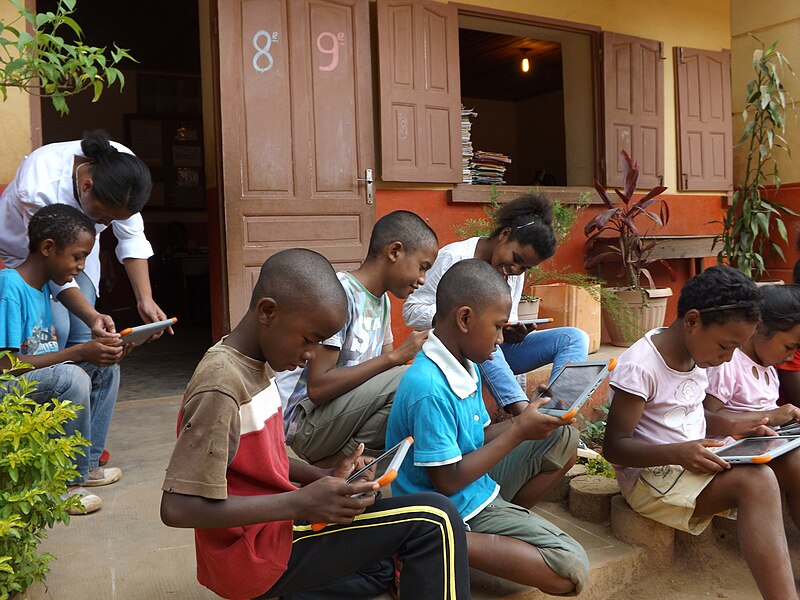
It is through education that the daughter of a peasant can become a doctor, that the son of a mine worker can become the head of the mine that a child of farm workers can become the president of a great nation. The current educational system in Madagascar is composed of five mandatory years in primary school and an extension of seven years in secondary school which is divided into two, the junior year of four years and three senior years.File:Students doing group work with slates in Antsiranana Madagascar.JPG

https://commons.wikimedia.org/wiki/User:Lemurbaby – Photo source

Among the challenges that the education system in Madagascar experience are,

Covid-19 aftermath

The virus resulted to poor educational development across the globe. In Madagascar it was no exceptional, school dropouts was recorded highly during the pandemic. UNESCO reported that the number of dropouts in Madagascar were at a higher rise within the pandemic. Senior secondary being the most affected group.

Gender Inequality

Boys are rated to drop out of schools especially in primary schools, meanwhile girls have been recorded to drop out starting at the age of fifteen and older. This is caused by poverty among the households of these children. Other households are faced with either disabilities or orphans’.

Extreme poverty

Madagascar is one of the poorest countries globally. Due to poor economic growth most Malagasy children have not set foot in classrooms. This has forced most children to grow up being responsible for their families at early ages.

Most of these children grow up as herders and engaging in agricultural activities especially among boys. Early marriages is experienced at high levels, girls are set up for unexpected marriages hence early pregnancies.File:Ecoles Afrique Madagascar 1.jpg

https://commons.wikimedia.org/wiki/User:Anthere – Photo source

Low qualification of teachers

One of the core causes of the poor quality of education in Madagascar is the low quality of teachers due to the teacher recruitment process, which does not focus on selecting professional education personnel but instead on meeting the demands of civil servants.

Existence of community teachers paid by parents have a significant influence on non-enrollment and dropout of students. In 2016 UNESCO Institute for statistics presented a ratio of 7 qualified teachers among 40 students. Teachers tend to lack formal education in especially public schools.

According to World Bank four out of ten pupils in primary schools drops out before completing the last stage in that level.

Poor Educational Facilities and Infrastructure

Poor school facilities and infrastructure quality are also part of Madagascar’s education challenges. The schools that do exist are unable to cope with the demand for places, and often lack basic water or hygiene facilities and even furniture.

Uneven access to the internet, and discrepancy in teacher qualifications and education quality, appeared as the biggest challenges in implementing distance learning. Remote learning for young children and the diversity of the country’s digital access levels cause further inequalities for marginalized children.

Conclusion

Focused development initiatives can strive to ensure access to quality education for all, provide a bright future for Madagascar’s youngest generation, and strengthen continuing education opportunities.

References

Educational Challenges in Zambia

Zambia is a landlocked country located in the south central part of Africa. It has a population of about 18 million according to the world bank. Zambia has one of fastest growing economies in Africa, however, its educational sector faces several of challenges as 60% of the population living below poverty and 40% out of this living in extreme poverty.

Despite the global pandemic, Corona virus, Zambia faces the following problems in its educational sector; lack of qualified teachers, educational materials, financing and lack of adequate school infrastructures. According to Kelly (1992) poverty has stricken the education system in many of African countries, therefore most pupils and teachers are not able to find the basic needs they deserve”. This is true about Zambia, because even though with the existence of the government and organizations to help the welfare of the country, Zambia still needs more interventions to change the current situation in its educational sectors.

Lack of qualified teachers

A large number of teachers at fundamental schools in Zambia in both rural and urban areas are not completely trained or qualified. This affects the quality of the provision of the education framework. The issue is that teachers are not able to teach and cover some topics which they do not fully understand. A case which Hoppock (1966) called academic poisoning where pupils are taught wrong abilities and theories. In regards to this, there is need for teachers to be trained and treat their respective job as professions and not anything else.

Educational Materials

Most schools in Zambia do not have adequate educational materials like books, rulers, maps, charts and many other resources needed for the provision of education to children. According to Carmody (2004), education without resources is like education without a future. In this case, Carmody is alleging that quality and sustainable education cannot continue or be given without any formal documentation or resources to back it up. There is need for educational materials at basic level in many schools in  Zambia . There is a need to improve the procurement of books and other educational materials in order to improve the standard of the Zambian educational system in both rural and urban areas.

Financing

Money is the limiting factor for most of the activities in which we are basically found. When it comes to the educational sector, teachers require salaries and compensation. According to research, there had been a number of strikes made by educators in the teaching profession in trying to request money and complaints on salary delays. These strikes directly affect the provision of the education system in Zambia . Therefore, finances are one of the biggest factors to be paid attention to.

Lack of adequate school infrastructures

A great problem for most people in Zambia is the lack of adequate school infrastructures. Numerous children in Zambia are not able to go to school because they are discouraged by the distance they have to walk to and from their school. Due to this problem some parents fear to send their children of young age to school especially the female pupils. The government and various organizations have taken part in building schools in the country, however there is still a need for more intervention.

Conclusion

It is important that all stakeholders work with the Zambian government to make resources available. Student centered learning approach through improved teacher training courses should be provided to teachers. Lastly, governments, donors, organizations and all stakeholders need to work collaboratively to improve the educational sectors.

Written by Ntchindi Theu

References

WDI – Home. (2022). Retrieved 31 May 2022, from https://datatopics.worldbank.org/world-development-indicators/

Give, W., ®, B., Giving, M., Needs, G., Program, G., & Children, V. et al. (2022). Solving Education Problems in Zambia | Cross Catholic Outreach. Retrieved 31 May 2022, from https://crosscatholic.org/blogs/2022/01/solving-education-problems-in-zambia/

Kelly, M.J. (1999). Origin and Development of Education in Zambia , Lusaka : Image Publishers Limited.

https://pixabay.com/illustrations/zambia-flag-symbol-national-nation-4623043/ – Cover photo source

Carmody, B. (2004). Evolution of education in Zambia . Lusaka : Book world.

Hoppock, R. 1966. What is the real problem? America : educationalists Press

Universal Periodic Review of Mali

The Malian education system

  1. Education in Mali is free, compulsory between the ages of 7, and 16 or until the end of the ninth grade Primary education is the first six years, and the last six years are divided into two three-year cycles of secondary education. [i]
  2. To continue with the second level of secondary education, students take an exam called Diplôme d’études fondamentales at the end of the ninth grade.[ii]
  3. At the end of grade 12, students sit for an exam called the Baccalauréat, which is required to pass in order to graduate. From there, students may attend an institute of tertiary education.

Budget on Education

  1. In 2020, the Malian state budget for education amounted to USD 637.3 million. Only 13% of the national budget was allocated to the construction of classrooms and 4.8% to the acquisition of teaching materials. [iii]

Overview of the previous UN UPR cycle

  1. In its national report prepared for the 2017 UN UPR, Mali particularly emphasized the significant development in the education sector because of implementation of the Ten-Year Educational Development Programme, the Education Sector Investment Programme. [iv]
  2. The Malian Government has continued to strengthen vocational education, including with the support of the international community through the implementation of several projects and programmes, including the Youth Employment Programme and the Ten-Year Vocational Training for Employment Programme. [v]
  3. In the previous UPR cycle, Mali received 194 recommendations and accepted 187. Sixteen of the recommendation was regarding the right to education. Five percent of the recommendations was on Quality of the Education. Mali supported all of those recommendations.[vi]

By Ramazan Ince

Download PDF

43rd_Session_UN-UPR_Country_Review_Mali

[i] https://www.scholaro.com/db/countries/Mali/Education-System

[ii] https://borgenproject.org/education-in-mali/#:~:text=In%20Mali%2C%20the%20first%20six,the%20end%20of%20grade%20nine.

[iii] https://reliefweb.int/report/mali/mali-insecurity-and-lack-funding-force-over-half-million-children-out-school

[iv] https://documents-dds-ny.un.org/doc/UNDOC/GEN/G17/333/47/PDF/G1733347.pdf?OpenElement

[v] https://documents-dds-ny.un.org/doc/UNDOC/GEN/G17/333/47/PDF/G1733347.pdf?OpenElement

[vi] https://www.ohchr.org/sites/default/files/lib-docs/HRBodies/UPR/Documents/Session29/ML/MALI_Infographic_29th.pdf

Cover image by Pete unseth.

Universal Periodic Review of Ghana

Ghana’s educational system is structurally and underdeveloped. There is widespread violence and discrimination and overall violations of human rights. It must address the educational challenges it faces. Its many challenges and obstacles in education that need to be addressed and dealt with in terms of finance, structure, administration, and management, combating wrongful actions committed against students, the presence of discrimination, violence, and lack of rights. This summary review will outline the country’s performance since the last 3d cycle recommendations.

By Noor Mousa

Download PDF

6346d9a16e956-doc

Cover image by 12019 on PixaBay.

Educational Challenges in the Republic of Kenya

Educational Challenges in the Republic of Kenya

Kenya’s educational development has been impacted by numerous factors, such as being a colony of the British Empire from 1895 until 1963 and becoming a Republic in 1964[i]. Kenya currently has a population of 53.77 million people who speak a total of 42 ethnic languages[ii]. There are various national authorities for education, such as the National Council for Nomadic Education in Kenya, the Commission for University Education, the Teachers’ Service Commission (TSC), and the Kenya National Examination Council (KNEC);[iii] as well as international influence for quality education, especially the Millennium Development Goals (MDGs).[iv] All these contributed to the development of a system that promotes access, quality, and attainable standards, enshrining the right to education in the constitutional revision of 2010 and through the Basic Education Act of 2013.[v] However, this progress may be outweighed by negative results, leading to general issues we see globally but also issues specific to the Kenyan context with regards to indigenous communities, education agencies, and the teacher training of educators.

General Educational Challenges

In 2020 there were 18 million students in Kenya, 15 million in primary and secondary schools, following a format known as the ‘8-4-4’ system of eight years in primary, four years in secondary, and another four in post-secondary education as a result of policies that sought to fulfil the MDG of  universal primary education, quality education for all (EFA). The current government policy aimed at a 100% student transition from primary to secondary education helped to increase this ratio from 83% in 2018 to 95% in 2020, dedicating 95.7% of total expenditure to enhance public primary education.[vi] The government and private sector also came together to adopt joint funding mechanisms to provide both basic education but also eradicate poverty, allowing for tuition fees to be waived for primary education first, but gradually doing so for public day secondary education too, despite the fact that parents continue to pay for uniforms, meals, transport, and learning materials.[vii]

The digital media organization Tafuta Kenya refers to the Kenyan education system as a ‘state of crisis’ because of issues like gender disparity for girls in education due to traditional, cultural beliefs in 23 counties; the high drop-out rates due to poverty, child labour, drugs, poor health; inadequate facilities such as not having enough public schools, desks, chairs, textbooks; the high rate of absenteeism of educators in classrooms partially tied to frequent strikes for better working conditions and salaries; and the persistent trend of political influence that leads to corrupt embezzlement of funds that disrupts resource allocation and planning.[viii] More than 1.2 million children of primary age are not enrolled in primary school, with orphans especially vulnerable in this respect, and that only roughly 1% of Kenyan youth are in university because of the high tuition fees and the lack of access to youths from lower socio-economic backgrounds, leaving those aged between 15-24 years old the largest age group in terms of unemployment rates.[ix]children sitting on chairs inside classroomPhoto by Doug Linstedt on Unsplash

The main reason for these issues is that poverty remains rife in Kenya, with the World Poverty Clock estimating that 11 million Kenyans live on less than $1.90 per day, worsening the issue of hunger as one in every four children experiences stunting as a result of homes not having enough food to feed their children who are at risk of having undeveloped brains.[x] A 2014 study by the United Nations International Children’s Emergency Fund (UNICEF) concluded that the level of education held by parents is a firm indication of the level of the poverty that children may face which hinders their access to education and increases socio-economic disparities.[xi] In a similar vein, a 2019 study by Abuya et al. concluded that children from single parent households were less likely to be in primary education at the right age in comparison to children living in two-parent households, standing at 66% and 74% respectively, and that children living with guardians were 23% less likely to be in the primary education at the right age, with the data based on gender, educational attainment, household income, the number of siblings, and the educational institution, to display the impact of socio-economic resources being available to invest in children’s education.[xii]

These issues directly challenge the ‘Vision 2030’ national development plan of Kenya, whose budget increased by 50% to make education competitive with other systems globally and raise the quality of life. However, it resulted in bad planning because millions of students who dropped out in the past due to poverty returned which led to overcrowded classrooms, leaving teachers overwhelmed with the task of handling sometimes three classrooms with their respective behavioural challenges.[xiii] With over eight million students being accommodated by 216,517 teachers in primary schools, the average of 50 students per teacher in Nairobi, 92 students per teacher in Turkana, and 200 students per classroom in Kibera Olympic School is evidence that the system is pressured.[xiv]

In this situation, girls remain vulnerable since they continue to face ‘archaic’ traditions and parents who fear that sending their daughters to school would be a waste of resources, seeing them better fit to handle chores, care for their siblings, and travel long distances for water. Girls are also often forced into early marriages and pregnancies in exchange for economic and social benefits, remaining 2.5 times more likely to face gender-based violence (GBV) given Kenya’s recent history of internal and transboundary conflict.[xv] The activities of Flying Kites, an organisation focused on improving education by meeting the needs of individual students, has expressed the importance of investing in girls not only for gender equity, but also because girls can be seen as agents of change and boosting their access to Guidance, Information, Resources, Leadership, and Skills (G.I.R.L.S.).[xvi] One priority is sanitation standards which results in some girls leaving education because they cannot afford sanitary pads, wherein one in every ten 15-year-old girls do not have such access and would resort to engaging in sexual activities to get money for such products, leading to more early pregnancies and less time to focus on education.[xvii]

The outbreak of COVID-19 negatively impacted the past and current education policies, highlighting the lack of prepared plans to tackle the shift to remote, distance, and online alternatives of learning. It is noteworthy that Kenya’s Ministry of Education (MoE) had launched a disaster management policy in July 2018 but only addressed the effects of heavy rains, wildfires, and promoting peace and safety but did not expand the aim of common safety guidelines to prevent the disruption of education as a result of diseases, especially considering the past outbreaks of malaria, HIV/AIDS, Ebola, and Zika across Africa.[xviii] Instead, the pandemic highlighted the inadequate ICT infrastructure given the fact that the government leaned on broadcasting education when only 17% of Kenya has access to broadband and students living in rural regions did not own digital devices; only 42% of children had access to a television and 19% to a radio, resulting in a higher rate of child labour since 16% and 8% of girls and boys respectively did not return to education when schools reopened on 4th January 2021; put at risk 150,000 refugee students who were confined in a so-called home when schools closed on 15th March 2020; and increased poverty since children lost access to school meals, and increased the rates of GBV, early marriages and pregnancies for girls.[xix] This was also reflected in the lack of digital and e-learning skills that teachers held, leading to a lack of preparation to shift to remote learning and aiding students to engage as e-learners, losing the crucial teacher-learner connection that ensures a steady transfer of knowledge.[xx]

Lack of Educational Planning & Low Educator Qualifications

There is a clear mismatch of resources to meet the needs of education for students which require proper education planning policies that implement logical mechanisms that set goals according to needs by systematically, strategically, and optimally utilizing the limited number of resources for an efficient system.[xxi] But without qualified planners, statisticians, analysts, the right tools such as computers and calculating machines, and accurate data, the system buckles under issues that hinder developing a system that safeguards against future problems, especially given the political instability that underlies the system as different political beliefs disrupt a consistent and coherent flow of government activities.[xxii] Furthermore, planners need to expand teachers’ salaries and promotion tracks, issues that result in teachers taking on other jobs to make ends meet which increases teacher absenteeism.[xxiii]

The system must be buttressed by educators who are properly trained and qualified which are obligations that fall under the TSC as mandated by the constitution to register, recruit, assign, promote the transfer, exert discipline, review, and even terminate the employment of teachers within the education system, all the while maintaining a set of standards that teacher training is based upon.[xxiv] Therefore, the task of supplying and maintaining teachers must retain transformational, holistic, creative, yet professional mindsets which Jonyo & Jonyo (2017) have argued has failed to address that teachers are understaffed, digitally illiterate, are not monitored and evaluated according to set standards, aim for low targets with an inadequate infrastructure, and through unionisation resist the development of the 2015 Teacher Performance Appraisal and Development that seeks to strengthen the status of the teacher as a leader of curriculum implementation but instead is feared as a ‘weeding’ exercise for incapable individuals.[xxv] Teacher training needs to change so that prior to entering a classroom, and also through professional development to attain new skills, they can fuse teaching the curriculum with an inflation of digital, automated capabilities that collect data to increase performance and service delivery, as well as expand the apprenticeship model established for junior teachers to train alongside senior teachers with leadership training so that they can manage in-class responsibilities whilst taking note of any changes that require teachers to adjust practices.[xxvi]

Tied to teacher training is amending pedagogical methods of teaching and students assessment which Akala (2021) has argued remains attached to the ‘recall of trivial information’ that is dense for students to remember through ‘rote learning’ by drilling information into memory to then be regurgitated in exams.[xxvii] What is instead being called for is to balance these methods with a competency based curriculum (CBC) whereby students are taught to attain:

‘sufficient practical skill and knowledge to perform the activity or service to a degree and quality that is acceptable to the industry and the customer in a time within which a competent person at the level could reasonably be expected to perform the task.’[xxviii]

CBC is arguably better than an examination-focused mode of teaching because it allows students to retain what they learned in a measurable way that empowers them beyond simply assessment and instead produces positive learning experiences of support and meeting their needs in education. This can help to reduce tension resulting from competitive academic performance that demands good grades to attain quality education and bars students from having the space to relax and develop social skills.[xxix]

Exclusion of Indigenous Culture & Language

Lastly, as a consequence of colonialism, Kenya continues to exclude indigenous languages and cultures from education, perpetuating a sense of ‘negative ethnicity’ that prioritises the content, teaching methods, and outcomes that remain inherently English- or Western-focused.[xxx] The 2019 study by Ng’asike observed this issue from the perspective of the Turkana community, showing how the community remained at a significant disadvantage of developing their learning and skills attainment capacities, especially in terms of language learning, arguing that there is ample evidence from other countries such as Mali, Burkina Faso, and South Africa  of the benefits that result from the inclusion of students’ mother tongues, be it Kiswahili, Turkana or any of the other ethnic languages spoken outside school.[xxxi]

Instead, parents, agencies, and communities continue to see the practice of the mother tongue as ‘backward’ or ‘tribalism’ and including indigenous knowledge within educational settings risks students being placed at a disadvantage to learn English.[xxxii] Ng’asike (2019) explained the benefits of including mother tongues and indigenous knowledge in education. Students coming from these communities have already adopted ways of associating the world through their mother tongue and cultural practices which provides a foundation on which educators can create bridges of understanding that helps them to progress onto curricular topics and language learning further down the education system. The study also suggests the use of story books in English, Kiswahili and the mother tongue as a primary tool in the early stages of education which would allow students, parents and the wider community to engage in storytelling, increase student and adult literacy, and alternative, supplementary materials that depart from the rigidity of what is considered important in the curricula or materials that ‘become vehicles of passive transmission of Western values.’[xxxiii]

Conclusion

It is evident that Kenyan education faces many challenges that spill over into socio-economic, political, and cultural issues. However, the system is willing to address these issues and provide solutions, making space for private and non-governmental actors to assist improving the system. To mention a few programmes of importance: Tusome[xxxiv] is a national programme that provided a total of 26 million textbooks and supplementary materials to students in 1,384 primary schools to increase literacy rates; the latter is complemented by the 2016 digital literacy programme (DLP) that successfully provided 1.2 million devices to 21,718 primary schools and increased attention and enrolment as well as creating over 11,000 jobs in the field of ICT; and lastly, the Home-Grown Feed Model (HGFM) that built on school meals in a holistic manner by adopting a community-growth model that approaches local farmers to sell their products to schools, supporting both the local market economy alongside nutritiously dense diets for students which contributes to the global goal of zero hunger.[xxxv]

Written by Karl Baldacchino

Sources;

Featured Image from :Photo by Oscar Omondi on Unsplash

[i] Ndemwa, N. & Otani, M. (2020) ‘Education System in Kenya – Its Current Condition and Challenges’. Memoirs of the Faculty of Education, Shimane University, p. 15.

[ii] Ibid.; see also Ng’asike, J. T. (2019) ‘Indigenous Knowledge Practices for Sustainable Lifelong Education in Pastoralist Communities of Kenya’.  International Review of Education, Vol. 65, p. 22.

[iii] Ibid., pp. 18 & 19; see also Ng’asike, p.21

[iv] Ibid., p. 16.

[v] Ibid., pp. 19; see also Jonyo, D. O. & Jonyo, B. O. (2017) ‘Teacher Management: Emerging Issues in Kenya’. European Journal of Educational Studies, Vol. 4(1), p. 19; see also Jesse, N. W. (2021) ‘Effective Ways of Overcoming Challenges Facing High School Teachers in Kenya’. International Journal of Humanities and Social Science, Vol. 11(1), p. 45; see also Ngwacho, A. G. (2020) ‘COVID-19 Pandemic Impact on Kenya Education Sector: Leaner Challenges and Mitigations’.  Journal of Research Innovation and Implementation Education, Vol 4(2), pp. 129-130.

[vi] Ibid., p. 16; see also Kibaara, J. M. (2021) ‘Kenya’s Education Goals Face the Challenges of Affordability, Traditions and COVID-19. The Conversation. Available online from: https://theconversation.com/kenyas-education-goals-face-the-challenges-of-affordability-traditions-and-covid-19-168113 [Accessed 04/05/2022]; see also Abuya, B. A. (2021) ‘Securing the Education of Kenya’s Girls During COVID-19’. The Conversation. Available online from: https://theconversation.com/securing-the-education-of-kenyas-girls-during-covid-19-154871 [Accessed on 04/05/2022]; see also Akala, B. M. (2021) ‘Revisiting Education Reform in Kenya: A Case of Competency Based Curriculum (CBC)’. Social Studies & Humanities Open, Vol. 3, p. 2; see also Jensen, A. (2019) ‘Enhancing Digital Education in Kenya’. The Borgen Project. Available online from: https://borgenproject.org/digital-education-in-kenya/ [Accessed on 04/05/2022]; Brock, H. (2021) ‘Continued Education for Vulnerable Children in Kenya’. The Borgen Project. Available online from: https://borgenproject.org/vulnerable-children-in-kenya/ [Accessed on 04/05/2022].

[vii] Kibaara.

[viii] Tafuta Kenya, ‘Challenges Facing Education in Kenya and Solutions’. Available online from: https://tafutakenya.com/challenges-facing-education-in-kenya-and-solutions/ [Accessed on 04/05/2022]; see also Samuel (2022) ‘Challenges Facing Educational Planning in Kenya’. World Student Forum. Available online from: https://worldstudentforum.com/challenges-facing-educational-planning-in-kenya/ [Accessed on 04/05/2022]; see also Ndemwa & Otoni, pp. 19-20 & 23-24; see also Jonyo & Jonyo, pp. 21 & 34-36; see also Jesse, pp. 46-48; see also Akala, pp. 1 & 2.

[ix] Brock.

[x] Manning, G. (2021) ‘Education in Kenya is a Path Out of Poverty’. The Borgen Project. Available online from: https://borgenproject.org/education-in-kenya/ [Accessed on 04/05/2022]; Ngwacho, p. 133.

[xi] Brock.

[xii] Abuya, B. A. et al. (2019) ‘Family Structure and Child Educational Attainment in the Slums of Nairobi, Kenya’. Sage Open, April-June 2019, pp. 1-2 & 5-8.

[xiii] Ibid.; see also Kabaara; see also Jonyo & Jonyo, p. 25; see also Jesse, p.48; see also Akala, p. 2.

[xiv] Ibid.; see also Ndemwa & Otoni, pp. 16-17; see also Kibaara.

[xv] Abuya; see also Tafuta Kenya; see also Ndemwa & Otoni, pp. 23-24; see also Olk, S. (2019) ‘Overcoming Barriers to Education for Internally Displaced Children’. The Borgen Project. Available online from: https://borgenproject.org/education-for-internally-displaced-children/ [Accessed on 04/05/2022].

[xvi] Manning.

[xvii] Ibid.; see also Tafuta Kenya; see also

[xviii] Ngwacho, p. 131

[xix] Ibid., pp. 133-134; see also Kibuku, R. N. et al. (2020) ‘e-Learning Challenges Faced by Universities in Kenya: A Literature Review’.  The Electronic Journal of e-Learning, Vol. 18(2), pp. 153-154; see also Brock; see also Kibaara; see also Abuya; see also Manning.

[xx] Kibuku et al., pp. 154 & 156-157.

[xxi] Samuel.

[xxii] Ibid.

[xxiii] Tafuta Kenya.

[xxiv] Ndemwa & Otoni, p. 19.

[xxv] Jonyo & Jonyo, pp. 23-26.

[xxvi] Ibid., pp. 32 & 36-37.

[xxvii] Akala, pp. 1, 2 & 4; see also Ng’asike, pp. 27, 35 & 37; see also Tafuta Kenya.

[xxviii] Ibid., p. 2.

[xxix] Ibid., p. 3; see also Ndemwa & Otoni, pp. 17 & 23.

[xxx] Ibid., p. 7; see also Ng’asike, pp. 22-24 who gives a good indication how historical progress during and after colonial regimes impact the access of indigenous communities to a quality education.

[xxxi] Ng’asike, pp. 37-39

[xxxii] Ibid., pp. 24, 28, 37 & 40.

[xxxiii] Ibid., pp. 27, 30-33, 36-37 & 41

[xxxiv] ‘Let’s read’ in Kiswahili’.

[xxxv] Jensen; see also Maria, J. (2020) ‘Tusome: Powering Childhood Learning in Kenya’. The Borgen Project. Available online from: https://borgenproject.org/tusome-powering-childhood-learning-in-kenya/ [Accessed on 05/05/2022]; see also Clausen, A. (2020) ‘The Home-Grown School Feeding Model Tackles Zero Hunger’. The Borgen Project. Available online from: https://borgenproject.org/home-grown-school-feeding/ [Accessed on 05/05/2022].

Universal Periodic Review of Algeria

In the last review in 2017, Algeria received 235 recommendations, 9% of which were linked to inclusive and equitable quality education and promoting lifelong learning opportunities for all. The main issues in the educational field were overcrowded classrooms, school infrastructure and low enrollment rates.

Download PDF

41st_Session_UN-UPR_FactSheet_Algeria

Cover image by 22815513 on PixaBay.

Universal Periodic Review of Morocco

The main issues in education in Morocco are illiteracy, high dropout and repetition rates, no access to education or equipment as a result of poverty. Morocco received 244 recommendations in the 3rd cycle, accepted 191 of those and 12% of recommendations focused on quality education (SDG4).

Download PDF

41st_Session_UN-UPR_FactSheet_Morocco

Cover image by AntoMes on PixaBay.

Universal Periodic Review of South Africa

Broken Chalk recommends that the government of South Africa addresses problems with equality and discrimination, education and support of LGBTQ+ community and child trafficking. In the last cycle South Africa received 243 recommendations, accepted 187 of those and 9% focused on quality education (SDG 4).

Download PDF

41st_Session_UN-UPR_FactSheet_South_Africa

Cover image by flowcomm on Flickr.