Translation Educational Challenges in Mozambique (Portugese)

Desafios Educacionais em Moçambique

Escrito por Néusia Cossa

Traduzido por Christiano Oliveira


Os Desafios Educacionais em Moçambique é uma das maiores lutas que o país enfrenta e a questão central com que a maioria das organizações educacionais locais têm de lidar. Na maioria das vezes, isto deve-se a uma série de factores dentro do país, especialmente sendo Moçambique uma nação subdesenvolvida do sul.

Em 2008, mais de dois terços da força de trabalho não tinha qualquer educação ou não tinha completado o ensino primário. Moçambique ainda está atrás dos seus vizinhos (e concorrentes) no que diz respeito ao desempenho educacional a todos os níveis, pelo que será necessário fazer mais para garantir que o país estabeleça uma força de trabalho qualificada que possa promover um crescimento económico sustentável. Estudos realizados em Moçambique e noutras nações africanas concluíram que os agregados familiares e os trabalhadores com o ensino primário foram capazes de fazer a transição para actividades não agrícolas, alcançando um rendimento mais elevado e transformando os seus meios de subsistência tanto nas zonas rurais como urbanas, mas aqueles que não tinham pelo menos o ensino primário inferior não o fizeram (Moz Policy Note, 2012:2).

Em resumo, Moçambique enfrenta vários desafios educacionais, alguns dos quais podem incluir: acesso limitado à educação, baixa qualidade da educação, pobreza e desigualdade, recursos limitados e falta de currículo relevantei.
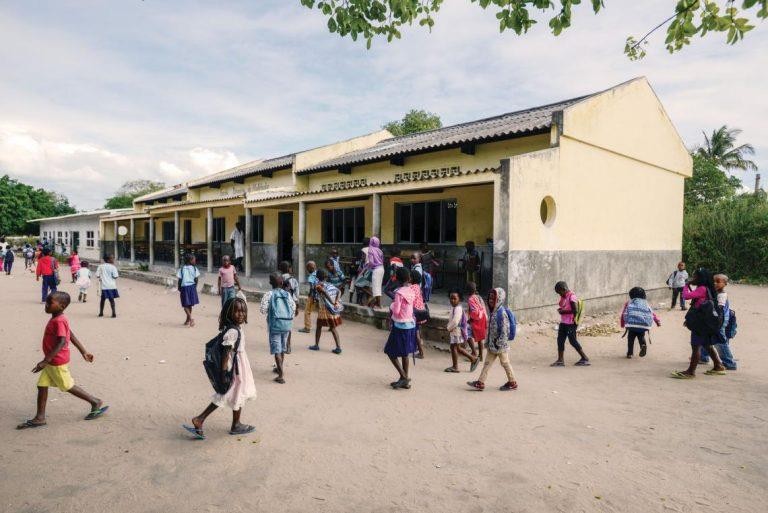
Instalações escolares em Moçambique – Foto de: https://www.unicef.org/mozambique/en/education


Acesso limitado a educação

Moçambique tem demonstrado o seu empenhamento na educação. Aboliu as propinas escolares, forneceu apoio direto às escolas e livros escolares gratuitos no nível primário, bem como fez investimentos na construção de salas de aula. O sector recebe a maior fatia do orçamento do Estado, mais de 15%. Consequentemente, registou-se um aumento significativo das matrículas no ensino primário na última década. No entanto, a qualidade e a melhoria da aprendizagem registaram atrasos. Além disso, as matrículas estagnaram no ensino primário e secundário, apesar do aumento da oferta. Cerca de 1,2 milhões de crianças não frequentam a escola, sendo a maioria raparigas, especialmente no grupo etário do ensino secundário. A avaliação nacional da aprendizagem de 2013 revelou que apenas 6,3% dos alunos do 3.º ano tinham competências básicas de leitura. Um inquérito do Banco Mundial de 2014 mostrou que apenas 1 por cento dos professores do ensino primário tem o conhecimento mínimo esperado e apenas um em cada quatro professores consegue fazer uma subtração de dois dígitos. O absentismo entre os professores é elevado (45%) e entre os diretores (44%). Cerca de metade dos alunos matriculados faltam num determinado dia.

Outro grande desafio é a falta de um serviço de aprendizagem na primeira infância. Estima-se que apenas 5% das crianças entre os 3 e os 5 anos beneficiam destes serviços e que a maioria dos serviços ainda se encontra em zonas urbanas (UNICEF).


Baixa qualidade de educação

A maioria das nações africanas subdesenvolvidas recorre ao suborno em quase todos os serviços públicos, como hospitais, escolas, serviços de polícia e migração, como resultado direto da escassez.

Em termos de qualidade da educação, Moçambique tem uma elevada percentagem de falta de professores formados, com boas competências, tais como formação pedagógica. Devido à escassez e aos baixos salários (mal chegam para sobreviver), na maioria das escolas secundárias e primárias os professores, pais e educadores usam o suborno em troca de boas notas.

Para um professor, custa 116 dólares (ou 58 dólares por dia) uma formação de alta qualidade, de dois dias, sobre o desenvolvimento de materiais de baixo custo, incluindo transporte, pensão completa, propinas e todos os materiaisii.

No entanto, de acordo com Sam Jones (2017)iii, Moçambique, à semelhança de muitos outros países em desenvolvimento, registou aumentos impressionantes no acesso à educação. Desde 2000, o número de crianças que frequentam o ensino primário mais do que duplicou, assim como o número de escolas. As matrículas no ensino secundário também aumentaram rapidamente – em 2004, menos de 8.000 jovens concluíram o ensino secundário (12a classe) em todo o país; em 2014, o número de diplomados ultrapassou os 50.000.

Estas tendências são positivas, mas só mostram metade do quadro. O outro lado do acesso é saber se as crianças estão a aprender quando estão na escola. As evidências aqui são fragmentadas, mas sugerem, em termos gerais, que Moçambique está a ficar muito atrás de muitos dos seus pares de países em desenvolvimento na qualidade, e não na quantidade, da educação que oferece às suas crianças.

Não é difícil perceber porque é que a qualidade da escolaridade é importante. Sistemas educativos fracos criam encargos tanto para os empregadores como para os trabalhadores. Se os certificados de habilitações não forem um bom indicador das competências que uma pessoa possui, os empregadores têm dificuldade em identificar os candidatos adequados e qualificados. Este facto pode levar a uma maior rotatividade e a processos de recrutamento dispendiosos. Pode também levar os empregadores a exigir níveis de educação mais elevados, mesmo quando as tarefas específicas de um emprego não o exigem. Hoje em dia, a mudança tecnológica também está a aumentar a procura de competências – mesmo as empresas de produção com mão de obra intensiva preferem trabalhadores com melhor formação que sejam capazes de operar equipamentos e seguir objectivos de produção.

Um dos principais desafios da educação em Moçambique é garantir que todas as crianças que iniciam o ensino primário o concluam. Dados do Ministério da Educação e Recursos Humanos sugerem que, em cada classe do ensino primário, apenas cerca de 80% das crianças passam diretamente para a classe seguinte. Embora nem todas estas crianças abandonem a escola, a probabilidade de uma criança que inicia o ensino primário completar os sete anos é inferior a 50%. Assim, muitos jovens moçambicanos estão a entrar no mercado de trabalho sem sequer terem completado o ensino primário.

Mas completar o ensino primário não significa que os jovens Moçambicanos aprendam o suficiente através da escolaridade. Isto é revelado por um recente inquérito presencial a crianças em Nampula implementado pela TPC Moçambique, parte da Facilidade-ICDS (Instituto para Cidadania e Desenvolvimento Sustentável). O inquérito segue um modelo originalmente desenvolvido pela Pratham na Índia, atualmente utilizado em muitos países. Os dados destes inquéritos não são estritamente comparáveis, mas são informativos sobre as diferenças gerais.

Utilizando o inquérito, o Quadro 1 compara os resultados obtidos em matéria de literacia e numeracia num conjunto de países. Em todos os casos, as competências testadas referem-se a aptidões retiradas do currículo de cada país que devem ser dominadas pelas crianças depois de completarem dois anos de escolaridade. Verificamos que há muitas crianças a frequentar a 5ª classe que não dominam as competências de nível da 2ª classe. Em Nampula, a maioria das crianças que terminam a primeira fase da escola primária não domina as competências básicas: menos de 1 em cada 3 crianças na 5ª classe consegue ler uma história simples e fazer uma subtração básica. Além disso, os resultados em Moçambique parecem ser substancialmente inferiores aos das crianças da mesma classe noutros países de baixo rendimento.
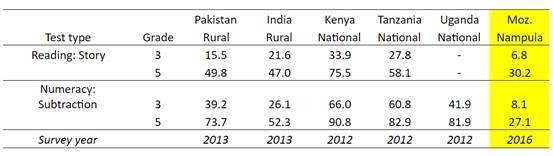
Tabela 1: Percentagem de crianças matriculadas na 3ª e 5ª classes capazes de atingir competências específicas. Adaptado de Jones et al. (2014), acrescentando dados do TPC Moçambique (2017).


A situação preocupante em Moçambique é corroborada por uma investigação do Banco Mundial sobre a qualidade do serviço no sector da educação. Conforme consta no estudo de Bold et al. (2017), que compara resultados em vários países, apenas 38% dos alunos moçambicanos da 4.ª classe eram capazes de reconhecer letras, contra 89% no Quénia e 50% na Nigéria. Sugere-se uma possível razão para esta situação – não só muitos professores estão ausentes da escola e/ou da sala de aula – o que significa que os alunos moçambicanos estão a receber menos de metade das quatro horas recomendadas de ensino por dia – mas também, muitos professores mostram um fraco conhecimento do currículo que devem ensinar.


Para além disso, a JICA (2015:25) faz uma análise comparativa do acesso por grupo, onde aponta, tanto no ensino primário inferior como no superior, que as Províncias de Maputo Cidade, Nampula, Sofala, Niassa e Maputo têm taxas de abandono escolar mais elevadas do que a média nacional. As taxas de repetição são mais elevadas nas províncias de Tete, Sofala, Niassa, Nampula e Manica. Em geral, as províncias do norte e do centro têm taxas de abandono e de repetição mais elevadas do que a média nacional. Em particular, as taxas de repetição na província do Niassa são, em comparação com a média nacional, 4,4 pontos mais altas no ensino primário inferior e 5,1 pontos mais altas no ensino primário superior.

As taxas de abandono por género mostram que as taxas de abandono das mulheres são 0,2 pontos mais altas do que as dos homens, tanto no ensino primário inferior como no superior. Analisando por província, as taxas de desistência das mulheres no ensino primário são mais elevadas nas províncias de Maputo Cidade, Gaza, Inhambane e Maputo, sugerindo que as estudantes do sexo feminino desistem mais do que os seus homólogos do sexo masculino nas regiões do sul do país. Na média nacional, as taxas de repetição das mulheres são 0,3 pontos e 0,4 pontos mais altas do que as dos homens no ensino primário inferior e superior, respetivamente. Por província, todas, exceto a província da Zambézia, apresentam taxas de repetição feminina mais elevadas.

O governo moçambicano tem prestado especial atenção ao género em todas as fases de planeamento do sector, a fim de reduzir a diferença de género. A educação das raparigas tem sido promovida desde o primeiro Plano Estratégico da Educação, e o PEEC 2006-2011 também identificou o ensino primário universal – especialmente com enfoque na educação das raparigas – como uma questão importante. Graças a estes esforços governamentais, a diferença de género no ensino primário foi quase corrigida (PEE 2012-2016, P.41-42iv).


Pobreza e desigualdade

A pobreza é um grande obstáculo à educação em Moçambique, uma vez que muitas famílias não têm meios para pagar as propinas escolares ou despesas relacionadas, tais como uniformes e manuais escolares. Além disso, as raparigas e as crianças das zonas rurais estão frequentemente em desvantagem devido a barreiras sociais e culturais, como o casamento precoce e os papéis tradicionais de género (Chatgpt, 2023).

A pobreza limita a educação em Moçambique em muitas famílias. Os salários normais são, na maioria das vezes, para a alimentação, a necessidade básica. As pessoas têm muitas vezes dificuldades em pagar as despesas da escola e da faculdade, razão pela qual os pequenos negócios informais são uma saída.
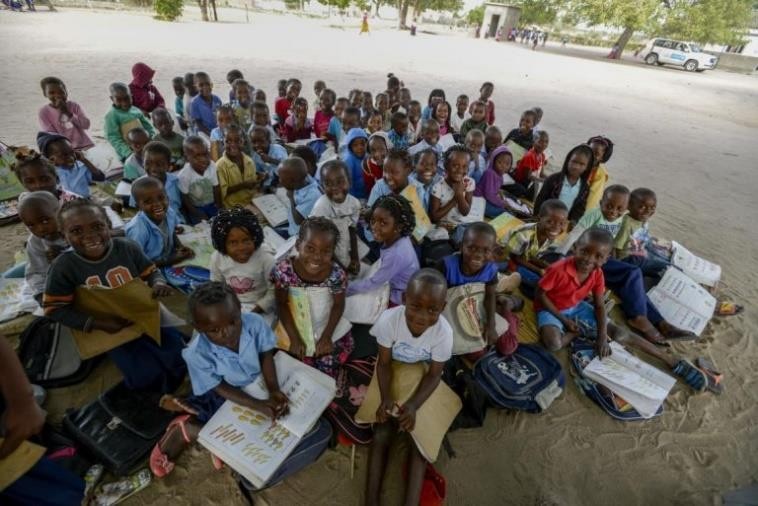
Crianças em idade escolar em Moçambique – Foto de: https://www.unicef.org/mozambique/en/education

Recursos limitados

Para que a educação seja bem sucedida, não é suficiente garantir que as crianças frequentem a escola, mas é também importante que aprendam enquanto estão na escola. A expansão do ensino primário, devido aos recursos limitados, exerce pressão sobre a qualidade do ensino. As crianças e os pais queixam-se frequentemente da baixa qualidade das infra-estruturas, da falta de disponibilidade de livros e do aumento do número de alunos por turma (Moz policy note, 2012:3).

Para Bonde e Matavel (2022:2), o financiamento da educação é um dos problemas que a maioria dos países subdesenvolvidos enfrenta diariamente. Muitos destes países são economicamente dependentes devido à fragilidade dos seus respectivos Estados e à sua condição pós-colonial (Crossley, 2001; Williams, 2009). Vieira, Vidal e Queiroz (2021) argumentam que “o financiamento da educação é um tema central do debate sobre política educacional. Longe de ser exaustivamente discutido pela literatura da área, representa um desafio fecundo e permanente à reflexão” (Vieira; Vidal; Queiroz, 2021, p. 1).

No caso de Moçambique, desde a independência do país, em 1975, o Governo tem enfrentado problemas no financiamento da sua educação. Sobre esta realidade, Oliveira (1995) afirma que “viabilizar uma educação pública democrática e de qualidade implica providenciar fontes de financiamento” (Oliveira, 1995, p. 76) ver página 2.

A dificuldade de financiamento da educação moçambicana levou a que se solicitasse aos seus parceiros internacionais que ajudassem neste sector. Numa primeira fase, os financiamentos externos vieram de vários países (bilaterais e multilaterais), desde o período de orientação socialista (1975-1986) e na fase posterior de multipartidarismo (1990). Estes financiamentos foram direcionados para o Orçamento Geral do Estado até 2001. Em 2002, foi criado o Fundo de Apoio ao Setor da Educação (FASE), que constitui o principal instrumento de canalização de fundos externos para o sector. “O Fundo Comum (FASE) é o instrumento mais alinhado para a canalização de fundos externos para o financiamento do plano anual do sector, utilizando os procedimentos e instrumentos do Estado em matéria de planificação, execução e monitoria”, refere o Ministério da Educação e Desenvolvimento Humano (MINEDH, 2010, p. 56). pág. 2

O Fundo Comum (FASE), através do qual é canalizada a maior parte do financiamento externo ao sector, contribui para o financiamento de programas-chave centrados no financiamento de programas para o ensino básico, tais como o livro escolar, o apoio direto às escolas, a formação de professores, a supervisão e a construção acelerada de salas de aula. Metade da despesa do FASE é contínua.

Entre os muitos objectivos do FASE, destacam-se os seguintes: [1] – atingir o Objetivo de Desenvolvimento do Milénio; [2] – atingir o Ensino Primário Universal para todos; e [3] – assegurar a conclusão do ensino primário para todas as crianças em 2015. A FASE foi criada pela Iniciativa Acelerada de Educação para Todos (FTI). A FTI segue o compromisso da comunidade internacional estabelecido no 4º Fórum Mundial de Educação para Todos, em Dakar, afirmando que nenhum país empenhado em providenciar educação básica para todos e com um plano credível estaria limitado a atingir este objetivo devido à falta de recursos financeiros (MINEDH, 2010, p. 8). Assim, foi pelo FTI que foi introduzido o Apoio Direto às Escolas (ADE). Hanlon (1997) considera que “Moçambique tornou-se o país mais dependente da ajuda externa e provavelmente ainda o é” (Hanlon, 1997, p. 15). Abrahamsson e Nilsson (1994) afirmam que “Moçambique encontra-se atualmente numa situação consideravelmente pior do que na altura da independência” (Abrahamsson; Nilsson, 1994, p. 73). Entendemos que o país deve reduzir a ajuda externa e criar as suas próprias fontes de investimento para a educação e outras áreas sociais e económicas, pois os problemas locais devem ter soluções locais. Enquanto os parceiros continuarem a financiar a educação, eles continuarão a delinear as políticas educativas de Moçambique e dificilmente sairemos desta dependência externa.

Os documentos do Banco Mundial evidenciam esta realidade. O Relatório de Monitoria Global da Educação para Todos refere que “os modelos externos de boas práticas educativas, defendidos sem muita convicção por diferentes grupos de agências, não estão geralmente suficientemente sintonizados com as circunstâncias locais” (UNESCO, 2005, p. 23). Incapaz de gerir e financiar a educação, o Governo moçambicano optou pela privatização do ensino desde 1990 para se livrar dos encargos financeiros. Assim, Moçambique esqueceu-se que não há uma única experiência no mundo que tenha desenvolvido altos padrões educacionais com discursos, mas com recursos. Silva e Oliveira (2020) afirmam que “[…] quando os governos se baseiam na privatização para expandir o acesso à educação, essa abordagem pode entrar em conflito com a promoção do acesso universal, especialmente para as populações mais marginalizadas” (Silva; Oliveira, 2020, p. 14).


Falta de um currículo relevante

O currículo em Moçambique é frequentemente considerado desatualizado e não relevante para as necessidades dos estudantes ou da economia. Isto pode levar a um desfasamento entre as competências que os alunos aprendem na escola e as competências exigidas pelos empregadores, limitando as suas oportunidades de emprego futuro (Chatgpt, 2023).

Moçambique registou progressos impressionantes na melhoria do acesso ao ensino primário inferior e superior desde as reformas educativas de 2004, que aboliram todas as propinas do ensino primário nacional, forneceram manuais escolares gratuitos e introduziram um novo currículo, mantendo ao mesmo tempo o ritmo elevado de construção de escolas e de formação de professores. O número de matrículas nas escolas primárias aumentou, uma vez que a combinação de custos mais baixos e a oferta de escolas aumentou o acesso, especialmente para as famílias mais pobres. O estudo mostra que, no ensino primário inferior (EP1), o acesso melhorou mais e que a reação às reformas foi mais elevada para as famílias mais pobres, enquanto no ensino primário superior (EP2), os ganhos para as famílias pobres foram limitados. Em geral, o sistema primário tornou-se mais inclusivo (Nota de política de Moçambique, 2012:2).

Para concluir, Moçambique é uma nação subdesenvolvida cujos desafios educacionais têm de lidar com a pobreza, a qualidade, o acesso limitado e os recursos limitados. No entanto, há alguns bons resultados no acesso à educação nas comunidades rurais, como em Nampula, onde algumas organizações, como a “Girl Move”, têm trabalhado com raparigas jovens. Mais poderia ser feito para reduzir estes desafios, como por exemplo, o governo investir mais dinheiro na educação, aumentar os salários dos professores e a qualidade das competências, o que consequentemente melhoraria a educação das crianças e dos jovens.


Referências


Abrahamsson, Hans; Nilsson, Anders. Moçambique em transição: um estudo da história de desenvolvimento durante o período de 1974-1992. Maputo: Padrigu, 1994.

Crossley, Michael. Cross-cultural inssue, small states and research: Capacity Building in Belize. International Jounal of Education Development, v. 21, n. 3, p. 217- 229, 2001. Hanlon, Joseph. Paz sem Beneficio. Como o FMI Bloqueia a Reconstrução de Moçambique. Maputo: Centro de Estudos Africanos, Universidade Eduardo Mondlane, 1997. (Coleção Nosso Chaão).

Japan International Cooperation Agency: Study on Basic Education Sector in Africa Mozambique. Basic Education Sector Analysis Report. 2015.

MINED: Manual de Apoio a ZIP. 2010.

Mozambique Policy Note: Education Reform in Mozambique: Lessons and Challenges. 2012.

Oliveira, Romualdo P. Educação e Cidadania: o Direito à Educação na Constituição de 1988 da República Federativa do Brasil. 1995. Tese (Doutorado em Educação) – Programa de Pós-Graduação em Educação, Universidade de São Paulo, 1995.

Rui Amadeu Bonde and Princidónio Abrão Matavel: Education Financing in Mozambique and its Challenges. Universidade de São Paulo (USP), São Paulo/SP Brazil & Universidade Federal de São Carlos (UFSCar), São Carlos/SP – Brazil. 2022.

Silva, Rui da; Oliveira, Joana. Privatização da educação em 24 países africanos: tendências, pontos comuns e atípicos. Educação & Sociedade, Campinas, v. 41, 2020.

UNESCO. Organização das Nações Unidas para a Educação, a Ciência e a Cultura. Educação para todos: o imperativo da qualidade. Relatório de monitoramento global. Brasília, DF: Unesco; São Paulo: Moderna, 2005.

Vieira, Sofia Lerche; Vidal, Eloisa Maia; Queiroz, Paulo Alexandre Sousa. Financiamento e Expansão do

Ensino Médio: o caso da diversificação da oferta no Ceará. EccoS – Rev. Cient., São Paulo, n. 58, p. 1-23, jul./set. 2021.


  1. https://chat.openai.com/chat 27 de fevereiro de 2023 12:36
  2. https://www.unicef.org/mozambique/en/education 27 de fevereiro de 2023 13:22
  3. https://www.wider.unu.edu/publication/has-quality-mozambique%E2%80%99s-education-been-sacrificedaltar-access 04 de março de 2023 22:05
  4. https://www.portaldogoverno.gov.mz/por/Imprensa/Noticias/Plano-Estrategico-da-Educacao-PEE-2012-20169-no-ultimo-ano-de-implementacao Março de 2023 11:40


The Role of EdTech Startups in Transforming Education in Egypt


Written by Iasmina Stoian

Source: Getty Image https://www.al-monitor.com/originals/2022/01/egypt-moves-redress-teacher-shortages-public-schools


Education in Egypt has long faced numerous challenges, including overcrowded classrooms, insufficient resources, and outdated curricula. For decades, these obstacles have limited the quality and accessibility of education for students across the country, particularly in rural areas. In recent years, however, the rise of educational technology (EdTech) startups has begun to change the face of education in Egypt. These innovative companies are leveraging technology to address the systemic issues within the Egyptian education system, offering new opportunities for both students and educators. This article explores the transformative role of EdTech startups in Egypt and their potential to reshape the future of education in the country.


The Need for Innovation in Egyptian Education

The Egyptian education system has historically been marked by its rigidity, with an over-reliance on rote memorization and high-stakes testing. Students often lack access to critical thinking, creativity, and problem-solving skills—skills that are increasingly in demand in the global workforce. Furthermore, a significant urban-rural divide exacerbates educational inequality, with students in rural areas facing even greater challenges in accessing quality education.

The COVID-19 pandemic highlighted these pre-existing issues while also introducing new challenges. With schools closing for extended periods, millions of students were left without access to education due to the lack of digital infrastructure and resources. The crisis underscored the urgent need for innovation in education and the potential of technology to provide solutions.


The Rise of EdTech Startups

In response to these challenges, Egypt has seen a surge in the number of EdTech startups in recent years. These startups are developing innovative platforms, tools, and applications designed to make education more accessible, engaging, and effective for students across the country. The growing demand for online learning during the pandemic acted as a catalyst for many of these ventures, but their impact is expected to extend far beyond the immediate crisis.

EdTech startups in Egypt are tackling a wide range of educational needs, from early childhood learning to university-level education and vocational training. They are focusing on diverse areas, including online tutoring, interactive learning platforms, gamification, and adaptive learning technologies. These companies are not only addressing the issues of accessibility and quality but also working to modernize and digitize the traditional education system.

Key Areas of Transformation

One of the most significant contributions of EdTech startups in Egypt is the promotion of personalized learning. Traditional classrooms often fail to cater to the individual needs of students, as teachers are required to manage large groups with varying levels of ability. EdTech solutions, however, allow students to learn at their own pace, accessing resources tailored to their learning styles and needs.

Platforms like Almentor and Kiwa Academy offer online courses in various subjects, enabling students to select the areas in which they need more support. By providing a more flexible and personalized approach, EdTech companies are helping students to better understand complex concepts, retain information, and develop independent learning habits.

Another crucial area where EdTech startups are making a difference is in bridging the gap between urban and rural education. In Egypt, students in rural areas often have limited access to qualified teachers, modern resources, and extracurricular activities. This has led to a significant disparity in educational outcomes between rural and urban students. Through digital platforms, EdTech startups are making quality education accessible to students in remote areas. For example, Nafham, an Egyptian EdTech platform, provides free educational content aligned with the national curriculum, allowing students across the country to access lessons regardless of their location. The platform also includes interactive features like quizzes and video tutorials, making learning more engaging and effective.

In addition to student-focused initiatives, some EdTech startups in Egypt are also working to enhance teacher training and professional development. The traditional education system often overlooks the need for continuous teacher training, leaving educators ill-equipped to manage the changing demands of the modern classroom. EdTech startups such as Classera provide teacher training programs that help educators develop digital literacy and integrate technology into their teaching methods. By empowering teachers with new tools and skills, these startups are improving the overall quality of education and ensuring that teachers can provide students with a more engaging and interactive learning experience.

The Egyptian education system has traditionally placed a heavy emphasis on academic learning, often at the expense of vocational training and lifelong learning opportunities. EdTech startups are addressing this gap by providing platforms that cater to non-traditional learners, including those seeking vocational training or professional development.

For instance, platforms like Udemy and SkillAcademy offer courses in various vocational fields, enabling learners to acquire skills that are directly applicable to the job market. These platforms are particularly valuable in a country like Egypt, where unemployment rates are high, and many young people are seeking opportunities to enhance their employability through skills-based learning.


Challenges and Opportunities

Despite the significant progress made by EdTech startups in Egypt, challenges remain. One of the primary obstacles is the lack of digital infrastructure in many parts of the country. While EdTech platforms can reach students in remote areas, they still require a reliable internet connection and access to devices, both of which are limited in many rural regions. Additionally, there is a need for greater collaboration between EdTech companies and the government to ensure that technological solutions are integrated into the national education system in a sustainable and equitable manner.

However, the opportunities for growth are immense. Egypt’s young and tech-savvy population is increasingly open to adopting new technologies, and the government has shown a growing interest in supporting digital education initiatives. By fostering an ecosystem that supports innovation and collaboration, Egypt has the potential to become a regional leader in EdTech, with startups playing a pivotal role in transforming education for future generations.


Conclusion

The rise of EdTech startups in Egypt represents a promising step toward addressing the longstanding challenges of the country’s education system. Through personalized learning, improved access to resources, enhanced teacher training, and innovative teaching methods, these startups are reshaping how students learn and how educators teach. While challenges remain, the transformative potential of EdTech is undeniable, offering hope for a more inclusive, accessible, and effective education system in Egypt. As these startups continue to grow and evolve, they are poised to play a critical role in the future of education in the country.

Education in Egypt has long faced numerous challenges, including overcrowded classrooms, insufficient resources, and outdated curricula. For decades, these obstacles have limited the quality and accessibility of education for students across the country, particularly in rural areas. In recent years, however, the rise of educational technology (EdTech) startups has begun to change the face of education in Egypt. These innovative companies are leveraging technology to address the systemic issues within the Egyptian education system, offering new opportunities for both students and educators. This article explores the transformative role of EdTech startups in Egypt and their potential to reshape the future of education in the country.


Keywords: Egypt, education, personalized learning, online learning platforms, digital education, vocational training, teacher, innovation


References:

AU Startups. “12 EdTech Startups Transforming Education across North Africa to Watch.” AU Startups, September 8, 2023. https://au-startups.com/2023/09/08/12-edtech-startups-transforming-education-across-north-africa-to-watch/ausjobs/.

Magnitt. “EdTech Startups in Egypt.” Magnitt. Accessed May 12, 2025. https://magnitt.com/en-eg/startups/edtech.

UNESCO. “UNESCO Celebrates Egypt’s Achievements in Digital Technology and Innovation in Education.” UNESCO, February 16, 2023. https://www.unesco.org/en/articles/unesco-celebrates-egypts-achievements-digital-technology-and-innovation-education.

Halo Lab. “TOP 15 promising EdTech startups to follow in 2024.” Halo Lab Blog, April 20, 2023. https://www.halo-lab.com/blog/edtech-startups.

Kozma, Robert B. Technology, Economic Development, and Educational Reform: Global Changes and an Egyptian Response. OECD/CERI International Case Study Project. Paris: Organisation for Economic Co-operation and Development, 2005. https://www.academia.edu/download/62234764/kozma_egyptian_report.pdf.

Ewiss, Mohamed Zaki. “Empowering the Egyptian’s Education in the Era of COVID-19.” ResearchGate, 2020. https://www.researchgate.net/profile/Mohamed-Zaki-Ewiss/publication/346589333_Empowering_the_Egyptian’s_Education_in_the_Era_of_Covid-19/links/5fc8c535a6fdcc697bd858d5/Empowering-the-Egyptians-Education-in-the-Era-of-Covid-19.pdf.

El-Masry, Nermine. “The Future of Educational Technology in Egypt: Prospects and Challenges.” Egyptian Journal of Educational Technology, vol. 31, no. 3 (2021): 125–144. https://journals.ekb.eg/article_316740.html.

UNIVERSAL PERIODIC REVIEW OF MALAWI

The following report has been drafted by Broken Chalk as a stakeholder contribution to the fourth cycle of the Universal Periodic Review [UPR] for Malawi. Broken Chalk’s main objective is to combat educational human rights violations, and the contents of this report and its recommendations will primarily focus on the Right to Education.

Malawi is a landlocked country located in Southeast Africa. Its economy is primarily based on agriculture, with tobacco being the main cash crop. Despite its small size, Malawi is rich in natural resources, including forests, wildlife, and minerals. However, the country faces several challenges, including poverty, food insecurity, inadequate infrastructure, and limited access to quality education.

According to the Education Act and the Constitution of Malawi, primary education in Government schools shall be free of tuition and available to all. Education is compulsory for every child below eighteen years of age. [i]

However, the reality is different. According to UNESCO, Malawi has a total of 4.5 million pupils enrolled in primary and secondary education. About 3.7 million (83%) of these pupils are enrolled in primary education. An estimated 11% of primary-age children are out of school, with poorer children most likely to fall into this category. [ii]

Based on the educational attainment of 15 – 24-year-olds in 2010, 5% received no education at all, 57% failed to complete primary school, 19% attended secondary school but failed to complete their secondary education, 7% completed secondary education, and 1% studied beyond secondary level. [iii]

The illiteracy rate is higher among women in Malawi, with about 34.1% of females being illiterate compared to 28.4% of males. In rural areas, female illiteracy can reach as high as 35.2%. [iv]

UNESCO estimates that learning poverty—defined as the proportion of children unable to read and understand an age-appropriate text by age 10—is alarmingly high across sub-Saharan Africa, with estimates around 89%. [v]

Additionally, among those who transition to secondary education, only about 54% pass the Malawi School Certificate of Education (MSCE) examinations, which is an extremely low pass rate. [vi]

The report will evaluate the challenges and commitments made by Malawi in the 3rd cycle and provide recommendations based on primary and secondary research, including a qualitative interview.

Download the PDF

50th_Session_UN-UPR_Malawi
References

[i] Government of Malawi, The Constitution of the Republic of Malawi, 1994, accessed November 20, 2024, https://malawilii.org/mw/legislation/consolidated-act/constitution-republic-malawi. 

[ii] Ripple Africa. “Education in Malawi Africa.”  Accessed November 17, 2024. https://rippleafricausa.org/project/education-in-malawi-africa/  

[iii] Ibid  

[iv] DVV International. “The Painful Hefty Price for Illiteracy.” Accessed November 20, 2024. https://www.dvv-international.mw/malawi/news/article/the-painful-hefty-price-for-illiteracy  

[v] UNESCO IICBA. “Malawi.” Accessed November 10, 2024. https://www.iicba.unesco.org/en/malawi  

[vi] USAID. “Education Fact Sheet 2021.” Accessed November 15, 2024. https://www.usaid.gov/sites/default/files/2022-05/Education-Fact-Sheet-2021.pdf  

Featured Photo by Stuart Malcolm on Flickr

UNIVERSAL PERIODIC REVIEW OF LIBYA

The following report has been drafted by Broken Chalk as a stakeholder contribution to the fifth cycle of the Universal Periodic Review [UPR] for Libya. As Broken Chalk’s focus is on combating human rights violations within the educational sphere, the contents of this report and the following recommendations will primarily focus on the Right to Education.

Libya’s education system comprises nine years of compulsory basic education, consisting of six years of primary education followed by three years of preparatory education. In secondary education, there are both general and specialised pathways, including, for example, vocational and technical schools. Furthermore, higher education is delivered through universities and higher technical and vocational institutes. [i]

Before 2011, Libya achieved near-universal enrolment in primary and secondary education. However, over the past decade, conflict and economic instability have severely impacted the education system, leading to damaged infrastructure, insufficient resources, and a shortage of qualified teachers. As of 2022, approximately 160,000 children and 5,600 teachers urgently require educational support. [ii]

The COVID-19 pandemic deepened Libya’s education crisis, with school closures starting in mid-March 2020. This disrupted access to learning for children already affected by conflict. At least 165,000 children require access to schooling, and the lack of digital infrastructure, compounded by limited internet connectivity, leaves vulnerable groups, such as internally displaced children and migrants, disproportionately affected. [​iii]

Despite Libya’s high enrolment rates in primary and secondary education, significant disparities persist, particularly among marginalized groups. Children with disabilities encounter substantial barriers to accessing education, including inadequate infrastructure and limited specialized support.

Approximately 27,500 migrant and refugee children face obstacles such as a lack of documentation, language differences, and discrimination, which hinder their educational opportunities. [iv] Additionally, children in conflict-affected areas suffer from damaged infrastructure and limited access to learning materials, further impeding their academic prospects. [v]

Download the PDF

50th_Session_UN-UPR_Libya
References

[i] Scholaro. “Education System in Libya.” Accessed November 17, 2024. https://www.scholaro.com/db/Countries/Libya/Education-System. 

[ii] REACH Initiative. “Barriers and Enablers to Education in Libya – Situation Overview, April 2024.” ReliefWeb. May 7, 2024. Accessed November 17, 2024. https://reliefweb.int/report/libya/barriers-and-enablers-education-libya-situation-overview-april-2024. 

[iii] UNICEF. Humanitarian Action for Children: Libya 2021. UNICEF, 2021. https://www.unicef.org/appeals/libya. 

[v] REACH Initiative. “Barriers and Enablers to Education in Libya – Situation Overview, April 2024.” ReliefWeb. May 7, 2024. Accessed November 17, 2024. https://reliefweb.int/report/libya/barriers-and-enablers-education-libya-situation-overview-april-2024. 

Featured Photo by Windsorguy770 on Flickr

UNIVERSAL PERIODIC REVIEW OF LIBERIA

The following report has been drafted by Broken Chalk as a stakeholder contribution to the fourth cycle of the Universal Periodic Review [UPR] for Liberia. As Broken Chalk’s focus is on combating human rights violations within the educational sphere, the contents of this report and the following recommendations will focus on the Right to Education.

Liberia’s education system is structured into six subsectors: early childhood education (ECE), basic education (primary, junior secondary, and adult education), senior secondary education (academic and technical), junior colleges and post-secondary institutions, universities and colleges, and intermediate institutions for teacher and vocational training. The system follows a 3 9 3–4 structure, comprising three years of ECE, nine years of basic education (six years of primary education and three years of junior secondary education), three years of senior secondary or vocational education, and four years of tertiary education. Basic education is offered free of charge, but challenges remain in ensuring access and quality across all levels. [i]

Liberia’s education system, governed by the Ministry of Education, has improved access through school construction and teacher training initiatives; however, disparities persist, particularly between urban and rural areas. Notably, primary enrolment in rural areas is 27.2%, significantly lower than the 40.7% in urban areas, due to limited infrastructure and teacher shortages in remote regions. [ii]

The education sector has seen notable gains in student enrolment at the primary level and in girls’ access to schooling, thanks to policy reforms aimed at gender inclusivity and reducing dropout rates. However, variability in educational quality and resources continues to affect academic outcomes nationwide. [iii]

A significant step forward has been Liberia’s commitment to global education standards, aligning its goals with Sustainable Development Goal (SDG) 4 for quality and inclusive education. This focus is evident in recent efforts to reform the curriculum and adapt school infrastructure to support inclusive learning environments better. [iv]

The COVID-19 pandemic exposed digital access and resource challenges, impacting learning continuity. The government’s response included remote learning initiatives, but resource gaps revealed the need for further digital investment. [v]

Despite these challenges, Liberia’s dedication to improving educational access and quality is evident in its ongoing reforms. Continued investment and international support are essential to building on this progress and addressing areas where access to education remains limited. [vi]

Download the PDF

50th_Session_UN-UPR_Liberia-1
References

[i] UNESCO, Education Sector Analysis 2022: Republic of Liberia (Paris: UNESCO, 2022), https://unesdoc.unesco.org/ark:/48223/pf0000383314. 

[ii] International Institute for Educational Planning, Education Sector Analysis: Republic of Liberia (Paris: UNESCO, 2022), https://www.iiep.unesco.org/en/publication/education-sector-analysis-republic-liberia. 

[iii] World Bank. Education Sector Analysis 2022: Republic of Liberia. Washington, DC: World Bank, 2022. https://documents1.worldbank.org/curated/en/edu-liberia-analysis. 

[iv] United Nations, The Sustainable Development Goals Report 2022 (New York: United Nations, 2022), https://unstats.un.org/sdgs/report/2022/. 

[v] Ministry of Education, Republic of Liberia, and World Bank, Education Sector Analysis: Republic of Liberia (Monrovia: Ministry of Education, 2016), https://documents1.worldbank.org/curated/en/481011575583469840/pdf/Liberia-Education-Sector-Analysis.pdf. 

[vi] ibid 

Featured Photo by Windsorguy770 on Flickr

Broken Chalk’s Press On Release Deepening a Culture of Social Justice and Human Rights in South Africa

Leticia Cox / Broken Chalk Media Department

Durban—On this significant day, Broken Chalk joins the global community in celebrating South Africa’s Human Rights Day, which honors the nation’s hard-fought struggles for dignity, equality, and justice.
This year’s theme, “Deepening a Culture of Social Justice and Human Rights,” reminds us of the ongoing commitment to protect fundamental freedoms and dismantle systemic inequalities.
On March 21st 1960, 69 unarmed protesters were brutally killed while demonstrating against apartheid’s oppressive pass laws.

The Sharpeville Massacre has made March 21st an enduring symbol of democratic South Africa’s legacy. This day serves as a sad reminder of the sacrifices made for freedom and underscores the ongoing struggle against injustice.
While South Africa has made significant progress since the fall of apartheid, many challenges persist: poverty, gender-based violence, xenophobia, and corruption continue to impede actual impartiality.


Broken Chalk urges collective action to address these issues by:


• Ensuring Access to Quality Education

Education is a fundamental human right and a powerful tool for breaking cycles of poverty and discrimination.
• Protecting Press Freedom and Democracy

Journalists and human rights defenders must be safeguarded from threats and violence.
• Combating Inequality and Discrimination

Women, children, and refugees continue to face structural barriers; policies must actively promote inclusion and justice.
• Strengthening Justice Systems

Law enforcement and judicial processes must ensure fairness, impartiality, and accountability for all.
As we commemorate Human Rights Day, Broken Chalk stands in solidarity with all South Africans working toward a more just and equal society. The fight for human rights is not over—it is a continuous journey that demands active participation from all sectors of society.

Featured image by Leticia Cox

Broken-Chalk-Press-Release-Iraq-1

Navigating Educational Challenges in Tunisia: A Roadmap for Reform

Written by Veronica Grazzi


Tunisia gained independence from French colonial rule in 1956, marking the beginning of its modern era. Since then, the country has undergone significant social, economic, and political transformations. The pursuit of quality education has long been intertwined with the nation’s journey toward modernization and development. One of the key priorities of the Tunisian government has been the advancement of education to foster national development and social progress.


The education system in Tunisia is based on the principles of accessibility, inclusivity, and quality. Education is free and compulsory for children between the ages of 6 and 16, with efforts made to ensure equal access for both genders. Over the years, Tunisia has made notable strides in expanding educational opportunities, achieving nearly universal enrollment rates for primary education.


However, in 2021, a region-wide poll found that 77% of respondents were dissatisfied with education; Tunisia’s education system faces several challenges. These include disparities in educational quality between urban and rural areas, high dropout rates at the secondary and tertiary levels, inadequate infrastructure and resources, as well as a need for curriculum reform to align with the demands of a rapidly changing global economy.


Furthermore, Tunisia’s education sector has been impacted by broader socio-economic and political factors. The country has experienced periods of political instability and social unrest, which have at times disrupted educational activities and hindered progress in education reform initiatives.


However, Tunisia also possesses significant potential for overcoming these challenges. The country boasts a young and dynamic population, with a growing emphasis on innovation and entrepreneurship. Initiatives aimed at modernizing the education system, enhancing teacher training, and promoting digital literacy are underway, reflecting Tunisia’s commitment to addressing its educational challenges and unlocking opportunities for its youth.


The geographical concentration of educational institutions in Greater Tunis and along the Tunisian coast: unequal access to education

One of the foremost challenges confronting Tunisia’s education system is the unequal access to educational opportunities, particularly among marginalized communities and rural areas. According to a report by UNICEF, a significant number of children in Tunisia remain out of school, with disparities in enrollment rates prevalent across different regions of the country. While urban centers like Tunis boast relatively higher enrollment rates, rural areas such as Kairouan face several challenges in ensuring equitable access to education. The lack of adequate infrastructure, including schools and transportation facilities exacerbates the problem, contributing to a widening educational gap between urban and rural populations.

The concentration of educational institutions in Greater Tunis and along the Tunisian coast poses a significant obstacle to the advancement and improvement of Tunisia’s education system. This unequal distribution of schools and universities impedes efforts to modernize education and enhance its quality, perpetuating inequalities by withholding necessary resources from other regions. Moreover, it imposes additional financial burdens on students for transportation and accommodation. To alleviate these challenges, one approach could involve establishing educational facilities within or near students’ localities to reduce costs and foster local development. This strategy could also help mitigate migration to major cities. For instance, while medical schools in Monastir and Sousse are geographically proximate, regions in central, northwestern, and southern Tunisia lack similar institutions.

Furthermore, socio-economic factors intersect with geographical disparities, further exacerbating the inequities in access to education. Children from low-income families often encounter barriers such as prohibitive school fees, inadequate resources for learning


materials, and the necessity to contribute to household income, thereby impeding their ability to pursue education. This disparity not only perpetuates social stratification but also undermines Tunisia’s efforts towards achieving inclusive and sustainable development.


Infrastructure deficiencies in numerous educational institutions, particularly in rural areas:

Additionally, many educational establishments, particularly those situated in rural regions, face infrastructure shortcomings. These schools need significant assistance to improve their infrastructure, especially in terms of health, sports, and cultural amenities. The Tunisian Forum for Economic and Social Rights (FTDS) for example is advocating for government action to tackle educational inequalities, specifically focusing on inadequate school infrastructure in the west-central regions of Tunisia.

In a recent report titled “Consequences of Lack of Environmental Justice and Impact of Climate Change on Other Rights,” issued by FTDS’s Environmental and Climate Justice Unit on April 18, concerns were raised about the deficiencies in essential amenities like clean water and sanitation facilities in many schools in these areas. The report underscores the severe implications of these shortcomings on students’ health, overall well-being, and academic performance.

Significant deficiency in educational resources: Quality of Education

Beyond the issue of access, the quality of education in Tunisia poses a significant challenge, characterized by shortcomings in curriculum, teaching methodologies, and learning outcomes. The World Bank highlights the need for comprehensive educational reforms to address the underlying deficiencies that hinder the delivery of quality education. While Tunisia has made considerable progress in expanding educational opportunities, there remains a pressing need to enhance the relevance and effectiveness of its education system in preparing students for the demands of the 21st-century economy.

A key aspect of improving the quality of education lies in revamping the curriculum to align with the evolving needs of society and the job market. Arab Barometer emphasizes the importance of integrating critical thinking, problem-solving skills, and digital literacy into the curriculum to equip students with the competencies required for success in a knowledge-driven economy. Furthermore, investing in teacher training and professional development is essential to empower educators with the pedagogical skills and tools necessary to engage students effectively and foster a culture of lifelong learning. Another urgent concern is the insufficient distribution of educational resources, illustrated by low enrollment rates in regions such as Kairouan. Concerned parents have expressed dissatisfaction through protests due to the dearth of educational infrastructure, particularly evident in Kairouan where there is a severe shortage of teachers, resulting in numerous unfilled positions.


In public schools, class sizes often swell to between 30 and 40 students, significantly detracting from the effectiveness and caliber of instruction. This situation not only undermines the implementation of essential pedagogical methods tailored for skills-based teaching but also limits opportunities for hands-on learning experiences, as previously highlighted.

Achieving high-quality education necessitates smaller class sizes and the provision of adequate educational resources and technology. Consequently, students attending private schools enjoy greater prospects for skill development compared to their counterparts in public schools. Consequently, while education remains free, the focus on skill development suffers, eroding the state’s capacity in critical sectors. This imbalance pushes many to seek enrollment in private institutions in pursuit of a “quality” education.


Governance and Policy Reform

The governance and management of the education sector in Tunisia present another critical challenge that calls for attention. The Campaign for Education underscores the need for robust monitoring and assessment mechanisms to track progress, identify bottlenecks, and inform evidence-based decision-making. Transparent and accountable governance structures are essential for ensuring the efficient allocation of resources, fostering innovation, and promoting stakeholder engagement in the education sector.

Moreover, policy coherence and coordination across different government agencies are imperative to address systemic issues and implement holistic solutions. The Tunisian Educational Reform report emphasizes the importance of adopting a multi-dimensional approach that encompasses not only quantitative expansion but also qualitative improvement in education. By fostering partnerships with civil society organizations, international donors, and other stakeholders, Tunisia can leverage collective expertise and resources to drive sustainable change in its education system.


The need of a joint action

In conclusion, navigating the educational challenges in Tunisia requires a concerted effort from all stakeholders, including government authorities, educators, civil society organizations, and the international community. By prioritizing equitable access, enhancing the quality of education, and fostering effective governance and policy reform, Tunisia should guarantee that every child has the opportunity to fully enjoy the universal right to education.

UN Special Rapporteur on the right to education, Koumbou Boly Barry, well highlighted the way forward to the key challenges in Tunisia in a statement at the end of a fact-finding visit to the country: “Tunisia’s democratic transition requires the development of education law based on the fundamental values of its society, with proper funding.”

She also emphasized that sufficient and decentralized financial resources were necessary to achieve the right to education. She also suggested the establishment of forums to deliberate on the most effective implementation of this right, aiming to foster social cohesion nationwide.

She further suggested that these dialogue platforms should be present across all levels of society. Stakeholders were urged to participate in collaborative management and genuine cooperation to cultivate trust between decision-makers and the educational community.

Featured image by Tunisia, Marcel Crozet 2020 via Flickr


References

· Middle East Institute. “Education in Tunisia: Current Challenges and Opportunities.” Last modified March 16, 2023. https://www.mei.edu/events/education-tunisia-current-challenges-and-opportunities.

· UNICEF. Tunisia Country Report on Out-of-School Children: Summary. New York: UNICEF, 2019. https://www.unicef.org/mena/media/6661/file/Tunisia%20Country%20Report%20on%20OOSC%20Summary_EN.pdf%20.pdf.

· UNICEF. “Tunisia: Keeping Tunisia’s Most Vulnerable Children on the Path to Education.” Last modified December 12, 2020. https://www.unicef.org/mena/stories/unicef-tunisia-keeping-tunisias-most-vulnerable-children-path-education.

· UNHCR. “Education – UNHCR Tunisia.” Accessed September 5, 2024. https://www.unhcr.org.

· AEHN. “The Colonial Legacy of Education: Evidence from Tunisia.” African Economic History Network, 2022. https://www.aehnetwork.org.

6 / 6

· World Bank. “Shortcomings in Tunisian Education: What Went Wrong?” World Bank Blogs, last modified June 14, 2018. https://blogs.worldbank.org/arabvoices/shortcomings-tunisian-education.

· Arab Barometer. “Education in Tunisia: Past Progress, Present Decline and Future Challenges.” Last modified March 23, 2021. https://www.arabbarometer.org/2021/03/education-in-tunisia-past-progress-present-decline-and-future-challenges/.

· Campaign for Education. Tunisian Report. Global Campaign for Education, 2023. https://campaignforeducation.org.

· Statista. “Education in Tunisia: Statistics & Facts.” Last modified September 2022. https://www.statista.com.

· Mahfoudh, Hédi. The Tunisian Educational Reform: From Quantity to Quality and the Need for Monitoring and Assessment. ResearchGate, 2020. https://www.researchgate.net/publication/341199765_The_Tunisian_Educational_Reform_From_Quantity_to_Quality_and_the_Need_for_Monitoring_and_Assessment.

· World Bank. Tunisia – Higher Education: Challenges and Opportunities. Washington, DC: World Bank, 2023. https://www.worldbank.org.

· Global Partnership for Education. “Tunisia.” Last modified September 2022. https://www.globalpartnership.org/where-we-work/tunisia.

· ReliefWeb. “Tunisia: Country Report on Out-of-School Children: Summary (EN/AR).” Last modified May 2020. https://reliefweb.int/report/tunisia/tunisia-country-report-out-school-children-summary-enar?gad_source=1&gclid=Cj0KCQjwiMmwBhDmARIsABeQ7xQsu1ug0Nk-iS6ShLLRBNln9IAYw8ymwhRczfa43w_SrT22NhE7cecaAkjhEALw_wcB.

· Flickr. “Kesra, Visit of Achievements.” Last modified February 25, 2016. https://www.flickr.com/photos/ilo/25112766145.

· Tunisia Education. “Education System of Tunisia: Primary, Secondary, Higher, Technical Ed.” Last modified March 2021. https://tunisiaeducation.info.

· European Commission. Country Fiche: Tunisia 2022. Brussels: European Commission, 2022. https://europa.eu.

· Daily News Egypt. “Tunisian Forum Calls for School Infrastructure Upgrades to Address Inequality.” Last modified April 26, 2024. https://www.dailynewsegypt.com/2024/04/26/tunisian-forum-calls-for-school-infrastructure-upgrades-to-address-inequalitypen_spark.

· OHCHR. “Tunisia Must Act Now to Ensure the Right to Education Is Met and Fully Funded, Says UN Expert.” Last modified April 18, 2019. https://www.ohchr.org/en/news/2019/04/tunisia-must-act-now-ensure-right-education-met-and-fully-funded-says-un-expert.

· Houloul. “Will Be Available Soon.” Last modifi

ed July 22, 2021. https://houloul.org/en/2021/07/22/will-be-available-soon-9/.


The lack of adequate education due to poverty in South Africa


Written by Alessia Bruni

The right to quality education is a fundamental right. However, in South Africa, numerous children encounter substantial obstacles in obtaining adequate education due to impoverished circumstances. Education plays a pivotal role in shaping individuals, affording them access to further opportunities. Regrettably, for many learners in South Africa, this aspiration remains elusive. Despite the efforts made by the South African government to improve the educational system, the economic divide continues to leave a large portion of the people of South Africa with limited educational opportunities and insufficient resources.

The Interrelation between Education and Poverty

The influence of poverty on a child’s education is profound, impacting their ability to access and remain in school and pursue higher education in the future. Approximately 55% of South Africa’s population resides in poverty. (World Bank Group 2023) This statistic highlights the nation’s educational framework, particularly in economically disadvantaged regions where essential elements such as infrastructure, teaching personnel, and educational materials are deficient. This results in significant disparities between wealthier schools and those in rural and township communities. (Mohamed 2020)

The influence of poverty on education can be found both directly and indirectly. Families facing financial hardship often encounter challenges in providing necessities such as uniforms, transportation, and school supplies, which can result in students discontinuing their education or frequently missing school. Moreover, students raised in impoverished environments may lack stable housing and an environment conducive to learning, thus adversely affecting their academic performance. The current challenges make it difficult to secure employment due to the absence of a strong educational foundation leaving the students without essential educational skills such as writing, reading, and social skills. (Hogan 2020)

Deficient Infrastructure and Resources

The need for adequate infrastructure in the education sector is paramount, as its absence can significantly affect the delivery of quality education. In South Africa, the adverse effects of poverty on education show in numerous schools that lack essential amenities such as running water, sanitation, and electricity. This insufficiency has led to students being educated in makeshift classrooms and outdoor settings due to the absence of proper facilities. Furthermore, overcrowded classrooms have hampered teachers’ ability to provide individual attention to students, impacting the overall education quality. (Veriava 2012)

Schools in rural and township areas of South Africa are not only confronted with inadequate infrastructure, but also face a dearth of fundamental educational resources such as books, textbooks, seating, desks, and technological amenities including internet connectivity and computers, which are occasionally non-existent in these rural educational institutions. These deficiencies underscore the profound impact of poverty on the educational landscape, thereby exacerbating the disparity between underprivileged and affluent schools, placing students in rural areas at a distinct disadvantage with limited prospects. (Global 2023)

Financial Barriers Leading to Dropout Rates

Public education in South Africa is offered at no cost. However, a significant number of students attending these schools are required to contribute to their family’s income, often resulting in high dropout rates. Additionally, these public schools that offer education free of charge lack the quality that is given in contrast to private schools, leading to many children lacking adequate and quality reading, writing, and many other skills offered at private schools. (Expatica 2016)

According to Statistics South Africa, approximately 20% of children aged 7-18 not in attendance at school attribute their absence to financial constraints. (Statistics South Africa 2022) Furthermore, individuals from economically disadvantaged backgrounds exhibit a higher likelihood of remaining at home with their families. Additional research indicates that poverty significantly contributes, elucidating variations in dropout rates between genders. The research reveals that male students are more prone to leaving school due to academic underperformance or interpersonal conflicts with peers and educators. Many also depart in pursuit of vocational training with the aspiration of securing employment. Conversely, female students are more inclined to discontinue their education due to caregiving responsibilities and financial adversity. (Desai et al. 2024)

The Significance of Early Childhood Development

Early childhood development plays a critical role in laying the foundation for future learning or studies, with barriers such as poverty in South Africa early childhood development (ECD) is affected. In South Africa access to ECD programs is difficult amongst families living in impoverished circumstances. The sectors most impacted in South Africa include early childhood education, social protection, and healthcare. These gaps negatively affect the youngest children from impoverished backgrounds creating barriers that leave them disadvantaged. An alarming rate of “ 7 in every 10 young children now live below the poverty line” (Biersteker, Lake, and Wiedaad Slemming 2024)

Insufficient financial support, coupled with minimal welfare grants, compounds the challenges and restricts access to vital services necessary for children’s development. ECD centres in impoverished areas where often financial constraints, inadequate staffing, and lack of resources, result in a deficiency of early stimulation and support for children. Consequently, many children commence formal schooling already disadvantaged, grappling to keep pace with the curriculum, thus contributing to elevated dropout rates in later years. (DGMT 2024)

Resolutions and Forward Thinking

It is paramount that the education gap be addressed in South Africa specifically relating to the disparities caused by poverty. Investment strategies should be implemented to contribute to adequate school infrastructure specifically in the rural and township areas. It is essential to provide a safe and conducive learning environment in South Africa to provide a more than adequate educational system to children in impoverished areas in South Africa. (uMkhonto weSizwe Party 2024)

The prioritization of teacher training and development is paramount, and the implementation of incentives is recommended to attract qualified educators to underserved schools. Moreover, it is advisable for the government to explore avenues for expanding early childhood education accessibility during the formative years of schooling. (Maimane 2022) Additionally, addressing financial barriers, such as transportation and undisclosed educational fees, is imperative to ensure equitable access to quality education for all students, irrespective of their socioeconomic background. (uMkhonto weSizwe Party 2024)

Conclusion

The quality of education in South Africa resulting from poverty remains a critical impediment to the nation’s advancement. The limited resources, inadequate infrastructure, and financial constraints continue to contribute to a system that marginalizes children from low-income and impoverished communities. Effective remedies need to be placed to address these challenges and necessitate the need for an adequate system to contribute financially to educational institutions with enhanced support for educators and families. Through a concentrated effort to remove these barriers in educational disparity, we can disrupt the cycle of poverty and secure a more promising future for all children in South Africa.


References

Biersteker, Linda, Lori Lake, and Wiedaad Slemming. 2024. “South Africa Is Failing Its Youngest Children – Report Flags Critical Gaps in Early Learning, Social Protection and Health Care.” The Conversation. September 11, 2024. https://theconversation.com/south-africa-is-failing-its-youngest-children-report-flags-critical-gaps-in-early-learning-social-protection-and-health-care-238607.

Desai, Rachana, Ansuyah Magan, Robert A.C. Ruiter, Priscilla S Reddy, and Liesbeth A.G. Mercken. 2024. “Understanding Why Youth Drop out of School in South Africa.” SAGE Open 14 (1). https://doi.org/10.1177/21582440231219080.

DGMT. 2024. “South African Early Childhood Review 2024 – DGMT.” DGMT – the DG Murray Trust. July 18, 2024. https://dgmt.co.za/south-african-early-childhood-review-2024/

Expatica. 2016. “Education in South Africa – Expat Guide to South Africa | Expatica.” Expat Guide to South Africa | Expatica. Expat Guide to South Africa | Expatica. 2016. https://www.expatica.com/za/education/children-education/education-in-south-africa-803205/.

Global, 4 Earth. 2023. “State of Education Facilities in Africa.” 4 Earth Global. November 7, 2023. https://4earth.global/state-of-education-facilities-in-africa/.

Hogan, Alyssa. 2020. “Links between South African Poverty and Education.” The Borgen Project. December 17, 2020. https://borgenproject.org/south-african-poverty-and-education/.

Maimane, Mmusi. 2022. “Mmusi Maimane | Ten Steps to Fix SA’s Education System for Future Generations.” News24. January 26, 2022. https://www.news24.com/news24/opinions/columnists/guestcolumn/mmusi-maimane-ten-steps-to-fix-sas-education-system-for-future-generations-20220126.

Mohamed, Shenilla. 2020. “South Africa: Broken and Unequal Education Perpetuating Poverty and Inequality.” Amnesty International. February 11, 2020. https://www.amnesty.org/en/latest/news/2020/02/south-africa-broken-and-unequal-education-perpetuating-poverty-and-inequality/.

Statistics South Africa. 2022. “Increase in Number of Out-of-School Children and Youth in SA in 2020 | Statistics South Africa.” Stats SA. June 29, 2022. https://www.statssa.gov.za/?p=15520.

uMkhonto weSizwe Party. 2024. “The State of Education in South Africa: Challenges and Prospects – MK Party.” MK Party. July 9, 2024. https://mkparty.org.za/the-state-of-education-in-south-africa/.

Veriava, Faranaaz . 2012. “Rich School, Poor School – the Great Divide Persists.” The Mail & Guardian. September 28, 2012. https://mg.co.za/article/2012-09-28-00-rich-school-poor-school-the-great-divide-persists/.


World Bank Group. 2023. “Poverty & Equity Brief Africa Eastern & Southern South Africa.” World Bank. April 2023. https://databankfiles.worldbank.org/public/ddpext_download/poverty/987B9C90-CB9F-4D93-AE8C-750588BF00QA/current/Global_POVEQ_ZAF.pdf.

Cover Image by Pixabay on 29/07/2020, Kone Kassoum. https://pixabay.com/photos/children-students-school-books-5445625


Ethiopia’s Education Problem: 96% of students fail final school exam 

Written by Zoë Alford

Hundreds of thousands of students are left without the opportunity for higher education due to a massive educational crisis currently facing Ethiopia. Out of the 3,106 schools administering 12th grade in 2023, 43% reported that no students had passed the Ethiopian General Secondary Education Certificate Examination (EGSECE) (Hood, 2023). This final exam is a prerequisite for university entrance and saw 96% of students failing for the second year in a row (Hood, 2023). The overwhelming majority of Ethiopia’s youth are now left with limited education opportunities and few choices for their future. While exam results are not the only measure of a country’s education system, such significant failure rates can only be symptomatic of one that is fractured and struggling.

Structural Issues:

The education system in Ethiopia is struggling to keep up with the burgeoning numbers of primary and secondary school students. Since 1990, students in primary education increased from 3 million to 20 million in 2018/19 (Tiruneh et al., 2021). With more students finishing primary school than ever before, Ethiopian pupils are continuing on into high school with limited resources and infrastructure in place to support them. Secondary enrollment has doubled in the last 10 years, going from 23% in 2011/12 to 46% in 2021/22 (Ministry of Education, 2022) This remarkable achievement has given greater access to education for children from disadvantaged backgrounds and drastically increased the number of girls in school. However, the rapid expansion of the education system has left it struggling to ensure all students are given a sound education and the resources they require (Tiruneh et al., 2021).

Poor school infrastructure, inadequate distribution of resources and outdated materials have also fueled this crisis. Combined with a system stretched thin to meet the demands of ever-increasing pupils, hundreds of thousands of children have consequentially finished primary education without fundamental skills in literacy and numeracy (Hood, 2023). These abilities are not only essential for further education but also necessary to live a life of opportunity in a modern, globalised world.

The lack of robust education combined with a burgeoning student population has also left Ethiopia without appropriately trained teachers. In the country’s teacher trainee program, many candidates have not completed the final 2 years of secondary education. Trainees often also score low when tested for their science and mathematics abilities (Assefa et al. 2021; Gebremeskel et al. 2017). This leaves a major gap in the education system for educated and well-trained teachers, creating a cycle where limited education creates poorly educated teachers, creating further inadequate education for younger students in fundamental subjects. There is also a high student-to-teacher ratio, stretching what teachers that Ethiopia does have already, thinner (Assefa et al. 2021). Ethiopia has recognized that their educational system must consider the gap between their societal goals for education and the general student learning experience (Hood, 2023).

Covid-19:

It is also important to note that the Covid-19 pandemic widened the education gap. Lockdowns in 2020 prevented more than 26 million students from learning over a period of 8 months (Araya et al., 2022). With limited online learning materials and resources, students were required to catch up on 8 months’ worth of lessons lost in just 45 days. Primary school students in 2021 had lower foundational numeracy skills and made slower progress in numeracy as the year progressed, compared to students from 2018 (Araya et al., 2022). The pandemic lockdowns also heavily affected students from rural and lower-income families, with pupils from these backgrounds having the lowest numeracy levels in their cohort (Araya et al., 2022). The pandemic therefore exacerbated the systemic problems already prevalent in Ethiopia’s education system.

Internal Conflict:

The Tigray War in northern Ethiopia also likely added to the declining exam results. Lasting from November 2020 until November 2022, the conflict caused a humanitarian crisis, human rights abuses and destruction of infrastructure, including educational institutions. The conflict affected around 1.4 million children in the region, with many parents too concerned about their children’s safety to send them to school (Belay et al., 2023). This conflict severely limited access to education, for reasons such as trauma, loss of infrastructure and population movement (Belay et al., 2023). The armed conflict in Tigray has not only impacted on educational achievement in the region but also limited education opportunities. This has been cited as another reason for the extremely low pass rate in Ethiopia in recent years (Belay et al., 2023).

Looking forward:

An overall greater financial investment in education would offer a fast-tracked solution to many of Ethiopia’s’ education systemic problems. Funding for additional, more uniform and up to date learning resources as well as improving school infrastructure would greatly increase educational quality for all students. Higher salaries, a stronger teacher training program and leadership training would encourage and upskill both current and potential teachers in Ethiopia (Tena & Motuma, 2024). Leadership training and a better trainee program can also be achieved via greater investment in university education, which has the potential to play a critical role in overcoming widespread structural issues. Investing in universities encourages innovation and improvement in curriculum, teacher training programs and capacity building within the education system (Tena & Motuma, 2024).

Greater focus on students from disadvantaged backgrounds would also ensure that Ethiopia’s most vulnerable pupils would not miss out on an education. Targeted support for low-performing students, those from low socio-economic backgrounds and students from rural areas would prevent further widening learning inequalities (Araya et al., 2022). When possible, employing technological forms of teaching would keep pupils in school who otherwise would not be able to attend, whether caused by conflict, illness or events like Covid-19. When online learning is not possible, continuing to encourage the importance of education across local communities and providing learning resources would greatly encourage students from disadvantaged backgrounds to continue their education (Araya et al., 2022). Ensuring pupils can still access education, despite conflict, pandemics or remoteness is essential to ensure such high rates of failure do not continue in the future.

Overall, Ethiopia must continue to invest and improve in their education system. This will ensure the robust functioning of not only its economy, but the right to self-determination for all Ethiopians regardless of economic background. Education has the power to reduce inequality, poverty, and it is therefore necessary to ensure that future Ethiopian generations are not left behind.

Photo by Roman Mager on Unsplash

Resources:

Araya, M., Rose, P., Sabates, R., Tiruneh, D.T., Woldeanna, T. (2022). Learning Losses during the COVID-19 Pandemic in Ethiopia: Comparing student achievement in early primary grades before school closures, and after they reopened. Rise Insight Series. Retrieved from https://riseprogramme.org/publications/learning-losses-during-covid-19-pandemic-ethiopia-comparing-student-achievement-early.html

Assefa, S., Asfaw, A., Fufa, D., Zewdie, G., Wodajo, H., Kekeba, H. & Tola, T. (2021). Status of teacher education programs in Ethiopia: Policy, curricula and resources. The Ethiopian Journal of Education, 41(1), 247-296.

Belay, F., Berhane, D., Teshale, H., Mulubrhan, G., Hagos, T., Gebremariam, H., Brhane, T., Islam, Z. (2023). The effect of war on educational institutions of Eastern Tigray zone, Tigray state, Ethiopia. International Journal of Educational Development, 102:102864. Retrieved from

https://www.sciencedirect.com/science/article/abs/pii/S0738059323001402#:~:text=Children%20did%20not%20attend%20schools,relevant%20to%20the%20war%20experiences.

Gebremeskel, H.H., Ahmed, A.Y., Getahun, D.A., Debele, M.L., Tibebu, D., Wondem, D.T. (2017). Revisiting teacher educators’ training in Ethiopia: Implications for a new approach to curriculum development. Bahir Dar Journal of Education, 17(2), 89-105.

https://www.ajol.info/index.php/bdje/article/view/249011/235474

Hood, L. (2023, November 23). Ethiopia’s education system is in crisis – now’s the time to fix it. The Conversation. Retrieved from https://theconversation.com/ethiopias-education-system-is-in-crisis-nows-the-time-to-fix-it-217817

Ministry of Education (2022). Education statistics annual abstract (ESAA). Federal Republic of Ethiopia. Retrieved from https://moe.gov.et/storage/Books/ESAA%202014%20EC%20(2021-22%20G.C)%20Final.pdf

Tena, B. & Motuma, F. (2024). Policy reforms and unresolved educational challenges in Ethiopia: Implications for the University of Education. Bahir Dar Journal of Education, 24(1), 147-167. https://dx.doi.org/10.4314/bdje.v24i1.10

Tiruneh, D., Hoddinott, J., Rolleston, C., Sabates, R., Woldehanna, T. (2021). Understanding achievement in numeracy among primary school children in Ethiopia: Evidence from Rise Ethiopia study . RISE Working Paper Series. Retrieved from https://www.researchgate.net/profile/John-Hoddinott-2/publication/359826987_Understanding_Achievement_in_Numeracy_Among_Primary_School_Children_in_Ethiopia_Evidence_from_RISE_Ethiopia_Study/links/64676983c9802f2f72ea0135/Understanding-Achievement-in-Numeracy-Among-Primary-School-Children-in-Ethiopia-Evidence-from-RISE-Ethiopia-Study.pdf

Current Issues Ethiopia’s Education Problem: 96% of students fail final school exam

By Zoë Alford

Hundreds of thousands of students are left without the opportunity for higher education due to a massive educational crisis currently facing Ethiopia. Out of the 3,106 schools administering 12th grade in 2023, 43% reported that no students had passed the Ethiopian General Secondary Education Certificate Examination (EGSECE) (Hood, 2023). This final exam is a prerequisite for university entrance and saw 96% of students failing for the second year in a row (Hood, 2023). The overwhelming majority of Ethiopia’s youth are now left with limited education opportunities and few choices for their future. While exam results are not the only measure of a country’s education system, such significant failure rates can only be symptomatic of one that is fractured and struggling.

Structural Issues:

The education system in Ethiopia is struggling to keep up with the burgeoning numbers of primary and secondary school students. Since 1990, students in primary education increased from 3 million to 20 million in 2018/19 (Tiruneh et al., 2021). With more students finishing primary school than ever before, Ethiopian pupils are continuing on into high school with limited resources and infrastructure in place to support them. Secondary enrollment has doubled in the last 10 years, going from 23% in 2011/12 to 46% in 2021/22 (Ministry of Education, 2022) This remarkable achievement has given greater access to education for children from disadvantaged backgrounds and drastically increased the number of girls in school. However, the rapid expansion of the education system has left it struggling to ensure all students are given a sound education and the resources they require (Tiruneh et al., 2021).

Poor school infrastructure, inadequate distribution of resources and outdated materials have also fueled this crisis. Combined with a system stretched thin to meet the demands of ever-increasing pupils, hundreds of thousands of children have consequentially finished primary education without fundamental skills in literacy and numeracy (Hood, 2023). These abilities are not only essential for further education but also necessary to live a life of opportunity in a modern, globalised world.

The lack of robust education combined with a burgeoning student population has also left Ethiopia without appropriately trained teachers. In the country’s teacher trainee program, many candidates have not completed the final 2 years of secondary education. Trainees often also score low when tested for their science and mathematics abilities (Assefa et al. 2021; Gebremeskel et al. 2017). This leaves a major gap in the education system for educated and well-trained teachers, creating a cycle where limited education creates poorly educated teachers, creating further inadequate education for younger students in fundamental subjects. There is also a high student-to-teacher ratio, stretching what teachers that Ethiopia does have already, thinner (Assefa et al. 2021). Ethiopia has recognized that their educational system must consider the gap between their societal goals for education and the general student learning experience (Hood, 2023).

Covid-19:

It is also important to note that the Covid-19 pandemic widened the education gap. Lockdowns in 2020 prevented more than 26 million students from learning over a period of 8 months (Araya et al., 2022). With limited online learning materials and resources, students were required to catch up on 8 months’ worth of lessons lost in just 45 days. Primary school students in 2021 had lower foundational numeracy skills and made slower progress in numeracy as the year progressed, compared to students from 2018 (Araya et al., 2022). The pandemic lockdowns also heavily affected students from rural and lower-income families, with pupils from these backgrounds having the lowest numeracy levels in their cohort (Araya et al., 2022). The pandemic therefore exacerbated the systemic problems already prevalent in Ethiopia’s education system.

Internal Conflict:

The Tigray War in northern Ethiopia also likely added to the declining exam results. Lasting from November 2020 until November 2022, the conflict caused a humanitarian crisis, human rights abuses and destruction of infrastructure, including educational institutions. The conflict affected around 1.4 million children in the region, with many parents too concerned about their children’s safety to send them to school (Belay et al., 2023). This conflict severely limited access to education, for reasons such as trauma, loss of infrastructure and population movement (Belay et al., 2023). The armed conflict in Tigray has not only impacted on educational achievement in the region but also limited education opportunities. This has been cited as another reason for the extremely low pass rate in Ethiopia in recent years (Belay et al., 2023).

Looking forward:

An overall greater financial investment in education would offer a fast-tracked solution to many of Ethiopia’s’ education systemic problems. Funding for additional, more uniform and up to date learning resources as well as improving school infrastructure would greatly increase educational quality for all students. Higher salaries, a stronger teacher training program and leadership training would encourage and upskill both current and potential teachers in Ethiopia (Tena & Motuma, 2024). Leadership training and a better trainee program can also be achieved via greater investment in university education, which has the potential to play a critical role in overcoming widespread structural issues. Investing in universities encourages innovation and improvement in curriculum, teacher training programs and capacity building within the education system (Tena & Motuma, 2024).

Greater focus on students from disadvantaged backgrounds would also ensure that Ethiopia’s most vulnerable pupils would not miss out on an education. Targeted support for low-performing students, those from low socio-economic backgrounds and students from rural areas would prevent further widening learning inequalities (Araya et al., 2022). When possible, employing technological forms of teaching would keep pupils in school who otherwise would not be able to attend, whether caused by conflict, illness or events like Covid-19. When online learning is not possible, continuing to encourage the importance of education across local communities and providing learning resources would greatly encourage students from disadvantaged backgrounds to continue their education (Araya et al., 2022). Ensuring pupils can still access education, despite conflict, pandemics or remoteness is essential to ensure such high rates of failure do not continue in the future.

Overall, Ethiopia must continue to invest and improve in their education system. This will ensure the robust functioning of not only its economy, but the right to self-determination for all Ethiopians regardless of economic background. Education has the power to reduce inequality and poverty and it is therefore necessary to ensure that future Ethiopian generations are not left behind.

References

Araya, M., Rose, P., Sabates, R., Tiruneh, D.T., Woldeanna, T. (2022). Learning Losses during the COVID-19 Pandemic in Ethiopia: Comparing student achievement in early primary grades before school closures, and after they reopened. Rise Insight Series. Retrieved from https://riseprogramme.org/publications/learning-losses-during-covid-19-pandemic-ethiopia-comparing-student-achievement-early.html

Assefa, S., Asfaw, A., Fufa, D., Zewdie, G., Wodajo, H., Kekeba, H. & Tola, T. (2021). Status of teacher education programs in Ethiopia: Policy, curricula and resources. The Ethiopian Journal of Education, 41(1), 247-296.

Belay, F., Berhane, D., Teshale, H., Mulubrhan, G., Hagos, T., Gebremariam, H., Brhane, T., Islam, Z. (2023). The effect of war on educational institutions of Eastern Tigray zone, Tigray state, Ethiopia. International Journal of Educational Development, 102:102864. Retrieved from

https://www.sciencedirect.com/science/article/abs/pii/S0738059323001402#:~:text=Children%20did%20not%20attend%20schools,relevant%20to%20the%20war%20experiences.

Gebremeskel, H.H., Ahmed, A.Y., Getahun, D.A., Debele, M.L., Tibebu, D., Wondem, D.T. (2017). Revisiting teacher educators’ training in Ethiopia: Implications for a new approach to curriculum development. Bahir Dar Journal of Education, 17(2), 89-105.

https://www.ajol.info/index.php/bdje/article/view/249011/235474

Hood, L. (2023, November 23). Ethiopia’s education system is in crisis – now’s the time to fix it. The Conversation. Retrieved from https://theconversation.com/ethiopias-education-system-is-in-crisis-nows-the-time-to-fix-it-217817

Ministry of Education (2022). Education statistics annual abstract (ESAA). Federal Republic of Ethiopia. Retrieved from https://moe.gov.et/storage/Books/ESAA%202014%20EC%20(2021-22%20G.C)%20Final.pdf

Tena, B. & Motuma, F. (2024). Policy reforms and unresolved educational challenges in Ethiopia: Implications for the University of Education. Bahir Dar Journal of Education, 24(1), 147-167. https://dx.doi.org/10.4314/bdje.v24i1.10

Tiruneh, D., Hoddinott, J., Rolleston, C., Sabates, R., Woldehanna, T. (2021). Understanding achievement in numeracy among primary school children in Ethiopia: Evidence from Rise Ethiopia study . RISE Working Paper Series. Retrieved from https://www.researchgate.net/profile/John-Hoddinott-2/publication/359826987_Understanding_Achievement_in_Numeracy_Among_Primary_School_Children_in_Ethiopia_Evidence_from_RISE_Ethiopia_Study/links/64676983c9802f2f72ea0135/Understanding-Achievement-in-Numeracy-Among-Primary-School-Children-in-Ethiopia-Evidence-from-RISE-Ethiopia-Study.pdf

Featured image by Emmanuel Ikwuegbu from Unsplash