Universal Periodic Review of North Macedonia

This report drafted by Broken Chalk contributes to the fourth cycle of the Universal Periodic Review (UPR) for the Republic of North Macedonia. This report focuses exclusively on human rights issues in North Macedonia’s education field.

  • The Balkan country of North Macedonia has made remarkable educational progress since gaining independence in 1991. Despite a decade of complicated development in the years following independence, due firstly to the conflicts in former Yugoslavia and Kosovo and then to tensions with Bulgaria and Greece over its own identity, North Macedonia has developed a more proactive policy over the past decade. The country is one of the founders of the Open Balkan Initiative, which aims to bring the countries of the southern Balkans closer together economically and culturally. The improvement in bilateral relations with Greece in 2018, with the Prespa agreements, has raised hopes of reducing regional tensions. This new climate is favourable for creating new initiatives to strengthen cooperation in culture and education. A few Erasmus programs are offered between North Macedonian and other European universities. University exchanges with neighbouring countries, including members of the Open Balkans initiative and the European Union, are the best way to reduce tensions in the Western Balkans by bringing young people together in dialogue.
  • The country’s literacy rate, although below the European Union average (98.7%), is ahead of other developed countries such as Greece (97.7%) and Singapore (96.8%). 2002, the literacy rate was 96%, compared with 98.1% in 2015. The female literacy rate rose from 90.93% in 1994 to 96.70% twenty years later in 2014. In addition to these results, public spending on education fell from 3. 30% in 2002 to 3.7% in 2016. Moreover, in general, the education budget in North Macedonia has systematically lost since it gained independence in 1991 (4.7% of GDP in 1992). Education is compulsory from the age of 6 up to 15, which is lower than in Western European countries, where schooling lasts, on average, until the age of 16 [i]. School dropout rates vary from one category of the population to another. North Macedonia is ethnically diverse: 26% Albanian, 3.41% Turkish-speaking and 2.53% Roma. The Roma are the primary school dropout victims despite forming only a small ethnic minority.
  • The North Macedonian curriculum is similar to that of OECD countries. Higher education and research and development have received little attention from the North Macedonian public authorities: the budget for higher education has fallen from 1.1% in 2010 to 0.8% in 2021. Higher education is neither free nor fully covered by the state. Students are eligible for grants based not on income but on academic performance. Students are categorised into “state-funded” or “self-funded” groups based on their prior academic performance. State-funded students, representing high-achieving individuals, contribute partially to their education costs and pay administrative fees. Special exemptions exist for disadvantaged groups like disabled individuals, unemployed youths, and security force families, and their number is capped. Self-funded students follow a fixed tuition fee model. Similar fees are applied to students in short-cycle higher education programs. So, even if this system is meritocratic in principle, it excludes students whose families do not have the means to pay for private tuition or don’t attach much importance to reading or culture. [ii]

By Camille Boblet-Ledoyen

Download the PDF

46th_Session_UN-UPR_Country_Review_North_Macedonia_S

References

[i] European Commission, “Republic of North Macedonia: Organisation of the education system and structure”, Eurydice Network, 9 June 2022.

[ii] OECD, “The education system in the Republic of North Macedonia”, OECD Reviews of Evaluation and Assessment in Education: North Macedonia, June 2019.

[iii] UPR Database, “Recommendations received by North Macedonia”, Cycle 2 (2012 – 2016). 

[iv] Minority Rights, “Minorities and indigenous peoples in Macedonia: Roma”, October 2020.

[v] World Bank, “North Macedonia Needs to Continue Investing in Education and Health to Improve Its Human Capital”, Press release, September 16th, 2020.

[vi] Staletović, Branimir; Pollozhani, Lura, “To resist or not to resist: “Skopje 2014” and the politics of contention in North Macedonia”, East European Politics, November 2022.

[vii] Eurostat, “Enlargement countries – statistics on research and development”, May 2023.

[viii] European Parliament, “Artificial Intelligence: threats and opportunities”, June 2023.

[ix] Elena Kjosevska and Sanja Proseva, “Mental health in schools in Republic of North Macedonia”, SHE Assembly, June 3rd, 2021.

[x] UNICEF, “Exploring the interplay between wellbeing and academic attainment of children”, conference in Skopje, 9 March 2022.

[xi] Aldrup, Karen; Carstensen, Bastian; Klusmann, Uta, “Is Empathy the Key to Effective Teaching? A Systematic Review of Its Association with Teacher-Student Interactions and Student Outcomes”, Educational Psychology Review, March 2022.

Cover image by Nato North Atlantic Treaty Organization via flickr

Universal Periodic Review of Eritrea

This report drafted by Broken Chalk contributes to the fourth cycle of the Universal Periodic Review (UPR) for the State of Eritrea. This report focuses exclusively on human rights issues in Eritrea’s education field.

  • During the last decade, Eritrea presented a good evolution in its complex education system. The progress demonstrated in its previous comprehensive evaluation highlighted achievements and improvement areas. The 2012 educational reform, known as the “Education Sector Development Plan (ESDP 2012 – 2017),” made notable strides in equitable access to education, especially for socially disadvantaged groups like nomadic communities and those in rural areas. 
  • Since the end of the civil war 1993, the country has stabilised macro policy objectives for education, and the current National Education Sector Plan of 2018 – 2022 of the Ministry of Education reconfirmed the strategy policies. Focusing on three main areas or pillars for the education system: first, the “development of a population equipped with necessary skills, knowledge and culture for a self-reliant and modern economy”; second, the “development of self-consciousness and self-motivation in the population to fight disease, attendant causes of backwardness and ignorance”; and third “provision of basic education to all, regardless of their ethnic origin, sex and religion”[i].
  • Improvement in various metrics has been reported, such as a 6.6% increase in enrollments in pre-primary schools and an 8.5% rise in the number of such schools. The emphasis on mother-tongue instruction has been pivotal in primary education, with over 349,753 students enrolled nationwide. Eritrea’s educational policy emphasises universal primary education through the mother tongue, promoting language equality and benefiting 349,753 students, 45% of whom are girls. The advances have resulted in a 1.3% rise in rural schools and enhanced opportunities for girls and nomadic communities, with specialised workshops fostering strategy development for these segments.[ii]
  • Among Eritrea’s concerns is enhancing efforts to guarantee girls’ rights to education and provide them with a higher level of education. Expenditure on education has fluctuated over the years, representing 4% of the country’s GDP, underlining the government’s commitment to providing free education at all levels[iii].
  • Concerning gender equality in educational institutions, Eritrea has disclosed a coefficient of 0.91 for gender parity in pre-primary schools, with 1 representing absolute parity. For elementary, middle, and secondary schools, the figures are 0.82, 0.85, and 0.91, respectively, highlighting a pressing need to intensify efforts to secure and enhance girls’ educational rights and access to more advanced academic levels. Nonetheless, challenges remain in gender parity and the quality of education[iv].
  • Eritrea has also made strides in literacy and adult education, realising a 20% decrease in illiteracy facilitated by continual workshops and programs promoting literacy. Based on the data from 2016, the program witnessed participation from over 17 million adults, with a successful 75% completion rate[v].
  • Eritrea recorded enrollments exceeding 81,000 students in secondary education in the 2017-2018 academic year. Within this educational level, three crucial goals have been established: to optimise university entrance opportunities, to foster social cohesion amongst new generations, and to construct a competitive environment conducive to high academic achievement and merit competition. Despite the efforts to increase access to education and improve the opportunities and the quality of the system at all levels for the schools, the country reported in 2016 that over 220,000 children aged 5 to 13 years old remain out of schools, with the rage to 73% of pre-primary school and 27% from middle school[vi].
  • The Early Childhood Development Program enabled extensive reform that got advancements in fostering early intervention, leading to a 6.6% rise in enrollments in pre-primary schools, with the total number of such schools growing by 8.5%. This accounted for 47,196 students, with girls making up 48.7% of enrollees. The initiative also saw an increase in rural coverage from 64.2% to 65%, an 18.5% rise primarily attributed to the pivotal role of the Rural Community Care Givers Scheme. The national workshop on nomadic education has been instrumental in developing and applying strategies in these communities. Eritrea has also established progress for literacy and adult education, achieving a 20% reduction in illiteracy and ongoing workshops to drive the project’s progress[vii][viii].
  • Furthermore, regardless of the country’s advances and progress in education overall since the end of the civil war and the advances in the last decades, the country presents urgent issues on their policies that ensure equity of access to schooling all around the country. The challenges surround wide disparities in the level of participation among the different regions (Zobas) of the country, gender gaps, low level of involvement of children with disabilities, access to education for children that are part of nomadic tribes and for the ones who live geographic areas with difficult access[ix].

By Daniel Ordoñez

Download the PDF

46th_Session_UN-UPR_Country_Review_Eritrea_S

References

[i]  Partnership, Golbal. 2018. “ERITREA EDUCATION SECTOR PLAN.” P. 25

[ii]  Assembly, UN General. 2018. “Universal Periodic Review​ – Third Cycle – Eritrea.” P. 11

[iii] Ibid.

[iv] Ibid.

[v]  Ibid.

[vi] Partnership, Golbal. 2018. “ERITREA EDUCATION SECTOR PLAN.” P. 14

[vii] Assembly, UN General. 2018. “Universal Periodic Review​ – Third Cycle – Eritrea.”  P. 11

[viii] Watch, Human Rights. 2019. “Eritrea: Conscription System’s Toll on Education.” https://www.hrw.org/news/2019/08/08/eritrea-conscription-systems-toll-education.

[ix] Mengesha, Tedros Sium, and Mussie T Tessema. 2019. “Eritrean Education System: A  Critical Analysis and Future Research Directions.” International Journal of Education 11 (1): 1–17. doi:10.5296/ije.v11i1.14471. P. 3

Cover image by aboodi vesakaran via Pexels

Arbitrariness on the education field in the Nicaraguan Regime: Cancellation and Expropriation of Universities

Written by: Samantha Orozco

Since 2018, Nicaragua has been experiencing an unprecedented political crisis that has led to a series of human rights violations against its population. The limitation on the exercise of fundamental rights, recognised in both the Nicaraguan Constitution and international treaties to which Nicaragua is a party, has not ceased since the onset of citizen protests against the regime. These restrictions have escalated since the controversial re-election of Daniel Ortega as president, who assumed office alongside his wife, Rosario Murillo, as vice president, following elections deemed arbitrary and fraudulent by the international community.

The field of education has not been exempt from this series of violations and arbitrary actions by the authorities of this Central American country. A concerning example is the closure of 27 universities in Nicaragua, which has affected over 37,000 higher education students and even forced university professors into exile. This situation gained more prominence after the closure of two of the country’s most recognised university centres: the Universidad Centroamericana (UCA) and the INCAE Business School. In addition to having their legal status revoked, these institutions were also confiscated.

Demonstration outside an University in Nicaragua. Photo by Jorge Mejía Peralta on Flickr.

Background on the Ortega-Murillo Regime

In 2018, Nicaragua experienced a profound political and social crisis. It began with municipal elections in November 2017, which were heavily criticised due to allegations of fraud and lack of transparency. These elections marked the beginning of a period of growing political polarisation in the country.

The situation worsened in April 2018 when the government of Daniel Ortega announced a reform to the social security system that triggered widespread protests across the country. These protests, led mostly by university students and civil society, resulted in a violent response from the government. The repression by the police and government-affiliated paramilitary groups led to a high number of casualties, as well as the detention of protesters and opposition leaders.

Since 2018, the situation in Nicaragua related to the violation of human rights has been on the rise, resulting in the closure and cancellation of media outlets and non-profit organisations, the expulsion of international missions, the cancellation of political parties, and the imprisonment of opposition leaders.i This ultimately led to the 2021 elections in which Ortega and his wife, Rosario Murillo, competed as the sole presidential ticket. These elections were rejected due to evident irregularities that silenced the opposition and sowed fear among voters.

During their new term, the government of Ortega and Murillo has followed a single mission: to silence criticism, attack the opposition, and control the country’s institutions. The education and university sector has not gone unnoticed, becoming another target of the regime to consolidate control over the population.

Measures against Universities: At least 26 universities have been cancelled.

As mentioned earlier, the Ortega government has made several decisions that have led to the closure and revocation of the legal status of media outlets, non-profit organisations, and, of course, private universities in the country. To understand this situation better, it is essential to recall that university students led the citizen protest movements against the Ortega regime. Therefore, this could be seen as a retaliation and an effort by the government to control students and their civic engagement. These arbitrary measures should be understood as a way for the government to ensure aligned thinking that does not encourage criticism or scrutiny, which also jeopardises academic freedom through intimidation and persecution of teachers considered traitors to the regime.

The measures taken against universities not only violate human rights but also run counter to the Nicaraguan Constitution, which protects the autonomy of universities and prohibits the confiscation of their assets. So far, 26 universities have had their legal status revoked, with reasons for revocation ranging from allegations of financial opacity or non-compliance with educational standards to more serious accusations such as money laundering, terrorism, and weapons proliferation. The cancellations began with the confiscation of Universidad Politécnica (Upoli), culminating in the shocking cancellation and expropriation of UCA and the INCAE headquarters, two of the most renowned universities in the Central American region.ii

UCA was cancelled through government decree, under the accusation of being a hub for terrorism. This action has been the pinnacle of Ortega’s religious persecution against the Catholic Church, which has been running through this university founded by Jesuits and belonging to the Latin American network of universities entrusted to the Society of Jesus (AUSJAL for its acronym in Spanish). In response to the closure of UCA, AUSJAL issued a press release condemning the actions of the Nicaraguan government, declaring, “The UCA has been slandered and harassed, just like the more than three thousand civil society organisations in Nicaragua.’´iii Additionally, hundreds of professionals expressed their outrage and called for the reinstatement of the legal status of this university. This illustrates the significant blow that Ortega has dealt not only to Nicaragua’s education sector but to the entire region. In an interview, Miquel Cortés Bofil, Rector of Universidad Rafael Landivar mentioned to Broken Chalk ‘’Certainly the University is not a centre of terrorism, nor has it ever been. It is a study house where critical thinking and responsible and democratic citizenship are encouraged. Accusations of “terrorism” are unfounded.’’ Now, the defunct UCA has been renamed the National University Casimiro Sotelo Montenegro in honour of a leader of the Sandinista movement.

The most recent action against the university system occurred with the closure and expropriation of the INCAE campus in Nicaragua. This stirred indignation among professionals throughout the Latin American region, as this was the first campus of one of the most prestigious business schools in the region.iv The justification for its revocation, according to the government resolution, was a lack of transparency in its financial statements. The most deplorable aspect of these measures is that university representatives have been denied their right to a defence, as the challenges to the resolutions have been dismissed by the relevant judicial bodies, leaving them without access to an objective and impartial justice that can protect against such arbitrary actions.v A situation proper of a dictatorship where all institutions and bodies are co-opted.

The CNU, the Accomplice of the Ortega-Murillo Regime

These attacks on education and the academy have had key institutions and actors. In this case, it is important to mention the National Council of Universities (CNU) of Nicaragua as the institution that has facilitated these actions. Without key allies, these arbitrary actions against the country’s universities would not be possible. The CNU of Nicaragua is an entity responsible for the coordination and supervision of public universities in the country. It plays a significant role in the regulation and planning of higher education in Nicaragua. This institution is composed of the rectors of public universities. It is responsible for establishing educational policies, accrediting academic programs, and supervising the quality of education in public higher education institutions.

Currently, the CNU is presided over by Ramona Rodríguez, the rector of UNAN-Managua, who has been a key figure in the attack on the autonomy of Nicaraguan universities and is responsible for jeopardising higher education in the country. Rodríguez has been a loyal supporter of the Ortega regime and has been the public face justifying the closure of universities in the country.

An example of this is what was highlighted by the former authorities of UCA, who emphasised that since 2018, when the protests began, the CNU had begun to strangle the university by not extending certifications for its operation, excluding it as a member of the CNU, which meant it could not receive the corresponding budget allocation as established in the constitution.vi Furthermore, Rodríguez has publicly justified the closure of several universities on the grounds of financial transparency or not meeting minimum quality and infrastructure standards. In response to this, Adrián Meza, an exiled professor from the University Paulo Freire, stated to the media that “many of the universities that have been closed under these pretexts were in the middle of verification processes and were not granted the right to defend themselves”.vii

In addition, the CNU has implemented new policies following reforms approved by the legislative assembly to the General Education Law and the Law on Autonomy of Higher Education Institutions, centralising functions within the CNU and undermining university autonomy. Among the new powers granted to the CNU is the exclusive authority to open or close universities in the country, among others, turning it into a dangerous weapon against higher education.

Manifestation of students and alumni of public and private schools in Managua, Nicaragua. Photo by Jorge Mejía Peralta on Flickr.

Challenges for Students and Academics

University students and educators have viewed these actions with dismay, considering that the availability of higher education programs has diminished. Many students who were pursuing degrees at universities that have been closed have encountered difficulties in resuming their studies or obtaining their respective degrees due to a series of rigorous administrative requirements imposed by the CNU. Additionally, educators have faced limitations in job opportunities and academic freedom as their curricula are increasingly controlled. Furthermore, a significant number of university educators are now in exile following government persecution by being labelled as conspirators or traitors to the nation. The Interamerican Commission of Human Rights heavily condemned this situation in a press communication in which the actions were qualified as an “arbitrary interference towards academic freedom”.viii

In response to this series of abuses, some universities in the Central American region have taken action to provide support to students and faculty members in exile. The efforts of Jesuit universities such as the Rafael Landívar University in Guatemala and the José Simeón Cañas Central American University in El Salvador exemplify this. These institutions have led initiatives to enable students from the UCA to continue their studies. According to Landivar’s Rector Cortés ‘’Around 2,300 students have requested information from the UCA in El Salvador and the Rafael Landívar in Guatemala to continue their studies virtually. The two Central American universities have formed an inter-institutional commission, and we are responding to the students…’’

Nicaragua: A New Role Model for the Central American Region?

Nicaragua has become an example of antidemocratic standards in the Central American region due to the policies implemented against those considered opposition. Therefore, in light of the democratic crisis prevailing in the region, there is a significant fear that if the situation worsens in neighbouring countries, such actions that undermine higher education could become a popular measure. This is a reminder of the historical role of universities in Central America and the student movements that originate from their classrooms.

In this context, it is essential to remember the university martyrs who fought for freedom and democracy in Central America, often facing persecution and violence for their convictions in the darkest times of the region. Examples such as the assassination of Ignacio Ellacuría by the military in El Salvador or the persecution and murder of student leaders in Guatemala, such as Oliverio Castañeda, serve as stark reminders of the risks faced in universities when one is critical during a dictatorship.

Conclusion

Nicaragua has experienced a profound political and social crisis since 2018, marked by controversial elections, protests, and government repression under Daniel Ortega’s leadership. The situation has worsened with human rights violations, the closure of media outlets, and the persecution of opposition leaders. Furthermore, the role of the National Council of Universities (CNU), led by Ramona Rodríguez, has been instrumental in implementing policies that threaten university autonomy and restrict higher education. These actions have affected both students and educators, with numerous universities closed and a growing diaspora of academics. This situation not only poses a challenge for students and professors but also sets a dangerous precedent in the Central American region, where higher education and academic freedom are at risk. The situation in Nicaragua serves as a reminder of the importance of always defending higher education and human rights, especially during times of democratic crisis.


i Inter-American Commission of Human Rights (ICHR) (2023). Comunicado de prensa sobre la situación en Nicaragua. https://www.oas.org/es/CIDH/jsForm/?File=/es/cidh/prensa/comunicados/2023/201.asp

ii La Prensa. (2022). Régimen de Nicaragua ha cerrado 17 universidades privadas en los últimos 16 meses. https://www.laprensani.com/2023/05/02/nacionales/3140523-regimen-de-nicaragua-ha-cerrado-17-universidades-privadas-en-los-ultimos-16-meses

iii AUSJAL. (2023). Comunicado “Todos somos la UCA Nicaragua”. https://www.ausjal.org/comunicado-todos-somos-la-uca-nicaragua/

iv INCAE Business School. (2023). Sobre la cancelación de la personería jurídica de INCAE Business School en Nicaragua. https://www.incae.edu/es/blog/2023/09/26/sobre-la-cancelacion-de-la-personeria-juridica-de-incae-business-school-en-nicaragua

v Inter-American Commission of Human Rights (ICHR). (2021). Principios para la Libertad Académica. https://www.oas.org/es/cidh/informes/pdfs/principios_libertad_academica.pdf

vi Swissinfo. (2023). El gobierno de Nicaragua cierra 2 universidades privadas más y ordena decomisar sus bienes. https://www.swissinfo.ch/spa/nicaragua-crisis_el-gobierno-de-nicaragua-cierra-2-universidades-privadas-m%C3%A1s-y-ordena-decomisar-sus-bienes/48697976

vii La Prensa. (2022). Régimen de Nicaragua ha cerrado 17 universidades privadas en los últimos 16 meses. https://www.laprensani.com/2023/05/02/nacionales/3140523-regimen-de-nicaragua-ha-cerrado-17-universidades-privadas-en-los-ultimos-16-meses

viii Inter-American Commission of Human Rights (ICHR) (2023). Comunicado de prensa sobre la situación en Nicaragua. https://www.oas.org/es/CIDH/jsForm/?File=/es/cidh/prensa/comunicados/2023/201.asp

References

Universal Periodic Review of Cyprus

This report drafted by Broken Chalk contributes to the fourth cycle of the Universal Periodic Review (UPR) for the Republic of Cyprus. This report focuses exclusively on human rights issues in Cyprus’ education field.

  • Cyprus has turned the island into a place renowned for conflicts due to the differences between the two central communities, Greek Cypriots and Turkish Cypriots. In 1974, a Greek coup against the President of the country and Turkey’s military invasion and partition of the island led to the forceful division and completed the physical separation of the two central communities. (i) This situation and especially the consequences of the Turkish invasion affected every sector, such as the economy, the society, and the education system. 
  • Nowadays, two education systems exist in the country. The structural organisation of Turkish schools is similar to the Greek one. However, there are a lot of differences. The Republic of Cyprus, as a member of the European Union since 2004, complies with European standards about education. Compulsory education lasts for ten years and four months, starting from the age of 4 years (pre-preliminary education) and extending to the age of 15 years (end of lower secondary education). Public education, namely preliminary, primary, and secondary education, is free for all from the age of 4 years to 18 years. However, there are many private institutions. Furthermore, public tertiary (non-university level) education is free. As for public higher education (undergraduate level), it is free for Cypriots and citizens from the European Union, as the government fully pays the fees. [i]
  • As for the northern part of Cyprus, Turkey controls it, and the educational system is similar to the Turkish one. Education is compulsory and free from age 5 to 17 years. Higher education includes all the institutions after secondary education. The system consists of 5 private universities and one semi-public state academy. [ii] Under these circumstances, both educational systems of Cyprus have been criticised for supporting the idea of the other as an enemy.

By Alexia Kapsabeli

Download the PDF.

46th_Session_UN-UPR_Country_Review_Cyprus_S

References

[i] Cyprus Eurydice European Union https://eurydice.eacea.ec.europa.eu/national-education-systems/cyprus/overview Last accessed 3 September 2023

[ii] Ministry of Foreign Affairs Republic of Turkiye “Study in North Cyprus” https://www.mfa.gov.tr/data/cyprus.pdf   Last accessed on 5 September 2023

Cover image by EUCyprus via Wikimedia Commons

The parents of the quintuplets were arrested due to membership in the Gülen movement.

The Gülen Movement: Promoting Education and Human Rights

The Gülen Movement, named after its founder, Fethullah Gülen, is an influential cluster of religious, educational, and social organisations. Founded in the late 1960s in Turkey, the movement aims to provide faithful Muslims with a modern education while emphasising traditional religious teachings. With a network of schools and centres in over 100 countries, the movement has significantly contributed to education and intercultural dialogue worldwide.

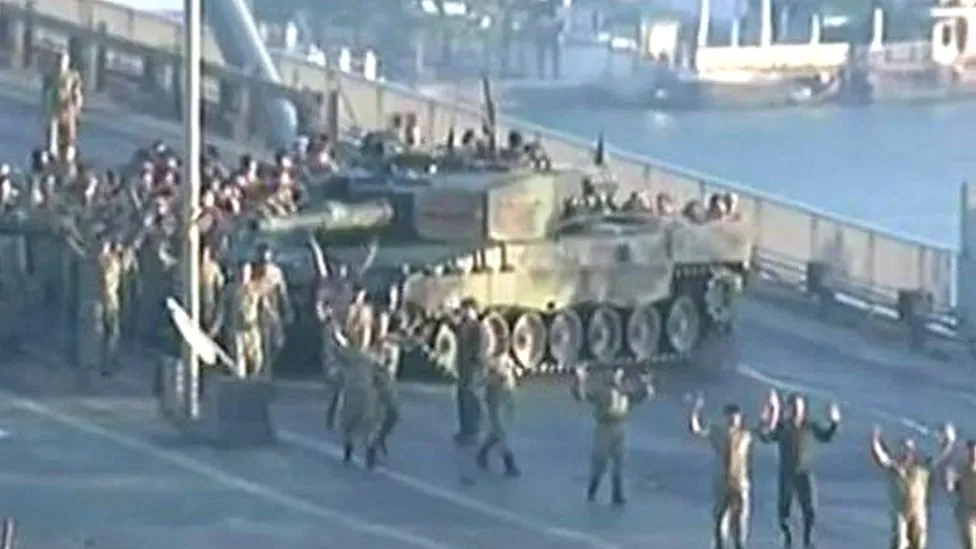
The movement gained international attention in the aftermath of the failed coup attempt on July 15, 2015, in Turkey. The coup attempt, attached to a faction within the Turkish military, led to a turbulent period in the country. In the wake of the coup, many individuals associated with the Gülen Movement, including educationists and teachers, faced severe repercussions.

Soldiers with their hands up on Istanbul's Bosporus Bridge

Source: https://www.bbc.com/news/world-europe-36855846

Following the coup attempt, educationists and teachers associated with the Gülen Movement became targets of government crackdowns. Thousands of educators were dismissed under a state of emergency decrees (KHK), leaving them without job security and facing social stigma. The government accused them of being members of a terrorist organisation, specifically the Gülen movement, and subjected them to legal proceedings.

One notable case in this context is the decision of the European Court of Human Rights (EHRC) regarding teacher Yalcinkaya. The EHRC recognised that Yalcinkaya’s dismissal from her teaching position violated her rights to freedom of expression and association. This decision shed light on the challenges faced by educators associated with the Gülen Movement and highlighted the need to safeguard human rights after the coup attempt.

Source: https://www.turkishminute.com/2023/09/11/ecthr-soon-announce-decision-turkish-teacher-convicted-of-gulen-link/

It is important to note that accusations against the parents of the quintuplets and their siblings, Abdülkadir and Nurcan Arslan, who were arrested and subsequently imprisoned, are not considered crimes in any part of the world. It was stated that Abdülkadir Arslan worked at a private teaching institution previously closed by a decree law, and his wife was a housewife. The couple was accused of being members of the Gülen movement, resulting in their separation from their children. This situation raises concerns about the well-being of the children and the impact of parental absence on their development. Furthermore, one of the children has a health problem, which adds to the complexity of their situation. The absence of their parents and the challenges they face as a result of the coup attempt have undoubtedly affected their overall well-being and access to necessary medical care.

Despite these difficulties, some people in Turkey have shown support for the family through social media platforms. By raising awareness and advocating for their rights, individuals have come together to provide assistance and solidarity to the quintuplets and their siblings. This support demonstrates the power of social media in mobilising communities to address the challenges faced by individuals affected by the aftermath of the coup attempt.

The Gülen Movement’s commitment to education has been a cornerstone of its efforts. The movement has established numerous educational institutions worldwide, focusing on providing a comprehensive education that combines modern subjects with an emphasis on religious values. These Gülen-inspired schools have been successful in countries such as Germany, where they cater to Turkish immigrants and their offspring. The movement’s educational agenda aims to equip students with the skills and knowledge necessary to thrive in the modern world while maintaining a solid connection to their religious heritage.

However, the educational initiatives of the Gülen Movement have faced significant challenges after the failed coup attempt. The government’s crackdown on the movement’s members and institutions has resulted in the closure of many Gülen-inspired schools and educational centres. The dismissal of teachers and educationists associated with the movement has disrupted the education of countless students who relied on these institutions for their learning.

The impact of the coup attempt and subsequent government actions on the education sector goes beyond the closure of schools. The stigmatisation and persecution of educators associated with the Gülen Movement have created an atmosphere of fear and insecurity within the education community. Teachers, once respected and valued for their dedication to education, now find themselves marginalised and targeted. This not only hampers the progress of education but also undermines the fundamental principles of human rights and freedom of expression.

The plight of the quintuplets and their sibling, left without their parents due to their alleged affiliation with the Gülen Movement, highlights the human cost of the political turmoil in Turkey. Separated from their loved ones, these children face an uncertain future and the challenges of growing up without parental guidance. The emotional and psychological impact of their situation cannot be underestimated, particularly considering that one of the children has a health problem that requires extra care and support.

Source: https://www.turkishminute.com/2023/10/04/turkish-court-send-parents-of-6-to-prison-on-gulen-charges-conviction/

In such difficult circumstances, social media has become a powerful tool for mobilising support and raising awareness. People from all walks of life, both within and outside Turkey, have used social media platforms to express solidarity with the quintuplets and their siblings. Through hashtags and online campaigns, individuals have shared their concerns, donated resources, and advocated for their rights. This outpouring of support demonstrates the potential of social media to galvanise communities and bring attention to pressing human rights issues.

In conclusion, the Gülen Movement, focusing on education and intercultural dialogue, has significantly contributed to society globally. However, the movement and its members have faced challenges and human rights issues in the aftermath of the failed coup attempt in Turkey. It is crucial to recognise the impact on educationists and teachers associated with the movement, the separation of families, and the importance of safeguarding human rights in such circumstances. The support individuals show through social media platforms highlights the resilience and solidarity among communities in times of adversity. As the international community grapples with the aftermath of political turmoil, it is vital to prioritise human rights and ensure that education remains a fundamental right for all children, irrespective of their parents’ affiliations.

Educational Challenges in Taiwan: Mental Health in Taiwanese High Schools

Written by Thao Pham.

In the chronicles of global education, Taiwan has etched its name with an education system renowned for academic excellence and unwavering standards. However, beneath the surface of this claim lies a pressing concern – the mental health challenges faced by high school students. The Taiwanese education system, marked by intense competition and high expectations, places an enormous burden on students striving for scholastic distinction and coveted spots in prestigious universities. This relentless pursuit of achievement, compounded by societal expectations and the looming fear of failure, exacts a toll on the mental well-being of students, giving rise to pervasive issues such as chronic stress, anxiety, depression, or burnout.

Navigating the landscape of mental health in Taiwanese high schools is further complicated by deeply ingrained cultural stigmas. These often shroud the struggles in silence and shame, creating barriers that hinder students from seeking help and perpetuating a distressing cycle. While strides have been made in addressing these concerns, there remains an imperative to foster a culture of openness and support. This article endeavours to unravel the complex layers of these struggles and aims to spark conversations that propel positive transformation.

Education in Taiwan

The Taiwanese education system is deeply rooted in the legacy of Confucian values and places a strong emphasis on academic achievement, discipline, and respect for authority. Spanning several years of education, it aims to prepare students for future scholastic and career pursuits. It begins with six years of elementary education, where students acquire foundational knowledge in subjects such as mathematics, Chinese language, English, science, and social studies. This phase focuses on building a strong educational base and developing essential skills in communication and problem-solving. Following elementary school, students progress to three years of junior high school. Here, they delve deeper into various subjects and receive more specialised instruction.

The curriculum expands to include subjects such as literature, history, geography, biology, chemistry, and physics. Additionally, students begin to explore elective courses based on their interests and career aspirations. The final stretch of the Taiwanese education system consists of three years in senior high school. This phase is crucial as it prepares students for the university entrance exams, which have a significant impact on their future academic pursuits. Senior high school students focus intensively on exam preparation, dedicating considerable time and effort to studying and reviewing the required curriculum.

The pinnacle of this academic odyssey culminates in the monumental university entrance exams, a rite of passage that echoes Confucian principles of meritocracy. The General Scholastic Ability Test (GSAT), commonly known as the joint college entrance exam, assesses students’ knowledge and skills across various subjects, including Chinese language, English, mathematics, natural sciences, and social sciences. The results of this exam play a vital role in determining students’ eligibility for admission into universities and colleges. Success in these exams is often equated not just with educational achievements but with societal stature.

To support students in their academic journey, Taiwan has made significant investments in education, with a focus on providing modern facilities and resources to enhance the learning experience. Schools are well-equipped with advanced laboratories, libraries, and multimedia classrooms. The integration of technology in education has become increasingly prevalent, with the use of computers, tablets, and online resources to support teaching and learning. The country also has a robust network of cram schools, also known as buxiban. Approximately 70 per cent of high school students in Taiwan attend cram schools, and 60 per cent of middle school students attend them as well. These privately-run institutions offer supplemental education and exam preparation services. Cram schools provide additional tutoring, practice exams, and study resources to help students excel in their studies and increase their chances of success in the university entrance exams.

The Taiwanese education system is characterised by a strong commitment to quality education and continuous improvement. Schools in Taiwan are equipped with modern facilities, and teachers undergo rigorous training to ensure their competence and ability to deliver effective instruction. The emphasis on discipline and respect for authority creates a structured learning environment that promotes academic excellence and personal growth. Yet, woven into this tapestry of academic dedication are the challenges that underpin the mental health of high school students. The intense competition inherent in the system, coupled with societal expectations and the fear of failure, casts a looming shadow. Stress, anxiety, and, at times, depression become companions in this arduous journey.

An English quiz in Taichung Municipal Chu-Jen Junior High School / Photo by Chia Ying Yang via Wikimedia

Mental health issues and their stigmas

In Taiwan, high school students face significant mental health challenges that have a profound impact on their well-being, academic performance, and overall quality of life. Stress, anxiety, depression, and burnout are common issues experienced by Taiwanese high school students, with alarming statistics highlighting the prevalence of these mental health concerns. Academic pressure is a major contributor to the mental health issues faced by high school students in Taiwan. The intense focus on academic achievement and the competitive nature of university entrance exams places immense pressure on students. According to a study conducted by the Child Welfare League Foundation, over 70 per cent of high school students in Taiwan experience high levels of stress. The fear of not meeting expectations and the pressure to excel academically can lead to heightened anxiety levels and burnout.

One of the significant barriers to addressing mental health issues among Taiwanese high school students is the cultural stigma surrounding mental health. Traditional beliefs and cultural norms often view mental health problems as a sign of weakness or personal failure. This stigma prevents students from seeking help and perpetuates the cycle of suffering. According to research conducted by the Taiwan Suicide Prevention Center, the suicide rate among students aged from 15 to 24 has been increasing, underscoring the urgency of addressing mental health concerns.

Efforts have been made in Taiwan to address mental health issues among high school students. Schools have implemented counselling services and mental health programs to provide support and resources for students. The Ministry of Education has also developed guidelines for mental health promotion in schools, emphasising the importance of awareness, prevention, and early intervention. These initiatives aim to create a supportive environment and reduce the stigma surrounding mental health. However, despite these efforts, there are still many challenges in effectively addressing mental health issues among Taiwanese high school students. One of the key challenges is the lack of sufficient resources and funding for mental health support in schools. The demand for mental health services often exceeds the available resources, leading to long waiting lists and limited access to timely support for students.

Another challenge is the need to increase awareness and education around mental health. While progress has been made in reducing the stigma associated with mental health, there is still a long way to go. Many students, parents, and educators may still lack understanding and knowledge about mental health issues, which can hinder early identification and intervention. Additionally, the pressure to achieve high academic performance remains deeply ingrained in the education system and society, making it difficult to shift the focus towards holistic well-being. The emphasis on standardised tests and university entrance exams creates a competitive environment that prioritises academic success over mental well-being. To address this challenge, a comprehensive approach is needed, involving not only schools but also policymakers, parents, and the wider community.

To truly address mental health issues among high school students in Taiwan, it is crucial to rely on facts and statistics to highlight the severity of the problem. By emphasising the prevalence of stress, anxiety, depression, and burnout among students and showcasing the impact of these issues on their well-being and academic performance, we can raise awareness and advocate for better support and resources. Additionally, it is important to continue promoting a supportive and inclusive environment in schools, where students feel comfortable discussing their struggles and seeking help without fear of judgment or stigma.

Conclusion

In conclusion, the Taiwanese education system, deeply rooted in Confucian values, places a strong emphasis on academic achievement. High school students face intense competition and pressure to excel academically and secure admission to prestigious universities. This, combined with a rigorous curriculum, heavy workload, and societal expectations, can contribute to mental health challenges such as stress, anxiety, and a sense of constant pressure. Promoting a supportive environment, addressing stigma, and prioritising students’ well-being are essential steps toward addressing these challenges and fostering a healthier educational culture in Taiwan. Last but not least, it is essential to recognise that the problem discussed above extends beyond the Taiwanese borders, resonating with many other countries in the Sino-sphere where the pressures of academic achievement and the accompanying mental health challenges are shared experiences.

References

Cover Image by NSaad (WMF) via Wikimedia Commons

Universal Periodic Review of the Comoros

This report drafted by Broken Chalk contributes to the fourth cycle of the Universal Periodic Review (UPR) for the Union of the Comoros. This report focuses exclusively on human rights issues in Comoros’s education field.

  • Comoros, formally known as the Union of The Comoros, is an independent country made up of three islands in Southeastern Africa, located at the northern end of the Mozambique Channel in the Indian Ocean.
  • Comoros stands as one of the most economically disadvantaged and underdeveloped countries globally. The three islands contend with insufficient transportation connections, a youthful and swiftly growing population, and a scarcity of natural resources.
  • There are two educational systems concurrently in Comoros: l’École Quranic (Koranic School) and l’École Officielle (Official School). Almost all children attend a Quranic school for 2 or 3 years before beginning primary school. L’Enseignement elémentaire(Primary school) is six years, starting at age six.
  • In Comoros, it is mandated by law that every child must undergo eight years of schooling from the age of seven to fifteen. This education system consists of six years dedicated to primary education, catering to students aged six to twelve, succeeded by an additional seven years of secondary school education.
  • Today, the education system comprises the formal school, taught mainly in French, and the Koranic school due to the extended majority of Comorans being Sunni Muslims.
  • Often, due to financial issues, many families send their children to Koranic schools, where students can receive an Islamic education for free.
  • This report first explores the main issues in the educational field in Comoros, reflecting on the recommendations the country received in the 3rd cycle UN UPR review in 2019 and its progress since. Finally, Broken Chalk offers some suggestions to Comoros on further improving its human rights in the educational field.

By Leticia Cox

Download the PDF.

46th_Session_UN-UPR_Country_Review_Comoros_S

References

https://www.ohchr.org/en/hr-bodies/upr/km-index

Letter by the High Commissioner to the Foreign Minister, 2018. https://www.ohchr.org/sites/default/files/lib-docs/HRBodies/UPR/Documents/Session32/KM/HC_letter_Comoros_ENG.pdf

https://www.ilo.org/dyn/natlex/docs/ELECTRONIC/72696/74026/F-92095240/COM-72696.pdf

https://www.ohchr.org/sites/default/files/lib-docs/HRBodies/UPR/Documents/Session32/KM/Infographic_Comoros.pdf

https://bnn.network/breaking-news/comorian-teachers-announces-strike-over-unfulfilled-promises-to-improve-welfare/

https://www.unicef.org/media/135826/file/Comoros-2022-COAR.pdf

https://uis.unesco.org/sites/default/files/country-profile/Comoros_SDG4-Profile.pdf

https://documents1.worldbank.org/curated/en/354101559590231457/pdf/Comoros-Towards-a-More-United-and-Prosperous-Union-of-Comoros-Systematic-Country-Diagnostic.pdf

Cover image by aboodi vesakaran via Pexels

Universal Periodic Review of the Dominican Republic

This report drafted by Broken Chalk contributes to the fourth cycle of the Universal Periodic Review for The Dominican Republic. This report focuses exclusively on human rights issues in Domincan Republic’s education field.

  • The Dominican Republic overcame many challenges over the last two decades to achieve its enhanced socioeconomic status. Vital reforms and policies allowed the country to prevail over the obstacles of the 2003-4 economic crisis, with an improvement that halved the number of people living in poverty today.[i]
  • As of 2023, among the approximately 11 million people inhabiting the Dominican Republic, 2.9 million students have enrolled in public or private schools. The development strategies that reinforced children’s access to education result from a joint effort with the participation of the government, international organisations, and personal and academic sectors. [ii]
  • One of the most significant accomplishments of recent years is that compulsory education was extended to 13 years instead of the previously mandated eight years. Three levels of the educational structure in the Dominican Republic – pre-primary (3 years), primary (8 years), and secondary level (4 years) – are also being offered free of charge, except the 4th level, higher education.[iii]
  • Under SDGs and the “National Development Strategy 2010-30”, authorities of the Dominican Republic pledged to ensure education for all regardless of gender, financial status, or territorial placement.[iv] To boost literacy standards, multiple projects have focused on the foundational development of children. These frameworks somewhat weakened during the COVID-19 pandemic. Still, the Dominican Republic took severe account of the modernisation of digital learning and supplied necessary technological equipment for residents in due time.[v]
  • While acknowledging all past efforts, Broken Chalk further aims to highlight educational injustices that continue negatively affecting many Dominican Republic communities.
  • Despite the promising enrolment rates, the number of drop-outs has been rising since 2009. In 2018, only 75% of children in primary education finished 4th, and 63% completed 6th grade. Insufficient secondary education attainment creates inequalities and reduces skilled human capital in the labour market.[vi]
  • Girls’ education is likewise at risk, as the lower secondary school completion rate of 74.5%  for women was below the Latin American and Caribbean (LAC) average of 83% in 2021.[vii] Their studies usually end due to gender-based stereotypes, a high proportion of teenage pregnancies, and sexual harassment.[viii]
  • Thousands of Dominican children of foreign descent – primarily Haitian – were rendered stateless in 2013, and despite the national regularisation plan 2018, many still face discriminatory treatment. Unable to reclaim their citizenship, these children are also being denied an education.[ix]
  • Broken Chalk urges the Dominican Republic to uphold its domestic and international human rights obligations by considering the issues and their subsequent recommendations in the present report.

By Abigel Farkas

Download the PDF.

46th_Session_UN-UPR_Country_Review_Dominican_Republic_S

References
  • [i] IMF. “Dominican Republic: 2023 Article IV Consultation-Press Release; Staff Report; and Statement by the Executive Director for Dominican Republic”.
  • International Monetary Fund, Country Report No. 2023/225, 22 June, (2023): p. 4. www.imf.org/en/Publications/CR/Issues/2023/06/22/Dominican-Republic-2023-Article-IV-Consultation-Press-Release-Staff-Report-and-Statement-by-535083.
  • [ii] Dede, Chris. “Episode 150 | How the Dominican Republic Overcame Educational Challenges of the Pandemic.” Silver Lining for Learning, May 7, (2023). https://silverliningforlearning.org/episode-150-how-the-dominican-republic-overcame-educational-challenges-of-the-pandemic/.
  • [iii] Diaz, Katia. “COVID-19 and Digital Learning in the Dominican Republic: Implications for Marginalized Communities.” Current Issues in Comparative Education (CICE), Teachers College, Columbia University 23, no. 2 (2021): p. 144–45. https://www.tc.columbia.edu/media/centers-amp-labs/cice/pdfs/special-issue-2022–vol-24-issue-2/859-233-PB.pdf.
  • [iv] OECD, ed. “Latin American Economic Outlook 2019: Development in Transition.” OECD Publishing, (2019): p. 210. https://www.oecd.org/dev/americas/Dominican-Republic-Country-Note-Leo-2019.pdf.
  • [v] Diaz, Katia. “Uncovering Educational Inequalities: COVID-19 Digital Learning Strategies in the Dominican Republic.” Current Issues in Comparative Education (CICE), Teachers College, Columbia University 24, no. 2 (2022): 151–62. https://www.tc.columbia.edu/media/centers-amp-labs/cice/pdfs/special-issue-2022–vol-24-issue-2/859-233-PB.pdf.
  • [vi] OECD. Multi-Dimensional Review of the Dominican Republic: Towards Greater Well-Being for All. OECD ILibrary. Paris: Organisation for Economic Co-operation and Development, (2022): p. 71-72. https://www.oecd-ilibrary.org/docserver/560c12bf-en.pdf?expires=1692701204&id=id&accname=guest&checksum=007DC625A9660F225058A2679011AFAA.
  • [vii] The World Bank. n.d. “Dominican Republic Gender Landscape.” World Bank Gender Data Portal. https://documents1.worldbank.org/curated/en/099934406302284977/pdf/IDU03bd707a80b5e204a9b098e0096a5c56a8e2b.pdf.
  • [viii] Núñez, Isamar Marte. “Why Girls Aren’t Learning in the Dominican Republic?” www.unicef.org, April 18, (2022). https://www.unicef.org/dominicanrepublic/en/node/2026.
  • [ix] Freedom House. “Dominican Republic: Freedom in the World 2022 Country Report,” (2022). https://freedomhouse.org/country/dominican-republic/freedom-world/2022.

Cover image by Phyrexian via Wikimedia

Education Monitor: Around The Globe between the 16th and 31st of August, 2023

Broken Chalk proudly presents the eleventh edition of “Education Monitor: Around the Globe” between the 16th and 31st of August, 2023. Broken Chalk aims with this letter to increase public awareness of  Educational problems, challenges, and violations in the scope of the world. This newsletter is unique. This is a weekly newsletter in which we attempt to monitor and convey educational news from around the world in a concise manner. This monitor will be published biweekly with the effort of our young and enthusiastic team.

You can contribute to our work if you like. If you witness any violations in the scope of education, you can write the comment part of this post. Broken Chalk will try to address the issue in its next monitor edition.

To Download it as pdf : Education Monitor: Around The Globe between the 16th and 31st of August, 2023

Broken Chalk Platform, in March 2019, was founded by a group of educators abroad who experienced and have been experiencing severe human rights violations in Turkey and had to ask for asylum currently in several countries.

These education volunteers also suffered greatly and started their new lives in their new countries without human rights violations. They gained respect just because they were considered human beings in those countries. However, they left one part of their minds and hearts in their homeland. They assigned themselves a new duty, and the human rights violations they left behind had to be announced to the World. A group of education volunteers who came together for this purpose started their activities under the Broken Chalk platform’s umbrella. However, the Broken Chalk platform was not enough to serve their aims. Therefore, they completed their official establishment as a Human Rights Foundation in October 2020.

Broken Chalk is now much more than a platform, and we have reviewed and enlarged our vision and mission within this framework. Violations of rights would be the first in our agenda in the field of Education all over the World. At the point we reached today, Broken Chalk opened its door to all individuals from all across the globe, from all professions, and to all individuals who say or can say ‘I also want to stand against violations of human rights in Education for our future and whole humanity, where our generations grow up together.’

Education is essential because it can help us eliminate the evils from society, introduce, and increase the good. We want to draw the public’s and stakeholders’ attention to the fact that Education is in danger in several different parts of the World. The attacks are wide-reaching, from the bombing of schools to the murder of students and teachers. Raping and sexual violence, arbitrary arrests, and forced recruitment also occurred, instigated by armed groups. Attacks on Education harm the students and teachers but also affect the communities in the short and long term.

We invite all individuals who want to stop human rights violations in Education to become Volunteers at Broken Chalk.

Universal Periodic Review of New Zealand

This report drafted by Broken Chalk contributes to the fourth cycle of the Universal Periodic Review for New Zealand. This report focuses exclusively on human rights issues in New Zealand’s education field.

  • The education system of New Zealand consists of three levels. Early childhood education is from birth to school entry age. Primary and secondary education ranges from 5-19 years of age. Schooling is compulsory from ages 6-16. Once this is completed, students move to higher and vocational education.
  • Early Childhood Education (ECE) is not compulsory; however, it is attended by 96.8% of children. It is important to note that there are different types of ECE services.[i] The kind of learning that the children receive at an ECE service or Kōhanga Reo follows the guidance of the Te Whāriki curriculum framework.
  • The Te Whāriki curriculum framework has two pathways. Te Whāriki a te Kōhanga Reo is an indigenous approach which is deeply rooted in te reo Māori for Te Kōhanga Reo. Te Whāriki Early Childhood Curriculum is a bicultural framework for early childhood services. Both frameworks are distinct and hold equal significance in their respective contexts.[ii]
  • Te Kōhanga Reo entails a Māori immersion environment for tamariki and their whanau. It caters to tamariki from birth to school age.[iii]
  • Education is free in schools across all government-owned and funded grades. This free education is applicable if you are a New Zealand citizen or a permanent resident.
  • In the Māori medium of education, students are taught at least 51% of the education in Māori language. In English-medium schools, students learn te reo Māori as a language subject. The Māori language is also used in English-medium schools for teaching curriculum subjects up to 50% of the time. The English-medium schools follow the New Zealand Curriculum, whereas the Māori-medium schools follow a curriculum based on Māori philosophies.[iv]

By Caren Thomas

Download the PDF.

46th_Session_UN-UPR_Country_Review_New_Zealand_S

References

[i] Ministry of Education. “Education in New Zealand.” Accessed September 25, 2023. https://www.education.govt.nz/our-work/our-role-and-our-people/education-in-nz/#Early

[ii] Te Whāriki Online. “Te Whāriki Online”. Accessed September 25, 2023. https://tewhariki.tki.org.nz

[iii] Ministry of Education. “For parents and whānau.” Accessed September 25, 2023.  https://parents.education.govt.nz/early-learning/early-childhood-education/different-kinds-of-early-childhood-education/

[iv] Ministry of Education. “Education in New Zealand.” Accessed September 25, 2023. https://www.education.govt.nz/our-work/our-role-and-our-people/education-in-nz/#Early

Cover image by Ronnie Macdonald on Flickr.