How war in Ukraine affects education

Written by Katerina Chalenko

On February 24, 2022, Thursday, at 3:40 am, a full-scale war broke out in Ukraine.

Undoubtedly, the hostilities in the country have a negative impact on the psychological and physical condition of the citizens, both children and adults. Entire families were forced to hide from constant shelling, leave their homes and flee to other regions or countries due the danger situation in the regions where they live.

The martial law in Ukraine has changed the lives of every citizen and affected all spheres of life.

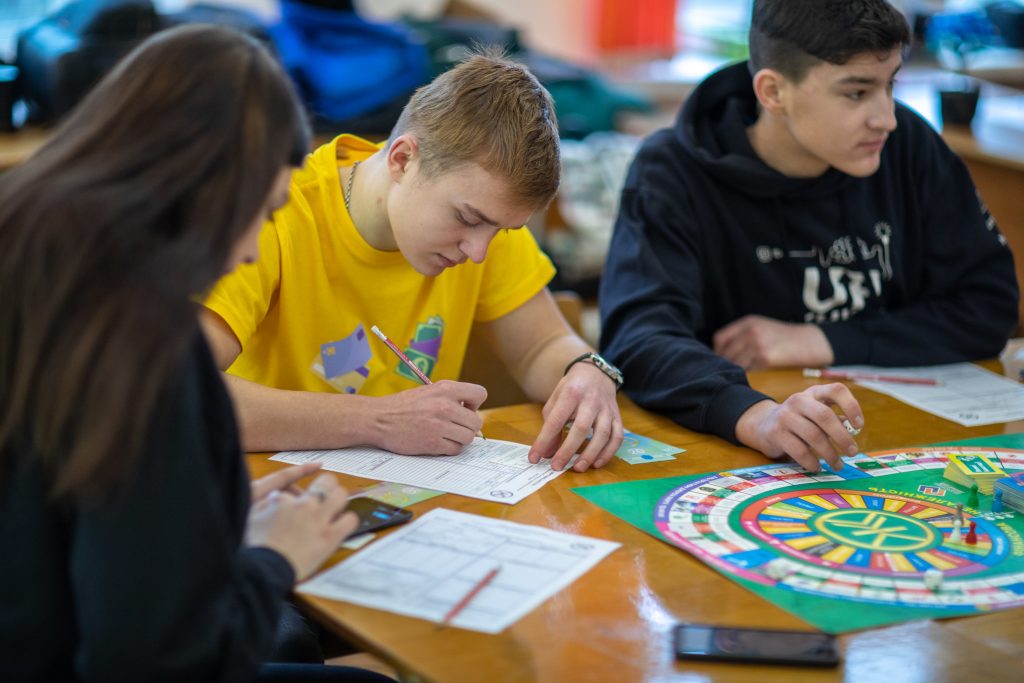
EU projects on education and psychosocial support to children in Eastern Ukraine. Photo by EU Civil Protection and Humanitarian Aid on Flickr.

But how did the war affect education in Ukraine?

Within weeks of the invasion, nearly 16 million Ukrainians were forced to flee their homes and seek refuge abroad and in other parts of Ukraine. Many of these were women and children, causing significant harm to Ukraine’s majority female teaching force and their students.

During the COVID-19 pandemic, teachers around the world developed remote teaching skills. Now that the war has again divided their classrooms, Ukrainian teachers have adapted these skills to teach students across Europe and the world.

Like Ukraine itself, which has shown tremendous resistance, educators (teachers, professors, etc.) have continued their educational efforts despite enormous odds.  Since the military invasion, teachers have continued to teach their students in bomb shelters during active bombardment. Gas stations and grocery stores powered by generators are turning into centers for filming virtual lessons.

Ukraine’s response and persistent challenges to Education

Ukraine’s literacy rate is 99.8%, one of the highest in the world, and education is a source of national pride. In wartime, the Ukrainian government is working to adapt the education system to new realities.

The day after the full-scale invasion of Ukraine began on February 24, the Ministry of Education and Science of Ukraine recommended that the educational process in educational institutions of all levels be suspended and that students be sent on a two-week vacation. During this time, part of Ukraine’s territory was temporarily occupied, and a number of cities and villages (Mariupol, Chernihiv, Sumy, Kharkiv, and others) became the scene of active hostilities.

On March 14, the educational process began to resume in areas where the security situation allowed it.

Children who live far from the hostilities zone and did not move to other regions of Ukraine or abroad during the war are enrolled in full-time, distance, or mixed forms of education.

However, due to prolonged air raids and power outages of several hours, the educational process in the safe areas is also interrupted. After all, when teachers and students are in a shelter during an air raid or without electricity and, accordingly, high-quality Internet, participants in the educational process cannot continue either full-time or distance learning at this time. Therefore, students spend a significant portion of their school time studying on their own. All this only exacerbates educational losses.

Students, who have been forced to change their place of residence within Ukraine, sometimes even repeatedly, experience interruptions in their education and educational losses. For internally displaced students, one of the biggest challenges is adapting to a new environment and integrating into a new educational institution and establishing communication with teachers and peers. Loss or separation from loved ones, separation from friends, change of residence, stress from the events experienced, because someone left the very “center of hell” – all this causes psychological stress for the child.

One of the most difficult is the situation with children living in the hostilities zone or on the contact line or close to the hostilities zone. There is currently no information on the number of such children who remain close to these zones.

Children in these territories are in constant danger, under fire, forced to hide in basements or other safe places as far as possible. There is often no communication, electricity, gas, water, or heat supply in these areas, some of the houses are destroyed, and children have no more or less equipped shelter or refuge. Therefore, the main thing here is to preserve the lives and health of children, and the educational process should be implemented whenever possible – and only in those forms that do not expose children to additional danger. Some children do not study at all, while others study independently where possible. Therefore, this group of children will suffer the greatest educational losses. At the same time, as we have already noted, children in difficult life circumstances also need special attention.

Each group of students has two common problems. These are educational losses, which are different for all groups of students, because it is clear that children who live far from the combat zone and have not changed their place of residence will have less educational losses than other children. Therefore, each educational institution and each community should have an individual strategy for compensating for educational losses, as well as a general state Ukrainian strategy for compensating for educational losses.

Another common problem is the need for psychological assistance to all groups of students, the level of which will also vary depending on the circumstances experienced by the child.

Fear and hope in eastern Ukraine: education in the shadow of conflict. Photo by EU Civil Protection and Humanitarian Aid on Flickr.

Access to education requires

First, education in times of war is an important topic that requires cooperation between government agencies, aid organizations, and the international community to maximize educational opportunities and protect children in such difficult circumstances. Cooperation with local organizations, social workers, and independent experts is needed to ensure that educational opportunities for children are adapted and accessible.

Secondly, to ensure access to education during war, it is necessary to provide sufficient financial resources, appropriate infrastructure and equipment.

Thirdly, it is important to remember that education in time of war is not limited to learning with books. Children need a variety of educational opportunities, including social and emotional support, cultural activities, and access to media and technology.

Fourth, education should be adapted to the situation of war and meet the needs of children to help them adapt to life in difficult circumstances in the future.

And most importantly, one of the key aspects of education in times of war is ensuring the safety of children and teachers. During war, schools are often targeted, resulting in loss of life and destruction of equipment. Schools need to be secured to protect the lives of children and teachers and ensure the continuity of the educational process.                                              

In addition, education in time of war should be accessible to all children, regardless of their social status or religious affiliation. War-related migration and unequal access to education can lead to discrimination and exclusion of some children. It is necessary to ensure accessible and equal educational opportunities for all children to prevent discrimination and ensure equal chances for all children in the future. This requires cooperation with local organizations, social workers, and independent experts to develop and implement strategies to ensure that education is accessible to all children during war.

Students in Ukraine engage in leisure activities. Photo by UNICEF Ukraine.

Conclusions

For sure, war has a significant negative impact on education, but with the right efforts and support, it is possible to mitigate these effects and help children in the future. Of course, many students do not have access to educational programs or the opportunity to join online learning. Those students who have traveled abroad face language problems and struggle to adapt to a different learning system.

Despite the fact that every student was in a terrible and difficult situation, the educational process resumed in spite of everything.

References
https://texty.org.ua/fragments/108683/yak-vijna-vplyvaye-na-ukrayinskyh-shkolyariv-doslidzhennya/

https://eo.gov.ua/de-i-iak-navchaiutsia-ukrainski-dity-v-chasy-viyny-problemy-propozytsii-rekomendatsii/2022/11/16/

https://lb.ua/blog/olena_vyshniakova/543064_osvita_pid_chas_viyni_shcho_zminilosya_i_yak.html

Education challenges in Guatemala

Written by Chiara Tomatis

Guatemala is a lower-middle-income country, representing the largest economy in Central America and accounting for 25% of the GDP of the Central American Common Market (CACM). Moreover, the International Monetary Fund (IMF), in its June 2019 report, confirmed that the country’s geographic and demographic characteristics allow it to have great potential for economic development. Another important factor, is that Guatemala is the most densely populated country in Central America, with a population of around 17 million[1], characterized by extreme youthfulness: one-third are under 15 years old, just under two-thirds are between 15 and 65 years old, and only 5.6% are over 65 years old[2]. Education in Guatemala has become increasingly accessible; however, low levels of literacy, educational attainment and retention remain as fundamental problems. Furthermore, there is a great disparity between rural and urban areas, men and women, and between indigenous and landina populations the biggest ethnic group. Some of the educational challenges that Guatemala is facing are limited access to education, poor quality of education, language barriers, poverty, gender inequality and violence.

Children in their classroom in El Renacimiento school, in Villa Nueva, Guatemala. Photo by Maria Fleischmann / World Bank on Flickr.

Limited access to education

A significant percentage of the Guatemalan population lives in rural areas, where access to education is limited due to inadequate infrastructure, teacher shortages and high costs. The population density in rural areas is motivated by the importance of the agricultural sector in the country, a characteristic of which is dual production. For example, the presence of large and efficient farms that produce bananas, oil palm, sugar along with other products for export, and small producers focused on the cultivation of basic cereals. This characterizes Guatemala as the Central American country with the largest number of subsistence farmers, about one million[3], leading to approximately 49% of the Guatemalan population living in rural areas. Some of them facing with the challenge of lacking basic resources, such as textbooks and teaching materials.

Language barriers

Guatemala is a multicultural land with a diverse population that includes many ethnic groups and has experienced an exponential increase in its inhabitants. Multiculturalism is a further prerequisite for the demographic conformation of the country. The Guatemalan population is diverse and includes 23 different ethnic groups, each of which has a distinct language and culture. The largest ethnic group is the Ladino group, which is formed by 56% of the population. They are generally non-indigenous Guatemalans, mestizos, and westernized Amerindians with western culture. About 42% of the inhabitants, 6.5 million people, belong to the numerous Maya people (among the most important are the Itzá, K’iche, Poqomchí, Q’anjob’al and Q’eqchi’)[4]. Moreover, it is steadily decreasing due to the so-called “Ladinisation” process, which refers to the phenomenon whereby Western culture is adopted by members of indigenous societies, who cease to identify themselves culturally as “indigenous”.

Tz’utuhil Maya class at a school in Panabaj, Guatemala. Photo by Erik Törner on Flickr.

However, disparities between indigenous and non-indigenous populations in terms of employment, income, health services and education remain. In Guatemala, racism and discrimination persist against these inhabitants who, although an integral part of the country’s society and economy, have no representation at the political level. In addition, many of these indigenous communities speak Mayan languages, which are not widely spoken outside these communities. This language barrier can make it difficult for children to learn in school, especially if they are taught in Spanish, the country’s official language. This discrimination also affects poverty levels in the country which impact 75% of indigenous people and 36% of non-indigenous people[5].

Poverty

Poverty is a significant obstacle to education in Guatemala, which as it turns out afflicts indigenous peoples the most, accentuating inequality. With 59% of the Guatemalan population living in poverty, mainly affecting rural areas where the most indigenous populations are located.

One indicator of current inequality is the GINI indicator, which in 2014 recorded a GINI coefficient of 48.3, the sixth highest in Latin America[6].

Families living in poverty often cannot afford to send their children to school or must rely on their children working to help support the family. Furthermore, although the economy is growing, the number of people living in poverty is increasing and social and economic inequalities are growing[7].

Gender inequality

Today, nationally, 81.5% of the population is literate, through it is possible to highlight a clear gender inequality. Although 51.5% of citizens are women and 48.5% are men, literacy is 78% and 85% respectively, both figures decrease in rural areas[8]. There may be many reasons for this, with cultural background and beliefs playing a primary role.

Violence and insecurity

The country is severely affected by the inequalities, violence and corruption that have historically affected the country. This directly and significantly impacts the education system; the high levels of violence have led to several critical issues that make it difficult for children and young people to access education and receive a quality education. The main critical issues are the vulnerability of young citizens to violence, a shortage of qualified educators/teachers who have decided to migrate or work in areas with less crime, and the negative impact this has had on the physical infrastructure of schools, leading to a lack of adequate spaces. This situation leads to an increased general sense of insecurity and instability that affects the social and economic development of the country.

Despite today’s critical issues, the Guatemalan administration has improved school coverage in recent decades. Since the peace accords of 1996, all administrations have supported the expansion of primary schooling and since 2006 the net enrollment rate at this level has averaged 95 per cent. Guatemala came close to achieving universal coverage in 2009 when the net enrolment rate at the primary level was 99%[9]. Since that year, however, Guatemala has suffered a slight setback (Figure 1). The reasons for this decrease require a deeper analysis of factors such as migration, climate change, the impact of social programs and demographic elements[10].

Nevertheless, overall, significant progress has been made in the expansion of educational provision, and the increase in net primary school enrollment is almost double the increase in population at the beginning of the 21st century[11].

In order to counter the limited access to education in rural areas, the low quality of education, the gender gap and racism present in this sector, the Guatemalan government can take several measures. Firstly, an increase in funding could be requested, the government could allocate more resources to increase quality, increasing the presence of facilities in rural areas and ensuring more resources for students and teachers. Building facilities in rural areas would improve access to education for all its citizens, limiting the inequality between Landini and indigenous people.

However, this effort in this area should be complemented by major efforts to address poverty, gender inequality and violence. Addressing these issues is therefore crucial to improving the overall education system and creating a brighter future for the country’s children and youth. This effort will be necessary and will need the full cooperation of the government, civil society, and international partners.

References:

Guerra Morales N.M., Rivas A.L., (Septiembre 2019). XII Censo Nacional de Población y VII de Vivienda – Principales resultados censo 2018, Insituto Nacional de Estadística Guatemala.

INE Guatemala, (2016).“República de Guatemala: Encuesta Nacional de “Condiciones de Vida 2014. Tomo I. Instituto Nacional de Estadística, República de Guatemala.

Mamo D., Berger D.N., Bulanin N., Alix L.G., Jensen W.M., (April 2022). The Indigenous World 2022, International Work Group for Indigenous Affairs (IWGIA), 36th Edition.

Minority Rights Group International(MRG), (January 2018). World Directory of Minorities and Indigenous Peoples. Guatemala and Maya.

Spross de Riviera V., and Abascal M., Guatemala: El efecto de las políticas públicas docentes, Inter-American Dialogue/CIEN, 2015).

United Nations Economic Commission for Latin America and the Caribbean (ECLAC), Food and Agriculture Organisation of the United Nations (FAO), Inter-American Institute for Cooperation on Agriculture (IICA), (2021). The Outlook for Agriculture and Rural Development in the Americas.

UNESCO-OREALC, Balance de los 20 años del Proyecto Principal de Educación en América Latina y el Caribe, Santiago de Chile, UNESCO, 2001.

World Bank, (2019). Guatemala Overview 2019.


[1] INE Guatemala, (2016).“República de Guatemala: Encuesta Nacional de “Condiciones de Vida 2014. Tomo I. Instituto Nacional de Estadística, República de Guatemala

[2] Guerra Morales N.M., Rivas A.L., (septiembre 2019). XII Censo Nacional de Población y VII de Vivienda – Principales resultados censo 2018, Insituto Nacional de Estadística Guatemala, pp. 9-13

[3] United Nations Economic Commission for Latin America and the Caribbean (ECLAC), Food and Agriculture Organisation of the United Nations (FAO), Inter-American Institute for Cooperation on Agriculture (IICA), (2021). The Outlook for Agriculture and Rural Development in the Americas, pp. 20-30.

[4] Minority Rights Group International (MRG), (January 2018). World Directory of Minorities and Indigenous Peoples. Guatemala and Maya.

[5] Mamo D., Berger D.N., Bulanin N., Alix L.G., Jensen W.M., (April 2022). The Indigenous World 2022, International Work Group for Indigenous Affairs (IWGIA), 36th Edition, pp. 402-411.

[6] World Bank, (2019). Guatemala Overview 2019.

[7] World Bank, (2019). Guatemala Overview 2019.

[8] Guerra Morales N.M., Rivas A.L., (septiembre 2019). XII Censo Nacional de Población y VII de Vivienda – Principales resultados censo 2018, Insituto Nacional de Estadística Guatemala, pp. 13.

[9] Spross de Riviera V., and Abascal M., Guatemala: El efecto de las políticas públicas docentes, Inter-American Dialogue/CIEN, 2015).

[10] Spross de Riviera V., and Abascal M., Guatemala: El efecto de las políticas públicas docentes, Inter-American Dialogue/CIEN, 2015).

[11] UNESCO-OREALC, Balance de los 20 años del Proyecto Principal de Educación en América Latina y el Caribe, Santiago de Chile, UNESCO, 2001.

Unlawful Deportation of Ukrainian Children to Russia

Written by Leticia Cox

Since the invasion of Ukraine by Russia in February 2022, it’s believed that more than 16,000 Ukrainian children have been forcibly transferred to Russia.

United Nations investigators have stated that Russia’s compelled displacement of Ukrainian children to Russia or areas under Russian control constitutes a war crime. According to the UN Commission of Inquiry on Ukraine, there is evidence of other war crimes, including hospital attacks, rape, torture, and wilful killings.

The Geneva Conventions and other international laws and agreements determine the rules for war crimes. Murder, extermination, enslavement, deportation or forcible transfer of population, imprisonment or severe deprivation of physical liberty in violation of fundamental rules of international law and torture are known as “crimes against humanity”– in some cases, “genocide”.

Military forces can’t deliberately attack civilians or the infrastructure they depend on, including power stations or water sources. Weapons, such as anti-personnel landmines and chemical or biological weapons, are banned, and the sick and the wounded must be cared for, including injured soldiers, who have rights as prisoners of war.

In March, The International Criminal Court (ICC) in The Hague formally indicted the Russian President, Vladimir Putin, and Maria Lvova-Belova, the Children’s Commissioner, on charges of orchestrating the mass abduction of Ukrainian children.

As a result, an international arrest warrant was issued for Putin, highlighting the pace with which the international legal community has pursued allegations of war crimes amid Russia’s invasion of Ukraine.

These instances mark the ICC’s first cases since its prosecutors initiated an investigation into war crimes, crimes against humanity, and genocide in Ukraine the previous February.

The pre-trial judges of the court have asserted that there are “substantial grounds to believe that each suspect holds responsibility for the war crime of forcibly displacing the population, as well as the unlawful transfer of population from occupied areas of Ukraine to the Russian Federation, to the harm of Ukrainian children.” The judges chose to disclose the suspects’ names to prevent further offences.

Initial reports appeared in the previous spring, revealing that Ukrainian children residing in occupied territories were being transported to Russia, with some even being adopted by Russian families. While Russia framed its actions as a humanitarian effort to rescue Ukrainian children from the war, Ukraine has accused Russia of committing genocide and characterizing these actions as war crimes.

Who are the children affected, and where do they come from?

The purported victims encompass children taken from Ukrainian state institutions within the occupied regions, children whose parents had sent them to Russian-administered “summer camps” from which they never returned, children whose parents were detained by Russian occupying forces, and children orphaned due to the conflict.

Most Ukrainian children captured by Russia originate from the regions currently occupied in the south and east of Ukraine. These regions include Kherson, Kharkiv, Zaporizhzhia, Donetsk, and Luhansk, along with a smaller area in the Mykolaiv region.

Russia has acknowledged holding at least 1,400 Ukrainian children it designates as orphans, although it indicated that at least 2,000 had entered Russia unaccompanied. Additionally, several hundred children from the occupied areas remain in Russia after attending “re-education” camps with parental consent, yet were not returned as expected.

Since the invasion, approximately 400 Ukrainian orphans have been adopted by Russian families, as reported by the Ukrainian Regional Center for Human Rights, which based its assessment on statements from the Russian government.

Russia asserts that an additional 1,000 orphans are awaiting adoption. Maria Lvova-Belova, the Russian Children’s Commissioner, has recounted “adopting” a 15-year-old child from Mariupol, a city in southeastern Ukraine devastated and seized by Russian forces.

Nonetheless, many of these Ukrainian children have surviving relatives diligently searching for them. Roughly 90% of Ukrainian children in state care during the invasion were classified as “social orphans,” indicating they had family members. Still, these relatives lacked the means to care for them.

The Russian government’s declarations regarding the orphans withhold their identities and pertinent details, making it challenging for Ukrainian and international authorities to identify and monitor them.

In certain instances, relatives have recognized children through videos disseminated by Russian state media, initiating efforts to secure their return. There are also documented cases of children ending up in Russian state care after fleeing the conflict in Ukraine via evacuation buses to Russia, as well as instances where children were separated from their parents in Russian filtration camps.

What are the “re-education” summer camps?

Over 6,000 Ukrainian children from the occupied areas attended summer camps funded by the Russian government. Several hundred of these children have not been reunited with their families. These camps, described as “re-education camps” in a February study by Yale University, were promoted by the occupying authorities as a means for children to experience peace from the war.

Since the onset of the conflict, even children as young as four months residing in occupied territories have been transported to 43 camps across Russia, including in the annexed Crimea and Siberia, for education with a pro-Russian patriotic and military focus.

Some parents have managed to retrieve their children by embarking on arduous journeys from Ukraine through Poland and the Baltics to southern Russia. Others have entrusted clandestine networks of anti-Putin volunteers with the power of attorney to facilitate their children’s extraction from Russia. However, videos released by regional Russian occupying authorities in November revealed hundreds of children still residing in these camps.

The United Nations Convention on the Prevention and Punishment of the Crime of Genocide forbids the “forcible transfer of children of the group to another group,” the UN Convention on the Rights of the Child prohibits the “illicit transfer and non-return of children abroad.” The specific international law section under which the ICC intends to pursue this case remains uncertain.

Russia claims its actions are intended to protect Ukrainian children from the conflict. Dmitry Peskov, the spokesperson for Putin, has additionally stated that Russia does not acknowledge the authority of the ICC.

“The decisions of the international criminal court have no meaning for our country, including from a legal point of view,” the foreign ministry spokeswoman, Maria Zakharova, said on her Telegram channel. “Russia is not a party to the Rome statute of the international criminal court and bears no obligations under it.”

Can President Putin be arrested and tried by the ICC?

Currently, President Putin of Russia exerts undisputed authority within his homeland, making it unlikely that the Kremlin would hand him over to the ICC. As long as he stays in Russia, Putin faces no risk of arrest.

However, if Putin were to leave the country, the potential for detention would arise. Considering the substantial restrictions on his international mobility due to existing sanctions, it is unlikely that he would travel to a jurisdiction that aims to prosecute him.

Since the Russian military’s incursion into Ukraine in February 2022, Putin’s travels have been limited to just eight nations. Seven are considered part of Russia’s historical sphere of influence due to their Soviet Union heritage. The exception is Iran, where he met with Supreme Leader Ali Khamenei in July of the preceding year. Given Iran’s support for Russia’s military efforts through equipment supply, a return visit to Tehran would probably not endanger Putin.

There is an unlikely scenario that President Putin and Ms. Lvova-Belova will face a trial despite international arrest warrants and charges against them. Not only does Russia not recognize the jurisdiction of the ICC, established in 2002 by the Rome Statute, this statute asserts that each nation should exercise its criminal jurisdiction over those accountable for international crimes.

The ICC only intervenes if a state can not conduct investigations and prosecutions. While 123 nations have accepted this statute, Russia and others are exceptions. Some countries, including Ukraine, have signed but not ratified the treaty.

The international community interprets the arrest warrant as a signal against the violations of international law in Ukraine. The ICC’s decision to publicize these warrants arises from the ongoing nature of these crimes, intending to deter further offences. Russia’s response has primarily been to dismiss these warrants as insignificant. The Kremlin denies any wrongdoing by its forces in Ukraine, and Putin’s spokesperson labelled the ICC’s decision as “outrageous and unacceptable.”

Given Russia’s defiance, it appears unlikely that the ICC’s actions will significantly influence the ongoing conflict in Ukraine. Consequently, Putin’s military endeavours are likely to persist unabated.

Sources: 

https://www.bbc.com/news/world-europe-64992727

Palestinian Students Detained at Illegal Israeli Checkpoint

Written by Nadia Annous

The school year has just started for Palestinian children, and not even a week has passed, and students have been victims of grave violations of children’s right to education.

Yesterday, Israeli Settlers detained an entire class of Palestinian children during their route to school. The children and their teachers were detained at an illegal checkpoint in Hebron.

Frequent instances of movement constraints have become a common occurrence in the West Bank. This recent incident is not the first case of students and educators facing detainment; some have even been held for over six hours resulting in arrests.

The Israeli forces have been exercising violations against human rights, the right to education and child rights. The limited accountability has made it easier for Israeli settlers to commit their apartheid against Palestinians, including demolishing schools in recent weeks.

The Bedouin town of Ramallah has lost its sole educational institution, Ras Al-teen School, which was recently razed to the ground. Israeli forces had targeted the school numerous times before its destruction on Thursday, August 17th, 2023.

The school accommodated approximately 50 students who now have lost their chance to attend school.

Palestinians already have limited access to education and educational facilities, and the Israeli forces are making it more difficult for Palestinian children to have a proper education. The West Bank has been experiencing deliberate attacks on schools to make room for new Jewish settlements that are state-approved but illegal according to International Law. Approximately 475,000 Jewish settlers are now occupying the West Bank.

The International community should condemn these violations and bring justice to Palestinian children across the West Bank. The United Nations should impose sanctions as this is a crime and a violation of International Law and treaties for which Israel should be held responsible.

References:

https://www.middleeastmonitor.com/20230822-entire-class-of-palestinian-schoolchildren-detained-at-israeli-checkpoint/
https://www.middleeastmonitor.com/20230821-after-israel-demolished-their-school-palestinian-students-study-in-the-open-air/
https://www.middleeasteye.net/news/israel-palestine-demolish-bedouin-school
https://www.refworld.org/docid/5be9430b13.html
https://www.reuters.com/world/middle-east/some-west-bank-schools-looming-displacement-disrupts-return-class-2022-09-22/

Educational challenges in El Salvador: ensuring the right to education amid capricious times

Written by Joan Vilalta Flo

Since the end of the Salvadorian Civil War in 1992, the country has enjoyed many improvements to education, mainly from the implementation of legislation and educational policies to protect the rights of children and to promote quality, and inclusive education. Evidence of these improvements can be found in a 2018 National Council on Education (CONED) evaluation report of the 2016 “El Salvador Educado Plan” (PESE), which indicated developments such as the provision of student and teacher education on the prevention of violence, greater teacher training options and the creation of a Teacher Training National Institute, a significant increase in preschool coverage (from 1.4% in 2014 to 5.1% in 2018), improved literacy rates, the provision of adaptive educational programs to cater for student’s needs, and a 27.8 million dollar investment to improve school infrastructure.[1]

Despite this, teacher unions, media outlets, non-governmental organizations and academics continue to complain about deficiencies, political failures, and broken promises regarding the protection of the right to education. Salvadorans have recently lived through times of significant change in society, namely the long-term consequences of the Covid-19 pandemic, and the policies brought about by Nayib Bukele’s presidency. Bukele’s most notable change was a crackdown on gang violence, El Salvador’s long-lasting scourge, through a controversial mass detention campaign against the powerful maras. Historically, gang presence has had a negative impact on educational development.[2] Thus, it is appropriate to take a close look at what are the main educational difficulties that the country has faced in the last decade, how have they evolved to this day, and which are the remaining educational challenges through a more nuanced examination of recent literature, data, and events.

Gang Violence and the Right to Education

El Salvador invests a large portion of its budget in security measures to respond to gang violence. Photo by Presidencia El Salvador.

During the last two decades El Salvador has grappled with the crippling effects of gang violence, mostly carried out by the gangs M-13 and Barrio-18, which had their origins in Los Angeles, USA, but extended their reach to Central America through the mass deportation of gang members to El Salvador over the years[3]. An example of the devastating effects of gang violence is the fact that in 2016, the capital of San Salvador had a homicide rate of around 100 per 100,000 inhabitants.[4] The intersection between gang criminality and education goes both ways: while low quality education and lack of access to schooling make individuals prone to join gangs and conduct crimes, the presence of gangs and their activities also hamper educational development, creating a vicious cycle.

A striking fact about gang members that are currently imprisoned is that around 90% of them never finished secondary education and more than 97% have not had access to tertiary education. Most of the gang members range between 12 and 24 years old.[5] These figures reflect the potential consequence of dropping out, lacking access to education, or receiving low-quality education. While there are many causes explaining why youths join gangs, education is an important protective factor. Gangs provide what the state cannot when there is a lack of welfare. Education can mitigate the risk of people slipping through the cracks.[6] Thus, the deficiencies of the educational system that will be explored below can help account for the systemic gang violence that has plagued the country over the last decades.

In 2016, when gang violence in El Salvador peaked, it was reported that children were abandoning school due to the dramatic rise of gang threats, and teacher unions estimated that around 100.000 students dropped out during the previous year due to such violence.[7]Teachers were affected as well by the threats and extortions, which also hindered their capacity to perform, and, by extension, the quality of education decreased. It was estimated that 60% of Salvadoran schools were affected by gang violence.[8] Students were not only deprived of education due to the violent climate created by the gangs, but also because they were (and still are) the main recruitment target of these groups, which evidently curtail the professional possibilities of their members.

Despite improvements to education, the challenges that gangs pose to educational development are the same. More recent studies, including the first empirical investigations into how gang presence affects education. Gang violence has also been found to lead to lower household incentives to invest in education, as well as lower academic performance due to victimization risks (accounting for the mental and physical wellbeing), the impact of crime on household budgets, and the impact on future expectations of families and students. [9]

Finally, it must be noted that Bukele’s presidency has been a turning point regarding gang violence in El Salvador. Adding to the steady decline of homicides since 2015, the latest government’s crackdown against gangs was possible due to the enactment of a state of emergency declared in March 2022, and has resulted in the arrest and imprisonment of more than 60.000 suspected gang members, with El Salvador reaching the highest incarceration rate in the world.[10] In dense urban areas where extortion was rampant, business seem to be finally flourishing, and homicides have plummeted (from 1.147 in 2021 to 495 in 2022).[11] Therefore it is legitimate to also expect a positive impact on education. However, it is too soon to have data on the impact that this might have had in education, but it should be noted that some experts see these repressive measures as a short-term solution, and that the best long-term strategy is, precisely, to invest in community-oriented strategies to improve educational quality and coverage. This does not only include the education of future generations but also that of imprisoned gang members.[12] The expectation is that educational rehabilitation will be provided by the program “Segundas Oportunidades”, but this is one of the most important educational challenges that El Salvador is yet to face.

Low-Quality Infrastructure

Recent news reports in El Salvador have made visible widespread teacher protests regarding the deficient state of most educational institutions’ infrastructure. According to Manuel Molina, the representative of a teacher union called Movimiento Magisterial Salvadoreño, around 85% of school infrastructure are in a bad condition. Together with large groups of education workers, Molina criticizes the inefficiency of the 2021 educational policy plan, “Mi Nueva Escuela,” claiming that only 70 centers in the metropolitan area of San Salvador have been provided with infrastructural improvements, while the remaining 600 sustain significant structural damages that hamper the quality of education and endanger students’ safety.[13]

El Salvador is in an area of high seismic activity, which costs an average of 0.7% of the country’s annual GDP. Other natural disasters, such as floods and landslides are also common in the country.[14] These have caused accumulated damages to educational centers, which are the most affected type of infrastructure according to a study conducted between 2015 and 2016.[15] Most centers do not have the proper infrastructure to withstand such disasters and that there has not been enough focus on the reparation of many schools. It has been widely documented in recent research about El Salvador’s educational system that poor infrastructure directly affects the learning quality of student and curtails the performance of teachers, thus making it a priority in order to fully ensure the right to education.

Bukele’s plan of “Mi Nueva Escuela” precisely acknowledges the importance of this issue and includes the promise of dedicating, in 2023 and with the aid of transnational banks, more than 289 million dollars to repair and build around 5.000 education centers.[16] However, it should be noted that this plan was initially launched in 2021 and its implementation has been slow or inactive, and no consistent follow-ups or data on it have been provided.[17] Media outlets and teacher unions have protested, as noted above, against the sluggish governmental action to solve the problem.

Insufficient Educational Budget

While it needs to be acknowledged that state budget in education has increased significantly over the last eight years (from 3.8% of the country’s GDP in 2014 to 4.6% in 2021), El Salvador is still far from the ideal benchmark of 7%, set and acknowledged by the governmental estimates of the 2016 PESE plan. In 2019, it was reported that the education budget for that year lacked around 1.2 million dollars to obtain the desired benchmark.[18] It is essential that education receives the budget it deserves, not only to provide adequate infrastructure and material, but also to provide better teacher trainings, technological tools to families and schools alike, scholarships for disadvantaged children, and to expand the curriculum and extra-curricular activities.

The Effects of COVID-19

Children in El Salvador use masks and face shields to protect them as they continue learning during the COVID-19 pandemic. Photo by USAID/EL Salvador.

El Salvador was one of the countries with stricter measures during the Covid-19 pandemic; educational centers remained closed from March 2020 to April 2021.[19] There is not yet a lot of information on the specific effects that the pandemic had on El Salvador, but some estimates expect a learning loss of 1.2 years.[20] It has also been reported that educational coverage has stagnated with the pandemic, and that inequalities were maintained throughout that period, even exacerbated (for instance, the poorest quintile’s rate of school assistance decreased from 65% in 2019 to 64.3% in 2021). The quality of education has suffered damage from the pandemic as well: in all learning areas, student performance decreased significantly in the last years of secondary education, attaining less than a 50% rate of successful achievement in languages and math.[21] These results suggest that remote education did not motivate students and that, even for those with the necessary resources, learning development proved to be difficult. On top of that, the percentage of high school students with notable symptoms of depression or anxiety rose from 13.5% in 2020 to 19.6% in 2021.[22]

Further studies on the educational challenges posed by Covid-19 in El Salvador align with the issues outlined above and point to a deeper problem that has become noticeable during the pandemic: the technological breach and the lack of digital literacy.

Students receive computers and lessons in San Bartolomé Perulapía. Photo by Presidencia El Salvador.

The technological breach refers to the significant portion of students who do not possess the adequate technological equipment nor appropriate connectivity to receive quality remote education. A recent survey suggests that around 13% of the students do not have technological equipment (e.g., a laptop or tablet), and that a 28.7% must share it with other family members, and only 3 out of 10 students report to have a good connectivity in their house. Moreover, around 45% of the students report to not have the adequate space at home to do remote education.[23] State-collected statistics confirm that the rate of student access to internet is lower than 50% for all levels of primary school and around 70% for secondary school, that such access rate is at least 10% higher in private schools for all levels of education, and around 20% higher in urban areas.[24] All in all, the evidence suggests that there is inequality in terms of access to technology between the rich and the poor, as well as between urban and rural populations.

The lack of digital literacy is especially important as regards teachers: only 3 out of 10 students consider that teachers are appropriately capacitated to teach online.[25] A recent study that measures the quality of education in El Salvador reports that the staff of most educational centers, especially those located outside major urban areas, have not received any training on digital skills and literacy. Those staff are unable to provide quality remote education and to make the best use of Text Box:   Retrieved from: https://historico.elsalvador.com/historico/113867/centros-educativos-limitados-de-recursos-e-infraestructura.html technologies in class, since the presence of material is impractical if the educator does not have the skill to use it. Furthermore, most educational centers in less populated regions do not possess the adequate technology to provide quality, up-to-date education, and often have poor access to internet.[26] The most recent state-recorded statistics on the matter align with the described problem: in 2018, the average number of students per computer at school was 19, and the percentage of teachers able to access internet at school on the same year was only 60.4%.[27]

Problems in Public Superior Education

Higher education is often essential to develop professionally in a globalized world. Due to a lack of monetary resources and weak political will, public higher education in El Salvador faces a range of problems that hamper the universal provision of quality, university-level training:

First, it has been reported that public university infrastructure is insufficient to host the vast quantity of students that wish to attend it. In fact, in public universities it is not rare to have more than a hundred students per one teacher, which obviously diminishes the quality of education for all. In comparison, private institutions might take in more students overall, but they have the appropriate infrastructure to avoid overcrowding.[28]

Secondly, the capacity constraint of public universities leads them to impose a highly strict admission filter: in 2019, 51.5% of first year university aspirants were ruled out by the admission tests at the Universidad de El Salvador (UES). While, by law, the right to higher education is to be ensured by the state, in practice, the opportunity is formally given to all but only obtained by a few. Equality of opportunity should not be confused with equality of possibility; and it seems that the possibility to access higher education is greater for those who can afford private education or the conditions to prepare access to public education, than for those who live in poverty (29.2% of the population in 2018).[29] Even in a society that values merit (a contestable term), the numbers seem excessive, and the term public seems to be drained of meaning.

Stagnated Educational Coverage and Low-Quality Education

In El Salvador, Adventist Church graduates thousands from its decade-long literacy program. Photo by Adventist News.

El Salvador finds itself in quite a decent position with a 90% rate in 2021 (the latest recorded).[30] However, when considering the average of its Latin American neighbors, El Salvador finds itself 4 percentual points below the average, a 94%.[31] Furthermore, it should be noted that since 2014, El Salvador’s literacy rate has remained almost unchanged, albeit slowly increasing (in 2014 the rate was of 89.1%).[32] This signals that around 10% of the population consistently remains illiterate, that efforts in that area could have been more fruitful, and that full educational coverage is still quite ahead of the current situation. In addition, the illiteracy rates show that women are significantly more affected than men (in 2021 the rate was of 8.1% for the women and 11.7% for the men), and that rural communities have a higher portion of illiterate population than urban areas (in 2021, the rate was of 15.5% for the former and of 6.8% for the latter).[33]

Beyond the issue of illiteracy, the 2022 rate of out-of-school population also leaves much to be desired: with an average rate of 40.38%, it is striking to note that the rate is greater than 46% for all ages under 5 years-old, decreasing throughout primary school levels, and then increasing notably from the age of 16 onwards, reaching almost 60% at the age of 18. When differentiating by gender, it seems that there is a greater proportion of men out of school.[34] Similarly, the dropout rates reach a concerning historic high of 14.7% in 2021 (the latest recorded) in secondary education. Again, the statistics indicate that men are significantly more likely to drop out than women, especially during the last years of primary education.[35] It seems that the challenge that lays ahead is not only to widen basic educational coverage but also to specifically do it in rural areas, with a focus on secondary education and with a gender lens.

Quality in education has been a longstanding concern in El Salvador. The most recent state-collected statistics display an astounding difference between the gross and the net rate of enrollment per level in 2022, that is, the difference between calculating the proportion of students enrolled in each level without regard for their age, and calculating the proportion of students with the corresponding theoretical age enrolled in each level. While the former shows rates of around 80% for the levels of primary and secondary school, each figure drops to a 10% less (approximately) in the latter.[36] That signals that there is an important educational lag at every level of education, something that is confirmed by the high rates of overage students at each level of education.[37] Another fact that signals that educational quality requires improvement in El Salvador is that the most common reason to abandon school in the country is low student performance, accounting for 22.4% of school dropouts.[38] Moreover, in previous sections it has already been shown how educational attainment, especially in the post-Covid context, is low.[39]

All things considered, El Salvador needs to boost student performance. Therefore, it seems important to shed light on what might be the causes of such figures, and according to recent reports and literature, some of these elements have already been discovered. Leaving the inescapable and damaging effect of the Covid-19 pandemic on educational development aside, studies suggest that to improve student motivation, possibilities and curricula, educational centers need to increase their contact with local communities and families. Working together with the immediate context of the students would propitiate the ideal learning conditions, in terms of support mechanisms and motivation through the applicability of knowledge.[40] Besides that, it is also important to consider that the low educational budget, reported lack of material and educational infrastructure hinders the learning possibilities and performance of students; something that seems to be especially present in most areas outside the capital.[41] On top of that, it is extremely important to increase teacher training programs and to address the critical teacher shortage in the country. In 2018, the statistics indicated that there were 27 students per teacher in El Salvador, while the regional average is at 21 students per teacher.[42] It should be noted that the teacher shortage was significantly higher in public schools and in rural areas.[43]

Multilevel Discrimination

Students participate in an environmental fair. Photo by Codelco.

As it might have been picked up from some of the data provided in the previous sections, there are clear discriminatory divides in the educational system of El Salvador. It has been shown how schools in rural areas receive less resources and attention than those in urban areas, how low student performance and low educational quality seems to primarily affect rural areas and the public sector, indicating that wealth might play a role in such difference, and how the gender lens allows for the identification of higher illiteracy among women and higher dropout rates among men. This final section will explore more deeply the main educational inequalities that need to be overcome in El Salvador.

Although it has shown great improvement over the last decade[44], El Salvador still shows significant levels of economic inequality, while low levels of economic power have been directly associated with having less educational opportunities, especially in the later years of educational development, due to the impossible costs of higher education and necessity to leave education in order to work for the family, or even due to joining a gang in contexts where state control and support is more absent.[45] Some accounts state that the issue of poverty (and, by extension, lack of access to education) is a matter of government prioritization of rich over the poor, actively contributing to (educational) inequality and a cycle of crime and poverty.

Gender parity in education has shown good results in 2022, often indicating a disparity in favor of women. However, El Salvador has been reported to be a country where patriarchal systems prevail and discrimination and violence against women is rampant, including at school.[46] In 2017, 67% of women aged 25 and older reported being victims of gender-based violence, and the pervasiveness of school-based gender-based violence has also been reported.[47] It has been argued and investigated, that while access to education has been fairly ensured for women, the sexist environment that they encounter at school can be an obstacle to their development.[48] The issue is, then, that girls receive a poorer quality education than boys, especially indigenous girls, who face more prejudice due to an intersection of discriminations. The complaint has often been directed towards the fact that gender and violence against girls has not been specifically named as a target area in the recent and current national education plans and inclusive policies. It would be through such focus that teachers would be able to obtain the training and tools to ensure an environment of true equality and to eliminate gender-based prejudice from its root.

More broadly, it has been pointed out that while normative frameworks have been set up to activate inclusive programs in education, no monitoring and evaluation mechanisms have been established yet. The previous national educational plans, such as the “Política de Educación Inclusiva” or the PESE, have not addressed the same issues over the years although such issues were ever-present, making for a scattered landscape of mechanisms to address inclusivity. Moreover, it is argued that these plans only offer temporary (but necessary) solutions such as food programs or support mechanisms for families but overlook the possibility of implementing structural changes. In order to obtain long-lasting improvements, it would be necessary to address poverty in rural areas and to provide them with appropriate infrastructure. Just like it has been argued with the issue of gender, there is also a broad need to be specific when defining the objects of inclusion too (e.g., race, disability, sexual orientation, gender identity), so that their difference and value can be acknowledged in the process of providing quality education.[49]

Lastly, it is important to highlight the clear inequalities existing between the rural and urban areas in El Salvador. Resource allocation, better student performance, lower dropout rates, and higher school attendance all concentrate in urban areas. The lack of access to digital tools and connectivity (less than 20% of rural families had internet access during Covid-19, and in 2019 only 19.6% of rural families had computer access) is also a salient issue for rural schools and families, and a much greater one compared to the situation in urban centers. Aside from material deprivation, it has also been reported that children in rural areas often do not find appropriate parental support on school tasks due to the labor conditions of the parents and their (relatively low) educational level. It is also often the case that the profile of families in rural areas is of low economic level, possibly adding the issues mentioned above as regards poverty and education. It should be noted that, in 2018, around 74.88% of the educational centers found themselves in rural areas. Educational issues associated to rural areas such as school dropout due to pursuing jobs (and child labor, for that matter), lack of material and technological conditions, poor transportation options in areas where schools are too far for some students, and the low training levels that some teachers present need to be addressed through integral solutions to avoid perpetuating inequality.


[1] UNDP. (2018, July 27). Presentan avances y desafíos del Plan El Salvador Educado. Retrieved from:  https://www.undp.org/es/el-salvador/news/presentan-avances-y-desaf%C3%ADos-del-plan-el-salvador-educado

[2] Cruz, J. M., & Speck, M. (2022, October 13). Ending El Salvador’s Cycle of Gang Violence. United States Institute of Peace. Retrieved from: https://www.usip.org/publications/2022/10/ending-el-salvadors-cycle-gang-violence

[3] Kalsi, P. (2018). The impact of US deportation of criminals on gang development and education in El Salvador. Journal of Development Economics, 135, 433-448.

[4] Dahbura, J. N. M. (2018). The short-term impact of crime on school enrollment and school choice: evidence from El Salvador. Economía, 18(2), 121-145.

[5] Speck, M. (2023, May 10). Mientras represión de las bandas en El Salvador continúa, los ciudadanos se preguntan qué vendrá después. United States Institute of Peace. Retrieved from: https://www.usip.org/publications/2023/05/mientras-represion-de-las-bandas-en-el-salvador-continua-los-ciudadanos-se ; Dahbura, J. N. M. (2018). The short-term impact of crime on school enrollment and school choice: evidence from El Salvador. Economía, 18(2), 121-145.

[6] Ibid.

[7] Tjaden, S., & Lasusa, M. (2016, July 22). El Salvador Gangs Cause Tens of Thousands to Leave School. Insight Crime. Retrieved from: https://insightcrime.org/news/brief/el-salvador-gangs-cause-tens-thousands-to-leave-school/

[8] Ibid.

[9] Dahbura, J. N. M. (2018). The short-term impact of crime on school enrollment and school choice: evidence from El Salvador. Economía, 18(2), 121-145.

[10] Speck, M. (2023, May 10). Mientras represión de las bandas en El Salvador continúa, los ciudadanos se preguntan qué vendrá después. United States Institute of Peace. Retrieved from: https://www.usip.org/publications/2023/05/mientras-represion-de-las-bandas-en-el-salvador-continua-los-ciudadanos-se ; Cruz, J. M., & Speck, M. (2022, October 13). Ending El Salvador’s Cycle of Gang Violence. United States Institute of Peace. Retrieved from: https://www.usip.org/publications/2022/10/ending-el-salvadors-cycle-gang-violence

[11] Appleby, P., Dalby, C., Doherty, S., Mistler-Ferguson, S., & Shuldiner, H. (2023, February 8). Insight Crime 2022 Homicide Round-Up. Insight Crime. Retrieved from: https://insightcrime.org/news/insight-crime-2022-homicide-round-up/#El-Salvador ; Speck, M. (2023, May 10). Mientras represión de las bandas en El Salvador continúa, los ciudadanos se preguntan qué vendrá después. United States Institute of Peace. Retrieved from: https://www.usip.org/publications/2023/05/mientras-represion-de-las-bandas-en-el-salvador-continua-los-ciudadanos-se

[12] Speck, M. (2023, May 10). Mientras represión de las bandas en El Salvador continúa, los ciudadanos se preguntan qué vendrá después. United States Institute of Peace. Retrieved from: https://www.usip.org/publications/2023/05/mientras-represion-de-las-bandas-en-el-salvador-continua-los-ciudadanos-se 

[13] Prensa Latina. (2023, February 24). Latente crisis en sector educacional en El Salvador. Retrieved from: https://www.prensa-latina.cu/2023/02/24/latente-crisis-en-sector-educacional-en-el-salvador

[14] World Bank. (2022, May 19). Mainstreaming Disaster Risk Management into El Salvador’s Education Sector. Retrieved from https://www.worldbank.org/en/news/feature/2022/05/19/mainstreaming-disaster-risk-management-into-el-salvador-s-education-sector-drmhubtokyo

[15] ESSA. (2016). Natural Hazard Risks for Infrastructure in El Salvador [PDF document]. Retrieved from: https://essa.com/wp-content/uploads/2016/10/ElSalvador_Infographic_v4_MARN_EN.pdf

[16] Gobierno de El Salvador. Ministerio de Educación. (n.d.). Mi Nueva Escuela. El Salvador [PDF file]. Retrieved from: https://ceccsica.info/sites/default/files/inline-files/8.Gesti%C3%B3n%20de%20la%20inversi%C3%B3n%20en%20GIRD.pdf

[17] La Prensa Gráfica. (2022, September 8). Por tercera vez, Gobierno promete remodelar escuelas. Retrieved from: https://www.laprensagrafica.com/elsalvador/Por-tercera-vez-Gobierno-promete-remodelar-escuelas-20220908-0098.html

[18] El Faro. (2019, January). Los presidenciables reprueban en educación. Retrieved from: https://elfaro.net/es/201901/el_salvador/22766/Los-presidenciables-reprueban-en-educaci%C3%B3n.htm

[19] Fusades. (2022, December). Como está y hacia dónde va la educación en El Salvador. Nota de Política Pública, NPP No. 27 [PDF file]. Retrieved from: https://fusades.org/publicaciones/NPP%2027EDUCACION%20.pdf

[20] Ibid.

[21] Ibid.

[22] Ibid.

[23] Picardo Joao, O., Ábrego, A. M., & Cuchillac, V. (2020). Educación y la COVID-19: estudio de factores asociados con el rendimiento académico online en tiempos de pandemia (caso El Salvador).

[24] Ministerio de Educación de El Salvador. (2020, November 19). Estadísticas e indicadores. Retrieved from: https://www.mined.gob.sv/2020/11/19/estadisticas-e-indicadores/

[25] ibid

[26] Iraheta Argueta, W. A. (2020). Índice de Calidad Educativa en El Salvador: Una propuesta desde la Academia.

[27] Ministerio de Educación de El Salvador. (2020, November 19). Estadísticas e indicadores. Retrieved from: https://www.mined.gob.sv/2020/11/19/estadisticas-e-indicadores/

[28] Santiago, M. (2020). El acceso a la educación superior pública en El Salvador. Una aproximación al problema. AKADEMOS, 83-96.

[29] Ibid.

[30] World Bank. (n.d.). Literacy rate, adult total (% of people ages 15 and above). Retrieved 10/06/2023, from: https://data.worldbank.org/indicator/SE.ADT.LITR.ZS?end=2021&most_recent_value_desc=true&start=2000  ; Ministerio de Educación de El Salvador. (2020, November 19). Estadísticas e indicadores. Retrieved from: https://www.mined.gob.sv/2020/11/19/estadisticas-e-indicadores/

[31] Ibid.

[32] Ministerio de Educación de El Salvador. (2020, November 19). Estadísticas e indicadores. Retrieved from: https://www.mined.gob.sv/2020/11/19/estadisticas-e-indicadores/

[33] Ibid.

[34] Ibid.

[35] Ibid.

[36] Ibid.

[37] Ibid.

[38] Ibid.

[39] Iraheta Argueta, W. A. (2020). Índice de Calidad Educativa en El Salvador: Una propuesta desde la Academia.

[40] Ibid.

[41] Ibid.

[42] Ministerio de Educación de El Salvador. (2020, November 19). Estadísticas e indicadores. Retrieved from: https://www.mined.gob.sv/2020/11/19/estadisticas-e-indicadores/World Bank. (n.d.). Gross enrollment ratio, primary, both sexes (% of relevant age group) in ZJ. Retrieved from: https://data.worldbank.org/indicator/SE.PRM.ENRL.TC.ZS?locations=ZJ&most_recent_value_desc=false

[43] Ministerio de Educación de El Salvador. (2020, November 19). Estadísticas e indicadores. Retrieved from: https://www.mined.gob.sv/2020/11/19/estadisticas-e-indicadores/

[44] World Bank. (n.d.). El Salvador. Retrieved from: https://www.worldbank.org/en/country/elsalvador/overview

[45] Bissonnette, I. (2019). El Salvador’s drivers of poverty: Low levels of education, lack of access to water and sanitation, and violence and crime. Global Majority E-Journal4.

[46] Vandzura, A. (2021). Inclusive Education in El Salvador: Ensuring Quality Education and Gender Equality at the Primary Level. University of Ottawa.

[47] Ibid.

[48] Ibid.

[49] Muñoz Morán, C. A. (2019). Educación inclusiva en El Salvador. Una reflexión desde las políticas educativas. Revista latinoamericana de educación inclusiva13(1), 21-36.

Universal Periodic Review of Malaysia

  • Broken Chalk is a non-profit NGO with one main goal to protect human rights in education. The organisation investigates and reports education rights violations worldwide while advocating and supporting human-rights-focused educational development. By submitting this report, Broken Chalk aims to contribute to the 45th Session of the Universal Periodic Review (UPR) of Malaysia with a focus on the education sector, encouraging the country to continue its improvement efforts and providing further insight into how to overcome current challenges and deficiencies regarding human rights in education.
  • This culturally diverse country has become an upper-middle-income country for the last two decades. Since 2010, it has grown at a 5.4% annual rate and was predicted to move from an upper middle-income economy to a high-income economy by 2024 [1]. However, the Covid-19 pandemic has had a substantial negative impact on Malaysia, mostly on vulnerable households. Following the revision of the official poverty line in July 2020, 5.6% of Malaysian households live in absolute poverty. The pandemic worsened issues affecting adolescents, children, and women in many ways. [2].

By Müge Çınar

Download the PDF.

45th_Session_UN-UPR_Country_Review_Malaysia_1

References

[1] World Bank. (2022, 11 29). Overview: The World Bank in Malaysia. https://www.worldbank.org/en/country/malaysia/overview#1
[2] UNICEF. (2022, December 1). Institutionalizing Social And Behavioural Change In Malaysia. from https://www.unicef.org/malaysia/reports/institutionalizing-social-and-behavioural-change-malaysia

Cover image by Pete Unseth.

Universal Periodic Review of the Kingdom of Saudi Arabia

  • Broken Chalk is a non-profit organisation with one main goal – To protect human rights in education. The organisation started with a website and articles and is currently working on multiple projects, each aiming to fight human rights violations in the educational sphere. As the UPR is related to human rights violations, inequalities, human trafficking, and other violations, Broken Chalk prepares this article for the fourth Cycle and the specific country – the Kingdom of Saudi Arabia.
  • In the last cycle, the Kingdom of Saudi Arabia received 258 recommendations and supported 182 recommendations in adopting its UPR outcome at Human Rights Council 40 in March 2019 (United Nations Human Rights Council, 2018). The Kingdom of Saudi Arabia has addressed many issues highlighted in the previous Universal Periodic Review (UPR) cycles. Saudi Arabia has introduced an economic vision called Vision 2030, which involves educational reform, mandated by the Tatweer Project, focusing on projects such as enhancing schools’ teaching methods and strategies (Allmnakrah and Evers, 2019). Tatweer Project has trained more than 400,000 teachers in school management, educational supervision, computer science, and self-development (Arab News, 2017). It has also revised Saudi’s curriculum to keep pace with advanced international science curricula (Arab News, 2017). This report will provide an update on the previous issues related to education, plus recommendations on how to deal with new ones.

By Mayeda Tayyab

Download the PDF.

45th_Session_UN-UPR_Country_Review_Saudi_Arabia

Cover image by Abdulla Bin Talib.

Education Monitor: Around The Globe between the 1st and 15th of July, 2023

Broken Chalk proudly presents the eighth edition of “Education Monitor: Around the Globe” between the 1st and 15th of June, 2023. Broken Chalk aims with this letter to increase public awareness of  Educational problems, challenges, and violations in the scope of the world. This newsletter is unique. This is a weekly newsletter in which we attempt to monitor and convey educational news from around the world in a concise manner. This monitor will be published biweekly with the effort of our young and enthusiastic team.

You can contribute to our work if you like. If you witness any violations in the scope of education, you can write the comment part of this post. Broken Chalk will try to address the issue in its next monitor edition.

To Download it as pdf : Education Monitor: Around The Globe between the 1st and 15th of June, 2023

Broken Chalk Platform, in March 2019, was founded by a group of educators abroad who experienced and have been experiencing severe human rights violations in Turkey and had to ask for asylum currently in several countries.

These education volunteers also suffered greatly and started their new lives in their new countries without human rights violations. They gained respect just because they were considered human beings in those countries. However, they left one part of their minds and hearts in their homeland. They assigned themselves a new duty, and the human rights violations they left behind had to be announced to the World. A group of education volunteers who came together for this purpose started their activities under the Broken Chalk platform’s umbrella. However, the Broken Chalk platform was not enough to serve their aims. Therefore, they completed their official establishment as a Human Rights Foundation in October 2020.

Broken Chalk is now much more than a platform, and we have reviewed and enlarged our vision and mission within this framework. Violations of rights would be the first in our agenda in the field of Education all over the World. At the point we reached today, Broken Chalk opened its door to all individuals from all across the globe, from all professions, and to all individuals who say or can say ‘I also want to stand against violations of human rights in Education for our future and whole humanity, where our generations grow up together.’

Education is essential because it can help us eliminate the evils from society, introduce, and increase the good. We want to draw the public’s and stakeholders’ attention to the fact that Education is in danger in several different parts of the World. The attacks are wide-reaching, from the bombing of schools to the murder of students and teachers. Raping and sexual violence, arbitrary arrests, and forced recruitment also occurred, instigated by armed groups. Attacks on Education harm the students and teachers but also affect the communities in the short and long term.

We invite all individuals who want to stop human rights violations in Education to become Volunteers at Broken Chalk.

Educational Challenges in Brazil

Written by Daniel Ordoñez

Brazil stands out as the most biodiverse country on planet Earth, and with a territory covering more than 8.51 million km² is the largest country on the South American continent. Since its independence as a colony of Portugal, its territorial extension and political systems have directly influenced the development of the population, particularly in how the education system has been structured and designed. The constant socio-political changes and economic circumstances have been factors that have directly influenced the education system in the country.

This article will outline the different mechanics and factors that have influenced education in Brazil, as well as the different modifications it has undergone throughout the federal administrations, the projects underway and the challenges facing the system.

The sociocultural context and the education system

With the arrival of the Portuguese colonisers to the South American continent, Brazil would change its historical destiny forever, becoming the most important colony and the future of the Portuguese kingdom, as well as influencing politics, the structuring of the modern Brazilian state and its socio-economic evolution. The Catholic Church strongly influenced Brazilian society due to its past as a Portuguese colony. Unlike many European nations, Brazil was not affected by the various changes brought about by the Reformation movement in Europe.

During its early years of colonisation, Brazil was the destination of numerous Jesuit missions. These missionaries established the first colleges and educational centres in the country. However, in the 18th century, during the burgeoning Enlightenment movements, the Jesuit missions were expelled from the country. This period also brought about reforms in the Brazilian political system, according to Schwartzman (2006). These Enlightenment reforms led to the creation of Brazil’s national primary education system, which meant dismantling much of Catholic education in the country. Finally, it is worth mentioning that in 1838 Pedro II College was founded as the first primary school in Rio de Janeiro and marked an important milestone in the country’s educational system’s evolution.

Children attend school near Manaus, Brazil in the Amazon region. Brazil. Photo: Julio Pantoja / World Bank

By the 19th century, Brazil was a predominantly rural society with a highly centralised government that tried to adapt to ideas from Europe’s nation-states. In addition, most of the population was in a precarious economic state, with multiple disconnected provinces and economic models focused solely on mining and sugar exploitation (Schwartzman 11, 2006). A small white elite of Portuguese descent headed most of the decision-making, followed by a mixed majority of slave descendants, Native Americans and Portuguese settlers.

During the 19th and 20th centuries, the demography of the country changed considerably, receiving an influx of immigrants from all continents and countries in the same hemisphere in order to replace the slave labour that worked in the coffee, tobacco and corn plantations and with the industrial revolution, a considerable part of the rural population moved to the big cities, with the promise of better-payed jobs and better life quality. By the mid-20th century, an estimated 25% of the population was literate, with primary and secondary education being the responsibility of the local state. German, Japanese and Italian immigrants formed their private schools, with a strong influence from their native countries.

On 15 November 1889, the Empire was replaced by the Republican regime, which fostered an even more modern state that could more coherently integrate the national community, and established the first public schools. During the process of industrialisation of the country, which began at the end of the 19th century, schools had no system to unify and regulate them, which in a way, it promoted the implementation of modernisation policies, focusing on the creation of “school groups”, using the most advanced architectural technologies for the construction of schools; organising students according to their age and proficiency, following a multi-serial and sequential programme. Likewise, schools for training professional teachers called “escoltas normais” were founded, introducing new teaching and training techniques.

With the government of Getulio Vargas, from 1930 to 1945 and 1951 to 1954, the first fundamental reforms in the educational system were created, promoting a more centralised methodology and creating the Ministry of Education and Culture. During this era, the provision of elementary or primary education, which was expected to be compulsory and universally accessible, spanned four years, accommodating children between the ages of 7 to 10. The gymnasium succeeded in this initial phase, perceived as secondary education, which, too, lasted four years. Lastly, the “college” stage was in place, extending for two to three years, and was designed as a precursor to university education. A vital characteristic that would mark the future of education in the country was the lack of governmental interest in training students and teachers in technical and industrial careers, which left the door open to the private sector to meet this demand. By 1931, the first legislation to promote universities was created with the “Manifest of the Pioneers of the New Education”, implementing a French educational model and an Italian one for the faculties of Philosophy, Sciences and Letters.

After the military dictatorship, which ended in 1988, the new constitution established the right to education for all citizens of Brazil, allowing universities autonomy in research and teaching and promoting free public education from primary to secondary school. Subsequently, in 1996, Congress approved a new reform that would give educational institutions greater freedom and flexibility in setting up courses and programmes.

Challenges of the Education System

The attempt to comprehend and interpret why education in Brazil did not progress as swiftly as in other countries hinges on historical context. In brief, the main reason is the absence of factors in Brazilian society that would encourage its citizens to establish and nurture their academic institutions. Further, at both the national and regional scale, the Brazilian government needed more human and financial resources and the necessary drive to integrate its population into a uniform, top-down educational system. Sources for the development of the educational system, two strong trends marked its evolution, the first was the proliferation of primary and secondary education, and the second was the establishment of institutions for conferring professional competencies and official certifications.

In his 2006 paper entitled “The Challenges of Education in Brazil”, Simon Schwartzman states that the country did not have a properly developed education system due to several factors that hampered its evolution. The domain of teacher education was demoted to less prestigious components of higher educational establishments and the private sector. It did not cultivate robust postgraduate and research programs like those in the more scholarly social sciences such as economics, sociology, political science, and the natural sciences.

The isolation of teacher education and traditional “teaching” social sciences has resulted in some unintended outcomes. This has led to a new generation of well-organised and politically driven teachers who often need more teaching skills or subject matter expertise. They often need clarification about teaching methodologies or content; shockingly, they dismiss these aspects as insignificant. They perceive society as unjust, with exploitation rampant and governments showing apathy towards educators and education. They believe meaningful change can only occur through substantial social transformation or revolution.

According to Schwartzman, another factor was the rapid and uncontrolled expansion of the education system without clear guidance and the early retirement of many retired teachers, with two clear consequences. First, the financial burden of public higher education escalated dramatically, which constrained the government’s capacity to meet the rising demand for higher education and maintain salaries that outpace inflation. As a second point, only a fraction of the appointed individuals possessed the education and skills required for advanced academic tasks. To enhance the quality of education, new laws were enacted, with the objective of promotions and salary hikes with higher educational degrees, resulting in an inflated growth of specialisation and master’s programs.

Another essential aspect to highlight is the rate of young people who drop out of primary education in Brazil, many students lose the motivation to finish their primary or secondary studies because of the low quality of teachers and classes, or they have to work to earn money for themselves or their families. This is due to the expansion of the academic system without proper structuring, with irrelevant courses for young people or teachers who need to be more motivated.

A school in the Northeast region of Brazil (Escola Duarte Coelho) Photo by: Passarinho/Pref.Olinda

During the OECD’s economic report for 2020 and 2021, during the Covid-19 era, several aspects of the education system that Brazil lacks were highlighted, and challenges about its future and evolution were presented. According to the report, the governmental composition of the country and its bilevel bureaucracy between states and municipalities means that no national system allows the harmonious functioning of roles and responsibilities in the guidelines of how to manage schools and present a coherent education policy. Considering Brazil’s devolved education structure, which places federal, state, and municipal bodies equally, establishing a National Education System is complex. This issue, along with the numerous proposals previously mentioned, continues to be a hot topic of discussion among government bodies, civil society, and the public.

Another aspect highlighted by the OECD report is the growing disparity between the public and private education systems. While the public system covers more than 81% of the youth population, the private system meets the demand for tertiary education, technology and university training. In Brazil, over 75% of undergraduate students are enrolled in private universities, contrasting to less than a third in OECD countries. The previous decades have seen a surge in private sector enrollments and the number of private higher education institutions due to relaxed regulations since the late 1990s. Government funding programs such as the Student Financing Fund (FIES) and the “University for All” Program (ProUni) have facilitated access for underprivileged students to private institutions. However, a more significant proportion of less affluent individuals are enrolled in the public higher education network compared to private institutions (9.7% versus 5.5%). In general, higher education is primarily accessed by the more advantaged individuals.

These figures are also supported by the report presented by the US Department of Commerce in 2023, which shows how private institutions represent the majority of the education system, while public institutions are shown to be small bodies, unable to meet the demand for higher education. Public higher education institutions are positioned as hubs of high-quality learning and research, having extremely selective admission procedures and constrained expansion capabilities. On the other hand, private higher education institutions have crafted a distinct role, primarily addressing the professional demands of the job market. Consequently, they have formulated adaptive programs to cater to the requirements of the working demographic.

Latest projects and policies

Within the report presented by UNICEF in 2018, Brazil introduced a programme for developing the education system for the year 2021. Under national priorities and following the guidelines established in the UN Sustainable Development Goals (SDGs), the country focused its education projects on promoting and “facilitating the generation and knowledge exchange to identify the most excluded children and to monitor and measure the progress of actions in the fulfilment of their rights” (UNICEF 4, 2018). Using the ‘Theory of Change’, Brazil focused on creating partnerships between public and private entities, encompassing civil society, media and private sectors, on ensuring quality education access for all Brazil’s children, regardless of their strata, ethnicity or social conditions.

These UNICEF-driven policies had four fundamental components. Firstly, “Enhanced policies for excluded children”. Secondly, “Quality social policies for vulnerable children”. Thirdly, “Prevention of and response to extreme forms of violence”. Moreover, as a fourth and final component, “Engaged citizenship and participation”.

UNICEF’s final report showed results and progress in several facets of education in Brazil. In the first instance, more evidence was gathered on the causes of the increased exclusion of children through the development of the School Active Search strategy (SAS) and the Successful School Path (SSP) programmes, using the SAS system to monitor and measure the identification and reintegration of out-of-school children.

As a second development, specialised programmes for the most excluded children were created at national and subnational levels; “by the implementation of the SAS, through intersectoral articulation, population engagement, dialogue with families and school involvement and exchange of experiences among participating municipalities and states” (UNICEF 5, 2018).

Thirdly, the retention of both girls and boys in the primary education system has significantly increased, thanks to intersectoral policies that emphasise diversity and incorporate contextualised education. These policies are embodied in a variety of initiatives. For instance, research has been conducted on age-grade distortion and practical guidebooks have been produced to support educational strategies. Moreover, a seminar was held to introduce the “Indicators on Early Childhood Education Methodology”. This included the provision of materials and guidelines to facilitate self-assessment of school performance, this initiative aimed to foster a democratic management style that encourages the participation of children, families, teachers, and employees. One notable effort is the “Open Doors for Inclusion Initiative”, a Massive Open Online Course (MOOC). This course guides how to enhance the inclusion of children with disabilities in schools, signifying an essential step towards inclusive education.

The fourth advance, presented by UNICEF, is the improvement in guidance and policies for the promotion of satisfactory schooling trajectories, including children and adolescents who were victims of violence and have dropped out of school or are at risk of dropping out, as well as victims of child labour and children without civil registration.

Fifth, the involvement of citizens in advocating for the rights of boys and girls has grown, mainly through public advocacy efforts. The general election in the latter half of 2018 was seized as a unique chance to highlight the rights of children and adolescents. This was accomplished through the “More than Promises” advocacy campaign, designed around six central issues young people face. The campaign also proposed specific actions for elected officials to address these issues, demonstrating a proactive approach to realising children’s rights.

Finally, the report states how the level of knowledge and the opportunities for mobilisation and participation of adolescents in public decision-making forums have significantly increased. This growth has been particularly evident in actions that aim to enhance the development and participation of adolescents and youth in various debates. Key topics have included the safe use of the Internet and gender issues. As a result of these efforts, more than 30,000 adolescents were allowed to participate in the School Active Search program in 2019, reflecting a notable increase in youth engagement.

Cover image by Matheus Câmara da Silva on Unsplash

References

The Brazilian education system | Education in Brazil : An International Perspective | OECD iLibrary. (n.d.). Retrieved May 9, 2023, from https://www.oecd-ilibrary.org/sites/c61f9bfb-en/index.html?itemId=/content/component/c61f9bfb-en

Brazil – Education and Training. (n.d.). Retrieved May 9, 2023, from https://www.trade.gov/country-commercial-guides/brazil-education-and-training

Brazil Education System. (n.d.). Retrieved May 9, 2023, from https://www.scholaro.com/db/Countries/Brazil/Education-System

Education GPS – Brazil – Overview of the education system (EAG 2022). (n.d.). Retrieved May 9, 2023, from https://gpseducation.oecd.org/CountryProfile?primaryCountry=BRA&;treshold=10&topic=EO

Education system Brazil. (n.d.). Retrieved June 11, 2023, from https://www.nuffic.nl/sites/default/files/2020-08/education-system-brazil.pdf

Reforming Brazil’s Education System – BORGEN. (n.d.). Retrieved June 11, 2023, from https://www.borgenmagazine.com/brazils-education-system/

The education system of described and compared with the Dutch system. (n.d.).

The_Challenges_of_Education_in_Brazil.pdf. (n.d.). Retrieved May 9, 2023, from https://www.researchgate.net/publication/225088750_The_Challenges_of_Education_in_Brazil

UNICEF BRAZIL Programmatic Area – Education Thematic Report March – December 2018. (n.d.). Retrieved May 24, 2023, from https://open.unicef.org/sites/transparency/files/2020-06/Brazil-TP4-2018.pdf

Universal Periodic Review of Malta

  • Broken Chalk is a non-profit organisation with one main goal – To protect human rights in education. The organisation started with a website and articles and is currently working on multiple projects, each aiming to fight human rights violations in the educational sphere. As the UPR is related to human rights violations, inequalities, human trafficking, and other violations, Broken Chalk prepares this article for the 45th session regarding Malta.
  • The principles, aims, objectives, and regulations of the education system in Malta are laid down in Education Acts Chapters 327 and 605 of the Laws of Malta and pegged to the Malta Qualifications Framework for Lifelong Learning. State, Church and Independent schools provide education. It comprises childcare (for children 0-3 years old), two years of kindergarten (for 3-5-year-olds), 11 Years of compulsory education including six years of Primary school (mainly for 5-11-year-olds), a 2-year orientation cycle (middle school, for children aged 11-13) and a 3-year cycle of specialisation (secondary school, for children aged 13-16-year-olds), during which students pursue academic or vocational subjects.
  • Malta is committed to providing quality education for its population. However, like many countries, Malta faces educational challenges that impact the effectiveness and inclusivity of its education system. Recognising and addressing these challenges is crucial for fostering an equitable and high-quality education system that prepares students for the demands of the modern world.

By Asha Ouni

Download the PDF.

45th_Session_UN-UPR_Country_Review_Malta

Cover image by Gian Luca Sgaggero.