Educational Challenges in Ethiopia

Written by Joseph Kamanga

Ethiopia is a country in East Africa with a population of over 100 million people. The country has made significant progress in expanding access to education over the past few decades. However, despite these efforts, the education system in Ethiopia faces several challenges, which have hindered its ability to provide quality education to all students. In this article, we will explore some of the major challenges facing the education system in Ethiopia.

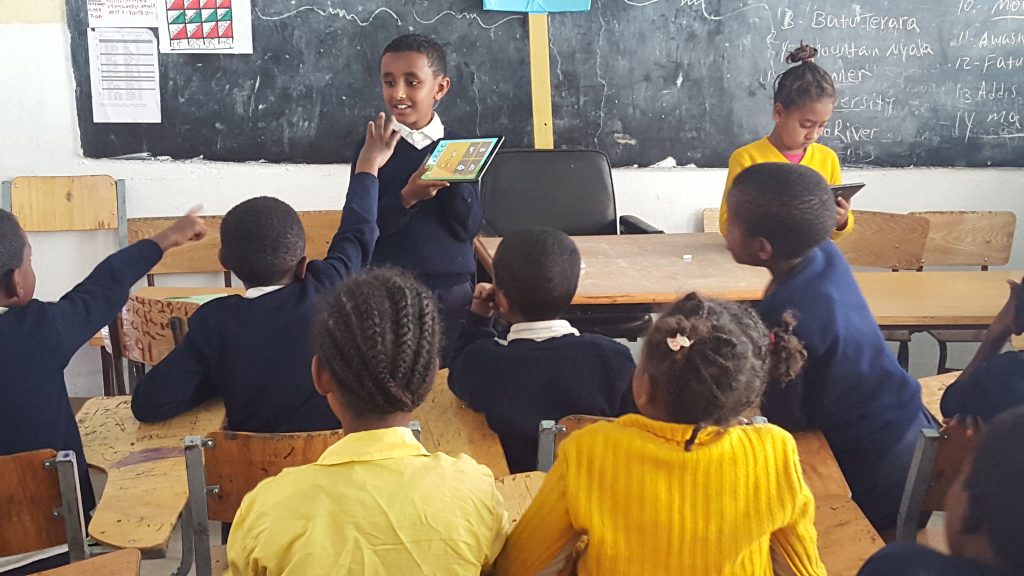
Children engaging with apps and tablets. Photo by Beyond Access.

Access to Education

Access to education is a major challenge in Ethiopia, particularly in rural areas. The country has made significant progress in expanding access to education, with primary school enrollment rates increasing from 20% in 1991 to over 90% in recent years. However, access to education remains limited in rural areas, where schools are often underfunded and understaffed, and students may have to travel long distances to attend school.

To address this challenge, the Ethiopian government has introduced policies aimed at expanding access to education in rural areas. For example, the government has introduced programs to build more schools in rural areas, provide free textbooks to students, and provide school meals to students.

Inflexibility of the curriculum

As researchers in the field of special needs and inclusive education advocate the rights of children with special needs to education, the curriculum that should be adopted should be inclusive by specifying minimum requirements for all learners. The special educational, social, emotional, and physical needs of learners will be addressed if the curriculum developers consider children with disability  during its design and development. Curriculum adaptations do not only benefit students with disabilities, but also facilitate successful learning for all learners in acquiring mastery of context. For many students with disabilities and for many without the key to success in the classroom lies in having appropriate adaptations, accommodations and modifications made to the instruction and other classroom activities.

However, research findings show that in some instances, curriculum is further found to be inflexible, especially with regard to the design and management of timetables. For instance, the timetables most often do not take care of Children with disability yet. In ideal situations, a child with special needs might need more time to accomplish the same assignment that can be done by a non- disabled person.

Children with disability could not receive quality education. This in turn indicates the extent to which our training institutions have deep-rooted problems . Teachers were not well trained in such way that they could teach those students who have a different ability and background. Being proficient in Braille and sign language were not sufficient and organized for in-service trainees. Even those teachers who have trained in special needs and inclusive education were not well equipped in skills of Braille and sign.

Quality training is one of basic ingredients for quality inclusive education. However, teachers’ training has basic problems in educating children according to their specific needs. Children with disability were not receiving quality education. For this, poor teachers’ training and shortage of trained teachers reciprocally have contributed to the delivery of poor quality education for Children with Disability. Though there were few teachers who have been graduated  in special needs and inclusive education, the training in which they have passed did not enable them to be efficient in teaching.

Language

Ethiopia being a multilingual nation faces many challenges in terms of communication which directly affects the education system and curriculum at large. The educational policy seems to be snared in the ideology of ethnic politics that was formally introduced in 1991, with the support of Ethiopian’s constitution after TPLF took power.

This new policy envisaged an education system that made students multilingual but the local languages are to be offered only on the basis of parental preference. The policy states that English language is to be offered from Grade 1 while Ethiopia’s Federal Working Language, like Amharic , is only to be offered after grade 3 and based on the preferences of parents.

Despite the above measures on the language barrier, regional  states have retained power in dictating what language students should use in schools. However after Grade 9 the medium will be strictly English. This has been authorized by the Federal Ministry of Education. In related development, the council of Ministers passed a decision that is believed to make universities more autonomous by authorizing and generating their own income and provide multi-faceted service to the public.

Young Women Students on the Boulevard – Axum (Aksum) – Ethiopia. Photo by Adam Jones.

Ignorance of stakeholders about children’s right to education

As it is believed, stakeholders of education are parents, children in schools, teachers, school principals and supervisors, experts, and officers in the education system. However, there is such discrepancy among stakeholders of education regarding the right of children with disability to education. Whereas, others stakeholders could not recognize the right of children to education fully. The inaccessibility of Education Bureau itself, insufficient budget allocation and unavailability sign language interpreters in schools could be evidence to the extent to which the education system was ignorant of the right of children with disability to education.

Quality of Education

Another major challenge facing the education system in Ethiopia is the quality of education. While the country has made significant progress in expanding access to education, the quality of education remains low, particularly in rural areas. Students in Ethiopia often struggle with basic literacy and numeracy skills, and the country’s education system has been criticized for being rote-based and lacking in creativity.

To address this challenge, the Ethiopian government has introduced policies aimed at improving the quality of education. For example, the government has introduced policies aimed at improving the training and professional development of teachers, promoting the use of technology in education, and improving the curriculum.

However, these efforts have faced challenges, including a lack of resources and infrastructure to support these initiatives.

Infrastructure Gap

The infrastructure gap is another significant challenge facing the education system in Ethiopia. More than 85% of Ethiopians live in rural areas where the infrastructure is not yet well constructed. As a result, houses are dispersed, schools are far-flung, and the topography is full of blockages. Pathways from home to schools are cliffy. With all these, children with motor and visual disabilities particularly have encountered difficulty primarily to go school to the worst to integrate themselves with non-disabled children in school activities.

Infrastructure together with pathways to classroom, offices, guidance, and counselors challenged students with disabilities not to come to school and not to have active participation in the learning process as well. Less restricted environment could enhance the realization of inclusion of Children with Disability. To the opposite of the above fact, however, most pathways are cliffy, ridge and sloppy. To jump such ways was a difficult task  for students with physical and visual disabilities as most of the participants of FGD were of the same mind.

Many schools in Ethiopia lack basic infrastructure, such as classrooms, libraries, and toilets. This infrastructure gap can have a significant impact on the quality of education, with overcrowded classrooms and inadequate facilities hindering students’ ability to learn.

Personnel in the education system pointed out that buildings in most mainstream schools were not constructed with people with disabilities in mind. As it was clearly indicated in the findings, the poor infrastructure together with pathways to classroom, offices, guidance, and counselors, challenged students with disabilities not to come to school and not to have active participation in the learning process as well. Entirely, the primary schools had full of up and down topography, the inclusion of children with mobility impairment had been at its challenge. As a result, the observable fact was that provision of infrastructure seems challenging for the implementers.

To address this challenge, the Ethiopian government has introduced policies aimed at improving the infrastructure in schools. For example, the government has introduced programs to build more schools, renovate existing schools, and provide basic infrastructure, such as toilets and water supply, to schools. However, infrastructure development in Ethiopia faces challenges, including limited resources and inadequate funding for infrastructure development.

Shortage of teachers in special needs education

Teachers, who are trained in special needs, could facilitate the implementation of inclusion of children with disability. To do this, their number should be enough to provide professional support for general education teachers and students with disabilities themselves. However, to contrary, the country is not able to train special needs and inclusive education teachers adequately to meet the demand. Factors that hindered the implementation of inclusive education were the inadequacy of teachers who have trained in special needs and inclusive education. To ensure the realization of inclusion of children with disability, either the general education teachers should have training or special needs and inclusive education teachers should assist them in the classroom.

Ethiopians are agrarians; there is job allotment among householders. As a result, the one looks after the cattle, the other harvests, still the other collects firewood, even the other may fetch water. With all these, hunting schools that have special classes, taking and returning the child with disabilities to these schools subsequently, is  a task that might have no owner . Therefore, the only harsh choice was to hide their child with disability at home.

In the towns, though there are abundant commercial schools, since hiring special needs and inclusive education teachers is costly, and not to enroll children with disability has legal impeachment, they enroll the children with disability and ‘dump’ them without any special support in their compounds. Significantly, the insufficient number of teachers of special needs and inclusive education has hampered the integration of children with disability in to the regular schools.

The shortage of trained and qualified teachers is another significant challenge facing the education system in Ethiopia. The country has a shortage of teachers, particularly in rural areas, where many teachers are untrained and lack the necessary qualifications to teach effectively.

To address this challenge, the Ethiopian government has introduced policies aimed at increasing the number of trained teachers in the country. For example, the government has introduced policies aimed at recruiting more teachers, providing training and professional development for teachers, and improving the salaries and working conditions of teachers.

Teacher training students on technology use. Photo by One Laptop per Child.

Family income/poverty

Most Ethiopians are weak in their income to educate their children. According to previous research done as per the references, the economic factor  could be another factor to educate their children and mostly children with disability in the regular school. Most parents of children in every family member in Ethiopian rural areas have economic engagement. For instance, some are shepherds, some others are farmers, still others collect firewood, and there are also others who accomplish home activities. However, when disability happens to one of those family members, he/she will be dependent on the rest to get daily food. With all this, taking that disabled child to school would be another burden to the family. Then, the choice of the family had to be either to sit the child at home or give for charity organization.

Since disability is a common and heart-breaking phenomenon, it further impoverishes families in need. As a result, not only lack of awareness and the negative attitude of the family, but living from hand-to-mouth caused the society as a whole to hinder children with disability from being included in regular school.

Curriculum Development

The curriculum is a crucial aspect of the education system and plays a significant role in shaping the learning outcomes of students. However, the Ethiopian curriculum has faced criticisms for being outdated, rigid, and lacking relevance to the needs of students and the country’s economy.

To address this challenge, based on the report from ENA, a state owned media, the council of ministers did see undesirable shortcomings of the ongoing system and believed that it did not encourage indigenous knowledge, did not encourage innovation and technology. Thus the Ethiopian government has introduced policies aimed at revising and updating the curriculum. On this not the prime minister of that time Hon. Abiy Ahmed’s cabinet believed that the new curriculum and training policy will bring about changes in terms of addressing the problems from the old system.

The government has introduced a new curriculum framework that emphasizes competency-based education, problem-solving, and critical thinking skills. This new curriculum policy introduced a 6-2-4 system, six years in elementary education, two years of junior school education and four years of high school education.

The new curriculum framework also emphasizes the development of vocational and entrepreneurial skills, which are seen as critical to addressing the country’s unemployment challenges. However, the implementation of the new curriculum framework has faced challenges, including a lack of resources and infrastructure to support the new approach.

Lack of guideline to implement inclusive education

Beyond doubt, teachers and schools at grassroots level, and education heads at the top together require guidelines to let them see how to implement inclusive education. However, issuing the document was not a simple task for Ethiopian education system. One of inclusive policy documents is having prepared a guideline of inclusive education to implement it effectively. Subsequently, if no guideline which leads how to implement inclusive education, the process would be subjected to personal interpretation. The above evidence indicates the extent to which experts and school supervisors were not clear about guideline and strategic plan. The strategic plan may help the education system to check and balance the goal that they were supposed to achieve with the plan that they had already scheduled. If the country had guideline of inclusive education, it would help stakeholders of education to demystify the wrong perception that the stakeholders possessed and would give them clear direction about the implementation of inclusive education.

Ethiopia is one of the multi-ethnic nations in Africa. As a result, the country is exercising multilingual curriculum. No matter how the country has multi-ethnic groups, issuing guidelines of inclusive education would not be costly when it is compared with the benefits that it could bring quality, equity and social justice in our education system. More than its cost, lack of commitment among political leaders has also delayed the endorsement of inclusive guidelines. Although the  country had designed strategic plan of special needs and inclusive education system in 2006 and 2012, this was meant for the purpose of country relief, unfortunately it did not work for all the regions.

Inadequate provision of adapted school materials

Despite measures to adopt an inclusive education policy for all groups, school directors were not willing to include children with disability in the regular schools with reason of shortage of adapted materials. From the previous studies done, it is not only lack of awareness that prevailed among school administration but also shortage of adapted teaching material for students with disabilities. Hence, education experts and school supervisors in common remarked poor provision of special needs equipment as a main challenge to implement inclusion.

Further, The Ministry  of Education and Regional Education Bureaus did not develop a mechanism which could enable them to monitor the schools that have/have not registered a child with disability. At the same time, the bureaus have budget insufficiency. As a result, they could not facilitate even those few schools with slate and stylus, Braille, paper, Braille textbooks, hearing aids, sign language books, wheelchairs and other adapted and modified materials with explanation of budgetary problems. As a result, insufficient provision of adapted school materials has been identified as one of challenges of inclusion of children with disability in to the regular schools. Owing to this fact, students with visual impairment were obliged to learn with no Braille. School supervision reports also tell as the group was attending lessons by listening. Children with hearing impairment had also school attendance with their physical presence

Conclusion

In conclusion, Ethiopia faces significant challenges in its education system, including limited access to education, low quality of education, infrastructure gaps, teacher shortages, and outdated curriculum. While the government has introduced policies aimed at addressing these challenges, there is a need for more concerted efforts to improve the education system in the country. This could include increased investment in education, improved teacher training and support, better infrastructure development, and more relevant and up-to-date curriculum development.

As the reports of the Ministry of Education of Ethiopia, more people affected in the educational system of the country are children with disability who have no access to education yet. Even the majority of those children with disability, who had access to education, were in a fuzzy educational setting. With this, the mode of education to educate children with disability is not marked out clearly. As a result, the education system has faced challenges  to achieve EFA. To ensure inclusion, therefore, identifying the barriers and suggest panacea has a paramount importance to reverse the situation. Theoretically, ecology of human development guided the study to investigate challenges that Ethiopia faced to implement inclusive education.  By addressing these challenges, Ethiopia can work towards providing quality education to all its citizens and improving its socio-economic prospects.

References:

United Nations Development Programme (2019). Ethiopia: Education. Retrieved from http://www.et.undp.org/content/ethiopia/en/home/countryinfo.html

World Bank (2021). Education in Ethiopia. Retrieved from https://www.worldbank.org/en/country/ethiopia/brief/education-in-ethiopia

GEBEYEHU, A. M. (2017). Quality of Education in Ethiopia: From the Perspective of Learners, Teachers and Parents. Journal of Education and Practice, 8(10), 76-85.

World Bank (2018). Ethiopia Education Sector Development Program V: 2015-2020. Retrieved from http://documents.worldbank.org/curated/en/180601551693773672/Ethiopia-Education-Sector-Development-Program-V-2015-2020

Ethiopian Ministry of Education (2015). Education Sector Development Plan V: 2015-2020. Retrieved from https://www.moe.gov.et/web/guest/-/education-sector-development-plan-v-2015-2020

African Development Bank Group (2018). Ethiopia Country Strategy Paper 2016-2020. Retrieved from https://www.afdb.org/en/documents/document/ethiopia-country-strategy-paper-2016-2020-106665

International Labour Organization (2016). Youth Employment in Ethiopia: An Overview. Retrieved from https://www.ilo.org/wcmsp5/groups/public/—ed_emp/documents/publication/wcms_528826.pdf

The World Factbook (2021). Ethiopia. Retrieved from https://www.cia.gov/the-world-factbook/countries/ethiopia/

Tessema, W. K. (2019). The Ethiopian Education System: Current Trends and Future Directions. International Journal of Innovative Research and Development, 8(12), 76-84.

Mohammed, A. (2018). Challenges and Prospects of Education in Ethiopia: A Literature Review. Journal of Education and Practice, 9(1), 21-26

Universal Periodic Review of Republic of Congo

  • Broken Chalk is a non-profit organisation with one main goal – To protect human rights in education. The organisation started with a website and articles and is currently working on multiple projects, each aiming to fight human rights violations in the educational sphere. As the UPR is related to human rights violations, inequalities, human trafficking, and other violations, Broken Chalk prepares this article for the fourth Cycle and the specific country – the Congo.
  • During the last Cycle, the delegation put forward 194 recommendations. The Republic of Congo supported 188 recommendations, and the rest they noted. At the adoption of its UPR outcome at Human Rights Council 40 in March 2019 (an increase of 15% concerning the 2nd cycle). Supported recommendations related to Legal and general framework of implementation, universal and cross-cutting issues, civil and political rights, economic, social, and cultural rights, women’s rights, and rights of other vulnerable groups and persons.
  • The Republic of Congo (Congo) – not to be confused with the Democratic Republic of Congo – is sparsely populated, with over half its population concentrated in the two largest cities and almost half its population under 18 (World Bank, 2019). Child rights in Congo (also known as Congo-Brazzaville) are improving, with good access to education and many legal mechanisms to protect child rights. Significant concerns remain as children who labour, girls, and indigenous children continue to experience serious rights violations and often have difficulty meeting their basic needs.

By Ruth Lakica

Download the PDF

45th_Session_UN-UPR_Country_Review_Congo

Cover image by J. Patrick Fischer on Wikimedia Commons.

Educational challenges in South Sudan

Written by Hassan A. Abusim

Education is one of the human rights that guarantee the continuity of generations and the steadiness of development and is one of the best tools for breaking the poverty cycle, as it is the basic building block for the building and renaissance of societies. The challenges of education for a country that recently gained its independence (2011) – the world’s newest nation, and occupies 2nd place on the (Fragile States Index) are extremely difficult and complex.

Agok Primary School, Abyei. Photo by Global Care.

What are the challenges for South Sudan?

In South Sudan, 70% of children aged between 6 and 17 have never set foot in a classroom. Only 10% of children complete primary education – one of the worst completion rates in the world. Shockingly, a girl in South Sudan is more likely to die in childbirth than to complete primary education.

A lack of quality teaching staff and inadequate school buildings are challenges that added to extreme poverty, as families desperately work for the next meal.

This is compounded by the violence and unrest militia groups bring to these poor communities. Thousands of young people join militia groups every year in the absence of any other source of livelihood, creating a vicious cycle of destruction.

Educational System

Unlike the previous educational system of regional Southern Sudan—which was modelled after the system used in the Republic of Sudan since 1990—the current educational system of the Republic of South Sudan follows the (8 + 4 + 4) system (similar to Kenya). Primary education consists of eight years, four years of secondary education, and four years of university instruction.

The primary language at all levels is English, as compared to the Republic of Sudan, where the language of instruction is Arabic. In 2007, South Sudan adopted English as the official language of communication. There is a severe shortage of English teachers and English-speaking teachers in the scientific and technical fields.

Education Development Plan

In 2010, South Sudan Development Plan (2011-13), through its two ministries of education, organized a conference titled the “The Education Reconstruction Development Forum.” The conference, intended to create a national dialogue about the fundamental problems in South Sudan’s educational infrastructure, did not have the intended effect “South Sudan Development Plan (2011-13)”. However, a persistent situation in South Sudan is a significant gender gap between teachers and students. The fact that the majority of teachers are male, with a near absence of female teachers further marginalizes female students, in particular.

Furthermore, a high school student-to-teacher ratio of 300 to 1 means that learning necessarily takes place in overcrowded classes. The lack of support staff such as librarians, school counsellors, and psychologists, which are staples in many educational systems and especially relevant for children with special needs, is evident as well. South Sudan also lacks modern technology, such as computers, for both teachers and students, from primary to university levels.

Challenges in the transportation system

Educational inequalities persist along rural and urban lines. For one, all 120 secondary schools are in South Sudan’s towns. Students from rural regions who want to obtain a secondary education must take on high transportation costs, which prevent some students from even trying. This challenge compounds upon others. Many rural South Sudanese families engage in cattle-keeping, for example, which forces school-aged children to migrate according to seasonal variations and economic pressures.

Challenges in Educational Facilities

Many school buildings have been decimated. In 2013, tensions between two major politicians spurred fighting between the Dinka and Nuer ethnic tribes. Thousands were killed and more than two million were displaced during the two-year civil war that followed. In the midst of this, 800 school buildings were destroyed. While 6,000 remained usable, almost all of them were stripped of vital educational resources and infrastructure. “Anywhere else, they wouldn’t be called schools. It’s a tree and a blackboard,” (UNICEF’s chief of education in South Sudan told NPR in 2016.)

Crowded primary classroom in South Sudan, where teacher-student ratios far outstrip international norms and there is little hope for individualized support, inclusive practices, or quality education. Photo by Windle Trust International.

A key question was asked of many targeted participants; “Since the independence of South Sudan, what do you view as the most pressing problem (s) in the educational system?

Participant responses to the key question posed by the interviewer as below:

ParticipantParticipant Responses
News Reporter“One of the greatest problems affecting our new country today is the continued problems and rivalries between the different tribes which has included severe violence and which has forced the government to pay a lot of money to police, security, and military forces. These problems are so severe that it is not unusual for the government to come to a complete standstill daily to the point that nothing functions in the country, not the transportation system, not the stores and markets, and not the schools. To me, the tribal problems, if not resolved, will bring this country down. I feel very bad for the children because, at times, no one seems to care for them, and many of them are likely to wander in life with no sense of contributing to their existence”. 
Minister of Education Representative #1“The major problem in the South Sudanese educational system is that we have no buildings for our students and teachers (Overcrowded Facilities). We, the government, keep telling them to be patient, but they want everything right away. This is a new country with other important priorities like our health care system, our refugee problem, our continuing problems with Sudan, and the mental health of the people affected by the war. Many of the citizens of our country have much emotional scarring from a war that traumatized everyone. They should consider themselves fortunate that we want to help them. Many of the people are illiterate, especially the parents of the children, and do not understand our mission as the new government. The President is trying very hard”
Minister of Education Representative #2“In our state and village, we keep being promised money to build our schools as the children are missing their right to free education. Everyone has the right under Article 26 of the Universal Declaration of Human Rights to education, and so do the children of South Sudan. First, the people from the north, the Sudanese government betrayed us and never cared about our education in the South, and now, it sometimes feels that our current government does not care. How can children learn when the schools are made of foliage and the teachers don’t get paid, or the children have to sit on the floor with no books, and are often sick?”

To discuss educational challenges in South Sudan.

Recommendation for the educational system development in South Sudan needs enormous help:

  • ‘Returnee’ schools be given immediate assistance, according to the priorities set by school management and education authorities
  • Agencies support schools outside Juba (the capital of South Sudan) to relieve the congestion in Juba town and provide boarding facilities to attract female students.
  • Agencies work with education authorities to establish policies to address quality and huge gender gaps in enrolment and attainment.
  • Support is provided to develop and procure English-language textbooks and provide intensive language training.
  • Literacy programs be targeted at adults who missed out on education to make them aware of its value and why they should send their children, including girls, to school

Conclusions

 The results of our observations that the current educational system in South Sudan continues to be in crisis mode, and perhaps even more so now that the country is in a civil war. Irrespective of age and role in education, the participants cited continued political strife, mistrust in the government and a chaotic economic system as contributing to the failure of education. The absence of a reliable transportation system also directly impacts the educational system in South Sudan; youth are dependent on transportation to get to school. Other problems voiced by the participants include the absence of school buildings, and the lack of basic resources such as books, teaching supplies, and computers. Overall, the needs are considerable for this new nation and are the result of a lack of economic resources in families; corruption and graft among school employees and administrators; the marginalization of female students and teachers; and a denial of basic human rights including the right to a continuous education.

References
  • Care, G. (2023, July 24). South Sudan Project. Retrieved from Global Care Organization: https://www.globalcare.org/project/south-sudan/
  • Delegal, J. (2019). 8 FACTS ABOUT EDUCATION IN SOUTH SUDAN. The Borgen Project.
  • G., B. (2011). Education in Southern Sudan: Investing in a better future. London, England: Center for Universal Education, Brookings Institute.
  • John Kuek, R. J. (2014). HUNGER FOR AN EDUCATION: A RESEARCH ESSAY ON THE CASE OF SOUTH SUDAN AND THE VOICES OF ITS PEOPLE. Forum for International Research in Education, 22-31.
  • WIKIPEDIA. (2023, July 26). South Sudan. Retrieved from WIKIPEDIA website: https://en.wikipedia.org/wiki/South_Sudan

Universal Periodic Review of Jordan

  • This report drafted by Broken Chalk contributes to the fourth cycle of the Universal Periodic Review for Jordan. This report focuses exclusively on human rights issues in the field of education in Jordan.
  • In the previous UPR cycle, Jordan received 226 recommendations, and it supported 149 recommendations. Some of these recommendations focused on the Sustainable Development Goal of “Quality Education”.
  • This report first explores the main issues in the educational field in Jordan, reflecting on the recommendations Jordan received in the 3rd cycle UN UPR review in 2018 and its progress since. Finally, Broken Chalk offers some recommendations to Jordan on further improving human rights in the educational field.
  • As per the letter by the High Commissioner to the Foreigner Minister, issues were raised explicitly for the right to education, which included making education accessible, particularly by ratifying human rights instruments, making education culturally acceptable, preventing marginalisation, making education accessible for those students in remote areas, promote tolerance and respect for religious diversity,  emphasis to be laid on non-discrimination focusing on inclusivity in education, particularly for women and other minority groups and persons with disabilities and ensuring educational rights are guaranteed to refugee children.
  • Jordan has continued its commitment to the right to education through the Jordan Declaration on Inclusion and Diversity in Education.

By Caren Thomas

Download the PDF

45th_Session_UN_UPR_Country_Review_Jordan

Cover image by Yazan Mahmoud Banihani

Universal Periodic Review of Monaco

  • Broken Chalk has drafted the following report as a stakeholder contribution to the 4th cycle of the 45th session of the Universal Periodic Review [UPR]. As Broken Chalk’s primary focus as an organisation is to combat human rights violations within the educational sphere, this report and the following recommendations will be related to the Right to Education.
  • During the previous Cycle of the UPR, Monaco has supported 72 out of 113 received recommendations, noted 35, and has not expressed its position on six other recommendations. Five suggestions are directly concerned with the Right to Education, and Monaco has supported all of them. Recommendation 76.31 urges Monaco to take action to ensure equal access to education. Recommendation 76.34 advocates for strengthening access to education at all levels for girls and young women. Recommendation 76.35 refers to integrating deaf-mute and visually impaired persons and their specific needs into the Monegasque educational system. Last but not least, recommendations 76.32 and 76.33 advise Monaco to take further legal measures to strengthen the right to education for children who are not Monegasque citizens and to guarantee access to education for all children, irrespective of their nationality.
  • The Permanent Representative of Monaco to the United Nations Office at Geneva, Carole Lanteri, has expressed deep commitment and attachment to the promotion and protection of human rights and the Universal Periodic Review and has noted equal access to education and care for all children who live in Monaco, without any discrimination based on gender or age.

By Aurelia Bejenari

Download the PDF

45th_Session_UN-UPR_Country_Review_Monaco

Cover image by WallpaperFlare

Universal Periodic Review of Nigeria

  • Broken Chalk is an Amsterdam-based non-profit human rights organisation focusing on the global development of human rights and education. By submitting this report, Broken Chalk hopes to contribute to the 44th Session of the Universal Periodic Review (UPR) and further the efforts made by the Federal Republic of Nigeria to structure its education sector continually and positively.
  • In its third UPR cycle, the Federal Republic of Nigeria received 290 recommendations, supporting 230 and noting 60.
  • Education in the Federal Republic of Nigeria faces many challenges. One of the most pressing issues is the learning crisis, with 3 out of four children in primary school unable to read. As stated by UNICEF, there is an alarming rate of school dropout, with one in five children out of school in the world being from the Federal Republic of Nigeria. Children are affected by the Boko Haram insurgency as well as gender biases.

By Alexandra Drugescu-Radulescu

Download the PDF

45th_Session_UN-UPR_Country_Review_Nigeria

Cover image by Emmanuel Ikwuegbu on Pexels.

Universal Periodic Review of Belize

  • Broken Chalk is a non-profit NGO with one main goal to protect human rights in the world of education. The organization investigates and reports education rights violations worldwide while advocating and supporting human-rights-focused educational development. By submitting this report, Broken Chalk aims to contribute to the 45th Session of the Universal Periodic Review (UPR) of Belize with a focus on the education sector, encouraging the country to continue its improvement efforts and providing further insight into how to overcome current challenges and deficiencies regarding human rights in education.
  • Belize’s average Human Development Index value throughout that time period was 0.668 points, with a low of 0.613 points in 1990 and a high of 0.722 points in 2016. The most recent value is 0.683 points from 2021. [1] The Index, which includes factors such as life expectancy, education, and per capita income, placed Belize in the high human development category, with a ranking of 103 out of 189 countries and territories. [2]
  • Belize’s population is projected to be around 1400,000 people, with a slightly higher proportion of rural (55%) than urban (45%) residents and an equal proportion of males and females. The majority of the population, 65.8%, is between the ages of 15 and 64, with another 29.2% between the ages of 0 and 14, and those 65 and above accounting for the remaining 5%. [3]
  • Mestizos/Hispanics make up 47.9% of Belize’s population and the majority of residents in the Corozal, Orange Walk, Cayo, and Stann Creek districts, according to the country’s 2010 Census. Creoles are the second largest ethnic group, accounting for 25.9% of the population in the Belize District. The Maya (Ketchi, Mopan, and Yucatec) make up 11.3% of the population and are the majority group in the Toledo District, while Garifunas, East Indians, and Mennonites make up 6.1%, 3.9%, and 3.6% of the overall population, respectively. [3]
  • Despite its diversity, Belize has maintained a stable parliamentary democracy without serious ethnic or religious conflict and there has been numerous and peaceful transitions of power between the country’s two major political parties since its independence from Great Britain in 1981. [3]
by Müge Çınar
 
Download PDF
UN-UPR_45th_Belize_-

Cover image by James Willamor on Flickr.


References
[1] Global Economy https://www.theglobaleconomy.com/Belize/human_development/#:~:text=Human%20Development %20Index%20(0%20%2D%201)&text=For%20that%20indicato %2C%20we%20provide,from%202021 %20is%200.683%20points.
[2] IOM https://publications.iom.int/books/belize-needs-assessment-migration-governance
[3] The Belize Education Sector Plan 2021-2025 https://www.moecst.gov.bz/wp-content/uploads/2022/02/The-Belize-Education-Sector-Plan-2021-2025_MoECST.pdf

Universal Periodic Review of China

  • Broken Chalk is a non-profit organisation with one main goal – To protect human rights in education. The organisation has a website and articles and is currently working on multiple projects, each aiming to fight human rights violations in the educational sphere. This report drafted by Broken Chalk contributes to the fourth cycle of the Universal Periodic Review (UPR) for China, focusing exclusively on China’s human rights issues in education.
  • During the 3rd Cycle of the Universal Periodic Review for China in November 2018, China received 346 recommendations and supported 284. Twelve per cent of these supported recommendations relate to the 4th Sustainable Development Goal, Quality Education. These recommendations in the 3rd UPR Cycle will be the basis on which Broken Chalk discusses the progress of human rights issues related to education in China. This report from Broken Chalk will also suggest some recommendations for these educational issues as part of the 4th cycle of the Universal Periodic Review for China.
by Melissa Sugiarta

Download the PDF

45th_Session_UN-UPR_Country_Review_China

Cover image by PublicDomainPictures

Educational Challenges in Botswana

Written by Elizabeth Atiru

Human rights are the rights one enjoys simply because they are human. According to the UN Universal Declaration of Human Rights (UDHR), there are thirty rights to which all people are entitled, irrespective of their race, color, sex, language, religion, political or other opinion, national or social origin, property, birth, or other status. Article 26 of the UDHR states that everyone has the right to education and recognizes education as one of the fundamental rights to which all humans are entitled. Education has not only proven to be a pivotal tool for every country’s development but has also served as an indispensable element that facilitates the realization of other human rights (UN, 2001). Botswana, since it gained independence in 1966, has made a commitment to ensuring that all children, regardless of gender, ethnicity, socio-economic background, or circumstances, realize their right to a quality education. While Botswana has made significant strides in its development journey, the country still faces several challenges that need to be addressed in order to improve the quality of education and provide better opportunities for its citizens. This report will explore the educational system, challenges, and recommended solutions to improve Botswana’s educational accessibility, quality, and delivery.

School students celebrating Botswana’s 50th independence day. Photo by Mahyar Sheykhi

Botswanas Education System.

Botswana has made significant strides in its education system through key reforms implemented over the years. These include the enactment of the Education Act in 1967, followed by the establishment of the National Commission on Education (NCE) in the 1970s. The NCE formulated Botswana’s education philosophy and set development goals. In 1977, the National Policy on Education (NPE) was adopted, emphasizing access and social harmony. The introduction of the National Literacy Policy (NLP) in 1981 addressed adult literacy challenges. The Revised National Policy on Education (RNPE) was adopted in 1994, aligning with international education goals. Vision 2016 was launched in 1996, highlighting education as a pillar for national development. Also, the Education and Training Sector Strategic Plan (ETSSP) was introduced in 2015 to transform education quality. In 2016, Botswana built upon the successes and lessons learned from the previous national development vision, Vision 2016, and formulated Botswana Vision 2036, a long-term development plan with a strong focus on education and skills development. Recognizing that education and skills are crucial for human resource development, the vision prioritizes quality education at all levels and aims to equip citizens with the knowledge and capabilities needed for sustainable socio-economic growth. 

Botswana’s school system consists of pre-primary, 7 years of primary school, 3 years of junior secondary, and 2 years of senior secondary education. The various national policies mentioned above have resulted in significant developments in Botswana’s education system. These include a considerable increase in public education funding and enhanced access to educational opportunities. Consequently, literacy rates have experienced notable improvement, enabling more individuals to acquire basic literacy skills. To meet the growing demand for education, additional schools have been constructed, expanding the overall education infrastructure. Furthermore, there has been a substantial increase in student enrollment rates in both primary and secondary schools, reflecting the heightened emphasis placed on education in Botswana.

Botswana’s Educational Challenges and Recommended Solutions

Despite the significant milestones achieved in Botswana’s educational system over the years, the country still faces several challenges.

One of such challenges includes significant socio-economic disparities, particularly in rural areas where high poverty rates prevail. A study by Makwinja (2022) revealed that in Botswana, poverty poses challenges for families sending their children to school, and some children are forced to work as maids, farm hands, or babysitters to support their families instead of attending school. Again, many students attend school without proper uniforms, and the lack of school buses results in long walks to reach educational institutions, with limited access to educational institutions such as books and computers. All this contributes to low literacy rates, leading to inequality in education delivery in Botswana. This clearly infringes on the right of children to education as against Article 29 of the United Nations Convention on the Rights of the Child (UNCRC). While the government provides some support through the social welfare department, more comprehensive and accessible poverty alleviation programs are needed to address this issue effectively. By improving the nutritional quality of meals provided to children and implementing targeted interventions, Botswana can encourage school attendance, reduce dropout rates, and improve overall academic performance. 

Also, the education budget in Botswana is disproportionately focused on tertiary education, resulting in limited resources allocated to pre-primary and primary education (Mokibelo, 2022). This imbalance poses a significant challenge to the delivery of quality education, particularly at the early stages of learning. Despite the recognition of the importance of education and skills development in Botswana’s Vision 2036, the budgetary prioritization hinders the necessary investments in pre-primary and primary education, leading to educational inequality and a lack of adequate support for early childhood development (Mokibelo, 2022). According to a UNICEF report in Botswana in 2022, only 43% of children between the ages of 4-5 have access to early learning opportunities, indicating limited participation in early childhood education. Furthermore, approximately one-third of children struggle to acquire basic literacy skills after 4–5 years of primary education. The pass rates in the Primary School examination and Junior Certificate examination are also concerning, with around one-third and two-thirds of children failing, respectively. These issues can be attributed to a lack of proper training and support during the early stages of children’s education. Additionally, there remains a notable proportion of children who are not enrolled in school, further impeding progress towards achieving universal access to education. To uphold the rights of children as stated in the UNCR and address the challenge above, Botswana should prioritize investment in early childhood and primary education to ensure equitable access to education for all children, regardless of their circumstances, and foster an inclusive and fair society. Secondly, provide comprehensive teacher training programs to enhance teaching practices and create child-centered learning environments. 

Likewise, Botswana faces poor quality education, as evidenced by low pass rates at the junior and senior secondary levels (Suping, 2022).  Currently, the teaching approach in Botswana remains predominantly traditional, with students passively listening to teachers and taking notes (Makwinja, 2022). There is limited emphasis on critical thinking and active student engagement. To address this, teachers and lecturers need to adopt innovative teaching methods that encourage collaboration, group work, and utilize available internet resources. It is crucial for teachers to undergo training to enhance their knowledge, skills, and competencies, aligning with international standards of performance. The focus should shift from test scores to fostering critical and analytical thinking through competence-based approaches. Collaboration among teachers as a community is essential, allowing for immediate support and shared challenges. These measures are crucial for improving educational outcomes and promoting youth development in Botswana.

Furthermore, the education system in Botswana faces the significant challenge of overcrowded classrooms and inadequate infrastructure, especially in rural areas, which hinders the delivery of quality education. The lack of suitable structures, overcrowding, and shortage of classrooms contribute to uneven teacher-student ratios and impede individualized instruction and high-quality learning experiences. In secondary schools, it is not uncommon to find classes with over 40 students, far exceeding the recommended ratio of 1:15 in primary schools. (Mokibelo, 2022). These infrastructure constraints also limit access to technology and educational resources, exacerbating the existing challenges. Resolving these issues by investing in infrastructure 2Wdevelopment and reducing class sizes is crucial to improving the overall quality of education and providing students with the necessary resources for their academic success.

Again, in Botswana, school dropouts are a significant challenge that requires immediate attention. According to survey data, when school was free, although not compulsory, most children were enrolled in primary and junior secondary schools. For instance, it has been reported that approximately 70% of junior secondary school (JSS) leavers progressed to senior secondary school (SSS) during that time, and the dropout rate was relatively low (UNICEF, 2022). While the rest of the JSS leavers progress to Brigades, which offer more vocationally based training. However, the reintroduction of school fees in 2007 has led to inequality in education in Botswana, particularly for families with lower economic means, which has exacerbated dropout rates.  To combat school dropout, Botswana needs to improve education quality, provide support for struggling students, and address financial barriers. Collaboration among government, NGOs, and community stakeholders is vital for creating an inclusive learning environment. By implementing comprehensive solutions and targeting specific challenges, Botswana can reduce dropout rates, ensure equal access to education, and empower its youth.

Children at school. Photo by UNICEF Botswana.

In addition to the above, gender-based challenges, such as early sexual initiation, the risk of HIV infection, and gender-based violence, pose significant obstacles to girls’ education in Botswana (UNICEF, 2022). Adolescent girls and young women face multiple barriers that impede their access to quality education. Consequently, these challenges contribute to high dropout rates among girls, exacerbating gender disparities in the education system. Limited access to sexual and reproductive health services and inadequate support systems further hinder girls’ educational progress. To address these issues, it is essential to implement comprehensive strategies. This includes promoting gender equality, providing comprehensive sexual and reproductive health education, enhancing access to healthcare services, and establishing safe and supportive learning environments. By prioritizing these measures, Botswana can create an inclusive educational system that empowers girls, enables their educational advancement, and fosters gender equality in education.

Similarly, mental health issues, including high suicide rates and poor mental well-being, have a profound impact on educational outcomes in Botswana. The limited availability of mental health services, particularly for adolescents, exacerbates these challenges. The lack of youth-friendly services and inadequate support within schools create significant barriers to learning and student engagement. Recommended solutions to address mental health challenges in Botswana’s education system include increasing access to mental health services, integrating mental health education into the curriculum, creating supportive learning environments, and fostering collaboration with stakeholders for holistic support. 

In conclusion, ensuring quality and accessible education for all, regardless of background, is of utmost importance. Education plays a crucial role in promoting socio-economic growth and development. It is, therefore, imperative that policymakers, government officials, NGOs, and advocacy groups collaborate at various levels, including national, regional, district, and grassroots levels, to initiate meaningful and sustainable changes that allow for quality and accessible education for all.

References

 Makwinja, V. M. (2017). Rethinking education in Botswana: A need to overhaul the Botswana education system. Journal of International Education Research (JIER), 13(2), 45-58. DOI: https://doi.org/10.19030/jier.v13i2.10075

Makwinja, V. M., & Nthoi, O. N. Finding Solutions for Addressing Poor Performance in the Botswana Education Systems and Lessons Learnt From COVID-19. DOI: https://doi.org/10.22492/issn.2435-9467.2022.6

Mokibelo, E. (2022). Implementing Early Childhood Education in Botswana: Teething Problems. Journal of Emerging Trends in Educational Research and Policy Studies (JETERAPS), 13(2), 41-51.

Suping, K. (2022). Political Spectacle and the Decline of Public Education in Botswana. Journal of Asian and African Studies, 00219096221117077. DOI: https://doi.org/10.1177/00219096221117077

UNICEF Botswana Country Office Annual Report 2022: https://www.unicef.org/reports/country-regional-divisional-annual-reports-2022/Botswana

UNICEF Botswana Country Report on Education 2019: https://www.unicef.org/botswana/education

Education Challenges in Malaysia: Low Quality of Education in a Rising Economy

Written by Müge Çınar

The Country Profile 

Malaysia, which gained independence in 1957 from British rule, has successfully transitioned its economy from an agriculture-based economy to robust manufacturing and service sectors. This economic diversification pushed the country to become a leading exporter of electrical appliance parts and components (World Bank, 2022). 

During the last two decades, this culturally diverse country has become an upper-middle-income country. The growth in poverty reduction has been made, with income poverty falling from 50 percent in the 1970s to 0.4 percent in 2016 (UNICEF, 2022). Since 2010, it has grown at a 5.4 percent annual rate, and it is predicted to move from an upper middle-income economy to a high-income economy by 2024 (World Bank, 2022).

However, the COVID-19 pandemic has had a huge negative impact on Malaysia, mostly on vulnerable households. Following the revision of the official poverty line in July 2020, 5.6% of Malaysian households now live in absolute poverty (UNICEF, 2022). The pandemic caused issues that directly affected adolescents, children, and women in many ways. 

Group of school children. Photo by Kamusal Alan.

Education System in Malaysia

According to the national education system, six-year education is required to start after children reach the age of six. Public schools offer 11 years of free primary and secondary education. Early childhood education (ECE) is not mandatory in Malaysia; however, preschool is accessible to children aged 4 and up. According to the Ministry of Education’s 2017 Annual Report, national preschool enrollment for children aged 4 and up was 84.3 percent (Ministry of Education of Malaysia, 2018).

Enrollment in primary and secondary education in Malaysia is generally high, with enrollment increasing at every grade level since 2013.  Secondary enrollment is lower than primary enrollment, and enrollment decreases by 10 percent between the lower and upper secondary levels. A variety of governmental, private, international, and religious institutions provide higher education (Ministry of Education of Malaysia, 2018). 

The Education 2030 Agenda’s Sustainable Development Goal 4 allocates at least 4 percent of GDP and 15 percent of national expenditure on public services to education (UNESCO, 2022). Government education spending accounted for 4.77 percent of GDP and 21 percent of total government spending in 2017. According to recent data, Malaysia has been reducing its education expenditure from 2011 by 5.8 percent to 2020 by 3.9 percent (World Bank Data, 2023). This is the highest of any ASEAN country. Education spending is also the Malaysian government’s largest single expenditure. 

Malaysia Education Blueprint 2013–2025 outlines five aims that motivate Malaysia’s educational system: access, quality, fairness, unity, and efficiency. To realize the objective of Education for All, full access to education and the closing of achievement disparities for equity must be met. The Ministry is committed to increasing primary school enrollment and decreasing dropout rates in distant areas (Abu Bakar, 2022). 

To achieve these two educational goals of “access” and “equity”, the government has provided additional support and programs over the years, including a financial assistance program, a program for Special Education Needs, and a special program for the Orang Asli communities. The Ministry of Education (MOE) has also incorporated ICT in the classroom to improve teaching and learning. Despite government improvements, many challenges impede the success of Malaysian education. 

Main Problems in Education in Malaysia

Quality of Education

Education quality is a huge concern, with almost 60 percent of 15-year-old Malaysian students failing to meet minimum competence standards (Anderson & Barrett, 2020). Although improvements have been made during the last few years, Malaysian students are still under performing compared to international averages. 

In the most recent PISA testing (2018), 54 percent of Malaysian students achieved minimum proficiency in reading, 59 percent in math, and 63 percent in science, compared to the OECD average of 77 percent (reading), 76 percent (math), and 78 percent (science) (OECD, 2019). This shows that the high amount of government spending on education may not be allocated to factors that have the biggest impact on learning outcomes.

Poor teacher quality is another barrier to quality and learning outcomes: 93 percent of those applying for a Bachelor of Education and 70 percent of those offered a place in the program did not have the necessary qualifications, and only 3 percent of offers were made to applicants considered high performers (UNICEF Malaysia, 2019). And also, a lack of autonomy in schools is a challenge. Researchers found that rigidity in curriculum and delivery hampered quality learning, and the high degree of centralization in the education system was also found to have hampered the efficient production and distribution of education services (Anderson & Barrett, 2020).

As mentioned before, the government’s spending on education is very high compared to the region. However, the amount of money granted to each school is determined by the number of students enrolled in the current school year, not by the school’s needs or the socioeconomic status of the students (Abu Bakar, 2022). This causes schools with fewer students in rural areas to get less financial support. Therefore, the discrimination against rural areas students are made to reach resources to get a better education.

Compared to students in larger cities, most parents in rural areas have lower incomes. They are unable to give their children the facilities and resources they require for academic success. The gap in quality education is realized between urban and rural areas of the country. As a result, the students’ achievements in urban areas are higher. This issue creates a gap in establishing educational equity between urban and rural schools.

Another weak point that divides rural and urban education quality is the lack of internet connectivity to support e-learning. Inadequate connectivity and device limits have been identified as significant problems in adopting teaching and learning in rural areas.

The most criticized issue when it comes to the quality of education in the country is the syllabus. It is discussed among educators that the learning syllabus for primary and secondary schools is too high-level and illogical for students. The high number of students per classroom, the number of subjects, and heavy school bags are threats to the health of the children. Heavy subjects in the study plan create a burden rather than joy for learning students and drop their success rates (The Malaysian Reserve, 2022).

Young woman graduating. Photo by PickPik.
Access to Education and Gender Gap

Most children get 11 years of education in Malaysia; however, there is an important number of out-of-school children. Secondary school students are at more risk of dropping out than younger children in primary school. According to the Ministry of Education, the following factors contribute to children dropping out: lack of parental participation; poverty; low motivation; and low academic proficiency (Ministry of Education of Malaysia, 2018). 

The most vulnerable ones to access education are children with disabilities and refugee children. 1 in 3 disabled children is out of school. Children with special education needs (SEN) are defined as children with visual, hearing, speech, and physical disabilities, learning disabilities, or any combination of disabilities and difficulties under the Education (Special Education) Regulations 2013, which apply to government and government-aided schools (Yan-Li & Sofian, 2018). Notably, children with mental health or behavioral difficulties do not appear to be included in this classification. 

Lack of access to education and dropout differ by gender at every level of education. The gender gap is even more prominent in secondary school, where 7.5 percent of male students are at risk of dropping out compared to 3.7 percent of female students (Rosati, 2022). Male students are under pressure to drop out, likely for different reasons. Poor upper-secondary school-aged boys are sometimes pressured to drop out and enter the labor force to support their family’s finances. 

The gross enrollment rate at secondary school was 88.4 percent for girls and 84.1 percent for boys in 2017. The participation in higher education of boys is also lower than that of girls. The enrollment of females and males in tertiary education was 45.5 percent and 38.7 percent, respectively (Anderson & Barrett, 2020). When females enter the labor force, any advantage they have regarding school access and learning results is lost. 

In the 2018 Programme for International Student Assessment (PISA), Malaysian girls scored higher in math than boys by seven score points, which is a higher difference than the OECD average. Among the high-scored students, two in five boys reported expecting to be an engineer or a science professional, while one in seven girls reported expecting the same career (OECD, 2019). It is realized that even though girls are good at math and science in the national exams, gender roles and social norms make girls fall behind when it comes to choosing a profession. 

Despite the government’s focus on science, technology, engineering, and mathematics (STEM) education, female students do not choose these subjects during university. Gender streaming in university education has been linked to teaching and learning materials used in secondary schools that do not empower girls to study male topics. The social norms tend to overrepresent females as teachers or maids regarding careers (Asadullah, 2020).

Child marriage is another obstacle for women to continue their education. While a person is recognized as a child until the age of 18 according to universal treaties, marriage at the age of 16 to 18 is legal with a license in Malaysia. In this case, girls will most likely drop out of school. The Ministry of Women, Family, and Community Development (MWFCD) has developed a National Strategy and Action Plan to End Child Marriage in 2019, although state-level opposition to a complete prohibition persists. Although Malaysia has implemented several measures to assist comprehensive sex education (CSE), their impact has been restricted by insufficient teacher training and the few hours dedicated to Sexual and Reproductive Health (SRH) within the school curriculum (UNICEF, 2019).

Disadvantages of Refugee Children

Refugee children are denied access to the formal education system; therefore, they access education via an informal parallel system of community-based learning centers. The main reason behind this is that all refugees are considered illegal in the country. The lack of legal work for refugees in the country prevents refugee families from earning sufficient income to provide for their children’s basic needs. Moreover, poverty and desperation lead families to allow their children to go out and earn income. Most of the refugee children are forced to beg on the streets (UNHCR, 2022). If there had been a chance for refugees to work legally and support their families adequately, refugee children would have attended school. 

According to the data given by UNCR; 44 percent of the refugee children aged 6 to 13 years enrolled in primary school, while this rate dropped drastically in secondary school to 16 percent. Of the 23,823 children that are of school-going age, only 30 percent are enrolled in community learning centers. Preprimary school attendance at the age of 3 to 5 is also only 14 percent. Learning centers are limited and not easily reachable by refugee children. In West Malaysia, there are only 133 learning centers for refugees (UNHCR, 2023).

The learning centers are mostly supported by UNCHR and non-governmental organizations. A most important contribution to non-formal education is made by Sekolah Komuniti Rohingya (SKR) and the United Arakan Institute Malaysia (UAIM) (Palik, 2020). These two community-based organizations are playing an important role for refugee children. Despite all these efforts, non-formal education is not valid for joining the labor force.

Malaysia is an important transit country for refugees. There are nearly 178,990 refugees and asylum seekers registered with UNCHR. 154,080 of them are from Myanmar, including 101,010 Rohingya. This shows the ethnic diversity of refugees coming from Myanmar to Malaysia. Rohingya refugees have been seeking to arrive in the country since the late 1990s. Unfortunately, there are neither refugee camps nor legal recognition of refugee status in Malaysia. Also, a total of 46,000 children refugees under the age of 18 have limited protection (Palik, 2020). 

Birthright citizenship is also not provided, which makes refugee children more vulnerable to having a formal education and joining the workforce in their adult lives. Even if getting a formal education is impossible, Rohingya refugees tend to send their female children to non-formal education centers due to their cultural and religious beliefs. Most parents would rather expect girls to accomplish housework at home than attend mixed education with boys.

Myanmar is forcing people to flee, and people in danger are seeking safety in other countries. Malaysia’s deportation of Myanmar asylum-seekers continues, and the remaining refugees still need status to access basic human services. The principle of non-refoulment is very important in international law and is binding on all states. 

At the same time, Malaysia is not a signatory to the 1951 Refugee Convention and its 1967 Protocol. Therefore, the country does not have a legal or administrative framework for managing refugees and has not set any mechanisms to protect and recognize asylum seekers and refugees in its territory.

Group of SMKBBA students and principal En Abdul Gaffar with Malaysian First Astronaut Dr Sheikh Muszaphar Shukor and Kapten Dr Faiz Khaleed. Photo by Wilson Liew.
Covid-19 Challenge

Due to the pandemic, education was disrupted, and the schools suffered from ongoing closings and reopenings. According to a UNICEF/UNFPA study of low-income urban families, 21% of children did not engage in any online learning during the Movement Control Period, while up to 45% failed to learn effectively due to limited access to electronic devices (UNICEF, 2020).  Migrant children and children with disabilities were even less likely to have engaged in effective remote learning, and that put a significant risk of school dropouts and rising educational disparities among different groups. 

Conclusion

Although Malaysia is a country with a growing economy, there are many aspects of the education sector that need improvement. The main problem in education in the country is that refugee children do not have the right to get a formal education. Without getting a formal education, refugee youngsters do not have a chance to enter the workforce. Also, the quality of education in the country has to be improved. The teacher has to be encouraged to get a higher and better education to be a better educator. The budget must be reallocated to eliminate the gap between urban and rural areas for equal education rights to be achieved. Despite the incentives made by the government in science, girls should be encouraged to enroll in engineering and science programs at university, since girls are better at math on exams. Social norms that put girls behind should be revised to build gender equality and a more qualified workforce for the future. Gender equality for boys is also assured by the government through the new campaigns. In this way, the school dropout rate for boys may be eliminated and girls’ success can be put forward. The growing economy of Malaysia mostly depends on its better-educated students entering the workforce.

References

Abu Bakar, A. Y. (2022). The Equal And Equitable Provision Of Primary School Education In Malaysia: Issues And Challenges. Journal of Positive School Psychology, 6(7), 2476-2485. https://journalppw.com/index.php/jpsp/article/view/11800/7639

Anderson, K., & Barrett, J. (2020, October 8). Situation Analysis of Adolescents in Malaysia. UNICEF. Retrieved July 1, 2023, from https://www.unicef.org/malaysia/media/1521/file/Situation%20Analysis%20of%20Adolescents%20in%20Malaysia.pdf

Asadullah, M. N. (2020, January). The Changing Status of Women in Malaysian Society.

The Malaysian Reserve. (2022, October 31). The education system needs urgent policy reform. Retrieved July 1, 2023, from https://themalaysianreserve.com/2022/10/31/education-system-needs-urgent-policy-reform/

Ministry of Education of Malaysia. (2018). 2017 Annual Report: Malaysia Education Blueprint 2013-2025. https://www.padu.edu.my/annual_report/2017/

OECD. (2019, December 3). Results from PISA 2018: Malaysia (2019). Retrieved July 1, 2023, from https://www.oecd.org/pisa/publications/PISA2018_CN_MYS.pdf

Palik, J. (2020). Education for Rohingya Refugee Children in Malaysia – Peace Research Institute Oslo. PRIO Policy Brief. https://www.prio.org/publications/12325

Rosati, F. C. (2022). Can cash transfers reduce child labour? ZA World of Labor.

UNESCO. (2022). Education financing in Asia-Pacific. https://unesdoc.unesco.org/ark:/48223/pf0000383745

UNHCR. (2022, January 7). UNHCR responds to child begging cases allegedly involving refugee children. UNHCR. https://www.unhcr.org/my/news/unhcr-responds-child-begging-cases-allegedly-involving-refugee-children

UNHCR. (2023). Education in Malaysia. UNHCR. https://www.unhcr.org/my/education-malaysia

UNICEF. (2019). Country Office Annual Report 2019 Malaysia. UNICEF. https://www.unicef.org/media/90286/file/Malaysia-2019-COAR.pdf

UNICEF. (2020). Country Office Annual Report 2020: Malaysia.

UNICEF. (2022, December 1). Institutionalizing Social And Behavioural Change In Malaysia. Retrieved July 1, 2023, from https://www.unicef.org/malaysia/reports/institutionalizing-social-and-behavioural-change-malaysia

UNICEF Malaysia. (2019, September). U-Report Poll on “‘Views of Youth For A Better Malaysia”.

World Bank. (2022, 11 29). Overview: The World Bank in Malaysia. https://www.worldbank.org/en/country/malaysia/overview#1

World Bank Data. (2023). Government expenditure on education, total (% of GDP) – Malaysia-Data. https://data.worldbank.org/indicator/SE.XPD.TOTL.GD.ZS?locations=MY

Yan-Li, S., & Sofian, S. (2018). A Preliminary Study on Leading Special Education in National Schools in Malaysia: Special Education Integrated Programme (SEI P). In The 5th National and 3rd International Conference on Education (NICE), 154-161.

            (Country Office Annual Report 2022 Malaysia – 2700, 2023)