Educational Challenges in the British Virgin Islands

Flag of the British Virgin Islands

Education in the British Virgin Islands (BVI) has been marred by various challenges that have significantly impacted both students and teachers. These challenges encompass issues related to school infrastructure, teacher shortages, limited resources, inadequate funding, and the need for educational reform. This article delves into the educational challenges faced by the BVI, provides a historical context of education in the territory, and offers in-depth analysis of the impact and potential solutions to these issues.

Background: Development of Education in the British Virgin Islands

The development of education in the BVI can be traced back to the mid-19th century when the first government-supported schools were established. These schools aimed to provide basic education to the local population. Over the years, the BVI has made significant strides in expanding educational opportunities and ensuring access to quality education for all residents. However, the educational system has faced persistent challenges that have hindered its progress.

While the BVI has made efforts to provide accessible and quality education to its residents, the education system still faces significant challenges. The territory’s small size and limited resources pose inherent constraints. Additionally, the geographical dispersion of the islands further complicates the delivery of education services. These factors, coupled with historical underinvestment in education, have resulted in a system struggling to meet the needs of its students and teachers.

Infrastructure Challenges: Deteriorating School Facilities

One of the major challenges faced by schools in the BVI is the deteriorating condition of their facilities. Many schools suffer from inadequate electrical and internet infrastructure, poor ventilation systems leading to mouldy air conditioning units, and insufficient waste disposal accommodations. These infrastructure deficiencies have persisted for a long time and have had a detrimental impact on the learning environment for both teachers and students.

The poor state of school facilities has wide-ranging implications for education in the BVI. Inadequate infrastructure hampers the delivery of quality education and creates an unfavourable learning environment. Uncomfortable classrooms, lack of proper ventilation, and unreliable internet connectivity hinder effective teaching and learning. Moreover, the lack of proper waste disposal facilities not only poses health and environmental hazards but also affects the overall cleanliness and hygiene of the schools, thus impacting the well-being of students and teachers.
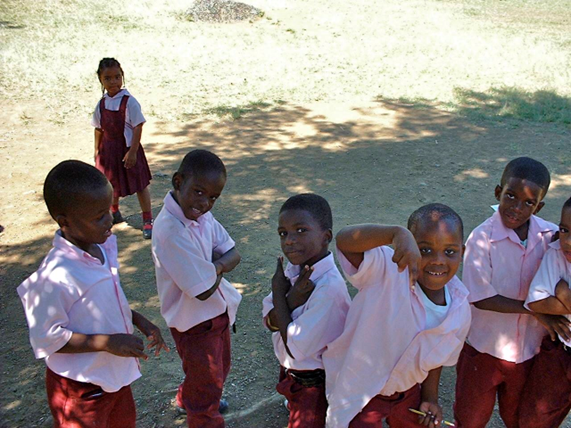
group of children pose for photo
Virgin Islands School Children, Roadtown, Tortola. Image via Flickr by @cowboysolo.

Wider Impact: Challenges Beyond a Single School

The challenges faced by the BVI’s education system extend beyond a single school. The Joyce Samuel Primary School, for example, experienced delays in its opening due to incomplete repairs. Teachers from various schools have reported issues such as excessive heat, mould, overflowing trash cans, overgrown grass, equipment shortages, internet problems, and electrical failures. These challenges are particularly concerning considering the hardships that students have already endured due to the aftermath of Hurricane Irma and the ongoing Covid-19 pandemic.

The cumulative impact of these challenges has been detrimental to the quality of education in the BVI. Students and teachers are forced to navigate substandard learning environments, hindering academic progress and overall well-being. The constant disruptions caused by infrastructure deficiencies and other related challenges further exacerbate the difficulties faced by students, impeding their ability to thrive and reach their full potential.

Government Response: Mixed Reactions and Funding Constraints

The government’s response to the educational challenges has been met with mixed reactions. Premier Dr. Natalio Wheatley attributed the problems to communication gaps, stating that he was not fully aware of the extent of the issues. However, the Teachers Union President, Sean Henry, contradicted this claim, asserting that the government has been neglecting these problems for an extended period. The situation is further exacerbated by a lack of sufficient funding, which has been a persistent issue even before Hurricane Irma struck in 2017. The hurricane worsened the existing problems, and the subsequent recovery efforts did not provide adequate funding to address the extensive damages suffered by the educational infrastructure.

The government’s limited financial resources have constrained its ability to adequately address the educational challenges. Prioritizing and allocating sufficient funding for education is crucial for implementing meaningful reforms and addressing infrastructure deficiencies. However, competing priorities and budgetary constraints have made it difficult for the government to allocate the necessary resources to meet the needs of the educational system.

Consequences: Impact on Behaviour and Teacher Shortages

The challenges faced by the BVI’s education system have far-reaching consequences. Inadequate facilities and learning environments contribute to behavioural problems among students, making it difficult for teachers to maintain discipline and create an effective learning environment. Minister Sharie de Castro has publicly acknowledged instances of extreme misconduct in schools, including fights, weapon possession, and drug and alcohol use. Uncomfortable classrooms and subpar facilities not only hamper effective teaching and learning but also contribute to a shortage of teachers in the territory.

The shortage of qualified teachers is a critical issue that further compounds the challenges faced by the BVI’s education system. Low salaries, limited career advancement opportunities, and challenging working conditions have contributed to teachers leaving the profession or seeking employment opportunities elsewhere. The departure of experienced teachers and the difficulty in attracting new teachers have created a significant gap in the education workforce, impacting the quality of education provided to students.

School Girls, Roadtown, Tortola. Image via Flickr by @cowboysolo.

Addressing the Challenges: Prioritizing Education and Funding

To overcome the educational challenges in the BVI, it is crucial for the government to prioritize education and allocate sufficient funding. Investment in school infrastructure is paramount to providing safe and conducive learning environments for students. Adequate funding should be allocated to address the infrastructure deficiencies, such as electrical and internet infrastructure, ventilation systems, waste disposal accommodations, and the provision of necessary resources for teachers.

In addition to infrastructure improvements, the government must focus on addressing teacher shortages. Competitive remuneration packages, professional development opportunities, and improved working conditions can help attract and retain qualified teachers. Furthermore, targeted recruitment strategies, including partnerships with educational institutions, can help bridge the gap in teacher supply.

Collaboration and Long-Term Solutions

The challenges faced by the BVI’s education system require collaboration among government entities, schools, teachers, and other stakeholders. Effective communication channels should be established to ensure that concerns are promptly addressed, and resources are allocated efficiently. Stakeholder engagement and input should be sought to develop and implement comprehensive plans for improving the educational system. Collective action is essential to finding long-term solutions that will provide a better education for the students of the British Virgin Islands.

Long-term solutions should focus on holistic educational reform, including curriculum enhancements, teacher professional development, and the integration of technology in the learning process. The government should actively engage with teachers, parents, and students to identify areas for improvement and develop evidence-based policies and strategies. Regular assessment and monitoring mechanisms should be implemented to track progress and make necessary adjustments.

Conclusion: Prioritizing Education for a Brighter Future

The British Virgin Islands has a unique opportunity to transform its educational landscape and provide quality education to all its students. By prioritizing education, investing in infrastructure, supporting teachers, and fostering a culture of excellence, the BVI can overcome its current challenges and create a brighter future for its students. Education is the key to unlocking the potential of individuals and driving the progress of a nation, and it is crucial that the BVI prioritizes the well-being and development of its future generations.

In conclusion, the educational challenges faced by the BVI are multifaceted and require comprehensive solutions. By addressing infrastructure deficiencies, tackling teacher shortages, and allocating sufficient funding, the BVI can pave the way for a brighter future for its students. It is imperative for all stakeholders, including the government, schools, teachers, and the community, to work together to overcome these challenges and provide a quality education that empowers the territory’s students to thrive and contribute to the growth and development of the British Virgin Islands.


References:

Beacon, B. (2023, September 26). Editorial: As school resumes, students deserve better – the BVI beacon. The BVI Beacon – “The light that comes from wisdom never goes out.” https://www.bvibeacon.com/editorial-as-school-resumes-students-deserve-better/

Beacon, T. B. (2023, May 12). Virgin islands delegation attends Education Forum – the BVI beacon. The BVI Beacon – “The light that comes from wisdom never goes out.” https://www.bvibeacon.com/virgin-islands-delegation-attends-education-forum/

ESHS sit-in: Officials unhappy over lack of communication. Virgin Islands Platinum News … BVI Daily News You Can Count On. (n.d.). https://www.bviplatinum.com/news.php?articleid=34915

ESHS teachers protest longstanding issues at school. BVI News. (2023, September 18). https://bvinews.com/eshs-teachers-protest-longstanding-issues-at-school/

Haynes, K. (2023, June 8). Teacher vacancies are alarmingly high – will this impact new school year?. 284 Media – News from the BVI. https://www.284media.com/local/2023/06/08/teacher-vacancies-are-alarmingly-high-will-this-impact-new-school-year/

Kampa, D. (2023, September 20). Students head back to class – the BVI beacon. The BVI Beacon – “The light that comes from wisdom never goes out.” https://www.bvibeacon.com/students-head-back-to-class-2/

Non-state actors in education. British Virgin Islands | NON-STATE ACTORS IN EDUCATION | Education Profiles. (n.d.). https://education-profiles.org/latin-america-and-the-caribbean/british-virgin-islands/~non-state-actors-in-education

Remarks by acting chief education officer at educators professional day: Government of the Virgin Islands. Remarks by Acting Chief Education Officer at Educators Professional Day | Government of the Virgin Islands. (n.d.). https://bvi.gov.vg/media-centre/remarks-acting-chief-education-officer-educators-professional-day

Statement from the Ministry of Education in response to industrial action at the elmore stoutt high school: Government of the Virgin Islands. Statement From the Ministry of Education in Response to Industrial Action at The Elmore Stoutt High School | Government of the Virgin Islands. (n.d.). https://bvi.gov.vg/media-centre/statement-ministry-education-response-industrial-action-elmore-stoutt-high-school

Education at a Crossroads: Navigating Thailand’s Educational Challenges

Written by Niyang Bai

Image Source: free stock photos from https://unsplash.com/ by Robert Collins.

Introduction

In the heart of Southeast Asia, Thailand is a land of rich history and boundless potential. Its picturesque surface hides the challenges facing its education system, a cornerstone of its development.

Education is the key to progress, dreams, and prosperity in Thailand. However, this journey is riddled with obstacles, from insufficient funding to educational inequality, casting shadows on a brighter future. These challenges aren’t abstract; they affect students, parents, and policymakers daily. We will explore Thai schools, educators, and students, highlighting their resilience and determination.

Thailand is at a crossroads in its education system, with choices that will impact future generations. We delve into Thailand’s education system’s complexities, hopes, and aspirations, recognizing that in adversity, a nation’s greatest asset is its pursuit of knowledge.

Insufficient Funding

In Thailand, where the promise of education should be a beacon for the future, insufficient funding looms as a dark cloud over the nation’s schools. A simple search through recent articles reveals a complex web of challenges from this issue.

According to a report by the World Bank, the education system in Thailand is beset by poor management, inequality, and high teacher shortages[1]. The World Bank has stated that investments in key financial, human, and digital learning resources were especially low in disadvantaged schools (ranked at the bottom 25 percent of the PISA Economic, Social, and Cultural Status (ESCS) Index), private schools that receive more than half of their funding from government, and rural schools[2].

World Bank highlights the small school challenge in Thailand and options for quality education. It reveals that compared to international peers, Thai secondary schools are severely hindered by inadequate learning materials and physical infrastructure, which limits their capacity to provide quality instruction. More importantly, the Thai secondary school system is dramatically lacking in qualified teachers: secondary schools in rural areas are much more understaffed and under-resourced than their urban counterparts[3].

A more in-depth report by the National Education Commission for the fiscal year 2022-2023 reveals the extent of the problem. It states that Thailand’s education budget falls significantly short of international standards. Thailand allocates only 15% of its annual budget to education, while UNESCO recommends a minimum of 20%[4]. This shortfall in funding directly affects the quality of education and students’ overall well-being.

To gain a deeper insight into the challenges of rural education in Thailand, the story of Ms. Nongnuch, a passionate teacher in a bamboo school in Buriram province. Like many others, her school strives to provide quality education despite limited resources.

Ms. Nongnuch explained that the bamboo school has an innovative learning method focusing on sustainability and environmental conservation. The students do not have to pay tuition but must plant 800 trees and participate in 800 hours of community service per year. They also learn leadership, empathy and compassion through hands-on activities.

She also highlighted the need for more support from the government and society. “Our school is more than just a school that we all used to know. A school is a lifelong learning centre and a hub for social and economic advancement in the communities,” Ms. Nongnuch quoted the school founder, Mechai Viravaidya[5]. However, she said the school still faces difficulties securing funds, materials and facilities.

Moreover, the lack of recognition and appreciation is a constant struggle. “Others often look down upon our students because they come from poor families or remote areas,” Ms. Nongnuch revealed. This stigma not only affects their self-esteem but also their motivation to pursue higher education.

Perhaps most inspiring is the impact on students’ aspirations. Ms. Nongnuch shared stories of talented students who had overcome their hardships and achieved their goals with the help of the bamboo school. “It fills me with joy to see potential realized,” she said. “We are nurturing future leaders who will make a difference in their communities and beyond.”

As Ms. Nongnuch eloquently put it, insufficient funding is “a barrier that blocks the opportunities for our children.”  It becomes increasingly clear that supporting rural schools like hers is not just a matter of charity; it’s about empowering the untapped potential of a nation’s youth.

Quality of Education

According to a report by the Asian Development Bank, Thailand’s basic education system faces several challenges, including the need to expand the supply of human capital to avoid the middle-income trap and the ageing society. The report highlights that despite the significant amount of resources spent on education, students’ learning outcomes are low and have not improved significantly in either national or international assessments. The performance of junior secondary school students in national examinations has declined, especially in mathematics and science. While the performance of senior secondary school students has improved slightly over the same period, the mean results for core subjects (mathematics, science, and English) were less than 50. This worrying figure is worsened by inequality in education quality across regions since the performance of secondary school students is lower in poorer, remote regions. The report argues that such poor learning outcomes are presumably due to two main reasons: the role of small schools and inefficient resource allocation for education in public spending[6].

As per the World Bank, various factors are influencing the quality of education in Thailand[7]. The report highlights the following key findings:

  • A lack of teacher training and professional development opportunities directly impacts the quality of instruction in classrooms.
  • Disparities in educational quality persist between urban and rural areas, where students in rural regions face limited access to qualified teachers and educational resources.
  • The curriculum was found to be outdated, with a need for reforms that align with 21st-century skills.
  • Student engagement and critical thinking skills remain underdeveloped due to traditional teaching methods.

The report recommends comprehensive teacher training programs, curriculum updates, and implementing student-centred teaching strategies to address these challenges.

The following views expressed by both a student and a parent tell us more about the quality of education in Thailand.

Nicha, a 16-year-old high school student, expressed dissatisfaction with the rigid curriculum. “I feel like I’m just following instructions from teachers,” she said. “I want to explore, not just obey.” Nicha also mentioned that the lack of creative learning opportunities made studying less interesting.

On the other hand, Mr. Somchai, a parent, shared his worries about the quality of education. “I wonder if my child is getting the skills they need for the future,” he said. “The education system seems old-fashioned, and it doesn’t prepare them for the changes of today’s society.”[8]

These voices resonate with a growing sentiment in Thailand: a need for a shift in the education paradigm. The emphasis on holistic development, critical thinking, and practical skills has become increasingly urgent. Thailand’s educational landscape stands at a crossroads, with the quality of education being a critical factor in determining the nation’s success in the global arena.

Image Source: Free stock photos from https://unsplash.com/t/3d-renders by Mario Heller

Educational Inequality

Educational inequality in Thailand is a pressing issue highlighted in recent news articles. According to a report by the World Bank, disparities in allocation and inefficiencies of investments across schools in Thailand have led to a decline in student performance in reading and a stagnation of scores in math and science[9]. The report further finds that investments in key financial, human, and digital learning resources were especially low in disadvantaged schools, private schools that receive more than half of their funding from the government, and rural schools.

Inequality between urban and rural areas is also a significant concern. Rural areas often lack basic infrastructure, qualified teachers, and educational resources, creating a significant gap in educational quality[10]. Ethnic minority communities face additional challenges, such as language barriers, discrimination, and limited access to quality education[11].

The Thai government must address these issues and create inclusive learning environments in schools to help improve Thailand’s education performance. A report by the Organisation for Economic Co-operation and Development (OECD) that assesses Thailand’s education system and skills imbalances[12]. The report highlights several issues that contribute to educational inequality in Thailand:

  • Education quality, not quantity, is the main contributing factor to long-term economic growth.
  • Disadvantaged schools have low investments in key financial, human, and digital learning resources.
  • There is a skills mismatch between the demand in the Thai labour market and the supply of skilled workers.
  • There are disparities in resources allocated for teachers and other educational resources between schools with higher and lower socioeconomic status students.

The report recommends several policy interventions to address these issues, including improving teacher quality, increasing investment in disadvantaged schools, and enhancing the relevance of education to labour market needs. The report also emphasizes the importance of developing relevant skills from pre-primary to higher education levels.

However, not all students have equal access to quality education and opportunities to develop their skills. Nong, a stateless student from a hill tribe in northern Thailand, shared her challenges and aspirations for education[13].

She explained that she had to overcome many obstacles, such as poverty, discrimination, and language barriers. “I had to work hard to support my family and pay school fees,” she said. “I also faced stigma and prejudice because of my ethnicity and status. I had to learn Thai as a second language, which was difficult.”

Nong also expressed her gratitude for the support she received from teachers and mentors. “They encouraged me to pursue my dreams and helped me with scholarships and citizenship applications,” she said. “They also taught me about my rights and responsibilities as a citizen.”

Regarding her future plans, Nong said she wanted to become a teacher and help other disadvantaged children. “I want to give back to my community and society,” she said. “I believe education is the key to empowerment and opportunity.”

Nong’s story illustrates the resilience and potential of many ethnic minority and stateless students in Thailand. While they face many hardships, they also have educational hopes and ambitions. There is a need for more inclusive and supportive policies and practices that enable them to access quality education and realize their full potential.

Teacher Shortage

Thailand is facing a serious challenge in providing quality education to its students, especially in rural areas lacking qualified teachers. A Thai PBS World report highlights the teacher shortage in Thailand, particularly in rural areas. The report states that the shortage is most severe in the northeastern region of Thailand, where schools struggle to attract and retain qualified teachers[14]. This has resulted in uneven access to quality education, with students in rural areas being disadvantaged.

In addition, a report from The Bangkok Post indicates a severe shortage of science and mathematics teachers nationwide. The report states that students in these subjects face a challenging situation due to the dearth of specialized educators[15].

According to a World Bank study, around 64% of Thai primary schools are critically short of teachers, defined as having less than one teacher per classroom on average. The study estimates that as many as 110,725 out of 353,198 classrooms in Thai primary and secondary schools are critically short of teachers[16]. The study also reveals that eliminating teacher shortages in terms of quality and quantity would significantly improve student learning, and the impact would be most significant for lower-performing schools. Therefore, improving the quality of teachers and addressing the severe teacher shortages – especially for the vast number of small rural schools – should be at the centre of Thailand’s reform initiatives if the country is serious about tackling the widespread low education quality and high disparity in educational performance between socioeconomic groups.

To gain insight into the challenges of teaching in under-resourced schools, the case of Chaisit Chaiboonsomjit, a learner at Xavier Learning Community (XLC) in Chiang Rai, who served as a volunteer teacher at Zi Brae School in Chiang Mai[17]. His experience was eye-opening.

Chaisit shared his enthusiasm for teaching but also revealed the harsh conditions he faced. “The school is located on top of a mountain, and it takes eight hours to get there by car or motorcycle,” he said. “When it rains, the roads become impossible to pass, and teachers are often stranded.”

He explained how the lack of teachers affects students. “Most of our students are from the Karen hill tribe and study seven subjects provided by the Thai Education Ministry. But we only have 15 teachers for more than 200 students. They need more guidance and support to learn effectively.”

Chaisit also expressed frustration about teacher retention. “Many teachers leave after a short time because they can’t cope with the isolation and hardship,” he said. “This creates instability and inconsistency in the school system.”

In his heartfelt appeal, Chaisit emphasized the value of equal opportunity for education. “Every child, no matter where they are born, deserves a good teacher and a chance to pursue their dreams. We need more incentives to attract teachers to rural areas and more resources for teacher training.”

Chaisit’s story is a powerful illustration of the real-world impact of the teacher shortage crisis. It’s a challenge that affects educators and limits the educational potential of countless Thai students, especially those in remote areas.

Conclusion

Thailand’s education system, often celebrated for its potential, is ensnared in a web of challenges that demand urgent attention. This report has delved into five critical issues that cast shadows over the nation’s educational landscape:

  1. Insufficient Funding: A chronic shortage of financial resources hampers the quality of education, hindering the nurturing of young minds.
  2. Quality of Education: Rote memorization and standardized testing take precedence over critical thinking and creativity, leaving students ill-prepared for the complexities of the modern world.
  3. Educational Inequality: Disparities in access to education and educational outcomes persist, affecting marginalized communities and perpetuating social divisions.
  4. Teacher Shortage: A severe lack of qualified educators, particularly in rural areas and critical subjects, disrupts the learning process and hinders student development.

These challenges collectively pose a profound threat to Thailand’s education system and, by extension, its future. A nation’s strength lies in equipping its youth with the knowledge and skills to navigate an ever-evolving global landscape. However, the current state of Thailand’s education system impedes this aspiration.

Insufficient funding and the resultant resource shortages compromise the quality of education, leaving students ill-prepared for a future that demands adaptability, creativity, and critical thinking. Educational inequality perpetuates social divisions, limiting the nation’s capacity to harness the full potential of its diverse populace.

In conclusion, the challenges outlined in this report are not isolated issues; they are interconnected strands in a complex web. The future of Thailand depends on addressing these challenges with determination and foresight. A well-funded, inclusive, and quality education system is not just an investment in the present but a beacon guiding the nation toward a brighter, more equitable, and prosperous tomorrow. To ensure Thailand’s place on the global stage, these challenges must be met head-on, placing education at the forefront of the nation’s priorities.


References:

[1]    https://theisaanrecord.co/2022/03/30/thai-education-beset-by-poor-management/

[2]    https://www.worldbank.org/en/news/press-release/2020/12/09/world-bank-more-inclusive-and-better-investments-in-education-to-improve-learning-outcomes-in-thailand

[3]    https://blogs.worldbank.org/eastasiapacific/thailand-s-small-school-challenge-and-options-quality-education

[4]    https://unesdoc.unesco.org/ark:/48223/pf0000384381

[5]    https://www.undertoldstories.org/2019/02/07/thailands-bamboo-school/

[6]    https://www.adb.org/publications/recent-developments-in-basic-education-in-thailand-issues-and-challenges

[7]    https://www.worldbank.org/en/country/thailand/publication/wanted—a-quality-education-for-all-in-thailand

[8]    https://www.oecd.org/countries/thailand/education-in-thailand-9789264259119-en.htm

[9]    https://www.worldbank.org/en/news/press-release/2020/12/09/world-bank-more-inclusive-and-better-investments-in-education-to-improve-learning-outcomes-in-thailand

[10]   https://rksi.adb.org/wp-content/uploads/2020/10/rural-urban-poverty-and-inequality-thailand.pdf

[11]   https://maxwellsnotes.com/2015/03/17/educational-inequality-in-thailand/

[12]   https://one.oecd.org/document/ECO/WKP%282020%2949/en/pdf

[13]   https://www.worldbank.org/en/news/press-release/2020/12/09/world-bank-more-inclusive-and-better-investments-in-education-to-improve-learning-outcomes-in-thailand

[14]   https://link.springer.com/chapter/10.1007/978-981-10-0847-4_11

[15]   https://one.oecd.org/document/ECO/WKP%282020%2949/en/pdf

[16]   https://blogs.worldbank.org/eastasiapacific/thailand-s-small-school-challenge-and-options-quality-education

[17]   https://jcapsj.org/blog/2023/08/31/teaching-and-learning-in-rural-thailand/

Lorem ipsum dolor sit amet, consectetur adipiscing elit. Ut elit tellus, luctus nec ullamcorper mattis, pulvinar dapibus leo.

Educational Challenges in Burundi

Written by Joseph Kamanga

Introduction

Burundi, a small landlocked country in East Africa with a population of over 11 million people, has been plagued by political instability and violence throughout its history. These challenges have severely impacted the country’s education system, hindering progress and development. While some improvements have been made in recent years to enhance access to education, Burundi continues to face several critical challenges, including substandard school infrastructure, limited access to education, low quality of education, and high dropout rates. Addressing these issues requires a collaborative effort involving the government, donors, and civil society to implement sustainable solutions.

Students are eagerly waiting for the completion of their new school in Mabayi, Burundi. Photo by United Nations Development Programme.

Substandard School Infrastructure

One of the primary obstacles affecting education in Burundi is the substandard condition of school infrastructure. Many schools lack the necessary facilities and resources, impeding effective teaching and learning. The critical problems associated with school infrastructure in Burundi include:

Lack of classrooms:

 A significant number of schools in Burundi suffer from a shortage of classrooms, resulting in overcrowding. Students often have to sit on the floor or study outside, hampering their ability to learn and concentrate.

Insufficient number of teachers:

In 2017, Burundi had only 40,000 teachers for a population of over 11 million, resulting in an alarming student-to-teacher ratio. The lack of teachers compromises the quality of education as individual attention to students becomes challenging.

Shortage of textbooks and learning materials:

Access to textbooks and learning materials is limited, with only 50% of students having access to these resources in 2017. This scarcity hampers students’ ability to actively participate in class and complete their assignments effectively.

Inadequate water and sanitation facilities:

Approximately 50% of schools lack proper water and sanitation facilities, depriving students of clean water and hygienic toilets. This lack of basic amenities contributes to the spread of diseases, making it difficult for students to attend school regularly.

Insufficient electricity:

Only 30% of schools in Burundi have access to electricity, restricting the use of electronic devices and hindering the integration of technology in teaching and learning practices.

Deteriorating school buildings:

Approximately 30% of schools in Burundi require urgent repairs, rendering them unsafe and unsuitable for students. Dilapidated infrastructure adds to the challenges faced by both students and teachers.

Limited Access to Education

Access to education in rural areas of Burundi is significantly limited due to various factors:

Poverty:

Poverty is a significant barrier preventing families from sending their children to school, even when educational institutions are available. The inability to afford school fees and related expenses hampers children’s access to education.

Distance:

The geographical remoteness of rural areas in Burundi makes it challenging for children to access schools, resulting in limited educational opportunities.

Gender discrimination:

Girls, particularly in rural areas, face gender-based barriers to education. Cultural beliefs often dictate that girls should prioritize household responsibilities, impeding their access to formal education. Additionally, the lack of adequate sanitation facilities specifically designed for girls discourages their attendance.

The combined effect of poverty, distance, and gender discrimination has led to an estimated 600,000 girls in Burundi not attending school during the 2017-2018 academic year.

Low Quality of Education

The issue of low quality of education in Burundi encompasses various factors that contribute to a substandard learning experience for students. These factors can be attributed to the lack of resources, inadequate teacher training, outdated curriculum, and insufficient focus on student-centred learning approaches as follows:

Insufficient focus on student-centred learning: A student-centred approach to education emphasizes active participation, collaboration, and critical thinking. However, the traditional teaching methods employed in Burundi often prioritize rote memorization and passive learning. Shifting towards student-centred approaches, such as project-based learning, inquiry-based learning, and interactive teaching methods, can foster a deeper understanding of concepts and improve students’ ability to apply knowledge in practical situations.

The quality of education in Burundi is generally low, attributed to several factors:

Lack of qualified teachers:

A considerable number of teachers in Burundi need to be qualified or adequately trained. Moreover, the low salaries offered to qualified teachers often discourage highly skilled individuals from pursuing a career in education. As a result, the quality of instruction suffers. The quality of education is closely linked to the competence and skills of teachers. In Burundi, there is a need to invest in comprehensive teacher training programs that focus on pedagogical techniques, subject knowledge, and classroom management. Without proper training, teachers may rely on outdated teaching methods or struggle to effectively engage students in the learning process. Ongoing professional development opportunities can help teachers stay updated with best practices and enhance their instructional strategies.

Poor quality textbooks:

Many textbooks in Burundi are outdated or inaccurate, failing to provide up-to-date and accurate information to students. This hinders their ability to acquire knowledge effectively.

Outdated Curriculum:

The curriculum used in Burundi’s education system may suffer from outdated content, limited relevance to real-world contexts, and a lack of alignment with modern educational standards. Updating the curriculum to reflect current knowledge and skills required in the job market is crucial. A contemporary curriculum should promote critical thinking, problem-solving, creativity, and digital literacy, equipping students with the competencies necessary for future success.

Insufficient resources:

Many schools in Burundi need more essential resources, such as textbooks, learning materials, and technological equipment. Without access to up-to-date and relevant resources, students may struggle to grasp concepts and engage in meaningful learning. Insufficient resources also limit teachers’ ability to deliver comprehensive lessons and provide students with hands-on experiences that enhance their understanding of subjects.

High dropout rates:

Burundi experiences alarmingly high dropout rates among girls and children from disadvantaged backgrounds. Factors contributing to these high dropout rates include:

a. Poverty: Economic constraints force many families to prioritize immediate needs over education, making it difficult for children to continue their studies.

b. Early marriage: The prevalence of early marriage in Burundi prevents girls from pursuing education beyond a certain age. Early marriage often leads to the discontinuation of their schooling.

c. The need to work: Many children in Burundi are compelled to work to support their families, leaving them with no time or opportunity to attend school.

Addressing these complex challenges requires a multifaceted approach involving various stakeholders.

The Charlemagne School in Burundi. Photo by Bernd Weisbrod

Challenges faced by Children with disability

Children with disabilities face significant challenges in accessing quality education in Burundi. The educational system in the country often lacks the necessary infrastructure, resources, and inclusive policies to accommodate their diverse needs. Here are some key challenges faced by children with disabilities in Burundi’s education system:

Inadequate infrastructure and facilities:

Many schools in Burundi lack the necessary infrastructure and facilities to support children with disabilities. This includes wheelchair-accessible ramps, adapted classrooms, and accessible toilets. The physical barriers in schools make it difficult for children with mobility impairments to navigate the campus and fully participate in educational activities.

Limited availability of specialized support:

Specialized support services, such as trained teachers, therapists, and assistive devices, are scarce for children with disabilities in Burundi. These children often require individualized attention and tailored instructional approaches to address their specific learning needs. The need for more trained professionals and appropriate assistive technology hampers their educational progress.

Discrimination and stigma:

Children with disabilities in Burundi often face discrimination and stigma within their communities and schools. This can create psychological barriers affecting their self-esteem, confidence, and willingness to engage in learning. Negative attitudes and misconceptions about disability can lead to exclusion and social isolation.

Limited awareness and understanding:

There is a lack of awareness and understanding among educators, parents, and the wider community about disabilities and inclusive education. This can result in a failure to recognize and accommodate the diverse learning needs of children with disabilities. Promoting awareness campaigns and training teachers and stakeholders to foster an inclusive and supportive learning environment is crucial.

Inaccessible curriculum and teaching methods:

Burundi’s curriculum and teaching methods often do not consider the diverse learning styles and needs of children with disabilities. The instructional materials and assessments may not be adapted to cater to their specific requirements, hindering their full participation in the educational process. Adapting the curriculum and employing inclusive teaching strategies can help ensure that children with disabilities receive an equitable education.

Interventions to Improve Burundi’s Education System

To enhance the education system in Burundi, the following vital interventions are necessary:

Teacher Training and Professional Development:

To improve the quality of education in Burundi, a strong emphasis should be placed on teacher training and professional development programs. The government, in collaboration with educational institutions and international partners, should establish comprehensive training programs to enhance teachers’ skills and pedagogical techniques. Ongoing professional development opportunities should be provided to ensure that teachers are equipped with the latest teaching methodologies and subject knowledge. By investing in the professional growth of teachers, the overall quality of education in Burundi can be significantly improved.

Promoting Inclusive Education:

Another critical aspect of enhancing the education system in Burundi is promoting inclusive education. Efforts should be made to ensure that children with disabilities, those from marginalized communities, and those with special learning needs have equal access to education. This requires developing inclusive policies, providing necessary support services and resources, and effectively training teachers to cater to diverse learning needs. Inclusive education not only fosters a sense of equality and social cohesion but also maximizes the potential of all children, contributing to the nation’s overall development.

Enhancing Parent and Community Involvement:

To create a holistic and supportive learning environment, it is essential to enhance the involvement of parents and the wider community in education. Establishing partnerships between schools, parents, and community organizations can facilitate collaborative efforts in promoting education. This can involve initiatives such as parent-teacher associations, community outreach programs, and awareness campaigns on the importance of education. Engaging parents and the community can contribute to increased school attendance, reduced dropout rates, and improved educational outcomes for children in Burundi.

Integration of Technology in Education:

Integrating technology in education can revolutionize the learning experience for students in Burundi. Access to computers, internet connectivity, and digital learning resources can enhance teaching and learning methods, promote interactive and self-directed learning, and foster digital literacy skills. The government should prioritize initiatives to provide schools with the necessary technological infrastructure and ensure that teachers receive adequate training to utilize technology in their classrooms effectively. By embracing technology, Burundi can bridge the digital divide and equip its students with the skills needed for the modern world.

Monitoring and Evaluation:

A robust monitoring and evaluation system should be established to assess the progress and impact of education initiatives in Burundi. Regular assessments of school infrastructure, teacher quality, student performance, and dropout rates are essential to identify areas of improvement and make informed policy decisions. Additionally, collecting data on gender disparities, educational equity, and access to education can help design targeted interventions. Monitoring and evaluation provide the necessary feedback loop to ensure that efforts to enhance the education system in Burundi are effective and sustainable.

Violence has affected the infraestructure of schools in the country. Photo by EU/ECHO/Anouk Delafortrie

Investing in school infrastructure:

The government should prioritize investments in the construction and rehabilitation of schools. Adequate classrooms, furniture, and facilities are essential for creating a conducive learning environment.

Expanding access to education:

Efforts should be made to improve access to education, particularly in rural areas. This can be achieved by constructing additional schools, recruiting and training more qualified teachers, and providing transportation subsidies to ensure students can reach schools despite the distance.

Improving the quality of education:

The government must focus on improving the quality of education by enhancing teacher training programs and attracting skilled educators. Additionally, ensuring the availability of updated textbooks, learning materials, and technological resources is crucial for fostering a quality learning environment.

Reducing dropout rates:

To address the high dropout rates, comprehensive strategies must be implemented. This includes targeted interventions to alleviate poverty, awareness campaigns to discourage early marriages, and initiatives to provide financial assistance to families struggling with school fees.

Addressing these challenges for children with a disability requires a concerted effort from the government, educators, families, and civil society organizations. The following interventions can help improve educational opportunities for children with disabilities:

Inclusive policies and legislation:

The government should establish and enforce inclusive education policies that protect the rights of children with disabilities and ensure their access to quality education. This includes promoting inclusive practices, providing reasonable accommodations, and eliminating school discrimination.

Training and professional development:

Teachers and education professionals need specialized training on inclusive education and strategies to support children with disabilities. This training should focus on adapting teaching methods, creating accessible learning materials, and using assistive technology effectively.

Provision of support services:

Adequate resources should be allocated to provide necessary support services, such as speech therapy, occupational therapy, and psychological support, to children with disabilities. This includes recruiting and training specialized professionals who can work directly with these children.

Infrastructure and accessibility:

Schools should be equipped with appropriate infrastructure and facilities to ensure accessibility for children with disabilities. This involves constructing wheelchair ramps, installing accessible toilets, and adapting classrooms to accommodate different types of disabilities.

Awareness and community engagement:

Conducting awareness campaigns to combat stigma, raise awareness about disabilities, and promote the importance of inclusive education is essential. Engaging parents, communities, and local organizations in educating children with disabilities can help foster an inclusive and supportive environment.

By addressing these challenges and implementing inclusive practices, Burundi can create a more inclusive education system that ensures equal educational opportunities for all children, including those with disabilities.

Conclusion

Burundi’s education system faces significant challenges, including substandard school infrastructure, limited access to education, low quality of education, and high dropout rates. These issues have profound implications for the country’s development and the well-being of its population. However, these challenges can be overcome with the joint efforts of the government, donors, and civil society. By investing in school infrastructure, expanding access to education, improving the quality of instruction, and implementing strategies to reduce dropout rates, Burundi can pave the way for a brighter future, ensuring that all children have equal opportunities to access quality education.


References:

United Nations Educational, Scientific and Cultural Organization (UNESCO). (2018). Education for All Global Monitoring Report: Education Progress and Challenges in Burundi. Retrieved from https://unesdoc.unesco.org/ark:/48223/pf0000246736

World Bank. (2020). Burundi Education Sector Analysis: Challenges and Opportunities for System Improvement. Retrieved from https://openknowledge.worldbank.org/handle/10986/33776

UNICEF. (2019). Education in Emergencies Annual Report 2019 – Burundi. Retrieved from https://www.unicef.org/burundi/reports/education-emergencies-annual-report-2019

Human Rights Watch. (2017). Burundi: Girls’ Education under Threat. Retrieved from https://www.hrw.org/news/2017/09/07/burundi-girls-education-under-threat

Save the Children. (2020). Education in Burundi: Challenges and Opportunities. Retrieved from https://resourcecentre.savethechildren.net/node/18701/pdf/education_in_burundi.pdf

Plan International. (2019). Education in Burundi: Challenges and Solutions. Retrieved from https://plan-international.org/publications/education-burundi-challenges-and-solutions

Handicap International. (2018). Education for All in Burundi: Study on Inclusive Education. Retrieved from https://www.hi-us.org/wp-content/uploads/2018/08/education-for-all-in-burundi-study-on-inclusive-education.pdf

Burundi Ministry of Education. (2019). Strategic Plan for Education and Vocational Training 2018-2027. Retrieved from http://www.men.estburundi.org/plan-strategique

African Development Bank Group. (2017). Burundi Country Strategy Paper 2017-2021. Retrieved from https://www.afdb.org/fileadmin/uploads/afdb/Documents/Project-and-Operations/Burundi_-_CSP_2017-2021_With_CAADP.pdf

The New Humanitarian. (2020). Burundi’s Education System Faces Multiple Crises. Retrieved from https://www.thenewhumanitarian.org/analysis/2020/01/20/burundi-education-crisis-challenges

Educational Challenges in Lesotho

Written by Priscilla Thindwa

An Overview of Education

The significance of education in driving development and as a tool in reducing  poverty is undeniable. Education should be regarded as a human right, and every individual should have access to and be fully included. According to the World Bank, on an individual level, education has the impact of promoting employment, increasing earnings, and reducing poverty (World Bank, 2023). On the societal level, education has the potential to drive long-term economic growth, strengthen institutions and foster social cohesion (World Bank, 2023). For this reason, Sustainable Development Goal 4 envisages a world with inclusive and equitable quality education and promotes lifelong learning opportunities for everyone. However, the challenge in most African countries is not the accessibility but the quality of education and exclusion. According to reports by the United Nations (UN), sub-Saharan Africa has the highest rates of education exclusion globally, with approximately 60% of youth between the ages of 15 and 17 not in school (Kaledzi, 2022). Several factors contribute to such challenges.

Lesotho College of Education. Photo by OER Africa on Flickr.

The Landscape of Education in Lesotho

Lesotho, a country in sub-Saharan Africa, is not an exception to the persistent challenges of education faced by other countries in the region. Even though the country has had some challenges, its literacy rate is considered one of the highest in Africa. With an adult literacy rate of 81% in 2021, the World Bank datasets note a decline of 5.3% from 2000. Such a decline is worrisome because education is considered a fundamental human right for all individuals in the world. The primary school in Lesotho is free, and most primary schools and secondary schools are owned by churches (Bitso, 2006: 37). The Ministry of Education and Training is considered the mouthpiece of education whose main responsibilities include formulating and monitoring the implementation of educational policies, passing legislation and regulations governing schools (Bitso, 2006: 37).

Challenges

Overcrowding in Classrooms

One of the main challenges facing education in Lesotho is classroom overcrowding. This is mostly in Primary schools. In 2009 when the government of Lesotho implemented a free education policy, this put a strain on the existing “physical infrastructure, educational material and human resources” (Mukurunge, T., Tlali, N. and Bhila, T., 2019:29). Even though the policy’s aim was for everyone to have free access to education, quality of education was compromised. As pointed out by World Data on Education, Lesotho’s poor quality of primary education is a matter of concern (UNESCO, 2006:2). Citing overcrowding as the main cause of such low quality in education, which is exacerbated by shortages of teachers, classrooms as well as high repetition levels (UNESCO, 2006:2). Supporting the literature study by Seotsanyana and Matheolane, Francina Moloi, Nomusic Morobe, and Urwick, James, assert that introduction of free primary school education led to an increase of students per teacher ratio. This resulted in teachers resorting to ineffective teaching methods (Moloi, F., Morobe, N. and Urwick, 2007). For instance, the latest World Bank Data on the pupil-teacher ratio in Primary schools was 1:23 in 2018. Consequently, affecting the levels of pupil concentration and increasing drop-outs.

Shortage of Qualified Teachers

In addition to overcrowded classrooms, the shortage of qualified teachers is another challenge that limits the education system in Lesotho. This shortage is compounded by the lack of opportunities for teachers to undergo proper professional training to revamp their skills. The shortage of qualified teachers and overcrowding in classrooms continue to contribute to low-quality education and efficiency, especially at the primary level. Moreover, as indicated by the World Data on Education on Lesotho, the low quality of teachers is owed to the “absence of regular in-service training opportunities for teachers” (UNESCO, 2006:2). This is exacerbated by inexperienced headteachers, inadequate inspection and teachers who are not certified.

Qoaling is a village/suburb of Maseru. It has a built in infrastructure for most part but hand pumps are still evident in some sections. Maimoeketsi Community Primary School. The Standard 7 class during lessons. Photo by John Hogg. World Bank on Flickr.
Shortage of Furniture and Learning Materials

Shortage of furniture and inadequate learning material are other challenges that hinder most Basotho from enjoying their right to quality education thoroughly. Quality infrastructure and learning materials are imperative for education to be effective and efficient. However, this is not the case for most schools in Lesotho. Even though education is free in primary schools, insufficient learning materials such as textbooks, teachers’ guide materials, and desks hinder the provision of a good education. To make matters worse, some schools do not have enough classroom blocks, so they must learn outside under trees. For those with school blocks, they are poorly maintained, and pupils shiver in cold weather. For some, such unfavourable environments continue to deter pupils in Lesotho schools from accessing quality education.

Socio-economic Factors Leading to Poor Performance

Another challenge that most Basotho face concerning education is related to the socio-economic factors, which place a significant role in the performance of the pupils in school. According to the World Bank data on the collection of development indicators, 70.06% of Lesotho’s population is based in rural areas (Trading Economics, 2022). The 2021 UNICEF Multiple Indicator Cluster Surveys (MICS) findings on Lesotho indicated that approximately 80% of children complete primary education (UNICEF Lesotho 2021:15). The report observed a steep decline in the rate for lower and upper secondary education (UNICEF Lesotho, 2021:15). The report continues to note that children from the “poorest quintile and those in rural areas” had lower rates of completion and performing below the national average (UNICEF Lesotho, 2021:15). On the other hand, those from urban and wealthiest families, was noted to complete at “a level higher than the national average” (UNICEF Lesotho, 2021:15). Some contend that the disparities in the level performance are owed to lack of motivation for children from poor households whose parents are usually less educated (Help Lesotho, 2018). Most children from such households are not convinced that education’s impact is changing one’s economic status. Also, some children from poor households go to school hungry, making it difficult for them to concentrate and, as such, negatively affecting their performance. Thus, even though primary school is free, it remains inaccessible to certain groups of society in Lesotho.

Some Recommendations and Conclusion

Since education is considered a fundamental human right, one should expect it to benefit all groups of society regardless of their socio-economic status. However, this is not entirely the case in some schools in Lesotho. As discussed above, several challenges within the education system continue to hinder Basotho’s ability to enjoy fundamental human rights entirely. Firstly, classroom overcrowding can be tackled by constructing more schools and employing more teachers. Doing so will reduce the pressure on the limited resources. The employed teachers should be professionally trained and allow them opportunities to upgrade their knowledge to adapt to the changing world.

Moreover, the government and non-governmental organisations should ensure the provision of required learning and teaching materials to both students and teachers, respectively. Lastly, regarding tackling the challenge associated with socio-economic factors, children from poor and rural areas should be given more incentives to stay in school, and scholarships should be awarded to the best performers to continue their education to secondary school and tertiary education. Doing so will indeed ensure that education is accessible to all groups of society regardless of their socio-economic background.

References

Educational Challenges in Eritrea: Navigating Historical Context and Current Issues

Written by Joseph Kamanga

Education plays a pivotal role in shaping the future of individuals and societies. In the case of Eritrea, a country with a complex history and a strong desire for progress, the educational landscape reflects both the challenges inherited from the past and the contemporary issues faced by its education system. By examining the historical context and the current challenges, we gain a comprehensive understanding of the obstacles that Eritrea must overcome to ensure equitable and quality education for its population.

Children waiting to go to class. Photo by Merhawi147

Historical Background

Eritrea’s educational system has evolved over time, deeply influenced by its colonial history and the struggle for independence. Under Italian colonial rule in the late 19th and early 20th centuries, education was limited to a privileged few, primarily aimed at serving the interests of the colonial administration. This approach excluded the majority of Eritreans from accessing quality education, perpetuating inequities.

After World War II, Eritrea came under British administration and later federated with Ethiopia in 1952. During this period, educational opportunities remained limited and largely inaccessible to the broader population. However, the armed struggle for independence led by the Eritrean People’s Liberation Front (EPLF) brought about significant changes. The EPLF established underground schools, known as “ma’htot,” which focused on preserving Eritrean identity, culture, and language. This movement laid the foundation for a more inclusive and culturally relevant education system.

Current Challenges

Inequitable Access to Education

One of the most pressing challenges in Eritrea is inequitable access to education. Geographical factors pose significant barriers, particularly in remote and rural areas. Limited infrastructure and transportation hinder the establishment and maintenance of schools, making it difficult for children to access education. For example, in the Gash Barka region, located in the western part of the country, the lack of schools and the long distances students have to travel to get to school prevent many children from attending classes regularly. Similarly, in the Southern region, children from nomadic communities face difficulties in accessing formal education due to their transient lifestyle and the absence of educational facilities in their migratory routes.

Economic Constraints and Affordability

Economic factors further exacerbate the challenges in the education system. Poverty, particularly prevalent in rural areas, makes it challenging for families to afford school-related expenses such as uniforms, books, and transportation costs. The financial burden restricts access to education, disproportionately affecting vulnerable populations and perpetuating cycles of poverty and inequality. For instance, in the Anseba region, impoverished families struggle to cover essential educational expenses, leading to higher dropout rates among children from low-income backgrounds. Similarly, in urban areas such as Asmara, high living costs make it difficult for families to allocate sufficient resources for education, hindering access to quality schooling.

Gender Disparities

Eritrea faces gender disparities in access to education. Deep-rooted cultural norms and expectations often prioritize boys’ education over girls’, leading to lower enrollment rates for girls. Early marriage and assigned domestic responsibilities limit girls’ educational opportunities. Early marriage is prevalent in some areas, such as the Debub region, and girls are often forced to drop out of school at a young age, hindering their educational advancement. Furthermore, societal perceptions of traditional gender roles contribute to girls’ limited educational and career opportunities, constraining their full potential and undermining efforts to achieve gender equality in education.

The cloister of the Catholic Cathedral in Asmara hosts a large school. Photo by David Stanley.
Quality of Education

The quality of education in Eritrea is a significant concern. Insufficient numbers of qualified teachers, especially in rural areas, contribute to inadequate learning experiences. Teachers’ lack of professional development opportunities further hampers their ability to deliver quality instruction. The absence of essential resources such as textbooks, learning materials, and proper infrastructure also impacts the overall learning environment. In the Maekel region, for example, overcrowded classrooms and a shortage of trained teachers compromise the quality of education and hinder students’ learning outcomes.

Limited Access to Higher Education

Access to higher education is limited in Eritrea. The scarcity of universities and highly competitive admission processes restrict the number of students who can pursue tertiary education. This limitation impedes the development of a skilled workforce and hampers the country’s progress towards a knowledge-based economy. For instance, in the Central region, where the capital city Asmara is located, the few available spots in universities cannot accommodate the growing number of qualified students seeking higher education, leading to a significant gap between the demand and supply of tertiary education opportunities.

Conclusion

The educational challenges in Eritrea are deeply rooted in historical factors and compounded by current issues. Inequitable access, economic constraints, gender disparities, poor quality of education, and limited access to higher education continue to hinder the development and progress of the country’s education system. These challenges require urgent attention and comprehensive solutions. By addressing the underlying causes, investing in infrastructure, promoting gender equality, and improving the quality of education, Eritrea can pave the way for a more inclusive and effective education system that empowers its citizens and supports the country’s long-term development goals.

References

United Nations Development Programme (UNDP) – Eritrea: Education Sector Review: https://www.er.undp.org/content/eritrea/en/home/library/poverty/education-sector-review.html

United Nations Children’s Fund (UNICEF) – https://www.unicef.org/eritrea/education

World Bank – Education in Eritrea: https://www.worldbank.org/en/country/eritrea/publication/education-in-eritrea 

United Nations Educational, Scientific and Cultural Organization (UNESCO) – Eritrea: https://en.unesco.org/countries/eritrea Human Rights Watch – Eritrea: https://www.hrw.org/africa/eritrea

Educational Challenges in Ethiopia

Written by Joseph Kamanga

Ethiopia is a country in East Africa with a population of over 100 million people. The country has made significant progress in expanding access to education over the past few decades. However, despite these efforts, the education system in Ethiopia faces several challenges, which have hindered its ability to provide quality education to all students. In this article, we will explore some of the major challenges facing the education system in Ethiopia.

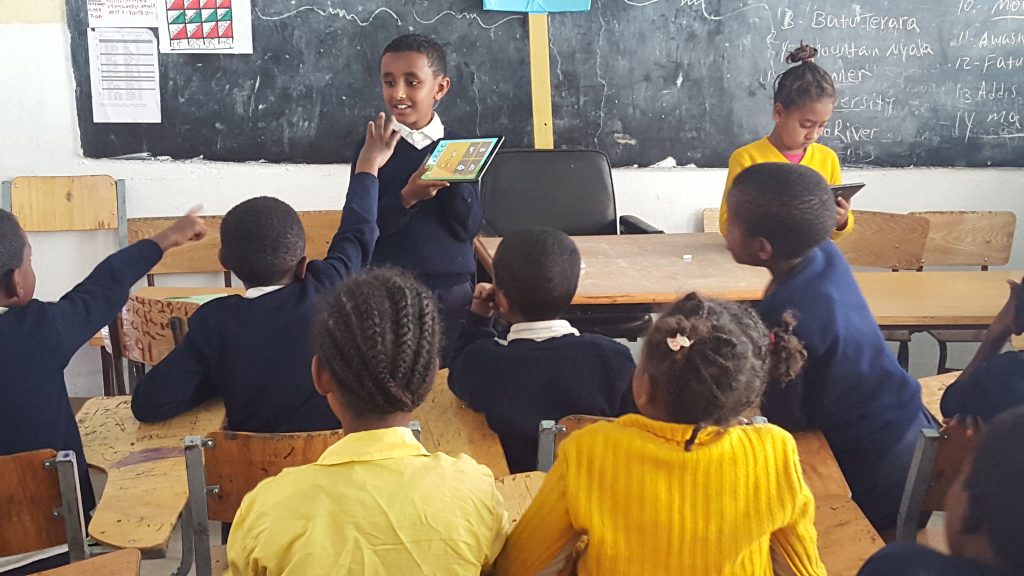
Children engaging with apps and tablets. Photo by Beyond Access.

Access to Education

Access to education is a major challenge in Ethiopia, particularly in rural areas. The country has made significant progress in expanding access to education, with primary school enrollment rates increasing from 20% in 1991 to over 90% in recent years. However, access to education remains limited in rural areas, where schools are often underfunded and understaffed, and students may have to travel long distances to attend school.

To address this challenge, the Ethiopian government has introduced policies aimed at expanding access to education in rural areas. For example, the government has introduced programs to build more schools in rural areas, provide free textbooks to students, and provide school meals to students.

Inflexibility of the curriculum

As researchers in the field of special needs and inclusive education advocate the rights of children with special needs to education, the curriculum that should be adopted should be inclusive by specifying minimum requirements for all learners. The special educational, social, emotional, and physical needs of learners will be addressed if the curriculum developers consider children with disability  during its design and development. Curriculum adaptations do not only benefit students with disabilities, but also facilitate successful learning for all learners in acquiring mastery of context. For many students with disabilities and for many without the key to success in the classroom lies in having appropriate adaptations, accommodations and modifications made to the instruction and other classroom activities.

However, research findings show that in some instances, curriculum is further found to be inflexible, especially with regard to the design and management of timetables. For instance, the timetables most often do not take care of Children with disability yet. In ideal situations, a child with special needs might need more time to accomplish the same assignment that can be done by a non- disabled person.

Children with disability could not receive quality education. This in turn indicates the extent to which our training institutions have deep-rooted problems . Teachers were not well trained in such way that they could teach those students who have a different ability and background. Being proficient in Braille and sign language were not sufficient and organized for in-service trainees. Even those teachers who have trained in special needs and inclusive education were not well equipped in skills of Braille and sign.

Quality training is one of basic ingredients for quality inclusive education. However, teachers’ training has basic problems in educating children according to their specific needs. Children with disability were not receiving quality education. For this, poor teachers’ training and shortage of trained teachers reciprocally have contributed to the delivery of poor quality education for Children with Disability. Though there were few teachers who have been graduated  in special needs and inclusive education, the training in which they have passed did not enable them to be efficient in teaching.

Language

Ethiopia being a multilingual nation faces many challenges in terms of communication which directly affects the education system and curriculum at large. The educational policy seems to be snared in the ideology of ethnic politics that was formally introduced in 1991, with the support of Ethiopian’s constitution after TPLF took power.

This new policy envisaged an education system that made students multilingual but the local languages are to be offered only on the basis of parental preference. The policy states that English language is to be offered from Grade 1 while Ethiopia’s Federal Working Language, like Amharic , is only to be offered after grade 3 and based on the preferences of parents.

Despite the above measures on the language barrier, regional  states have retained power in dictating what language students should use in schools. However after Grade 9 the medium will be strictly English. This has been authorized by the Federal Ministry of Education. In related development, the council of Ministers passed a decision that is believed to make universities more autonomous by authorizing and generating their own income and provide multi-faceted service to the public.

Young Women Students on the Boulevard – Axum (Aksum) – Ethiopia. Photo by Adam Jones.

Ignorance of stakeholders about children’s right to education

As it is believed, stakeholders of education are parents, children in schools, teachers, school principals and supervisors, experts, and officers in the education system. However, there is such discrepancy among stakeholders of education regarding the right of children with disability to education. Whereas, others stakeholders could not recognize the right of children to education fully. The inaccessibility of Education Bureau itself, insufficient budget allocation and unavailability sign language interpreters in schools could be evidence to the extent to which the education system was ignorant of the right of children with disability to education.

Quality of Education

Another major challenge facing the education system in Ethiopia is the quality of education. While the country has made significant progress in expanding access to education, the quality of education remains low, particularly in rural areas. Students in Ethiopia often struggle with basic literacy and numeracy skills, and the country’s education system has been criticized for being rote-based and lacking in creativity.

To address this challenge, the Ethiopian government has introduced policies aimed at improving the quality of education. For example, the government has introduced policies aimed at improving the training and professional development of teachers, promoting the use of technology in education, and improving the curriculum.

However, these efforts have faced challenges, including a lack of resources and infrastructure to support these initiatives.

Infrastructure Gap

The infrastructure gap is another significant challenge facing the education system in Ethiopia. More than 85% of Ethiopians live in rural areas where the infrastructure is not yet well constructed. As a result, houses are dispersed, schools are far-flung, and the topography is full of blockages. Pathways from home to schools are cliffy. With all these, children with motor and visual disabilities particularly have encountered difficulty primarily to go school to the worst to integrate themselves with non-disabled children in school activities.

Infrastructure together with pathways to classroom, offices, guidance, and counselors challenged students with disabilities not to come to school and not to have active participation in the learning process as well. Less restricted environment could enhance the realization of inclusion of Children with Disability. To the opposite of the above fact, however, most pathways are cliffy, ridge and sloppy. To jump such ways was a difficult task  for students with physical and visual disabilities as most of the participants of FGD were of the same mind.

Many schools in Ethiopia lack basic infrastructure, such as classrooms, libraries, and toilets. This infrastructure gap can have a significant impact on the quality of education, with overcrowded classrooms and inadequate facilities hindering students’ ability to learn.

Personnel in the education system pointed out that buildings in most mainstream schools were not constructed with people with disabilities in mind. As it was clearly indicated in the findings, the poor infrastructure together with pathways to classroom, offices, guidance, and counselors, challenged students with disabilities not to come to school and not to have active participation in the learning process as well. Entirely, the primary schools had full of up and down topography, the inclusion of children with mobility impairment had been at its challenge. As a result, the observable fact was that provision of infrastructure seems challenging for the implementers.

To address this challenge, the Ethiopian government has introduced policies aimed at improving the infrastructure in schools. For example, the government has introduced programs to build more schools, renovate existing schools, and provide basic infrastructure, such as toilets and water supply, to schools. However, infrastructure development in Ethiopia faces challenges, including limited resources and inadequate funding for infrastructure development.

Shortage of teachers in special needs education

Teachers, who are trained in special needs, could facilitate the implementation of inclusion of children with disability. To do this, their number should be enough to provide professional support for general education teachers and students with disabilities themselves. However, to contrary, the country is not able to train special needs and inclusive education teachers adequately to meet the demand. Factors that hindered the implementation of inclusive education were the inadequacy of teachers who have trained in special needs and inclusive education. To ensure the realization of inclusion of children with disability, either the general education teachers should have training or special needs and inclusive education teachers should assist them in the classroom.

Ethiopians are agrarians; there is job allotment among householders. As a result, the one looks after the cattle, the other harvests, still the other collects firewood, even the other may fetch water. With all these, hunting schools that have special classes, taking and returning the child with disabilities to these schools subsequently, is  a task that might have no owner . Therefore, the only harsh choice was to hide their child with disability at home.

In the towns, though there are abundant commercial schools, since hiring special needs and inclusive education teachers is costly, and not to enroll children with disability has legal impeachment, they enroll the children with disability and ‘dump’ them without any special support in their compounds. Significantly, the insufficient number of teachers of special needs and inclusive education has hampered the integration of children with disability in to the regular schools.

The shortage of trained and qualified teachers is another significant challenge facing the education system in Ethiopia. The country has a shortage of teachers, particularly in rural areas, where many teachers are untrained and lack the necessary qualifications to teach effectively.

To address this challenge, the Ethiopian government has introduced policies aimed at increasing the number of trained teachers in the country. For example, the government has introduced policies aimed at recruiting more teachers, providing training and professional development for teachers, and improving the salaries and working conditions of teachers.

Teacher training students on technology use. Photo by One Laptop per Child.

Family income/poverty

Most Ethiopians are weak in their income to educate their children. According to previous research done as per the references, the economic factor  could be another factor to educate their children and mostly children with disability in the regular school. Most parents of children in every family member in Ethiopian rural areas have economic engagement. For instance, some are shepherds, some others are farmers, still others collect firewood, and there are also others who accomplish home activities. However, when disability happens to one of those family members, he/she will be dependent on the rest to get daily food. With all this, taking that disabled child to school would be another burden to the family. Then, the choice of the family had to be either to sit the child at home or give for charity organization.

Since disability is a common and heart-breaking phenomenon, it further impoverishes families in need. As a result, not only lack of awareness and the negative attitude of the family, but living from hand-to-mouth caused the society as a whole to hinder children with disability from being included in regular school.

Curriculum Development

The curriculum is a crucial aspect of the education system and plays a significant role in shaping the learning outcomes of students. However, the Ethiopian curriculum has faced criticisms for being outdated, rigid, and lacking relevance to the needs of students and the country’s economy.

To address this challenge, based on the report from ENA, a state owned media, the council of ministers did see undesirable shortcomings of the ongoing system and believed that it did not encourage indigenous knowledge, did not encourage innovation and technology. Thus the Ethiopian government has introduced policies aimed at revising and updating the curriculum. On this not the prime minister of that time Hon. Abiy Ahmed’s cabinet believed that the new curriculum and training policy will bring about changes in terms of addressing the problems from the old system.

The government has introduced a new curriculum framework that emphasizes competency-based education, problem-solving, and critical thinking skills. This new curriculum policy introduced a 6-2-4 system, six years in elementary education, two years of junior school education and four years of high school education.

The new curriculum framework also emphasizes the development of vocational and entrepreneurial skills, which are seen as critical to addressing the country’s unemployment challenges. However, the implementation of the new curriculum framework has faced challenges, including a lack of resources and infrastructure to support the new approach.

Lack of guideline to implement inclusive education

Beyond doubt, teachers and schools at grassroots level, and education heads at the top together require guidelines to let them see how to implement inclusive education. However, issuing the document was not a simple task for Ethiopian education system. One of inclusive policy documents is having prepared a guideline of inclusive education to implement it effectively. Subsequently, if no guideline which leads how to implement inclusive education, the process would be subjected to personal interpretation. The above evidence indicates the extent to which experts and school supervisors were not clear about guideline and strategic plan. The strategic plan may help the education system to check and balance the goal that they were supposed to achieve with the plan that they had already scheduled. If the country had guideline of inclusive education, it would help stakeholders of education to demystify the wrong perception that the stakeholders possessed and would give them clear direction about the implementation of inclusive education.

Ethiopia is one of the multi-ethnic nations in Africa. As a result, the country is exercising multilingual curriculum. No matter how the country has multi-ethnic groups, issuing guidelines of inclusive education would not be costly when it is compared with the benefits that it could bring quality, equity and social justice in our education system. More than its cost, lack of commitment among political leaders has also delayed the endorsement of inclusive guidelines. Although the  country had designed strategic plan of special needs and inclusive education system in 2006 and 2012, this was meant for the purpose of country relief, unfortunately it did not work for all the regions.

Inadequate provision of adapted school materials

Despite measures to adopt an inclusive education policy for all groups, school directors were not willing to include children with disability in the regular schools with reason of shortage of adapted materials. From the previous studies done, it is not only lack of awareness that prevailed among school administration but also shortage of adapted teaching material for students with disabilities. Hence, education experts and school supervisors in common remarked poor provision of special needs equipment as a main challenge to implement inclusion.

Further, The Ministry  of Education and Regional Education Bureaus did not develop a mechanism which could enable them to monitor the schools that have/have not registered a child with disability. At the same time, the bureaus have budget insufficiency. As a result, they could not facilitate even those few schools with slate and stylus, Braille, paper, Braille textbooks, hearing aids, sign language books, wheelchairs and other adapted and modified materials with explanation of budgetary problems. As a result, insufficient provision of adapted school materials has been identified as one of challenges of inclusion of children with disability in to the regular schools. Owing to this fact, students with visual impairment were obliged to learn with no Braille. School supervision reports also tell as the group was attending lessons by listening. Children with hearing impairment had also school attendance with their physical presence

Conclusion

In conclusion, Ethiopia faces significant challenges in its education system, including limited access to education, low quality of education, infrastructure gaps, teacher shortages, and outdated curriculum. While the government has introduced policies aimed at addressing these challenges, there is a need for more concerted efforts to improve the education system in the country. This could include increased investment in education, improved teacher training and support, better infrastructure development, and more relevant and up-to-date curriculum development.

As the reports of the Ministry of Education of Ethiopia, more people affected in the educational system of the country are children with disability who have no access to education yet. Even the majority of those children with disability, who had access to education, were in a fuzzy educational setting. With this, the mode of education to educate children with disability is not marked out clearly. As a result, the education system has faced challenges  to achieve EFA. To ensure inclusion, therefore, identifying the barriers and suggest panacea has a paramount importance to reverse the situation. Theoretically, ecology of human development guided the study to investigate challenges that Ethiopia faced to implement inclusive education.  By addressing these challenges, Ethiopia can work towards providing quality education to all its citizens and improving its socio-economic prospects.

References:

United Nations Development Programme (2019). Ethiopia: Education. Retrieved from http://www.et.undp.org/content/ethiopia/en/home/countryinfo.html

World Bank (2021). Education in Ethiopia. Retrieved from https://www.worldbank.org/en/country/ethiopia/brief/education-in-ethiopia

GEBEYEHU, A. M. (2017). Quality of Education in Ethiopia: From the Perspective of Learners, Teachers and Parents. Journal of Education and Practice, 8(10), 76-85.

World Bank (2018). Ethiopia Education Sector Development Program V: 2015-2020. Retrieved from http://documents.worldbank.org/curated/en/180601551693773672/Ethiopia-Education-Sector-Development-Program-V-2015-2020

Ethiopian Ministry of Education (2015). Education Sector Development Plan V: 2015-2020. Retrieved from https://www.moe.gov.et/web/guest/-/education-sector-development-plan-v-2015-2020

African Development Bank Group (2018). Ethiopia Country Strategy Paper 2016-2020. Retrieved from https://www.afdb.org/en/documents/document/ethiopia-country-strategy-paper-2016-2020-106665

International Labour Organization (2016). Youth Employment in Ethiopia: An Overview. Retrieved from https://www.ilo.org/wcmsp5/groups/public/—ed_emp/documents/publication/wcms_528826.pdf

The World Factbook (2021). Ethiopia. Retrieved from https://www.cia.gov/the-world-factbook/countries/ethiopia/

Tessema, W. K. (2019). The Ethiopian Education System: Current Trends and Future Directions. International Journal of Innovative Research and Development, 8(12), 76-84.

Mohammed, A. (2018). Challenges and Prospects of Education in Ethiopia: A Literature Review. Journal of Education and Practice, 9(1), 21-26

Education Challenges in Malaysia: Low Quality of Education in a Rising Economy

Written by Müge Çınar

The Country Profile 

Malaysia, which gained independence in 1957 from British rule, has successfully transitioned its economy from an agriculture-based economy to robust manufacturing and service sectors. This economic diversification pushed the country to become a leading exporter of electrical appliance parts and components (World Bank, 2022). 

During the last two decades, this culturally diverse country has become an upper-middle-income country. The growth in poverty reduction has been made, with income poverty falling from 50 percent in the 1970s to 0.4 percent in 2016 (UNICEF, 2022). Since 2010, it has grown at a 5.4 percent annual rate, and it is predicted to move from an upper middle-income economy to a high-income economy by 2024 (World Bank, 2022).

However, the COVID-19 pandemic has had a huge negative impact on Malaysia, mostly on vulnerable households. Following the revision of the official poverty line in July 2020, 5.6% of Malaysian households now live in absolute poverty (UNICEF, 2022). The pandemic caused issues that directly affected adolescents, children, and women in many ways. 

Group of school children. Photo by Kamusal Alan.

Education System in Malaysia

According to the national education system, six-year education is required to start after children reach the age of six. Public schools offer 11 years of free primary and secondary education. Early childhood education (ECE) is not mandatory in Malaysia; however, preschool is accessible to children aged 4 and up. According to the Ministry of Education’s 2017 Annual Report, national preschool enrollment for children aged 4 and up was 84.3 percent (Ministry of Education of Malaysia, 2018).

Enrollment in primary and secondary education in Malaysia is generally high, with enrollment increasing at every grade level since 2013.  Secondary enrollment is lower than primary enrollment, and enrollment decreases by 10 percent between the lower and upper secondary levels. A variety of governmental, private, international, and religious institutions provide higher education (Ministry of Education of Malaysia, 2018). 

The Education 2030 Agenda’s Sustainable Development Goal 4 allocates at least 4 percent of GDP and 15 percent of national expenditure on public services to education (UNESCO, 2022). Government education spending accounted for 4.77 percent of GDP and 21 percent of total government spending in 2017. According to recent data, Malaysia has been reducing its education expenditure from 2011 by 5.8 percent to 2020 by 3.9 percent (World Bank Data, 2023). This is the highest of any ASEAN country. Education spending is also the Malaysian government’s largest single expenditure. 

Malaysia Education Blueprint 2013–2025 outlines five aims that motivate Malaysia’s educational system: access, quality, fairness, unity, and efficiency. To realize the objective of Education for All, full access to education and the closing of achievement disparities for equity must be met. The Ministry is committed to increasing primary school enrollment and decreasing dropout rates in distant areas (Abu Bakar, 2022). 

To achieve these two educational goals of “access” and “equity”, the government has provided additional support and programs over the years, including a financial assistance program, a program for Special Education Needs, and a special program for the Orang Asli communities. The Ministry of Education (MOE) has also incorporated ICT in the classroom to improve teaching and learning. Despite government improvements, many challenges impede the success of Malaysian education. 

Main Problems in Education in Malaysia

Quality of Education

Education quality is a huge concern, with almost 60 percent of 15-year-old Malaysian students failing to meet minimum competence standards (Anderson & Barrett, 2020). Although improvements have been made during the last few years, Malaysian students are still under performing compared to international averages. 

In the most recent PISA testing (2018), 54 percent of Malaysian students achieved minimum proficiency in reading, 59 percent in math, and 63 percent in science, compared to the OECD average of 77 percent (reading), 76 percent (math), and 78 percent (science) (OECD, 2019). This shows that the high amount of government spending on education may not be allocated to factors that have the biggest impact on learning outcomes.

Poor teacher quality is another barrier to quality and learning outcomes: 93 percent of those applying for a Bachelor of Education and 70 percent of those offered a place in the program did not have the necessary qualifications, and only 3 percent of offers were made to applicants considered high performers (UNICEF Malaysia, 2019). And also, a lack of autonomy in schools is a challenge. Researchers found that rigidity in curriculum and delivery hampered quality learning, and the high degree of centralization in the education system was also found to have hampered the efficient production and distribution of education services (Anderson & Barrett, 2020).

As mentioned before, the government’s spending on education is very high compared to the region. However, the amount of money granted to each school is determined by the number of students enrolled in the current school year, not by the school’s needs or the socioeconomic status of the students (Abu Bakar, 2022). This causes schools with fewer students in rural areas to get less financial support. Therefore, the discrimination against rural areas students are made to reach resources to get a better education.

Compared to students in larger cities, most parents in rural areas have lower incomes. They are unable to give their children the facilities and resources they require for academic success. The gap in quality education is realized between urban and rural areas of the country. As a result, the students’ achievements in urban areas are higher. This issue creates a gap in establishing educational equity between urban and rural schools.

Another weak point that divides rural and urban education quality is the lack of internet connectivity to support e-learning. Inadequate connectivity and device limits have been identified as significant problems in adopting teaching and learning in rural areas.

The most criticized issue when it comes to the quality of education in the country is the syllabus. It is discussed among educators that the learning syllabus for primary and secondary schools is too high-level and illogical for students. The high number of students per classroom, the number of subjects, and heavy school bags are threats to the health of the children. Heavy subjects in the study plan create a burden rather than joy for learning students and drop their success rates (The Malaysian Reserve, 2022).

Young woman graduating. Photo by PickPik.
Access to Education and Gender Gap

Most children get 11 years of education in Malaysia; however, there is an important number of out-of-school children. Secondary school students are at more risk of dropping out than younger children in primary school. According to the Ministry of Education, the following factors contribute to children dropping out: lack of parental participation; poverty; low motivation; and low academic proficiency (Ministry of Education of Malaysia, 2018). 

The most vulnerable ones to access education are children with disabilities and refugee children. 1 in 3 disabled children is out of school. Children with special education needs (SEN) are defined as children with visual, hearing, speech, and physical disabilities, learning disabilities, or any combination of disabilities and difficulties under the Education (Special Education) Regulations 2013, which apply to government and government-aided schools (Yan-Li & Sofian, 2018). Notably, children with mental health or behavioral difficulties do not appear to be included in this classification. 

Lack of access to education and dropout differ by gender at every level of education. The gender gap is even more prominent in secondary school, where 7.5 percent of male students are at risk of dropping out compared to 3.7 percent of female students (Rosati, 2022). Male students are under pressure to drop out, likely for different reasons. Poor upper-secondary school-aged boys are sometimes pressured to drop out and enter the labor force to support their family’s finances. 

The gross enrollment rate at secondary school was 88.4 percent for girls and 84.1 percent for boys in 2017. The participation in higher education of boys is also lower than that of girls. The enrollment of females and males in tertiary education was 45.5 percent and 38.7 percent, respectively (Anderson & Barrett, 2020). When females enter the labor force, any advantage they have regarding school access and learning results is lost. 

In the 2018 Programme for International Student Assessment (PISA), Malaysian girls scored higher in math than boys by seven score points, which is a higher difference than the OECD average. Among the high-scored students, two in five boys reported expecting to be an engineer or a science professional, while one in seven girls reported expecting the same career (OECD, 2019). It is realized that even though girls are good at math and science in the national exams, gender roles and social norms make girls fall behind when it comes to choosing a profession. 

Despite the government’s focus on science, technology, engineering, and mathematics (STEM) education, female students do not choose these subjects during university. Gender streaming in university education has been linked to teaching and learning materials used in secondary schools that do not empower girls to study male topics. The social norms tend to overrepresent females as teachers or maids regarding careers (Asadullah, 2020).

Child marriage is another obstacle for women to continue their education. While a person is recognized as a child until the age of 18 according to universal treaties, marriage at the age of 16 to 18 is legal with a license in Malaysia. In this case, girls will most likely drop out of school. The Ministry of Women, Family, and Community Development (MWFCD) has developed a National Strategy and Action Plan to End Child Marriage in 2019, although state-level opposition to a complete prohibition persists. Although Malaysia has implemented several measures to assist comprehensive sex education (CSE), their impact has been restricted by insufficient teacher training and the few hours dedicated to Sexual and Reproductive Health (SRH) within the school curriculum (UNICEF, 2019).

Disadvantages of Refugee Children

Refugee children are denied access to the formal education system; therefore, they access education via an informal parallel system of community-based learning centers. The main reason behind this is that all refugees are considered illegal in the country. The lack of legal work for refugees in the country prevents refugee families from earning sufficient income to provide for their children’s basic needs. Moreover, poverty and desperation lead families to allow their children to go out and earn income. Most of the refugee children are forced to beg on the streets (UNHCR, 2022). If there had been a chance for refugees to work legally and support their families adequately, refugee children would have attended school. 

According to the data given by UNCR; 44 percent of the refugee children aged 6 to 13 years enrolled in primary school, while this rate dropped drastically in secondary school to 16 percent. Of the 23,823 children that are of school-going age, only 30 percent are enrolled in community learning centers. Preprimary school attendance at the age of 3 to 5 is also only 14 percent. Learning centers are limited and not easily reachable by refugee children. In West Malaysia, there are only 133 learning centers for refugees (UNHCR, 2023).

The learning centers are mostly supported by UNCHR and non-governmental organizations. A most important contribution to non-formal education is made by Sekolah Komuniti Rohingya (SKR) and the United Arakan Institute Malaysia (UAIM) (Palik, 2020). These two community-based organizations are playing an important role for refugee children. Despite all these efforts, non-formal education is not valid for joining the labor force.

Malaysia is an important transit country for refugees. There are nearly 178,990 refugees and asylum seekers registered with UNCHR. 154,080 of them are from Myanmar, including 101,010 Rohingya. This shows the ethnic diversity of refugees coming from Myanmar to Malaysia. Rohingya refugees have been seeking to arrive in the country since the late 1990s. Unfortunately, there are neither refugee camps nor legal recognition of refugee status in Malaysia. Also, a total of 46,000 children refugees under the age of 18 have limited protection (Palik, 2020). 

Birthright citizenship is also not provided, which makes refugee children more vulnerable to having a formal education and joining the workforce in their adult lives. Even if getting a formal education is impossible, Rohingya refugees tend to send their female children to non-formal education centers due to their cultural and religious beliefs. Most parents would rather expect girls to accomplish housework at home than attend mixed education with boys.

Myanmar is forcing people to flee, and people in danger are seeking safety in other countries. Malaysia’s deportation of Myanmar asylum-seekers continues, and the remaining refugees still need status to access basic human services. The principle of non-refoulment is very important in international law and is binding on all states. 

At the same time, Malaysia is not a signatory to the 1951 Refugee Convention and its 1967 Protocol. Therefore, the country does not have a legal or administrative framework for managing refugees and has not set any mechanisms to protect and recognize asylum seekers and refugees in its territory.

Group of SMKBBA students and principal En Abdul Gaffar with Malaysian First Astronaut Dr Sheikh Muszaphar Shukor and Kapten Dr Faiz Khaleed. Photo by Wilson Liew.
Covid-19 Challenge

Due to the pandemic, education was disrupted, and the schools suffered from ongoing closings and reopenings. According to a UNICEF/UNFPA study of low-income urban families, 21% of children did not engage in any online learning during the Movement Control Period, while up to 45% failed to learn effectively due to limited access to electronic devices (UNICEF, 2020).  Migrant children and children with disabilities were even less likely to have engaged in effective remote learning, and that put a significant risk of school dropouts and rising educational disparities among different groups. 

Conclusion

Although Malaysia is a country with a growing economy, there are many aspects of the education sector that need improvement. The main problem in education in the country is that refugee children do not have the right to get a formal education. Without getting a formal education, refugee youngsters do not have a chance to enter the workforce. Also, the quality of education in the country has to be improved. The teacher has to be encouraged to get a higher and better education to be a better educator. The budget must be reallocated to eliminate the gap between urban and rural areas for equal education rights to be achieved. Despite the incentives made by the government in science, girls should be encouraged to enroll in engineering and science programs at university, since girls are better at math on exams. Social norms that put girls behind should be revised to build gender equality and a more qualified workforce for the future. Gender equality for boys is also assured by the government through the new campaigns. In this way, the school dropout rate for boys may be eliminated and girls’ success can be put forward. The growing economy of Malaysia mostly depends on its better-educated students entering the workforce.

References

Abu Bakar, A. Y. (2022). The Equal And Equitable Provision Of Primary School Education In Malaysia: Issues And Challenges. Journal of Positive School Psychology, 6(7), 2476-2485. https://journalppw.com/index.php/jpsp/article/view/11800/7639

Anderson, K., & Barrett, J. (2020, October 8). Situation Analysis of Adolescents in Malaysia. UNICEF. Retrieved July 1, 2023, from https://www.unicef.org/malaysia/media/1521/file/Situation%20Analysis%20of%20Adolescents%20in%20Malaysia.pdf

Asadullah, M. N. (2020, January). The Changing Status of Women in Malaysian Society.

The Malaysian Reserve. (2022, October 31). The education system needs urgent policy reform. Retrieved July 1, 2023, from https://themalaysianreserve.com/2022/10/31/education-system-needs-urgent-policy-reform/

Ministry of Education of Malaysia. (2018). 2017 Annual Report: Malaysia Education Blueprint 2013-2025. https://www.padu.edu.my/annual_report/2017/

OECD. (2019, December 3). Results from PISA 2018: Malaysia (2019). Retrieved July 1, 2023, from https://www.oecd.org/pisa/publications/PISA2018_CN_MYS.pdf

Palik, J. (2020). Education for Rohingya Refugee Children in Malaysia – Peace Research Institute Oslo. PRIO Policy Brief. https://www.prio.org/publications/12325

Rosati, F. C. (2022). Can cash transfers reduce child labour? ZA World of Labor.

UNESCO. (2022). Education financing in Asia-Pacific. https://unesdoc.unesco.org/ark:/48223/pf0000383745

UNHCR. (2022, January 7). UNHCR responds to child begging cases allegedly involving refugee children. UNHCR. https://www.unhcr.org/my/news/unhcr-responds-child-begging-cases-allegedly-involving-refugee-children

UNHCR. (2023). Education in Malaysia. UNHCR. https://www.unhcr.org/my/education-malaysia

UNICEF. (2019). Country Office Annual Report 2019 Malaysia. UNICEF. https://www.unicef.org/media/90286/file/Malaysia-2019-COAR.pdf

UNICEF. (2020). Country Office Annual Report 2020: Malaysia.

UNICEF. (2022, December 1). Institutionalizing Social And Behavioural Change In Malaysia. Retrieved July 1, 2023, from https://www.unicef.org/malaysia/reports/institutionalizing-social-and-behavioural-change-malaysia

UNICEF Malaysia. (2019, September). U-Report Poll on “‘Views of Youth For A Better Malaysia”.

World Bank. (2022, 11 29). Overview: The World Bank in Malaysia. https://www.worldbank.org/en/country/malaysia/overview#1

World Bank Data. (2023). Government expenditure on education, total (% of GDP) – Malaysia-Data. https://data.worldbank.org/indicator/SE.XPD.TOTL.GD.ZS?locations=MY

Yan-Li, S., & Sofian, S. (2018). A Preliminary Study on Leading Special Education in National Schools in Malaysia: Special Education Integrated Programme (SEI P). In The 5th National and 3rd International Conference on Education (NICE), 154-161.

            (Country Office Annual Report 2022 Malaysia – 2700, 2023)

Educational Challenges in Cape Verde: the sea and other barriers

Written by Samira Andrade

Cape Verde is an insular country located approximately 500 km off the African west coast. This archipelago, formed by 10 main islands and several smaller ones, is home to approximately 550,000 people, of which more than one-fifth are children between the ages of 6 and 14 and therefore obligated to attend school for a minimum of nine years, according to the Education Law of Cape Verde.

After Cape Verde gained independence from Portugal in 1975, the country set out to establish an educational system that would better serve Cape Verdeans. The early years were marked by significant challenges as the legacy of colonialism left the nation with limited means and structure to create access to universal education.

During the 80s and 90s, regular reforms were undertaken by the government to gradually improve the functioning of the education system and the quality of services provided to its people.

One of the most significant developments has been expanding access to education, particularly at the primary and secondary levels. Today, more than 80% of the population is literate, and most children in Cape Verde attend school, bringing the country close to achieving the Millennium Development Goals concerning universal basic education.

However, an in-depth analysis of the educational system reveals that there are still significant challenges to overcome, such as disparities in the quality of education experience between central and more rural areas, lack of qualified personnel for specialized and crucial areas like sciences and technologies and a defaulted articulation between the curricular program and the needs of the national economy.

The kindergarten graduation in Santiago island. Photo by Duncan CV

Insularity as a barrier to standardize education across the country.

Although, in general, there’s a relatively even distribution of population across the nation, Santiago is home to nearly 35% of its total population and, therefore, the most populous island.

Despite the decentralization policies implemented in the last years to empower local governments and address the unique needs of their communities, historically, there has been criticism about the unequal distribution of resources and investment funnelled to Praia (the country’s capital) and other regions.

Alongside other spheres of the national economy like trading, commerce, medical care and other specialized services,  the quality of education experienced in the capital and urban centres is different to what is the reality in more remote areas of the country. Schools in Praia tend to have better resources and infrastructures, more qualified teachers, and higher educational standards. In contrast, some schools in remote areas often lack essential resources like textbooks, electricity, and running water.

While there is a significant concentration of schools in urban areas, students in rural regions and less central islands like Brava, Santo Antao, and Sao Nicolau see themselves forced to travel further distances to attend school but unable to rely on a public transportation system to cover regular allocation. Because many families cannot afford the transportation cost, in this scenario, the distance to schools can be a significant barrier for children to access and complete their education. For many communities in the more interior regions of these islands, roads and infrastructures are debilitated. During the rainy season, travelling can be dangerous, leaving them temporarily isolated and students unable to travel safely to school.

The inequality in the level of education experienced across different regions of the cape-Verdean territory can have a considerable impact on the academic prospect and life opportunities of the youngsters. If those living in remote locations have limited access to quality education and training, their ability to secure employment in areas that require higher qualifications is being hindered and limits the extension of their contribution to the country’s development.

Neglected, with fewer resources and qualified teachers, schools in rural areas experience higher dropout rates, and illiteracy rates are twice more elevated than observed in the capital.

One way to balance the plate and pave a path towards a more standardized education across the country could be by redirecting social funds. Social action and funding are crucial to universal access to education in Cape Verde. Still, the internal sectoral analysis revealed that the education system consumes most of this resource with personnel and social support in primary education. Distribution of these funds that prioritized more impoverished groups could be a way to close the existing gap.

The modernization of the curricular program versus the needs of the economy

Since 2017, cape-verdean schools embraced a new curricular matrix to adapt to the country’s and the world’s modern challenges.

In an interview for a national newspaper, the cape-verdean National Director of Education detailed that the reform was designed to approximate the ones followed by foreign and modern countries so that cape-verdean students can respond to the challenges of the country but also prepare them to be capable of integrating foreign markets. Although around 40% of the population lives in rural areas, food production has a low weight in the country’s GDP (4.9% in 2020), which sentences the country to bare crushing importation rates to sustain its internal food necessities. On the other hand, significant but more labour areas of the national economy like agriculture, fisheries, and livestock are poorly supported by the curricular program leaving those who live from it stuck with precious but outdated knowledge and techniques passed down through generations.

In resemblance to what is currently being made around tourism, tailoring the national program to provide students with the knowledge on how to leverage technology to enhance local food production, improve the quality and quantity of livestock and expand their resources to take better advantage of their vast and rich maritime territory, Cape-Verd stands an excellent chance to enhance productivity, sustainability, and efficiency in the food production reducing its reliance on imported goods and bring primary products at a more accessible price to its people. 

In the context of scarce natural resources and recurrent cyclical periods of drought, Cape-verd could resort to education to empower the next generation of farmers, fishermen, and agricultural professionals with skills to employ cutting-edge technologies like precision agriculture, aquaculture systems, and intelligent livestock management practices. Modernizing their curricular programs centred on the needs of the internal economy and forming qualified people with skills to suppress those needs can ultimately lead Cape-Verd to achieve self-sufficiency and security at all levels.

Teachers – The vehicle to modernization

In Cape Verde, one of the challenges faced by the educational system is the limited number of teachers with qualifications and specialization. Although this “lack” constitutes a more significant issue in rural areas, it’s a problem that touches the whole educational system,  particularly in specialized areas such as science and technology. Although there has been considerable growth in the percentage of active teachers with higher education due to governmental programs, this number still needs to be increased across the primary and secondary levels of education, which can hinder their ability to effectively teach subjects requiring specialized knowledge and expertise. Areas like science and technology play crucial roles in today’s rapidly evolving world, and students need competent and knowledgeable teachers to guide them in these fields. Furthermore, as the ultimate facilitator of implementing curricular reforms, the teacher must be able to follow and absorb information to educate the students properly.

Continuous training for teachers and access to the latest research and pedagogical approaches empowers teachers to provide accurate and up-to-date information, cultivating an intellectually stimulating environment that nurtures students’ curiosity and prepares them to thrive in an ever-evolving world. Ultimately, investing in teachers’ professional growth and development is an investment in the quality of education and students’ future success.

To address this challenge, efforts should be made to enhance teacher training programs, provide professional development opportunities, and encourage teachers to specialize in specific subjects. By investing in the professional development of teachers and promoting specialization, Cape Verde can improve the quality of education in science and technology, equipping students with the necessary skills for a rapidly advancing future.


References

http://www.mistress-of-spices.net/2011/03/cachupa-national-dish-of-cape-verde.html

https://www.ibe.unesco.org/sites/default/files/Cape_Verde.pdf

https://minedu.gov.cv/documentoscartas/1

https://www.researchgate.net/publication/45452058_Cabo_Verde_e_a_Educacao_ganhos_e_desafios

https://minedu.gov.cv/noticias95

https://myaicep.portugalexporta.pt/mercados-internacionais/cv/cabo-verde?setorProduto=-1

https://expressodasilhas.cv/pais/2021/09/18/o-que-muda-com-a-revisao-curricular/76638  http://portaldoconhecimento.gov.cv/handle/10961/5030?mode=full

Educational Challenges in Algeria: A work in progress

Written by Müge Çınar

Algeria to ease primary school programme. Photo by Magharebia

Algeria is known as the geographically largest country in Africa, located in northern Africa. This country may be divided into two separate parts, one is under the influence of the Mediterranean with the Atlas Mountains as known Tell and the other mostly consists of the desert situated in the western portion of the Shara. The total population that is living in Algeria is nearly 44 million.[1]

Algeria became independent after more than 130 years of colonization in 1962. During the colonization, the education system was constructed for mirroring that of France, mostly serviced by the French population and a relatively small Algerian elite. When the Algerian Independence War ended, nearly 90% of the population was illiterate. As a result, the country went into creating a new Algeria by following Arabization.[2]

In 1990, the expenditure on education was high, at 29.7% of the national budget. Education was put at the centre of rebuilding the country by creating a skilled force and people who share the same national consciousness[3]. Although their attempts of reforming the education system after the Second World, the progress in the education of the children remained insufficient. Accordingly, colonial history, gender, ethnicity, and religion formed the education opportunities for the children.[4]

Today, education at all levels is free in Algeria in the condition of passing the previous cycle. Social policy is applied by the state in the education sector, and this may be related to the democratic transition, although it’s debatable how successful it was[5]. The Algerian school system includes three cycles that are primary, middle and secondary school. Nine years of education from ages 6 to 14, the first two cycles are compulsory and the attendance rate is very high. Secondary education is also compulsory while having high numbers of drop-offs.

Main Challenges in Education

A bachelor’s degree is the minimum requirement for teaching, however, there are differences in teacher preparation programs and in-service training programs. Only 17% of primary school teachers have this certification, and nearly 70% of middle school teachers don’t have it. Furthermore, the educational system’s internal effectiveness falls far short of what society expects, as evidenced by the high rates of school dropout and repetition among students.[6]

Poorly maintained facilities, and a lack of teachers and classroom space, especially in underprivileged communities, are examples of inadequate infrastructure. The lack of regulations and educational facilities restricts pre-primary education. Numerous students are required to repeat grades, especially at the lower secondary level, which motivates them to drop out.

Low educational quality is caused by a grading system that measures how test takers perform in contrast to their peers rather than how much information they know, by instruction that prioritizes content over learning, and by the absence of participation from important stakeholders. International test results are 20% below the worldwide average.[7] Many of the children who are not in school are disabled children. Specialist centres are scarce, and attempts to integrate students into regular classes fall short.

Economic Disparity

Nearly 2% of boys in primary school age are out of school, and it is nearly the same rate for girls. The disparity in genders gets wider in secondary school; 17% male youth and 14% of female youth never attend school. In both primary and secondary schools, the widest disparity can be realized between the poorest and richest children who are out of school. While attendance at primary school by the poorest children drops by 1% compared to the richest ones, it declines by 20% in secondary education level considering the poor economic conditions of the families. It shows how economic conditions hinder children to reach their main right to get an education. Despite the social policies of the state, most of the children in Algeria are unable to get a basic level of education due to inadequate economic conditions.[8]

Discriminatory socioeconomic characteristics play a huge role in education in the country. Household wealth, social differences, regional economic disparities and the mother’s educational level are the predominant factors that affect educational imbalance in Algeria. There is a crucial need for incentives by the government for children who can’t afford education or for children who have to work in order to support their families. On the other hand, regional and social differences have decreased, according to an analysis of developments over the past ten years. The equality of the Algerian educational system has improved as a result.[9] Yet, more investment is needed to create homogeneous economic levels in every region to solve educational disparities between children.

Bejaia University. Photo by Vermondo.

Spending on Education

Algeria’s economy suffered from a blow to the government budget due to the country’s oil-dependent economy. The struggle in the economy started in 2014 with the drop in global oil prices. Dependency on oil and gas export, rather than investing in other sectors, put Algeria in a vulnerable situation due to the breakdown of the trade during Covid-19.[10] Moreover, this situation contributed a multidimensional poverty that also affected education in a large dimension. Education spending on education dropped from 7.3% to 6.1% due to the pandemic. Hopefully, spending on education increased to 7% in 2020 and be back to normal levels before the pandemic.[11]

Despite the country providing nine years of mandatory and free education for all levels of schooling, Algeria still needs to improve some objectives to provide quality education, better living conditions and low unemployment by prioritizing its GDP spending on education.

High Rates of Non-Enrollment and Drop-Outs

According to data from UNICEF on the state of education, net enrolment levels are as follows: in elementary education, 98% of boys and 97% of girls are enrolled; in middle and high school, 57% of boys and 65% of girls are enrolled.[12] These statistics make it obvious that basic levels of participation are sufficient, but it requires much more growth. While primary school attendance is nearly the same for both genders, It changes after middle school when the attendance of boys at school is less than girls.

There are nearly 8.5 million children receiving an education in the three stages of education. According to the report, about 1 million Algerian children between the ages of 5 and 14 (or 15% of this age group) are impacted by various non-enrollment factors. Primary school attendance is high. On the other hand, at the secondary education level, half of them are not in school, and the other half are enrolled but in danger of dropping out before finishing the cycle.[13]

While participation in basic education is a huge problem to solve, drop-outs of school children is another critical issue to be concerned about. According to the Algerian League for Defence of Human Rights, 400,000 children drop out of school yearly, while 25,000 continue to get professional training. School dropouts occur mostly in the countryside due to the remoteness of schools and high rates of poverty. It is important to add that some regions are poorly equipped with water, heating and electricity that make getting an education impossible for children. Also, the classrooms are inadequate which leads to over crowdedness in classrooms. These are the main discouragements of children from getting an education and 4.7% of them drop out of school as a result.[14]

The Language Barrier

After its independence from France, the country pursued the usage of the French language at the institutions and the administration of business, despite the wide application of the Arabization policy. Today the official language of Algeria is Arabic and Tamazight, and Berber was also recognized as a national language in 2002. President Tebboune announced in June 2022 that the government took a step toward language transition into English in primary schools too.[15] He points out the universality of the English language to learn by children for their benefit, while others have criticised this transition as political agenda related to the history of the country.

In the early years of the Republic, especially under Houari Boumediene’s rule, Arabisation policies dominated the implementation of education policies. The law was applied to generalise using Arabic in 1991.[16] Implementing Arabisation to the education sector, academies and workers failed to switch to the Arabic language successfully. Also, Algeria’s ethnically diverse population was damaged by this transition.

Today, once again Algeria find itself in an intervention in language transition despite other challenges in the education sector waiting to be solved. With the decision of replacing French with English, a drastic change has been made and this situation will affect more than 20,000 schools across the country in 2023. Under the curriculum in 2022, English is taught at secondary school, while children at nine years old start with French.[17] Algerian children are being left unable to continue academically with a single language due to the unclarity of provisions in the transition into English in schools. This will also hinder the future workforce to form a single language to carry the work.

Higher education started to offer English in many degrees, while some of them remain taught in French. The main question is; Are there enough qualified academicians and teachers to pursue the language transition policy?

Low Qualified Staff in Higher Education

The students who attended higher education were composed of 1.5 million in 2020. In fact, women had a greater gross enrolment rate in higher education than males did.[18] 41% of females and 19% of males attended higher education, according to MICS data of UNESCO in 2019. This trend indicates that males are more likely to drop school than females in Algeria.[19] Poverty plays a huge role in gender inequality in education, male children are likely to be child-labour to support their families and themselves. Also, males tend to repeat classes more than females, and their risk of failing in classes to complete their education is higher.

The qualitative improvement of teaching in the higher education institutions is a must. Only 28% of the academic staff in the universities are holding doctorates. The government-funded programmes for doctoral students to study abroad are being negotiated. The British Council and the Ministry are working together on a large-scale postgraduate study programme for people who want to study abroad.[20] Hopefully, this would help facilitate the reform of the higher education system.

Sahrawi Children in the Refugee Camps

Forgotten refugee crisis: Sahrawi refugees in Algeria. Photo by AMMILOUIZA LOUIZA AMMI

More than 173,000 Sahrawi refugees currently live in five camps located in Tindouf province, Algeria. These people were displaced more than 45 years after fleeing the conflict. The children who live in the camps are suffering from food security, health conditions, inadequate protection and most importantly lack of education.[21]

Nearly 98% of the children are getting primary school education, and the illiteracy rate is 4%. Yet, secondary and grad school educations are not provided in the camps. Each camp consists of six primary schools and two middle schools with very low incentives and low resources. Sahrawi students are able to attend secondary schools and universities for free, but most of them are not able to cover travel and living expenses for moving to other cities. A number of male students who move out to study, while it’s not possible for the female students to do so.[22]

The 2021-2025 five-year education strategy for Sahrawi refugees in Algeria was launched by UNHCR, UNICEF, and WFP in November 2021 with the goal of improving Sahrawi refugee children’s and adolescents’ inclusive access to high-quality education. 244 kids with physical and cognitive disabilities are also given Special Needs Education (SNE) in 10 SNE centres spread around the camps. Children who are refugees are supported by UNHCR by giving them books, school supplies, and teaching aids to promote a secure learning environment.[23]


References

Footnotes

[1]Encyclopedia Britannica

https://www.britannica.com/place/Algeria

[2] Durham, B. (2021). Primary Education and the French Army During the Algerian War of Independence. In: Beier, J.M., Tabak, J. (eds) Childhoods in Peace and Conflict. Rethinking Peace and Conflict Studies. Palgrave Macmillan, Cham.

[3] Rose, M. (2015). Education in North Africa since independence. In Paper commissioned for the Hammamet Conference. London: British Council.

[4] Durham, B. (2021). Primary Education and the French Army During the Algerian War of Independence. In: Beier, J.M., Tabak, J. (eds) Childhoods in Peace and Conflict. Rethinking Peace and Conflict Studies. Palgrave Macmillan, Cham.

[5] https://www.arab-reform.net/publication/social-policy-in-algeria-a-historical-and-ideological-background/

[6] Education Data Center, Algeria: National Education Profile

https://www.epdc.org/sites/default/files/documents/EPDC_NEP_2018_Algeria.pdf

[7] WorldBank

https://data.worldbank.org/indicator/SE.XPD.TOTL.GD.ZS?end=2020&locations=DZ&start=1979&view=chart

[8] Education Data Center, Algeria: National Education Profile

https://www.epdc.org/sites/default/files/documents/EPDC_NEP_2018_Algeria.pdf

[9] UNICEF, Country Report: Algeria (2014)

https://www.unicef.org/mena/media/6526/file/Algeria%20Country%20Report%20on%20OOSC%20Summary_EN.pdf%20.pdf

[10] https://www.arab-reform.net/publication/social-policy-in-algeria-a-historical-and-ideological-background/

[11] World Bank

https://data.worldbank.org/indicator/SE.XPD.TOTL.GB.ZS?locations=DZ

[12] Tiliouine, H. (2015). Children’s Worlds National Report Algeria. Journal of Algerian Studies, 3, 48-70.

[13]  UNICEF, Country Report: Algeria (2014)

https://www.unicef.org/mena/media/6526/file/Algeria%20Country%20Report%20on%20OOSC%20Summary_EN.pdf%20.pdf

[14] https://www.middleeastmonitor.com/20180417-algeria-400000-children-drop-out-of-school-annually/

[15] https://www.bbc.com/news/world-africa-62368931

[16] https://www.middleeasteye.net/opinion/algeria-changing-french-language-english-wont-resolve-t

[17] https://www.bbc.com/news/world-africa-62368931

[18] https://www.statista.com/topics/9699/education-in-algeria/#topicOverview

[19] UNESCO, MICS 2019

https://www.education-inequalities.org/indicators/higher_1822/algeria/sexes#dimension1=%7B%22id%22%3A%22sex%22%2C%22filters%22%3A%5B%22Male%22%2C%22Female%22%5D%7D&ageGroup=%22attend_higher_1822%22&year=%222019%22

[20] Rose, M. (2015). Education in North Africa since independence. In Paper commissioned for the Hammamet Conference. London: British Council.

[21] ACAPS Briefing Note: Algeria: Sahrawi refugees in Tindouf (19 January 2022)

[22] ACAPS Briefing Note: Algeria: Sahrawi refugees in Tindouf (19 January 2022)

https://reliefweb.int/report/algeria/acaps-briefing-note-algeria-sahrawi-refugees-tindouf-19-january-2022

[23] UNHCR Algeria Fact Sheet – February 2023

Educational Challenges in Saudi Arabia

Written by Matilde Ribetti

The importance of education

Every individual has a right to education as it is the cornerstone of human progress. The ancient Greeks, who created the notion paideia, namely the holistic formation of the pais (young man) and the Romans, who eventually translated it into humanitas, were already aware of its significance. In fact, Cicero himself clarified the content of the latter concept by drawing a fundamental connection between the passion for knowledge and the elevation of human nature (Nybakken, O. E., 1939).

Throughout the centuries, the right to education underwent a number of changes before landing at its current formulation in Article 26 of the Universal Declaration of Human Rights. Modern society has now recognized its universal, accessible, and mandatory nature, at least in its early phases, and this is of fundamental importance when contextualized in contemporary culture.

Brief history of the Saudi education system

Saudi students study in the Prince Salman Library at the King Saud University in Riyadh. Photo by Tribes of the World.


Saudi Arabia, as outlined in the Saudi Vision 2030 growth plan, has recognized this relevance and has been at the forefront among MENA countries in the field of education.

To be able to understand this plan of innovation, it is necessary to outline at least the most general features of the historical and political background.
The three identity lines constituting the core of Saudi society are Islam, tribalism, and oil trade (Ochsenwald, W. L., 2019). As far as education is concerned, of the three the most interesting element is certainly the religious one: Saudi Arabia is an Islam Sunnite theocratic state whose citizenship can only be obtained by professors of the Muslim religion (Kingdom of Saudi Arabia Ministry of Interior Ministerial Agency of Civil Affairs, 1954).

The greatest support of such a close link between religion and State is surely the educational system, which since the seventh century has been articulated in various institutions related to the religious sphere. The most prominent examples are the kataatiib, elementary schools where young Saudis are taught the principles of the Quran (Esposito, John L., ed., 2003). Over the centuries, particularly under Ottoman rule, schools and teaching methods underwent numerous changes, culminating in modern times in a radical centralization of the system, presided over by the Governmental Directorate of Education (Rugh, W. A., 2002).

Oil business revenues played a key role in financing government educational projects. Particularly, in the late 1970s’ the State championed a series of development plans resulting in the extraordinary increase in school enrollment by 192% at the elementary level, 375% at the intermediate level, and 712% at the secondary level (Anon, 2020).

Now, in the context of Saudi Vision 2030, the education sector is being swept up in a new wave of investment aimed at equipping Saudi students with the tools they need to tackle “the jobs of the future” (Vision 2030, 2022).   In concrete terms, the considerable public spending (17.5 percent SAR 1.1 trillion in 2019) has resulted in the construction of 719 new schools and in a substantial school staff re-training program (KSA budget report, 2018).

The entire modernization process has thus culminated in the establishment of a system that nowadays looks like this: the country is equipped with an extensive network of public education centers segregated by gender and divided into three basic levels, elementary (six years), intermediate (three years) and secondary (three years) (Barry, A., 2019).

Accessibility

In terms of accessibility, the system can be said to be quite advanced: looking at the three regions with the lowest human development index in the country (0.855 HDI), namely Sourth Narjiran, Asir and Jizan it can be noted that the ratio schools – population is even more favorable than in the Riyadh province, the most prosperous in the country (Subnational HDI, 2023).

In fact, while the southern provinces have about 1 school for every 600 citizens residing in the territory, the populous capital region, although home to 38.9 % of Saudi educational institutions, has a value of 1 to 1392 in terms of school-citizen ratio (Saudi Arabia Education Report, 2021).

Another determinant factor  of accessibility is affordability: government schools are free for the entire population. However, the presence of numerous international private schools and the renown associated with them risks undermining equality in achieving the best schooling, on the basis of economic discrimination (Anon, 2020). However, it is pointed out that the public system, by virtue of the aforementioned centralization, is the most frequented by the population and therefore this constitutes a minor problem (Saudi Arabia Education Report, 2021).

Overall, the Saudi education system can be said to enjoy good accessibility, as evidenced by the growth of the student population by more than 6 percentage points in just four years (Saudi Arabia Education Report, 2021).

For economically disadvantaged students

However, formal equity does not necessarily correspond to substantive equity: while on paper the school system is equally accessible to all citizens from all income brackets, studies show that, in essence, students from economically disadvantaged families do not enjoy the same privileges.

Data report that the percentage of students under the age of fifteen coming from disadvantaged economic backgrounds who repeated an academic year amounts to 24.2 percent, compared with an average of 20.3% reported in Organization for Economic Co-operation and Development (OECD) countries.

In contrast, economically privileged students who found themselves having to repeat a year of their course of study amounted to only 3.3%, compared with 5.0% recorded in OECD countries.
These data highlight how the range of inequality regarding educational opportunities is eminently wide in KSA, where 20.9 percentage points divide disadvantaged students from privileged ones (compared with an average of 15.3 percent in OECD countries).

Other relevant indicators concern the student-teacher ratio among students in either socio- economically disadvantaged or advantaged schools. Here, too, the measured disparity rates are worryingly high when compared to the OECD average and motivate the poor performance of disadvantaged students in both mathematics and the humanities (Education GPS, 2018).

In light of the above, it is clear that the Kingdom still needs to take many steps to succeed in smoothing out the aforementioned differences so that every individual can fully enjoy his or her right to education.

For women

Another peculiarity to be taken into consideration is gender segregation, which in itself is not an obstacle to the use of educational services but may in some cases be a pretext for degrading education addressed to a gender, often the female one. Yet the data speak for themselves: in Saudi Arabia, female students follow the same curricular program and put to the test they outperform male students in all areas surveyed, including math, science, and curriculum subjects (Abdourahmane , B, 2021).

Such a result seems to support the hypothesis that, particularly in the MENA area, the division between males and females allows the latter to emancipate themselves more easily and express their intellectual qualities free from the social pressures related to the male-female relationship (Eisenkopf, Hessami, Fischbacher, & Ursprung, 2015).

The choice of curriculum subjects is a perfect example of this: in an all-female school it was found that female students felt more comfortable choosing science-oriented subjects, even though usually perceived as “boy stuff” (Sanford, K., & Blair, H., 2013).
In view of this, it can be inferred that the gender segregation system is not a detriment to the education of young Saudi women, quite the contrary.

Additionally, enrollment rates in primary and secondary educational institutions are reported to be almost the same for men and women (Abdourahmane , B, 2021) and in 2018, 66 percent of natural science, mathematics and statistics graduates were women (OECD, 2019).

However, the real issue for a Saudi woman arises once she completes her studies. The unemployment rate for women stands at 21.5 percent, compared to 3.5 percent for men (World Bank Data, 2013). As reported by the OECD women are still less likely to work despite improving gender equality in tertiary attainment levels due to the “regulatory barriers of a conservative society,” combined with endemic discrimination against women and a gendered educational system (Alfarran, A., Pyke, J., & Stanton, P., 2018). The latter, while it does not prevent women from obtaining an adequate education, it does in part prevent them from employing the knowledge they have acquired in the labor market.

In this respect, the data on the accessibility of the educational system for women should be read in conjunction with that on the labor market, so as to have a more complete picture of its critical points.

Saudi Ambassador Visits His Children at ASIS. Photo by Lwi932.

Quality

One of the methods used to assess the quality of a school system is to conceive it as a production system divided into inputs and outputs.
By inputs we mean the stimuli provided to students through curricular programs, methods, staff, and teaching materials, while outputs are student performances, not only in terms of academics, but also participation and long-term impact on society wise (OECD, 2000).

Looking at the case of the KSA, the first critical issue related to inputs provided by the system concerns schools whose principal reported that the school’s capacity to provide instruction is hindered to some extent or a lot by a lack of educational material, which amount to 44.4 percent against an average of 28.4 percent in OECD countries.

A similar figure is found in relation to the lack of teaching staff: 49.5 %of schools complain of such a shortage, compared with an average of 27.1% in OECD countries.

These shortcomes result in relatively lower academic outcomes than the OECD metric. Saudi students scored on average 100 points lower than their OECD peers in tests on reading, mathematics and science. However, it is indicated by PISA that the average for OECD countries amounts to 500, with values ranging from 400 to 600. Therefore, it can be said that KSA falls within a good range of achievement.

Based on the above, it can be concluded that in general the Saudi system, although not without critical issues, boasts an adequate overall quality resulting in fairly good academic preparation and cultural training of students.

In conclusion, Saudi Arabia has faced many challenges in the education sector in recent decades. However, the government has demonstrated an unwavering commitment to improving the quality of education and providing educational opportunities for its citizens. The expansion of public schools and the establishment of new universities are just some of the positive steps taken by the country. Despite this, there are still some issues to be resolved, such as gender inequality and the need to develop a more equal educational system in terms of economic opportunities. This is why it is necessary for government authorities to give absolute priority to the issue: education is a basic human right, and only through quality, inclusive and equitable education Saudi society will progress and prosper.


Bibliography