Nigeria, the most populous country in Africa[i] is plagued with serious educational challenges. With over 10.5 million out-of-school children, Nigeria takes the spot as the country with the highest number of out-of-school children in the world. In fact, out of every five out-of-school children in the world, one is a Nigerian.[ii] In every sense, the situation is a crisis.
The factors responsible for the educational challenges in Nigeria are numerous and hydra-headed. From weak legislations to the scourge of conflicts and terrorism, to socio-cultural challenges, lack of inclusive policies and inadequate commitment from the government, the list is almost endless.
To start with, there is a fundamental problem with the Nigerian Constitution vis-à-vis the right to education. Despite the fact that Nigeria has ratified some of the several international instruments that provide for the right to education, its own grundnorm – the 1999 constitution (as amended) however, makes the right to education non-justiciable. Section 18 of the constitution provides that the:
Government shall direct its policy towards ensuring that there are equal and adequate educational opportunities at all levels.
Government shall promote science and technology
Government shall strive to eradicate illiteracy; and to this end Government shall as and when practicable provide:
free, compulsory and universal primary education; b) free secondary education; c) free university education; and d) free adult literacy programme.
While the above provision may appear sufficient, however under the constitution, it is provided for as principles of state policy under chapter 2. In effect, the right to education although aptly provided for, lacks the force of law as it is not justiciable. In other words, it cannot be enforced by law. This disguised immunity that protects the government from being held accountable by right holders for the protection of the right to education contributes to the crises at hand.
Another of the challenges that education in Nigeria suffer from involves acts of terrorism that are targeted directly at educational institutions and those that are targeted at communities which in turn, impacts access to education in such communities.
Reports show that in north-east Nigeria between 2009 and 2022, more than 2,295 teachers were killed in attacks by insurgents which saw 19,000 people displaced and over 910 schools destroyed.[iii]
In 2021 alone, 25 schools were attacked and 1,440 students were abducted and 16 children killed. Attacks of this nature no doubt led to the closure of some schools. At least 619 schools were shut down in 6 states in northern Nigeria over fears of attack and this resulted into over 600,000 children losing access to education.[iv] This has been one of the most severe challenges that has confronted access to education in Nigeria.
More also, cultural and social implications impact access to education in Nigeria. Most affected in this regard, are young girls. The girl-child in Nigeria often has to contend with lack of access to education. For instance, in the north of Nigeria, practices like forced and early marriages deprive girls of access to education. Girls in the south of Nigeria, in like manner also contend with cultural practices that limits their access to education.[v] Boys suffer their own share too as they experience a high drop-out rate –especially boys in south – eastern Nigeria.[vi]
Another group of people who similarly suffer a disadvantage of lack of access to education in Nigeria are persons living with disability (PWDs). Although, Nigeria has ratified the United Nations Convention on rights of Persons with Disabilities which expressly provides that schools must be inclusive and accessible to all children living with disabilities, Nigeria has failed to meet required standards for the protection of this right. This unfortunately continues to happen in the face of its National Policy on Education and the Universal Basic Education Act which provides for inclusive and free education for all school children. PWDs suffer a lack of inclusion because most schools are not designed and managed in a manner that will be inclusive and accessible for them.[vii]
The challenges Nigeria suffer as a country cannot be discussed in isolation of the government’s responsibility and obligation to committing resources to education. Nigeria still spends below the recommended benchmark[viii] of between 15-20 percent of annual budgets on education. In its 2022 budget, Nigeria increased its budgetary allocation for education to 7.2 percent from 5.7 percent in the previous year. While this is commendable, a lot still needs to be done by devoting more resources to educational infrastructure and generally funding education in Nigeria as a lot of schools lack infrastructure like; conducive classrooms, laboratories, libraries, toilets, electricity and proper learning environment.[ix]
Recommendations
In order to address the educational challenges in Nigeria, the government must be committed to the following;
Resolving the legal barrier that makes the right to education non-justiciable. The government should amend the constitution to make the right to education enforceable.
In its response to armed conflicts and terrorism, the government should implement approaches that will ensure the protection of educational institutions and secure access to education for children in the internally displaced persons (IDP) camps and in post-conflict settlements and communities. Strategies aimed at securing education for all should form part of the government’s overall response to such conflicts and attacks.
Agencies of the government like the National Orientation Agency (NOA) and the Ministry of Information and Culture needs to do more in addressing the socio-cultural nuances that exclude children from access to education in some parts of the country. Nation-wide campaigns that target remote parts of the country where these cultural practices may be entrenched will go a long way in ensuring that children are able to access education.
Persons living with disabilities have a right to education. Therefore, in protecting their right, the government must develop inclusive policies, programs and infrastructure that will make education both accessible and inclusive for them.
In order to improve the quality of education and make it accessible for all, the government must commit adequate resources to education in the country. A good way to start will be by implementing the UNESCO recommendation on spending 15 -20 percent of national annual budget on education.
Somalia formerly Somaliland, which has as its capital city Mogadishu, is a small country located in the horn of Africa. Over the years, Somalia has been involved in intrastate conflicts. For instance, clannism and clan differences are a main source of conflict used to divide Somalis, including fuel clashes over resources and power. These differences have also been used to mobilize militia, and make broad-based reconciliation very difficult to achieve. This results in political leaders manipulating clannism for their own purposes. No emerging government has been able to establish a successful peaceful coexistence among the Somalis. It has been noted that in most communities they have set up their own traditional peace means to regain a peaceful state which has been quite significant. These challenges have posed serious concerns to education in the country. Specifically, some of the challenges that the country faces in relation to access to education are discussed below.
Terrorism
The formation of Al-shabaab is a major contributor to the educational challenges experienced in Somalia. The terrorist group is composed of a lot of Somalia’s young citizens who ought to be students in schools. During combats, Al-shabaab sends these young people on the front line where they are easily killed due to the very little training that has been offered them. Also arising out of this, are cases of rape resulting to early marriages and teenage pregnancies. Overall, terrorism affects the educational systems in Somalia.
Frequent wars and overcrowded classrooms
Another main problem Somali pupils suffer from is the problem of overcrowded classrooms. Even the lucky ones that make it to school cannot really benefit from it fully. It is truly hard to have quality education in overcrowded spaces, but there are even more problems. Frequent civil wars majored by the 1991 civil war are major factors that has caused poor educational systems in Somalia. This has posed a setback to students going back to schools because of their displacements in different locations. Students also in the process, lost their schooling items when their classes were invaded, this makes it difficult for them to continue their education.
The challenges associated with Covid-19
Covid-19 was first detected in Wuhan, China and later on spread to most parts of the world. Africa at large was affected. In Somalia there are still challenges where the advent of the virus continues to affect the daily activities of students. Especially in higher education departments where students had adopted online learning, hence there is an uneven and confused students’ attendance in these institutions. Over all, this affects the quality of the experience student are able to get out of the schools.
Insecurity
Somalia is a country that has been facing intra security problems for the past 3 decades continuously. This has not only affected the migration formula of the Somalis but has also largely affected their education system. Closed roads, explosions and violence are common factors that hinder the free movement of students and these results to families sending children to nearby schools regardless of the quality of education those school offer, all in a bid to prioritize the safety of their children. More also, the teachers are affected as they barely get paid their salaries frequently due to unexpected attacks. The salaries received by the teachers are also limited.
Lack of parental guidance and language barrier
Many parents in Somalia barely have formal education and as such, cannot give proper guidance and support to their children with regards to schoolwork. Language barrier is also another problem that Somalis face, and it remains a challenge for teachers, parents and students. Arabic and Somali are the official languages, therefore, in a case where most textbooks are in English language, a language barrier problem will arise.
Inadequate learning programs and lack of uniformity
Most schools have inadequate learning programs that caters only to theoretical learning without providing practical learning as well. In Somalia, most students get the theory experience with no results of the practical experience. This results to inadequate knowledge of most subjects. Lack of a similar syllabus is also another challenge that is affecting the country’s educational system.
Academic dishonesty and corruption
There are wide spread reports of corruption among teachers in Somalia. This includes cases of teachers demanding bribes for admission of new students, tendering false documents e.g. certificates, and giving bribes to acquire promotions. All these acts of corruption including the issue of nepotism poses challenges to education in Somalia.
Financial Instability
In Somalia many citizens are living as IDPs due to harsh security means. As a result, they cannot afford to pay for school or tuition fee, transport, uniform and books. Majority of the less privileged are left unattended and have no access to education.
Recommendations
Regional blocs that Somalia has acquired membership of should support Somalia by all means to reduce the growth of Al-Shabaab which continues to threaten education in the country.
The ministry of health and ministry of education should collaborate for regular tests for covid 19 as it is still within the country. Through regular checkups and distribution of the appropriate materials, the scourge of the virus can be curbed in the schools.
The government of Somalia should organize and create more spaces for classes, starting with the lower level to the tertiary levels of education. This will reduce the number of students attending classes in small spaces.
Security is of importance, especially in educational institutions. The government of Somalia should ensure tight security at all levels. This will motivate parents to take their children to schools. Special security arrangements should be made to protect schools, teachers and students.
Parents-teachers relationship should be advanced through frequent visits of parents to their teachers, this will result to mutual growth and connection of the students. The creation of parents-teachers associations should be highly encouraged too.
Students, especially those in secondary schools should be exposed to knowledge of the theory and practical aspects of certain majors (sciences). Schools should be committed to admitting students by the accurate numbers of practical apparatus available. The practical studies should also be taught on a very regular basis for effectiveness.
Teachers’ trainings institutes in the government of Somalia should work under a similar board in order to build the capacity of teachers.
Adequate funding should be done in Somalia’s educational systems. The government should engage in donations and distribution of, for instance textbooks and exercise books. The government should also commit to building new schools and rebuilding the ones that have come under attacks.
References
Ahmed, H., Allaf, M., & Elghazaly, H. (2020). COVID-19 and Medical Education. The Lancet Infectious Diseases, 20, 777-778.
Bao, W. (2020). COVID-19 and Online Teaching in Higher Education: A Case Study of Peking University. Human Behavior and Emerging Technologies, 2, 113-115.
Barre, A. G. (2020). Somalia Education Sector COVID-19 Response Plan.
Abdifatah Abdiaziz Dahie
Somalia Education Cluster Note on COVID-19 Preparedness and Response 11 (2020).
At the end of the 1990s, the educational discussion in Portugal was about the need of a school for all people which involved moving towards a more intercultural education. This made bilingual schools a famous model that has grown in the country for the past years. For the 21st century, the discussions involved the direction of children’s education within a social policy and developing beyond the school space. For example, guarantee assistance offered from 11 months of age, put education as a priority in everyone’s life, and adopt a paradigm of lifelong education. In addition, there were actions to prevent early school leaving. The conference held in 2007 by Portugal’s Department of Education[1] was relevant in highlighting these and other challenges of the period. The government priority has become a more smart, sustainable, and inclusive growth in education. To achieve social security, such as guaranteeing jobs. Creating a redirection toward student-centered learning, to make them able to meet the challenges of competitiveness and the use of new technologies. Although there has been an increase in the ranking of elementary school attendance and literacy from 2021 to 2022 Global Gender Gap Report, inequality in access to education is still a reality. Since in Portugal, the socio-economic background of students has a significant impact on their academic opportunities.
Due to COVID there has been an increase in anxious and vulnerable students due to non-face-to-face teaching causing less social interaction among students. The National Council of Education (CNE) reports that 23% of students may not have participated regularly in school activities during distance learning. This mainly affected students who already had less financial or social resources. One of the problems faced was the lack of access to digital platforms and the mediums to access these.
Asylum seekers:
There are some educational requirements imposed by the Government of Portugal that complicate the participation of asylum seekers into education. It is necessary to develop pedagogical activities for the specific needs of these students. It is possible to observe the difference in results for those students with a less privileged background, such as immigrants.[1] The language barrier is also considered a challenge in these situations. There is data showing that foreign students repeat courses in primary and secondary school more often than their peers[2].
According to the DGEEC (2020) report, School Profile of Roma Communities 2018/2019, retention and dropout rates are higher among Roma students than for the general population (15.6% in primary education and 12.6% in secondary vs 3.7% and 12.9% for the whole student population).[3]
Higher education:
According to OECD, Portugal has one of the lowest percentages of 25–64-year-olds with at least a higher education completed. This number becomes even smaller when there is a comparison between genders. While in the natural sciences the number of female undergraduates has increased, in the fields of business, management, and law where the number remains low.[4]
Unemployment and educational attainment:
Compared to other countries, Portugal has a high unemployment rate for those with a bachelor’s degree[5]. The proportion of adults who have been unemployed for at least a year among all unemployed adults with below upper secondary education is relatively high.[6] They face less opportunities due to the lack of labor market to contract qualified people. However, the government tries to improve this reality with programs like Qualifica,[7] which has the main objective of improving the qualification levels of adults, contributing to the progression of the population’s qualifications and improving the employability of individuals. But this is not yet the reality in the country, which seeks to reach the European Union’s employability target (60%) by 2030.
Conclusion
We can conclude that Portugal has many results in its favor. For instance, it has shown an increase of students in university education which is supported by the Adult Impulse Program and the Young Impulse STEAM program, which demonstrates effectiveness in actions.[8] Nevertheless, the economic and social background of the students is still an issue that directly impacts their opportunities of accessing to higher education. However, as mentioned before, the government has taken efforts to mitigate these inequalities specifically in higher education such as the initiative to sign a tripartite agreement to support students in technological areas in 2021[9] and in early childhood education. Another initiative was to create a care plan which plans to expand access to education for all children from the age of 3, with mandatory schooling. The increase in the number of teachers in this area can be considered an efficient factor for the evolution of the project. Nevertheless, there are still some regions that receive more support than others[10] which Portugal needs to address in order to mitigate a clearer fracture in the educational dynamic of the country.
[3] Direção-Geral de Estatísticas da Educação e Ciência. (n.d.). Direção-Geral de Estatísticas Da Educação E Ciência. Retrieved March 23, 2023, from https://www.dgeec.mec.pt/np4/97/
[9] ESTEL – Escola Profissional de Tecnologia e Eletrónica – Vídeos – E-volui. (n.d.). Retrieved March 23, 2023, from https://e-volui.pt/estel-videos/?dc=VideoEstel112
In the early 90’s, Malagasy form of education was highly decorated with the low management and demoralization that was portrayed by both teachers and parents. Public schools were mainly affected by being closed hence interference with the normal schooling program. The political coup that was faced in Madagascar in 2009 is among the factors that decreased international aid hence affecting the economic states. Considering as Education provides humankind with information, knowledge, skills and ethics to know, understand and respect our duties towards society, families and nation, and helps us progress further. Education is a way of life where one can learn and share knowledge with others. As quoted by the late Nelson Mandela “Education is the great engine of personal development.
It is through education that the daughter of a peasant can become a doctor, that the son of a mine worker can become the head of the mine that a child of farm workers can become the president of a great nation. The current educational system in Madagascar is composed of five mandatory years in primary school and an extension of seven years in secondary school which is divided into two, the junior year of four years and three senior years.
Among the challenges that the education system in Madagascar experience are,
Covid-19 aftermath
The virus resulted to poor educational development across the globe. In Madagascar it was no exceptional, school dropouts was recorded highly during the pandemic. UNESCO reported that the number of dropouts in Madagascar were at a higher rise within the pandemic. Senior secondary being the most affected group.
Gender Inequality
Boys are rated to drop out of schools especially in primary schools, meanwhile girls have been recorded to drop out starting at the age of fifteen and older. This is caused by poverty among the households of these children. Other households are faced with either disabilities or orphans’.
Extreme poverty
Madagascar is one of the poorest countries globally. Due to poor economic growth most Malagasy children have not set foot in classrooms. This has forced most children to grow up being responsible for their families at early ages.
Most of these children grow up as herders and engaging in agricultural activities especially among boys. Early marriages is experienced at high levels, girls are set up for unexpected marriages hence early pregnancies.
One of the core causes of the poor quality of education in Madagascar is the low quality of teachers due to the teacher recruitment process, which does not focus on selecting professional education personnel but instead on meeting the demands of civil servants.
Existence of community teachers paid by parents have a significant influence on non-enrollment and dropout of students. In 2016 UNESCO Institute for statistics presented a ratio of 7 qualified teachers among 40 students. Teachers tend to lack formal education in especially public schools.
According to World Bank four out of ten pupils in primary schools drops out before completing the last stage in that level.
Poor Educational Facilities and Infrastructure
Poor school facilities and infrastructure quality are also part of Madagascar’s education challenges. The schools that do exist are unable to cope with the demand for places, and often lack basic water or hygiene facilities and even furniture.
Uneven access to the internet, and discrepancy in teacher qualifications and education quality, appeared as the biggest challenges in implementing distance learning. Remote learning for young children and the diversity of the country’s digital access levels cause further inequalities for marginalized children.
Conclusion
Focused development initiatives can strive to ensure access to quality education for all, provide a bright future for Madagascar’s youngest generation, and strengthen continuing education opportunities.
References
ADEM, A. E. (2009). Teacher training through distance education: IICBA’s experience. Africa education review, 6(1), 174-184.
पश्चिमी बाल्कन देश (यूरोपीय संघ द्वारा अल्बानिया, बोस्निया और हर्जेगोविना, कोसोवो, मोंटेनेग्रो, उत्तरी मैसेडोनिया गणराज्य और सर्बिया के रूप में परिभाषित) संक्रमण कर रहे हैं, जिसमें संघर्ष और प्रगति दोनों शामिल हैं।
ये देश अद्वितीय ऐतिहासिक घटनाओं को साझा करते हैं जो आज की राजनीतिक, आर्थिक और शैक्षिक प्रणाली को प्रभावित करते हैं, कुछ का नाम लेने के लिए। हालांकि, इनमें से प्रत्येक देश गतिशील समाज बनाने और आर्थिक प्रतिस्पर्धा में सुधार करने की इच्छा रखता है, जिससे शैक्षिक सुधार क्षेत्रीय विकास प्रयासों का एक केंद्रीय स्तंभ बन जाता है। यूरोप में प्रत्येक देश की एकीकरण रणनीतियों के लिए गुणात्मक और समान शिक्षा प्रणाली का निर्माण और रखरखाव महत्वपूर्ण है।
अल्बानिया
अल्बानियाई शिक्षा प्रणाली जटिल और अनिवार्य रूप से अल्बानियाई राजनीतिक, सामाजिक और आर्थिक ऐतिहासिक विकास से प्रभावित है। इन स्तंभों में सुधार के लिए शिक्षा स्वयं एक उत्प्रेरक है, जो अल्बानिया में उनकी शैक्षिक प्रणाली के बारे में चिंता पैदा करती है जो देश के सामाजिक-आर्थिक विकास में योगदान नहीं दे रही है।
काम पर बच्चे
अल्बानिया में छह से सोलह साल के बच्चों के लिए शिक्षा अनिवार्य है। हालांकि, अल्बानिया में कई बच्चे बाल श्रम के सबसे बुरे रूपों में शामिल हैं, जिनमें खनन और जबरन भीख मांगना शामिल है। INSTAT (अल्बानियाई सांख्यिकी संस्थान) और ILO (अंतर्राष्ट्रीय श्रम संगठन) के एक अध्ययन में कहा गया है कि 5 से 17 वर्ष की आयु के बीच के 7.7% अल्बानियाई बच्चे अक्सर अपनी क्षमताओं से परे काम करते हैं। यह अनुमान है कि अल्बानिया में लगभग 54,000 बच्चे काम करते हैं।Photo by note thanun on Unsplash
आधे स्कूलों में मूलभूत सुविधाओं का अभाव
अल्बानिया में स्कूलों को परिस्थितियों और सुविधाओं के मामले में कठिनाइयों का सामना करना पड़ता है। देश के दूरदराज के इलाकों में, स्कूलों में हीटिंग के साथ-साथ अन्य आवश्यक और बुनियादी ढांचे तक पहुंच नहीं है। यूनिसेफ और डब्ल्यूएचओ की रिपोर्ट के अनुसार, अल्बानिया में 29% स्कूल न्यूनतम स्वच्छता शर्तों को पूरा नहीं करते हैं। रिपोर्ट ने स्कूलों में सामान्य जरूरतों पर ध्यान केंद्रित किया और दिखाया कि स्वच्छता ही एकमात्र समस्या नहीं है। प्रकाशित आंकड़ों के अनुसार, 53% स्कूलों में इंटरनेट तक पहुंच नहीं है, इस प्रकार यूरोपीय औसत से नीचे रैंकिंग है।
समावेशी शिक्षा
अल्बानिया में प्राथमिक शिक्षा नामांकन की 96% दर है। हालाँकि, शैक्षिक क्षेत्र के मुद्दे बच्चों की सबसे कमजोर श्रेणियों को गंभीर रूप से प्रभावित करते हैं। रोमा अल्पसंख्यक या विकलांग बच्चों को शिक्षा का आनंद नहीं मिलता है। अल्बानिया के शिक्षा और खेल मंत्रालय के अनुसार, रोमा बच्चों के लिए आधिकारिक छोड़ने की दर लगभग 4% है। 7-18 वर्ष के रोमा के लगभग 34.4% बच्चे निरक्षर हैं क्योंकि वे कभी स्कूल नहीं गए हैं।
ग्रामीण और दूरदराज के क्षेत्रों में रहने वाले बच्चों को कभी-कभी कठोर मौसम की स्थिति में घंटों पैदल चलना पड़ता है, जिससे समावेशी शिक्षा चुनौतीपूर्ण हो जाती है।
शिक्षकों की गुणवत्ता
अल्बानिया मानक प्रवेश राज्य परीक्षाओं के माध्यम से शिक्षण की गुणवत्ता में सुधार कर रहा है। फिलहाल, शहरी क्षेत्रों और उन वंचित ग्रामीण क्षेत्रों के बीच एक महत्वपूर्ण अंतर है। इसके अलावा, OECD (98%) और EU (98%) (OECD, 2019[44]) में भाग लेने वाले देशों और अर्थव्यवस्थाओं में उच्च शिक्षा के कुछ स्तर वाले शिक्षकों का प्रतिशत औसत से कम है। उच्च प्रवासन स्तरों के कारण वंचित क्षेत्रों को अतिरिक्त चुनौतियों का सामना करना पड़ता है।
निपटान में कम बजट
जबकि ओईसीडी के देशों ने पिछले वर्षों में अपने सकल घरेलू उत्पाद का लगभग 5% शिक्षा पर खर्च किया है, अल्बानिया का बजट 3% पर बना हुआ है।
.
मोंटेनेग्रो
मोंटेनेग्रो एक छोटा गणराज्य है जिसकी आबादी लगभग 650,000 है और 300 से कम स्कूल और एक विश्वविद्यालय है। निवेश की कमी और बुनियादी ढांचे और गुणवत्ता में सामान्य गिरावट दोनों के कारण शिक्षा प्रणाली को दस साल के अलगाव का सामना करना पड़ा है। शैक्षणिक चुनौतियों में शामिल हैं, लेकिन इन तक सीमित नहीं हैं:
क्षेत्र के अनुसार स्कूली शिक्षा की स्थिति अलग-अलग होती है, लेकिन कई स्कूल खराब सुविधाओं से ग्रस्त हैं। ग्रामीण क्षेत्रों में, विशेष रूप से अल्बानियाई-अल्पसंख्यक लोगों में, स्कूलों में इनडोर शौचालय, बहते पानी या सुरक्षित विद्युत प्रतिष्ठानों की कमी है। अधिकांश स्कूलों में फर्नीचर जर्जर और अपर्याप्त आपूर्ति में है। इसके अतिरिक्त, स्कूलों में, विशेष रूप से पर्वतीय क्षेत्रों में, एक महत्वपूर्ण ताप समस्या है। स्कूल वर्तमान में समय-समय पर स्कूलों को गर्म करने के लिए न्यूनतम मात्रा में ईंधन का उपयोग करके इस मुद्दे को संबोधित कर रहे हैं।
स्कूलों में भीड़भाड़ है
मोंटेनेग्रो के स्कूलों में भारी भीड़भाड़ है। कक्षाएं 35 और 40 छात्रों के बीच समायोजित करती हैं, जिससे अंतरिक्ष की समस्या पैदा होती है, जो विशेष रूप से माध्यमिक विद्यालयों में तीव्र है। शहरी क्षेत्रों में जनसंख्या वृद्धि के कारण उन्हें नई सुविधाओं की आवश्यकता है, जहां स्कूल दो या तीन पाली में संचालित होते हैं। शिफ्ट सिस्टम परिणामस्वरूप रखरखाव को प्रभावित करता है, इसलिए मोंटेनेग्रो को इस संबंध में निवेश बढ़ाना चाहिए।
शिक्षण विधियों
मोंटेनेग्रो में सकारात्मक शिक्षण विधियों का समान रूप से अभ्यास नहीं किया जाता है। अधिक वंचित छात्रों और व्यावसायिक प्रोग्रामर वाले स्कूलों में शिक्षक-निर्देशित निर्देश जैसे पारंपरिक अभ्यास अधिक बार उपयोग किए जाते हैं। उच्च परिणामों से जुड़े अनुकूली निर्देशात्मक दृष्टिकोण अक्सर अधिक सुविधा वाले छात्रों और सामान्य शिक्षा प्रोग्रामर वाले स्कूलों में होते हैं।
इन चुनौतियों के बावजूद, मोंटेनेग्रो आमतौर पर हाई-स्कूल में उपस्थिति देखता है। आधिकारिक उपयोग में भाषाएं (सर्बियाई, बोस्नियाई, अल्बानियाई और क्रोएशियाई) पर्याप्त रूप से सिखाई जाती हैं और मोंटेनेग्रो सांख्यिकी कार्यालय द्वारा 2012 के अध्ययन के अनुसार, शिक्षा के उच्चतम स्तर के लिए 25 से 29 वर्ष की उम्र के खाते, 28 के प्रतिशत के साथ कॉलेजों में शिक्षित।
सर्बिया
जनसंख्या की शैक्षिक संरचना प्रतिकूल है
2011 की जनगणना के आंकड़ों से पता चला है कि जनसंख्या की शैक्षिक संरचना प्रतिकूल है। इसने आगे दिखाया कि 15 वर्ष और उससे अधिक आयु की लगभग 34% आबादी के पास प्राथमिक स्तर की शिक्षा नहीं है। इसके अतिरिक्त, अधिकांश जनसंख्या (49%) के पास माध्यमिक शिक्षा है; और केवल 16% ने उच्च शिक्षा प्राप्त की है (सर्बिया गणराज्य का सांख्यिकीय कार्यालय [SORS], 2013)।
समावेशी शिक्षा की परिभाषा से, “एक ही कक्षा में कंधे से कंधा मिलाकर सीखने वाले विभिन्न और विविध छात्र”, यह निष्कर्ष निकाला जा सकता है कि, सर्बिया में, शैक्षिक प्राप्ति संकेतक रोमा आबादी के लिए सबसे कम अनुकूल हैं; अधिकांश सदस्यों के पास केवल प्राथमिक स्तर की शिक्षा या निम्न (87%) है, काफी कम माध्यमिक शिक्षा (11.5%) है, और कम से कम उच्च शिक्षा (1% से कम) (राडोवानोविक और नेसेविक, 2014) है। ह्यूमन राइट्स वॉच की 2016 की रिपोर्ट के अनुसार, सैकड़ों सर्बियाई विकलांग बच्चों को संस्थानों में उपेक्षा और अलगाव का सामना करना पड़ता है, जिससे उनका बौद्धिक, भावनात्मक और शारीरिक विकास अवरुद्ध हो जाता है। 88-पृष्ठ की रिपोर्ट, “यह मेरा सपना है कि मैं इस जगह को छोड़ दूं’: सर्बियाई संस्थानों में विकलांग बच्चे,” विकलांग परिवारों को बड़े आवासीय संस्थानों में बड़े आवासीय संस्थानों में भेजने के लिए दबाव का सामना करना पड़ता है, जो अक्सर उनके घरों से दूर होते हैं, उन्हें अलग करते हैं। उनके परिवारों से। इन संस्थानों में, बच्चों को उपेक्षा, अनुपयुक्त दवा, गोपनीयता की कमी, और सीमित या बिना शिक्षा की पहुंच का अनुभव हो सकता है।
फंडिंग की चुनौती
सितंबर 2021 में यूनेस्को इंस्टीट्यूट फॉर स्टैटिस्टिक्स द्वारा प्रकाशित आंकड़ों के आधार पर, शिक्षा और प्रशिक्षण पर सर्बियाई सरकार का खर्च 2018 में देश के सकल घरेलू उत्पाद का 3.5% था। यह डेटा यूरोपीय संघ के देशों के औसत 4.7% की तुलना में संबंधित है। 2017।
उत्तर मैसेडोनिया
छात्रों की कम उपलब्धि
उत्तर मैसेडोनिया में अंतरराष्ट्रीय परीक्षण की घटनाओं से सचित्र परिणाम बताते हैं कि उत्तरी मैसेडोनिया में प्राथमिक शिक्षा स्तर में चुनौतियों में से एक यह है कि विद्यार्थियों की सीखने की उपलब्धि गंभीर रूप से कम है। इस संबंध में, शिक्षा चक्र प्राथमिक शिक्षा के प्रत्येक चक्र के बाद सीखने के परिणामों के स्पष्ट उद्देश्यों को परिभाषित नहीं करता है। रूपरेखा पाठ्यचर्या अत्यधिक बोझिल और स्थानीय पर्यावरण के लिए अप्रासंगिक है।
2013 और 2017 के बीच, उत्तर मैसेडोनिया ने एक बाहरी परीक्षण प्रणाली को नियोजित किया लेकिन बेहतर हासिल करने में विफल रहा। इसने प्रोफेसर-आधारित शिक्षण से ध्यान हटा दिया और इसे आवश्यक समझ और व्यापक तर्क के बजाय याद रखने वाली जानकारी पर स्थानांतरित कर दिया। यह पूरे पश्चिमी बाल्कन देशों में एक आवर्ती मुद्दा है।
समावेशी शिक्षा
उत्तरी मैसेडोनिया में, अन्य WB6 देशों की तरह, कई रोमा बच्चे शिक्षा प्रणाली में शामिल नहीं हैं। उपस्थिति और छोड़ने के मामले छात्र की सामाजिक-आर्थिक पृष्ठभूमि से संबंधित हैं, जैसे माता-पिता की शिक्षा का निम्न स्तर, कम उम्र में विवाह, और मैसेडोनियन भाषा का कम ज्ञान। समावेशन के मामलों में, स्कूल छोड़ने की दर बहुत अधिक है।
विशेष शैक्षिक आवश्यकता वाले बच्चों को प्राथमिक शिक्षा प्रणाली में पर्याप्त रूप से शामिल नहीं किया जाता है। नियमित स्कूलों में उनका समावेश पर्याप्त रूप से विनियमित नहीं है, और उपयुक्त तंत्र शुरू नहीं किया गया है। यह मुद्दा सांस्कृतिक कारकों से भी संबंधित है जैसे कि इन समूहों पर माता-पिता, शिक्षकों और छात्रों के बीच पूर्वाग्रह। शिक्षक विशिष्ट श्रेणियों के शिक्षार्थियों के साथ काम करने के लिए योग्य नहीं हैं। इसके अलावा, सुधारक संस्थानों के किशोरों के साथ-साथ बेघर लोग भी शामिल होने से पीड़ित हैं।
पाठ्यक्रम
पाठ्यपुस्तकों में सुधार एक लंबी प्रक्रिया है, लेकिन अभी तक उनमें कई मायनों में कमी है। पुस्तकों में बहुसंस्कृतिवाद, एकीकरण और अंतर सम्मान के तत्वों का अभाव है। रूढ़िवादिता, पूर्वाग्रह और कलंक पाठ्यक्रम को प्रभावित करते हैं।
बोस्निया और हर्सेगोविना
बोस्निया में जातीय रूप से विभाजित शिक्षा
1990 के दशक में पूर्व यूगोस्लाविया के पतन के बाद, बोस्निया और हर्जेगोविना को दो अलग-अलग संस्थाओं में विभाजित किया गया था, अर्थात् बोस्नियाक-क्रोएट फेडरेशन और सर्ब-प्रभुत्व वाली रिपब्लिका सर्पस्का। बहुमत के बिना मिश्रित आबादी के रूप में, बच्चों से संबंधित कई समस्याएं हैं: राज्य स्तरीय कानून के अनुसार, छात्रों को उनकी भाषा में शिक्षित होने का अधिकार है। प्रत्येक जातीय समूह ने ऐसे स्कूलों में भाग लिया है जो आम तौर पर “एक छत के नीचे दो स्कूल” मॉडल होते हैं। दूसरे शब्दों में, बोस्नियाक और क्रोएशियाई छात्र एक ही स्कूल में जाते हैं लेकिन उन्हें अलग रखा जाता है। वे विभिन्न कार्यक्रमों और पाठ्यपुस्तकों को सीखते हैं।
इस देश में, ह्यूमैनिटी इन एक्शन और वाईआईएचआर जैसे गैर सरकारी संगठन इस तथ्य से निपटने के लिए एक सामान्य पाठ्यक्रम की मांग कर रहे हैं कि युवा बड़े हो रहे हैं, सोच विभाजन मानक हैं।
बोस्निया और हर्जेगोविना में, शिक्षकों के लिए कोई संतुलित वेतन प्रणाली नहीं है। उदाहरण के लिए, कैंटन हर्जेगोविना-नेरेत्वा के स्कूलों में, जहां बोस्निया और हर्जेगोविना संघ के फ्रेमवर्क पाठ्यक्रम के अनुसार एक कक्षा संचालित की जाती है, कर्मचारी की योग्यता की परवाह किए बिना रोजगार की स्थिति का भुगतान किया जाता है। इस मायने में, दो साल या विश्वविद्यालय की डिग्री वाले व्यक्ति को समान वेतन मिलता है। साराजेवो कैंटन में ऐसा नहीं है, जहां शैक्षिक स्तरों को अलग तरह से मुआवजा दिया जाता है।
ज्ञान का मूल्यांकन
छात्र मूल्यांकन के संबंध में, बोस्निया और हर्जेगोविना में छात्रों की उपलब्धि दर अन्य देशों की तुलना में कम है। छात्रों को याद रखने के माध्यम से उनके ज्ञान के लिए परीक्षण किया जाता है लेकिन स्कूली शिक्षा के दौरान मूल्यांकन, विश्लेषणात्मक या रचनात्मक कौशल की कमी होती है। यह अध्ययन के दूसरे चक्र में जारी रहता है, जिससे शिक्षण सुधारों के बावजूद परिणाम अपर्याप्त रहते हैं।
दूसरी ओर, अंतरराष्ट्रीय प्रणालियों और कार्यक्रमों वाले स्कूल हैं, लेकिन बड़ी फीस लेते हैं।
कोसोवो
कोसोवो की शिक्षा प्रणाली ने दो अनूठी घटनाओं का अनुभव किया। सबसे पहले, 1989 में कोसोवो में स्कूलों और एजेंसियों से अल्बानियाई वक्ताओं की बर्खास्तगी और सर्बियाई अधिकारियों द्वारा उनके प्रतिस्थापन (शाहनी, 2016)। दूसरे, बर्खास्तगी की सीधी प्रतिक्रिया के रूप में, एक समानांतर शैक्षिक प्रणाली के विकास ने 1992 में अल्बानियाई-आधारित शिक्षा जारी रखी। इन घटनाओं ने शैक्षिक प्रणाली के विकास पर ऐतिहासिक पदचिह्न छोड़े।
यूनिसेफ के आंकड़ों के आधार पर, कोसोवो जिन मुख्य चुनौतियों का सामना कर रहा है उनमें शामिल हैं:
कोसोवो की स्थिति के बारे में बात करने का मतलब युद्ध के 20 साल बाद ही वास्तविकता के बारे में बात करना है। कोसोवो में शिक्षा प्रणाली पर युद्ध का प्रभाव विनाशकारी था। 50% स्कूल क्षतिग्रस्त या नष्ट हो गए थे, और पाठ्यपुस्तकों, उपकरणों और सुविधाओं को तोड़ दिया गया था।
कम उपस्थिति
कोसोवो में सभी बच्चों को शिक्षा का अधिकार प्राप्त नहीं है। कई छात्र देर से नामांकन करते हैं, और अन्य नौ साल की अनिवार्य शिक्षा को अधूरा छोड़कर छोड़ देते हैं। पांच साल के 84% बच्चे प्री-प्राइमरी स्कूल जाते हैं, लेकिन केवल 15% बच्चे ही प्रारंभिक शिक्षा कार्यक्रम में भाग लेते हैं। कोसोवो के 87% बच्चे और रोमा, अशकली और मिस्र के समुदायों के केवल 24% बच्चे ही उच्च माध्यमिक शिक्षा पूरी करते हैं।
समावेशी शिक्षा
2011/12 शैक्षणिक वर्ष के आधार पर, केवल 33% विशेष आवश्यकता वाले बच्चों को शिक्षा में नामांकित किया गया था। यह आंशिक रूप से केंद्रीय और स्थानीय अधिकारियों के बीच सुसंगत और समन्वित कार्यों की कमी के कारण है। कोसोवो में, रोमा, अशकली और मिस्र के अल्पसंख्यकों के बच्चों को स्कूली शिक्षा प्रणाली से बाहर रखा जा रहा है। यह विकलांग बच्चों, प्री-स्कूल उम्र के बच्चों, लौटने वालों और अधिक उम्र के बच्चों के लिए भी मामला है।
ग्रामीण क्षेत्रों में बच्चों को सुलभ गुणवत्तापूर्ण शिक्षा मिलने की संभावना कम है। आंशिक रूप से केंद्रीय और स्थानीय अधिकारियों और संस्थानों के बीच सुसंगत और समन्वित कार्यों की कमी के कारण, उनके पास स्वास्थ्य देखभाल तक बहुत कम या कोई पहुंच नहीं है।
कोसोवर – सर्ब अल्पसंख्यक शिक्षा कार्यक्रम
सर्बियाई समुदाय की भागीदारी महत्वपूर्ण है। युद्ध के बाद, कोसोवर सर्ब ने पुनः स्थापित शिक्षा प्रणाली में भाग लेने से इनकार कर दिया। कोसोवर सर्ब सर्बियाई पाठ्यपुस्तकों के साथ काम करते हैं, शैक्षिक मॉडल को एक समानांतर प्रदान करते हैं जिससे राष्ट्रीय सरकार इसका एक हिस्सा प्रबंधित करती है। इसके विपरीत, अन्य का प्रबंधन सर्बियाई समुदायों द्वारा किया जाता है और सर्बिया द्वारा समर्थित है। मौजूदा व्यवस्था कभी-कभी तनाव पैदा करती है। वर्तमान में बहुभाषी स्कूल (सर्बियाई, अल्बानियाई और अंग्रेजी) मॉडल हैं, जो भविष्य का मॉडल हो सकते हैं।
छह देशों के बीच साझा की गई चुनौतियों में शामिल हैं:
कोविड-19 संकट ने WB6 स्कूलों को तैयार नहीं पाया
बचपन की शिक्षा में कम भागीदारी, शिक्षण पेशे का कम आकर्षण, अपर्याप्त शैक्षिक सामग्री या भौतिक बुनियादी ढांचा इस क्षेत्र में शिक्षा के लिए प्रमुख संरचनात्मक चुनौतियां हैं (ओईसीडी, 2018 [14])।
कोविड -19 लॉकडाउन के दौरान, WB6 देशों के सामने मुख्य चुनौती स्कूलों की अक्षमता और शिक्षकों के डिजिटल कौशल के साथ जोड़े गए डिजिटल सीखने के लिए पर्याप्त उपकरणों की कमी थी। WB6 (OECD, 2019[15]) में घर-आधारित स्कूली शिक्षा की संभावना पर PISA 2018 के आंकड़ों के आधार पर:
15 वर्षीय छात्रों में से लगभग दो-तिहाई छात्रों को ऐसे संस्थानों में पढ़ाया जाता है जहां प्रभावी ऑनलाइन शिक्षण सहायता मंच उपलब्ध नहीं थे।
15 वर्षीय छात्रों में से लगभग दो-तिहाई छात्रों को निर्देश के लिए अपर्याप्त डिजिटल उपकरणों के साथ परिसर में पढ़ाया जाता है।
शिक्षक निर्देश में डिजिटल उपकरणों को एकीकृत करने के लिए आवश्यक तकनीकी और शैक्षणिक कौशल के बिना लगभग एक-चौथाई 15 वर्षीय छात्रों को पढ़ाते हैं।
पेशेवर सेवाओं की कमी
हाल के वर्षों में, WB6 देशों के विभिन्न स्कूलों ने समाजशास्त्र और मनोविज्ञान के क्षेत्रों में पेशेवर सेवाओं को शामिल किया है। इसके बावजूद, सेवा प्रदाताओं की अपर्याप्त संख्या और विद्यार्थियों के प्रति उनके दृष्टिकोण के कारण प्रणाली अक्षम बनी हुई है, क्योंकि वे विभिन्न प्रशासनिक कार्यों में संलग्न हैं।
WB6 देश: पीसा से निष्कर्ष
यह खंड ओईसीडी के अंतर्राष्ट्रीय छात्र मूल्यांकन कार्यक्रम (पीआईएसए), पीआईएसए 2018 से परिणाम प्रस्तुत करेगा, जहां बाल्कन देशों ने भाग लिया था।
परिणाम बताते हैं कि इस क्षेत्र के समग्र परिणामों में सुधार हो रहा है।
पश्चिमी बाल्कन में प्रदर्शन (पढ़ने में औसत स्कोर, 402) आम तौर पर मध्य और पूर्वी यूरोपीय देशों (सीईईसी) (476)1, यूरोपीय संघ (ईयू) (481) और ओईसीडी के देशों की तुलना में कम है। 487)।
इस क्षेत्र में सीखने के परिणाम अत्यधिक असमान हैं। अंतरराष्ट्रीय औसत से अधिक दरों पर लड़कों का प्रदर्शन लड़कियों से भी खराब होता है।
इस क्षेत्र में शैक्षिक खर्च कम है, खासकर जब महत्वपूर्ण ढांचागत निवेश पर विचार किया जाता है जिसकी कई स्कूलों को आवश्यकता होती है। सामाजिक-आर्थिक रूप से सुविधा संपन्न छात्रों वाले स्कूल अधिक संसाधन का आनंद लेते हैं।
शहरी क्षेत्रों में भीड़भाड़ वाले स्कूल और ग्रामीण क्षेत्रों में सिकुड़ते स्कूल शहरीकरण के परिणामस्वरूप अन्य मुद्दे हैं।
पश्चिमी बाल्कन में, शिक्षक प्रथाएं प्राथमिक रूप से पारंपरिक हैं और शिक्षक के इर्द-गिर्द केंद्रित हैं (उदाहरण के लिए, पूरी कक्षा को व्याख्यान देना), जिसमें व्यक्तिगत, अनुकूली निर्देश पर कम जोर दिया गया है।
यह लेख पश्चिमी बाल्कन देशों की राज्य एजेंसियों, अंतर्राष्ट्रीय संगठनों और अन्य संरचनाओं की रिपोर्ट जैसे माध्यमिक स्रोतों पर ध्यान केंद्रित करते हुए गुणात्मक अध्ययन विधियों का उपयोग करके तैयार किया गया है।
One-third of Indonesia’s population are children- around 85 million, the fourth largest of any country in the world.
Education provides humankind with information, knowledge, skills and ethics to know, understand and respect our duties towards society, families and nation, and helps us progress further.
Education is a way of life where one can learn and share knowledge with others. “Education is the great engine of personal development. It is through education that the daughter of a peasant can become a doctor, that the son of a mine worker can become the head of the mine, that a child of farm workers can become the president of a great nation,” said former South African president Nelson Mandela.
In Indonesia, like in most parts of the world, children must attend twelve years of compulsory education, which consists of primary (grades 1–6), junior secondary (grades 7–9), senior secondary (grades 10–12), and higher education.
Youth can choose between state-run, nonsectarian public schools supervised by the Ministry of National Education (Kemdiknas) or private or semi-private religious (Islamic, Christian, Catholic, and Buddhist) schools managed and financed by the Ministry of Religious Affairs.
Over two years into the COVID-19 pandemic, students and educators in Indonesia and around the world are still grappling with a massive learning crisis. A June 2022 report by UNICEF, UNESCO, the World Bank and others uncovers an estimated 70 per cent of 10-year-olds globally are unable to understand a simple written text, up from 57 per cent before the pandemic.
Learning in Indonesia was already below curriculum expectations before the onset of COVID-19, with wide disparities by gender, region, disability, and other marginalization dimensions. Most students tested were performing two grade levels below their current grades. For example, grade 5 students, on average, were reading at the grade 3 level.
According to conducted research and surveys in the field, one of the reasons was the absence of clear educational goals before the learning activities were carried out, which caused students and educators not to know what ‘goals’ would be produced so that they do not have a clear picture in the educational process. In some areas of the country, there is evidence of an increase in the percentage of early-grade students who cannot read.
The vast school closures and job loss due to COVID-19 have worsened the situation. Underperformance is more acute for children in vulnerable situations, including children from low-income households, children with disabilities and children living in under-developed parts of the country, which are most at risk of school exclusion.
Even before the pandemic, child marriage was an issue in some poorer areas. Evidence shows that child marriages have surged during the pandemic as low-income families are looking to reduce their economic burden.
Child labour is now more likely to occur in the home or support the household’s livelihood (e.g., farming and fishing) as lockdown measures restricted employment opportunities.
Indonesian children with disabilities face considerable challenges. Research has shown that the disability of both children and parents is affecting their learning and the likelihood of returning to school.
Poor Educational Facilities and Infrastructure
Poor school facilities and infrastructure quality are also part of Indonesia’s education challenges.Seventy-five per cent of Indonesia’s schools are in disaster risk areas; the nearly 800,000-square mile country is exposed to large earthquakes, tsunamis, high winds, volcanoes, landslides, and floods.
Uneven access to the internet, and discrepancy in teacher qualifications and education quality, appeared as the biggest challenges in implementing distance learning. Remote learning for young children and the diversity of the country’s digital access levels cause further inequalities for marginalized children.
Low Quality of Teachers
One of the core causes of the poor quality of education in Indonesia is the low quality of teachers due to the teacher recruitment process, which does not focus on selecting professional education personnel but instead on meeting the demands of civil servants.
Most teachers do not have adequate professionalism to carry out their duties as stated in Article 39 of Law No. 20 of 2003, namely planning lessons, implementing lessons, assessing learning outcomes, mentoring, conducting training, conducting research and performing community service.
As part of the civil servant recruitment process, the teacher recruitment process generally does not pay attention to the work skills required of a professional teacher.
In a recent survey, teachers in the educational system who took the Teacher Competency Test (UKG), which measures competency in learning and understanding the subjects taught, did not even meet the minimum score.
The survey also shows that teachers who are educated below the standard set by the government are pretty high, namely 64.09% for junior high school, 61.5% for high school and 10.14% for vocational school.
The teaching profession requires complex work skills. Teachers must be able to teach effectively and have high commitment and motivation to educate their students.
Meanwhile, teacher recruitment in the civil servant recruitment system generally prioritizes nationalism and general knowledge and not teaching competence.
Prospective teachers with the highest scores on the essential competency selection will participate in a written section that examines their learning management skills and knowledge of the subjects they teach. There is no way of knowing the competence of a professional teacher through a written general knowledge test.
In general, the recruitment of teachers in the civil servant process can’t select the best prospective teachers- the system prioritizes nationalism and general knowledge, not teaching.
In education, the “calling” or passion is essential to becoming an educator since it is closely related to their love of the knowledge taught to students and their enthusiasm to explore students’ potential. Being a good teacher is challenging if it isn’t your calling.
Sweden enjoys a great reputation in the world not only in the category of education, but also for its economy and successful implementation and execution of the duties of a welfare state. Sweden is known to be regulated very clearly and successfully. It is applauded for being one of the countries with the best regulatory mechanisms for the refugee crisis and immigration and to be one of the pioneers in handling the climate crisis. But is Sweden truly as imperceptible in terms of education as is assumed? Which educational challenges is Sweden facing?
General information
Swedish student are attending school compulsorily for 10 years. School is government funded, e.g. through taxes. Therefore, every child has the possibility to attend school. Access to education is high.[1] Students attend the following school stages: ”förskoleklass (‘preschool year’ or year 0), lågstadiet (years 1-3), mellanstadiet (years 4-6) and högstadiet (years 7-9).” [2] These are the compulsory years. A highschool education, gymnasium, which is attended from years 10-12 is possible, but not compulsory. The higher education system is divided into universities and högskola. Högskola can be compared to university college.
Considering the International school awards, the international school Sigtunaskolan Humanistiska Läroverket won an environmental award in 2021. This was announced by ISC Research.[3] Both Sweden’s investment in education in financial terms and the study outcome in terms of reading performance are above the OECD average, a benchmark created by PISA. This means that the Swedish government puts sufficient focus on education and that the financial input and educational output align.[4] According to the HMRI Rights Tracker, “on the right to education, Sweden is doing 86.0% of what should be possible at its level of income (measured against the income adjusted benchmark).” [5] With this, Sweden finds itself in the top 10 countries with the highest score in the category “right to education”. The leading country is Singapore with 96.5 percent. Finland, Sweden’s neighboring country, is ranked in 7th place.
Quality of university education
In total, Sweden established 50 institutions of higher education on its land.[6] According to the QS World University Ranking 2022, six Swedish universities are among the top 200 universities worldwide, the best ranked being Lund University coming in place 89, scoring 60.1 overall. Lund University is followed by KTH Royal Institute of Technology and Chalmers University of Technology. Two other universities are ranked by the QS Ranking within the top 200 universities worldwide, the remaining 45 universities are not mentioned. The worst ranked university on the QS World University Ranking 2002 is Umeå University, scoring 30.5.[7]
Migrated students and the issues they face
Sweden is a country with large numbers of immigration. 14.4% of Swedish citizens are, as of 2009, born in other countries, and therefore immigrated to Sweden.[8] The PISA report recommends Sweden to have a closer focus on the needs of those with an immigration background, who make up more than 5 percent of their attending students. As immigrant students have it much harder to obtain high study results, there should be extra support for this demographic of students.[9] The gap in study performance between those born in Sweden and those whose families immigrated to Sweden is significant: 27% less students from immigration backgrounds are able to achieve high levels in the PISA testing. Furthermore, anxiety is also much higher amongst those students who are not born in Sweden.[10] Furthermore, almost one in two immigrant students in Sweden finds themselves at a disadvantage.[11] The gaps in performance and dedication to study remain big between those who were born in Sweden and those who immigrated. Even though Sweden has taken significant steps towards creating equal opportunities for those who seek refuge and more opportunities in the Swedish country and making relatively open immigration policies, there still is a lot of work that needs to be done. Seen on a global scale, the chances of those with low study performance due to socio-economic background attending the same school as those with high study performance is relatively high. It is stated that “disadvantaged students have at least a one-in-five chance of having high-achieving schoolmates”. [12] When asked if they believe that their intelligence cannot be affected, which is a question asked by PISA to find out if students have a will to improve their learning capacities and knowledge, more than 60 percent of students disagreed with this statement in 2018. This means that they believed that their own actions could affect their intelligence. Yet, there was a negative difference between immigrant and non-immigrant students.[13]
However, there are serious efforts to include those students from other countries into the Swedish educational system. They receive the right to study at the same schools as Swedish students and there is more focus being set on integration. Students who are originally from other countries also have the right to tutoring in their mother tongue if enough students with the same mother tongue are in their vicinity.[14] This indicates that the Swedish government also takes steps to accommodate those who are not native in the Swedish culture and language.
Performance
On the PISA report 2018 [15], Sweden’s general educational performance ranks at place 11. It is the 5th best country according to study performance in Europe. The PISA test examines students’ academic abilities in three disciplines: reading, mathematics and science. Students performace is measured in points and divided into 6 levels, level 1 being level 1a and 1b. In all three categories, Sweden scored in level 5, together with many other European states, such as Germany, Ireland and Switzerland.[16] Sweden’s study performance has been increasing in between the tests from 2015 to 2018.[17] Even though the trend was negative, now the curve is flattening, which means that the negative developments in reading performance are slowly coming to an end. It also shows that the investment in education, which is over OECD average, also leads to reading results higher than average. Students in Sweden scored 505 points on the reading test, the OECD average being 487 points and the maximum 555 points.[18]
New trends- Prepping being taught at schools
As a result of new developments, preppin is now being taught at Swedish highschools. Out of fear of a Russian military attack, not only private courses, but also public schools teach how to prepare for an emergency of this nature. There remains a possibility that Russia might settle its military on the Swedish island Gotland to be in a better position to attack and possibly annex the Baltics. Risk managers are giving classes at Swedish schools to inform the students about possible dangers and how to prepare for them. In these classes, students are taught how to prepare not only for the Russian invasion, but also for other catastrophes that could be a result of climate change or other global influences. [19] Sweden has already been focusing energy on teaching prepping since 2017, which had been intensified by the Covid 19 pandemic.[20]
Conclusion
To conclude, Sweden enjoys a good reputation for its education for a reason. The financial input is high, and the study performance has been increasing as well. Sweden has been successful at fixing its issues with decreasing performance and is slowly bringing this trend to an end. However, Sweden faces multiple immigration gap related issues. There should be a stronger focus at aligning the needs of immigrated and native-born students.
Bergmark, & Hansson, K. 2021. “How Teachers and Principals Enact the Policy of Building Education in Sweden on a Scientific Foundation and Proven Experience: Challenges and Opportunities.” Scandinavian Journal of Educational Research, 65(3), 448–467. https://doi.org/10.1080/00313831.2020.1713883.
Forsberg, E., Hallsén, S., Karlsson, M., Bowden, H. M., Mikhaylova, T., & Svahn, J. (2021). “Läxhjälp as Shadow Education in Sweden: The Logic of Equality in “A School for All.’” ECNU Review of Education, 4(3), 494–519. https://doi.org/10.1177/2096531120966334.
Olsson, Emelie, 2021. Understanding swedish prepping : a mixed-method study on resilience, trust, and incentives to prepare for crises. Second cycle, A2E. Uppsala: SLU, Dept. of Urban and Rural Development.
Persson, Magnus. 2022. “Crossing a Social Demarcation Line: Students Experience Friction in the Transformed Swedish Higher Education System.” International Studies in Sociology of Education 0 (0): 1–20. https://doi.org/10.1080/09620214.2022.2125039.
[20] Olsson, Emelie, 2021. Understanding swedish prepping : a mixed-method study on resilience, trust, and incentives to prepare for crises. Second cycle, A2E. Uppsala: SLU, Dept. of Urban and Rural Development.
Over 20 years, Israel has seen some significant developments connected to its education system. These advancements, by 2019, led to Israel becoming one of the highest spenders on primary, secondary, and post-secondary non-tertiary education as a share of GDP amongst OECD countries (Israel: 6.7%, OECD average: 4.9%),[i] with more than half of the population holding tertiary attainment between age 25 and 64.[ii] Furthermore, Israel’s fast technological developments put the country on the list of the top 20 most innovative countries in the world.[iii]
Despite all successes, Israel is still behind in ensuring some basic human rights regarding access to education for all its citizens and residents. Following brief overview of Israel’s ethnic composition and education system, this article highlights some of the most urgent issues in the country’s education sector by looking at educational differences along ethnic groups and socioeconomic classes, analysing the consequences of the COVID-19 pandemic, as well as investigating what is going on in Area C of the occupied territories of the West Bank.
The Composition and Historical context of Ethnic Groups in Israel
Israel is a multi-ethnic, multinational, and multicultural state; 74% of the population is Jewish, 21% is Arab, 1.5% is Ethiopian, and the remaining 3.5% are identified as “others”. The composition of the Arabic-speaking population can be further categorised according to religious beliefs: 85% of them are Muslim, 7.5% are Christian, and the remaining 7.5% are Druze.
The ethnic composition of the Israeli population is crucial to discussing issues in the country since many problems stem from discrimination and clashes among ethnic groups, and the Israeli education system reflects these issues too. Conflict among these ethnic (and religious) groups frequently have deep historical roots, particularly in the case of clashes between the Jewish and the Arabic groups. Their conflict dates back to the very creation of Israel as a state, and the several wars throughout the 20th century, such as the 1948 Arab-Israel War, the Six-Day War of 1967, and the Yom Kippur War of 1973, further complicated the relationship of the two sides.
The Arabic-speaking minorities’ national identity rarely associate with Israel, whose political leadership stresses the state’s Jewish character, while refusing to recognise Arab or Palestinian national identities. Moreover, Israel frequently applies discriminatory practices towards these ethnic groups (also in the education sector) because state authorities frequently perceive them as a security threat due to the historical Arab-Israel conflicts.[iv]
The Younger the Better – The Israeli Education System
From its very foundation in 1948, the State of Israel has been closely monitoring and regulating its education system because they have been considering education as a way to ensure social mobility. The 1949 Compulsory Education Act was the first official legal action taken in Israel to enforce compulsory education which ensured free school attendance for children for 9 years from age 5.[v] Later amendments further expanded the Act, and, by 2009, compulsory education was extended until grade 12, while, by 2016, compulsory school entrance age was lowered to age 3.[vi] The successes of the Israeli education system are further reflected in the fact that despite compulsory education starting at age 3, 47% of children are already enrolled in an educational institution before age 2.[vii] Furthermore, 99% of the child population between age 3 and 5 was enrolled in an educational institution in 2019.[viii]
State-funded Israeli general education works along a four-stream system to satisfy all cultural, religious, and ethnic demands of its population. Consequently, the state provides secular, religious, and ultra-orthodox (Haredi) educational institutions for Jewish Israelis, while Arab schools serve the needs of Arab, Bedouin, Christian Arab, and Druze Israeli minorities.[ix] Along these ethnic and cultural lines, Hebrew-speaking schools are managed by Jewish principals while schools teaching in Arabic are coordinated by Arab principals. However, all principals are subjugated to centralised Israeli administration, funding, and curriculum which ensure similar requirements and control teacher-salaries.[x]
‘Some are More Equal Than Others’[xi] – Ethnic Discrimination in Education
Although the four-stream school system seemingly satisfies different types of cultural and religious demands, the curricula of Arab schools are largely organized by a Zionist narrative which omit Arab historical, geographical, and cultural perspectives.[xii] Arabs are underrepresented in governmental educational decision-making bodies, as well as in educational planning and supervision positions, which prevents the interest of the Arabic-speaking community from being asserted both on national and on local levels.[xiii] Thus, despite the wide-range of official responsibilities of the Arab schools’ leaders, they have little influence on decisions concerning their institutions as most educational policies are top-down determined.[xiv]
Inequality is also prominent between Jewish and Arab schools when it comes to budget allocation for advance learning programmes, and to provide programmes supporting students who have fallen behind or children with disabilities.[xv] Moreover, an approximately 30% smaller budget is allocated to the Arab school system in population ratio. Differences in school budgets are tightly connected to inequality of opportunity and quality issues, as Arab schools often have ‘fewer classrooms, libraries, laboratories, and qualified teachers’.[xvi] These factors also result larger classes which hinder the learning of students because they have less individual attention from their teachers. In addition, Arabic-speaking students are required to learn Hebrew too, which is an additional subject for Arab students on top of all other compulsory subjects, yet schools do not receive extra funding to support their learning. [xvii]
The abovementioned factors negatively influence the learning outcomes of Arabic-speaking students which is indicated by the average lower achievement of Arab pupils and students on both national and international exams.[xviii] Arab students are 30% less likely to receive a matriculation certificate (Bagrut) which is needed to enter higher education and certain courses or even jobs.[xix]
Ethiopian students also experience significant discrimination. Although most of them attend Jewish religious schools, particularly the Orthodox Jewish community in particular questions the legitimacy of the minority’s Jewish identity due to their relatively recent presence in Israel and often also because of their darker skin colour.[xx] Racial discrimination, sometimes even by teachers, combined with low socioeconomic background widens the educational gap between Jewish and Ethiopian Israelis and results a considerably large dropout rate (10.5% official dropout and 23% hidden dropout) among Ethiopian students.[xxi] The issues Ethiopian students face are so severe that only ‘30% of twelfth-grade Ethiopian students earn the Bagrut at the level required for university entrance, compared to 65% of the general Jewish student population’ which further hinders Israeli Ethiopeans’ social mobility.[xxii]
Haim Zach / Government Press Office, CC BY-SA 3.0 <https://creativecommons.org/licenses/by-sa/3.0>, via Wikimedia Commons
Innovation But Not Equal Distribution –Socioeconomic Obstacles in Education
In Israel, socioeconomic inequalities majorly exist along ethnic and religious lines: Arabs and Haredi Jews together constitute approximately 30% of the Israeli population but make up 60% of the poor in the country.[xxiii] The reason behind this overrepresentation varies for the two groups.
As mentioned before, historical hostility between Arabs and Jewish Israelis are still prominent and often result in discrimination towards Arabs. Haredi Jews, on the other hand, are stuck in lower socioeconomic positions because of their strictly orthodox religious lifestyle in which men dedicate their life for reading the Torah and the community lives in relative segregation.[xxiv]
Figure 2 Israel Sci-Tech Schools. “Haredi Schools and Villages.” Friends of Israel Sci-Tech Schools. https://www.israel-scitech-schools.com/pioneering-models/haredi-schools-and-villages/. (Accessed: 15 October 2022).
While Jewish Israelis usually receive quality education for years and live in families where both parents work, Arab and Haredi communities frequently lack quality education, have lower paid jobs, and live in families where either one or both parents are unemployed.[xxv] Low socioeconomic background is generally in negative correlation with dropout rates, while the parents’ level of education is also a significant factor; the higher the number of years the parents attended school, the lower their children’s chances to drop out.[xxvi] This shows a vicious circle of social immobility which widens the educational and socioeconomic gap between the ethnic and religious groups in Israel.
However, not only are parents’ financial and educational statuses determinant in dropout rates. Since funding for general education institutions is allocated by local governments, schools in less affluent areas are frequently underfunded and cannot always provide quality education. This means that funding for Arab schools in Arab neighbourhoods can be 10 or even 20 times lower than in wealthier areas.[xxvii] Moreover, the population of Arab areas is increasing, which means a significant rise in student numbers in Arab schools.
In light of the above, the redistribution and reconsideration of funding allocation is becoming urgent to ensure quality education to all students in these areas.[xxviii] Financial issues affect the quality of Arab schools negatively, which can have a demotivating effect on Arabic-speaking student to continue or finish their studies. It gives some hope, however, that dropout rates have significantly declined since 2003 among Arabic-speaking students and fallen from 15.8% to 8.1% thanks to some reforms targeting the Arab education sector.[xxix]
When it comes to the Haredi community, boys from age 14 often transfer to yeshiva schools which are not supervised by the Israeli Ministry of Education. These schools follow a specific curriculum which rather focuses on religious studies and gives little space to regular school subjects. This means that Haredi students usually perform worse than other Jewish Israelis on international exams neither do they attain the Bagrut, which prevents them from entering higher education.[xxx]
However, recently the Israeli government has shown some admirable efforts in assisting yeshiva schools to ensure more regular subjects being taught, and thus increasing the chances of young Haredi Jews to pursue higher education and higher paid jobs. The state offered to cover 100% of the funding with an additional stipend for each student at every Haredi school that adopts core subjects in its curriculum, like mathematics or English.[xxxi]
Lacking Technology in the 15th Most Innovative Country – Issues During the Pandemic
The COVID-19 pandemic further widened the educational gap along socioeconomic lines. Israel has closed its educational institutions due to the pandemic in March 2020 and continued providing education through remote teaching.
However, many households lacked basic facilities needed for online education (computers, internet access, or even electricity) and even if they had access to them, families often could not afford multiple devices and facilities to support the learning of all their children.[xxxii]
The seriousness of these issues is exacerbated by the fact that students with low socioeconomic statuses are more likely to need assistance or extra attention from teachers which they rarely had the chance to get through online teaching, especially that some teachers also had difficulties adapting to remote teaching.[xxxiii] While some only struggled with getting used to the online platforms, others simply did not have access to appropriate facilities necessary for remote teaching.
In addition, online teaching was problematic in the Haredi Jewish community also because they traditionally avoid using internet, and although the number of internet users in the community is increasing, it is still not without obstacles for some children to participate in online education. A few Haredi schools simply refused to stop in-person teaching.[xxxiv]
Troubled Territories – Area C
Eventually, it is important to take a look at the West Bank territories (the majority of Palestine’s territory) occupied by Israel with almost only Arab residents. Legal, administrative, and governmental (and so many other) statuses of this region are complex and cluttered, but it is clear that Israel have significant influence over the region in every aspect.
The occupied West Bank territories were divided into three administrative regions in 1995, Area A, B and C.[xxxv] To put it simply, Area A is majorly governed by the Palestinian Authority (PA), while in Area B the PA has similar responsibilities, except for the security of the area which is managed by Israeli authorities. Area C, which means roughly 60% of the West Bank’s territories, is under Israeli control apart from certain civilian issues such as education and healthcare.
Figure 3 Welcome to Palestine. “Everything You Need to Know about Areas A, B and C.” Welcome To Palestine, July 21, 2017. https://www.welcometopalestine.com/article/areas-a-b-c-explained-west-bank-israel-gaza-palestine/. (Accessed: 15 October 2022).Figure 4 Kadman, Noga. “Acting the Landlord: Israel’s Policy in Area C, the West Bank.” B’TSELEM. June 2013. https://www.btselem.org/publications/summaries/201306_acting_the_landlord. (Accessed: 19 September 2022).
Despite it seems that Israel does not have much to do with education in the West Bank, they do have a tremendous amount of indirect influence over these civilian sectors just by controlling land or constructions in Area C. Besides, international law also identifies some responsibilities for Israel as it states that territorial occupants need to ensure human rights and dignified living conditions for people subjected to occupation.[xxxvi]
The education sector in Area A and B are affected by the overwhelming control of Israeli authorities in Area C, since the isolated regions with no airport or bay can only get supplies through Area C. However, this article primarily focuses on Area C as the education sector faces the most severe problems there.
Area C of the occupied West Bank territories hosts approximately 325 thousand Jewish Israelis, 180 thousand Palestinians, and 20 thousand Bedouin and other shepherding Israelis.[xxxvii] Israeli control limits non-Israeli settlement and certain activities, such as construction and infrastructural matters. These measures often leave non-Jewish villages without basic utilities and services, such as water, electricity, healthcare, education, or appropriate public transportation and roads.[xxxviii] Moreover, Israeli authorities have the right to demolish Palestinian and Bedouin settlements along Israeli interest and relocate their population.[xxxix] Some Bedouin villages are demolished simply because the Israeli authorities do not acknowledge them as official settlements. [xl]
Despite the lack of direct Israeli influence on education, these conditions prevent mostly Palestinian and Bedouin children from attending school among appropriate conditions, or even from attending at all. The demolition of settlements endangers educational institutions as well, while new schools can rarely be built due to the restriction of non-Jewish construction. This leaves entire villages without any form of educational services. In 2012 alone, 37 schools were facing demolition because they were built without a permit from Israeli authorities.[xli]
The lack of infrastructure is also challenging for non-Jewish children to physically get to school, as public transportation and school buses are limited in the area.[xlii] 189 out of 532 settlements do not even have a primary school at all,[xliii] which means that many children have to walk up to two hours each way to get to school.[xliv] This often becomes impossible when weather conditions are hostile.[xlv]
In addition, it is often unsafe for small children to travel alone to school due to frequent atrocities targeting Palestinian and Bedouin children, some of which is committed at military checkpoints where children often need to cross to get to school.[xlvi] During school raids, the Israeli military frequently arrests several students and confiscate school equipment. These dangers discourage parents to send their children to school, especially their daughters. [xlvii]
Girls’ education is particularly endangered as some traditional societal norms prohibit them to travel alone and when no male family member can accompany them on the way, they cannot attend school.[xlviii] In addition, early marriage, or the need for them to stay home to help take care of their grandparents or disabled siblings, for instance, also results in many girls never attending or failing to finish their education. [xlix] However, it is not genuine to girls to potentially drop out or miss school to help out their parents.[l] As the socioeconomic gap widens between Jewish Israelis and non-Jewish citizens and residents, some families become unable to afford school equipment, basic needs like shoes,[li] or public transportation, thus they cannot send their children to school despite education itself is free.[lii]
These circumstances negatively influence the quality of education which results in common disinterest in education among children in Area C which can result in children leaving school, while the ones who can continue with their studies often do this in poor-equipped educational institutions.[liii] Dropout rates are particularly high among Bedouin children: only 32% of them get a matriculation certificate compared to 68% of the Israeli population (excluding the Haredi community). [liv] These issues were exacerbated by schools shifting to online teaching during COVID-19, as Bedouins frequently live in tents without any electricity, internet access, and computers.[lv] ‘About 100,000 Bedouin students and about 2,000 Bedouin college students from the Negev’ had severe difficulties to attend school during the pandemic. [lvi]
Finally, it is also important to highlight that education in Area C lacks the adequate financial resources. Most financial support arrive from international organisations, such as the USAID, UNRWA, and the Middle East Quartet.[lvii] However, both these organisations and the PA need to complete prolonged bureaucratic procedures to finance projects and receive permit from Israeli authorities. The difficulties frequently result in organisations abandoning their projects or lead to subsequent delays in project implementation.[lviii]
Final Remarks
Israel inarguably has some admirable achievements regarding its education sector. However, policymaking and policy implementation face severe difficulties not only in terms of creating effective and inclusive policies for its ethnically and religiously diverse population, but also because of (unresolved) historical conflicts among the country’s ethnic groups. These clashes are reflected in Israel’s education system where the disadvantage of, for example, Arab or Ethiopian Israeli students is significant compared to Jewish Israeli students. These inequalities are partly indicated by the generally worse performance of Arab or Ethiopian students on both international and domestic exams.
Tackling educational inequalities (or any discriminatory practices embedded into a social, political, or economic system) is a multi-generational project. However tedious, slow, or impossible it seems sometimes to carry on with such an initiative, the current state of the Israeli education will lead to further damage if inequality issues are left unresolved. The vicious circle of poverty, closely intertwined with ethnic lines, cannot break without mutual cooperation, understanding, and the recognition of each other’s grievances. The Israeli government in cooperation with civil society actors must bridge societal gaps and the wide-spread disconnection between ethnic groups and between socioeconomic classes, to build an empathetic and harmonious society.
Of course, issues are more complex than simply setting up a few educational programmes or giving some extra funding for Arabic-speaking schools, for instance. But change must start somewhere, and maybe it has already in the six Hand in Hand Arabic-Jewish schools.[lix] The bilingual privately funded schools work with a multicultural curriculum that aims to advance inclusion and equality in the Israeli society. Hand in Hand does not only initiate productive discussion between ethnic groups but also facilitate their harmonious cohabitation and cooperation to build a healthier society and a peaceful future.
[x] Da’as, Rima’a, and Alexander Zibenberg. “Conflict, control and culture: implications for implicit followership and leadership theories.” Educational Review 73, no.2 (2021): 199.
[xi] Orwell, George. Animal Farm. 1945. Reprint, Boston ; New York: Houghton Mifflin Harcourt, Corp, 1945.
[xii] Reingold, Roni, and Lea Baratz. “Arab School Principals in Israel – between Conformity and Moral Courage.” Intercultural Education 31, no. 1 (November 20, 2019): 88.
[xiii] Da’as, Rima’a and Alexander Zibenberg. “Conflict, control and culture: implications for implicit followership and leadership theories.” Educational Review 73, no.2 (2021): 189.
[xiv] Reingold, Roni, and Lea Baratz. “Arab School Principals in Israel – between Conformity and Moral Courage.” Intercultural Education 31, no. 1 (November 20, 2019): 89.
[xv] Da’as, Rima’a and Alexander Zibenberg. “Conflict, control and culture: implications for implicit followership and leadership theories.” Educational Review 73, no.2 (2021): 199.
[xvi] Zeedan, Rami, and Rachel Elizabeth Hogan. “The Correlation between Budgets and Matriculation Exams: The Case of Jewish and Arab Schools in Israel.” Education Sciences, 12, no.554 (2022): 2.
[xvii] Resh, Nura, and Nachum Blass. “Israel: Gaps in Educational Outcomes in a Changing Multi- Ethnic Society.” In The Palgrave Handbook of Race and Ethnic Inequalities in Education, edited by Peter A. J. Dworkin and A. Gary Stevens, 631–94. Palgrave Macmillan, 2019; 671.
[xviii] Da’as, Rima’a and Alexander Zibenberg. “Conflict, control and culture: implications for implicit followership and leadership theories.” Educational Review 73, no.2 (2021): 199.
[xix] Zeedan, Rami, and Rachel Elizabeth Hogan. “The Correlation between Budgets and Matriculation Exams: The Case of Jewish and Arab Schools in Israel.” Education Sciences, 12, no.554 (2022): 2.
[xx] Resh, Nura, and Nachum Blass. “Israel: Gaps in Educational Outcomes in a Changing Multi- Ethnic Society.” In The Palgrave Handbook of Race and Ethnic Inequalities in Education, edited by Peter A. J. Dworkin and A. Gary Stevens, 631–94. Palgrave Macmillan, 2019; 659.
[xxiii] OECD. “Israel: A Divided Society – Results of a Review of Labour-Market and Social Policy.” OECD. OECD, 2010. https://www.oecd.org/els/44394444.pdf (Accessed 20 September 2022).
[xxiv] Black, Shlomo, Itschak Trachtengot, and Gabriel Horenczyk. “Community Post-Traumatic Growth: Israeli Ultra-Orthodox Coping with Coronavirus.” Contemporary Jewry 42, no. 1 (March 2022): 86, 90.
[xxv] OECD. “Israel: A Divided Society – Results of a Review of Labour-Market and Social Policy.” OECD. OECD, 2010. https://www.oecd.org/els/44394444.pdf (Accessed 20 September 2022).
[xxvi] Yanay, Guy, Hadas Fuchs, and Nachum Blass. “Staying in School Longer, Dropping out Less: Trends in the High School Dropout Phenomenon.” Taub Center for Social Policy Studies in Israel, 2019; 19.
[xxix] Yanay, Guy, Hadas Fuchs, and Nachum Blass. “Staying in School Longer, Dropping out Less: Trends in the High School Dropout Phenomenon.” Taub Center for Social Policy Studies in Israel, 2019; 9, 11-12.
[xxxi] Shain, Yossi. “Régóta esedékes változás következik a Haredi iskolarendszerben – Vélemény.” The Jerusalem Post | JPost.com, 2022. július 2. https://www.jpost.com/opinion/article-711008. (Accessed: 28 September 2022).
[xxxiii] Sabag, Ziba, and Shirly Cohen. “The Influence of the COVID-19 Epidemic on Teaching Methods in Higher Education Institutions in Israel”. Journal of Research in Higher Education 1 (2020):44-71.
[xliii] OHCHR. “United Nations Office for the Coordination of Humanitarian Affairs – Occupied Palestinian Territory | Access to Education in Area c of the West Bank.” United Nations Office for the Coordination of Humanitarian Affairs – occupied Palestinian territory, July 4, 2017. https://www.ochaopt.org/content/access-education-area-c-west-bank. (Accessed 20 September 2022).
[xlvi] OHCHR. “United Nations Office for the Coordination of Humanitarian Affairs – Occupied Palestinian Territory | Access to Education in Area c of the West Bank.” United Nations Office for the Coordination of Humanitarian Affairs – occupied Palestinian territory, July 4, 2017. https://www.ochaopt.org/content/access-education-area-c-west-bank. (Accessed 20 September 2022).
[lii] Kadman, Noga. “Acting the Landlord: Israel’s Policy in Area C, the West Bank.” Edited by Yael Stein. B’TSELEM. The Israeli Information Centre for Human Rights in the Occupied Territories, June 2013. https://www.btselem.org/publications/summaries/201306_acting_the_landlord. (Accessed 19 September 2022); 52.
[liii] UNICEF. “State of Palestine: Country Report on Out-of-School Children.” UNICEF, July 2018, 3.; Kadman, Noga. “Acting the Landlord: Israel’s Policy in Area C, the West Bank.” Edited by Yael Stein. B’TSELEM. The Israeli Information Centre for Human Rights in the Occupied Territories, June 2013. https://www.btselem.org/publications/summaries/201306_acting_the_landlord. (Accessed 19 September 2022); 82.
Zambia is a landlocked country located in the south central part of Africa. It has a population of about 18 million according to the world bank. Zambia has one of fastest growing economies in Africa, however, its educational sector faces several of challenges as 60% of the population living below poverty and 40% out of this living in extreme poverty.
Despite the global pandemic, Corona virus, Zambia faces the following problems in its educational sector; lack of qualified teachers, educational materials, financing and lack of adequate school infrastructures. According to Kelly (1992) poverty has stricken the education system in many of African countries, therefore most pupils and teachers are not able to find the basic needs they deserve”. This is true about Zambia, because even though with the existence of the government and organizations to help the welfare of the country, Zambia still needs more interventions to change the current situation in its educational sectors.
Lack of qualified teachers
A large number of teachers at fundamental schools in Zambia in both rural and urban areas are not completely trained or qualified. This affects the quality of the provision of the education framework. The issue is that teachers are not able to teach and cover some topics which they do not fully understand. A case which Hoppock (1966) called academic poisoning where pupils are taught wrong abilities and theories. In regards to this, there is need for teachers to be trained and treat their respective job as professions and not anything else.
Educational Materials
Most schools in Zambia do not have adequate educational materials like books, rulers, maps, charts and many other resources needed for the provision of education to children. According to Carmody (2004), education without resources is like education without a future. In this case, Carmody is alleging that quality and sustainable education cannot continue or be given without any formal documentation or resources to back it up. There is need for educational materials at basic level in many schools in Zambia . There is a need to improve the procurement of books and other educational materials in order to improve the standard of the Zambian educational system in both rural and urban areas.
Financing
Money is the limiting factor for most of the activities in which we are basically found. When it comes to the educational sector, teachers require salaries and compensation. According to research, there had been a number of strikes made by educators in the teaching profession in trying to request money and complaints on salary delays. These strikes directly affect the provision of the education system in Zambia . Therefore, finances are one of the biggest factors to be paid attention to.
Lack of adequate school infrastructures
A great problem for most people in Zambia is the lack of adequate school infrastructures. Numerous children in Zambia are not able to go to school because they are discouraged by the distance they have to walk to and from their school. Due to this problem some parents fear to send their children of young age to school especially the female pupils. The government and various organizations have taken part in building schools in the country, however there is still a need for more intervention.
Conclusion
It is important that all stakeholders work with the Zambian government to make resources available. Student centered learning approach through improved teacher training courses should be provided to teachers. Lastly, governments, donors, organizations and all stakeholders need to work collaboratively to improve the educational sectors.
La Federazione Russa è uno Stato relativamente nuovo. È nata 30 anni fa, dopo la dissoluzione dell’Unione Sovietica. La Russia ha un background storico, sociale e culturale unico, con un mix di imperialismo, influenza sovietica e 30 anni di storia moderna. Tutti questi periodi diversi hanno avuto un impatto sul sistema educativo. Ci sono stati numerosi tentativi di riformare il sistema educativo dopo la dissoluzione dell’Unione Sovietica. Alcuni dei più significativi sono stati le innovazioni della legge federale “sull’istruzione” del 1992, tra cui la possibilità di scuole private, nuovi libri di testo e l’autonomia finanziaria delle scuole (Dashchinskaya, 1997); la firma della Dichiarazione di Bologna nel 2003, che ha segnato l’inizio di uno spazio educativo europeo unificato in alcuni istituti russi; e l’introduzione di test standardizzati nazionali, obbligatori dal 2009 (Tsyrlina-Spady, 2016).
Secondo un esperto di istruzione, i cambiamenti fondamentali sono arrivati con le riforme del 2009-2010 e l’emanazione di una nuova direttiva di legge (On Education in the Russian Federation, 2012). Le riforme cruciali hanno incluso il finanziamento delle scuole per studente, nuovi test standardizzati per i diplomati e le matricole, la priorità della vicinanza alla scuola nel processo di ammissione, la creazione e la sostenibilità di ambienti scolastici sicuri, la promozione dell’istruzione inclusiva e la graduale chiusura delle istituzioni educative specializzate.
Cambiamenti di successo come l’investimento consistente nell’istruzione, la creazione di un sistema di valutazione nazionale e l’inclusione dei punteggi ottenuti come indicatori principali per l’ammissione all’università (fornendo pari accesso alle università a tutti gli adolescenti, comprese le famiglie a basso reddito e le persone provenienti da regioni lontane), la copertura quasi universale dell’istruzione prescolare e i finanziamenti pro capite. Questi cambiamenti hanno permesso agli studenti russi di superare i risultati del Trends in International Mathematics and Science Study (TIMSS) per il 2019, che, al momento della pubblicazione, mostravano la Russia in testa alla classifica dopo le economie dell’Asia orientale (Shmis, 2021). Tuttavia, lo scopo di questo articolo è quello di far luce su alcuni dei problemi più urgenti del settore educativo russo.
Le sfide dell’educazione inclusiva
Esistono diversi tipi di sfide che ostacolano la realizzazione dell’educazione inclusiva. In primo luogo, non c’è un numero sufficiente di specialisti che possiedono le capacità e le competenze necessarie per lavorare con bambini con bisogni speciali. Uno studio condotto nella regione federale degli Urali ha evidenziato che circa il 60% degli intervistati ha notato l’assenza di personale altamente specializzato (psicologi, pedagogisti sociali, tutor, ecc.), soprattutto nelle scuole delle piccole città e delle aree rurali (Grunt, 2019). In secondo luogo, non c’è abbastanza materiale. Sebbene oggi la maggior parte delle scuole inclusive disponga di ascensori, rampe, porte allargate, cartelli in Braille e accompagnamento sonoro, mancano materiali didattici e metodologici per l’insegnamento ai bambini con bisogni speciali (Mironova, Smolina, Novgorodtseva 2019). In terzo luogo, la burocrazia dell’istruzione è particolarmente onerosa per quanto riguarda l’educazione inclusiva. La distribuzione del potere e delle responsabilità tra insegnanti, tutor, psicologi o assistenti sociali può rappresentare un ostacolo al raggiungimento di accordi. Infine, esiste un enorme divario nella comunicazione, nella collaborazione e nella corretta interazione tra insegnanti e genitori, tra bambini con e senza bisogni sanitari speciali. I conflitti di valore diventano evidenti quando le classi sono mescolate con bambini disabili e… Purtroppo, gli attori coinvolti nelle attività educative non sono sempre disposti a comprendere i cambiamenti avvenuti negli ultimi anni.
Il declino del prestigio degli istituti tecnici e professionali
La tendenza diffusa a conseguire un diploma di istruzione superiore è indubbiamente benefica per la società; tuttavia, ogni moneta ha due facce. Nel caso della Federazione Russa, questa tendenza ha portato a una sovrasaturazione del mercato del lavoro con specialisti con un’istruzione superiore. Questo, a sua volta, ha diminuito il prestigio delle scuole professionali e tecniche e ha portato alla mancanza di specialisti tecnici o di lavoratori con una formazione professionale secondaria (Ivanova, 2016). La Russia ha uno dei più alti tassi di istruzione terziaria tra i membri dell’OCSE, come illustrato nel grafico 1 (OCSE, 2019). Nonostante il calo del prestigio degli studi professionali, i programmi professionali sono ancora relativamente più diffusi che in altri Paesi OCSE.
Risorse: OCSE. (2019). Education at a Glance 2019: Country note. OCSE.
Aumento degli investimenti a seguito delle nuove sfide del sistema educativo
Per aumentare la qualità dell’istruzione russa sono necessari nuovi investimenti. La Russia offre un’ottima infrastruttura digitale, quindi la digitalizzazione e la creazione di piattaforme educative su misura sono solo una questione di investimenti aggiuntivi e di sforzi di collaborazione. È fondamentale adattarsi alle nuove modalità di insegnamento, come i regimi ibridi e online, durante la pandemia COVID-19. L’introduzione di metodi di insegnamento e apprendimento unici consentirà di migliorare la qualità dell’istruzione russa. L’introduzione di metodi di insegnamento e apprendimento unici aumenterà la motivazione e il coinvolgimento degli studenti nel processo.
Insegnare a sviluppare le competenze della vita reale
Dopo la partecipazione degli studenti russi alla valutazione PISA delle capacità di problem solving collaborativo (2015), è stato rilevato il divario negativo più significativo tra i risultati in matematica, scienze e lettura (test fondamentali di PISA) e la capacità degli studenti di risolvere i problemi in modo collaborativo (Shmis, 2021). Poiché si tratta di una delle competenze vitali moderne, le nuove riforme dovrebbero essere adattate per introdurre nuovi aspetti del lavoro collaborativo nelle scuole e renderle un centro per ottenere nuove conoscenze e padroneggiare le competenze necessarie per il mondo moderno.
By Elizaveta Rusakova
Bibliografia:
OECD. (2019). Education at a Glance 2019: Country note. OECD.
Ivanova, S. A. (2016). VIII International Student Scientific Conference «Student scientific forum». In Problems of Modern Russian Education. Retrieved from https://scienceforum.ru/2016/article/2016018497.
Grunt, E. V. (2019). Inclusive education in modern Russian schools: Regional aspect.
Mironova, M. V., Smolina, N. S., & Novgorodtseva, A. N. (2019). Inclusive education at school: contradictions and problems of organizing an accessible environment (for example, schools in the Russian Federation).
Vasiliev, I. А. (2013). Quality of the school education: subjective view on the education process. Sociological Journal, (4).
Gohberg, L. М., Zabaturina, I. Yu., Kovalava, G. G., Kovaleva, N. V., Kuznetsova, V. I., Ozerova, О. К., & Shuvalova, О. R. (2013). Education in Numbers 2013: brief articles guide. М.: National Research University “Higher School of Economics”, 17.
We use cookies on our website to give you the most relevant experience by remembering your preferences and repeat visits. By clicking “Accept All”, you consent to the use of ALL the cookies. However, you may visit "Cookie Settings" to provide a controlled consent.
This website uses cookies to improve your experience while you navigate through the website. Out of these, the cookies that are categorized as necessary are stored on your browser as they are essential for the working of basic functionalities of the website. We also use third-party cookies that help us analyze and understand how you use this website. These cookies will be stored in your browser only with your consent. You also have the option to opt-out of these cookies. But opting out of some of these cookies may affect your browsing experience.
Necessary cookies are absolutely essential for the website to function properly. These cookies ensure basic functionalities and security features of the website, anonymously.
Cookie
Duration
Description
cookielawinfo-checkbox-analytics
11 months
This cookie is set by GDPR Cookie Consent plugin. The cookie is used to store the user consent for the cookies in the category "Analytics".
cookielawinfo-checkbox-functional
11 months
The cookie is set by GDPR cookie consent to record the user consent for the cookies in the category "Functional".
cookielawinfo-checkbox-necessary
11 months
This cookie is set by GDPR Cookie Consent plugin. The cookies is used to store the user consent for the cookies in the category "Necessary".
cookielawinfo-checkbox-others
11 months
This cookie is set by GDPR Cookie Consent plugin. The cookie is used to store the user consent for the cookies in the category "Other.
cookielawinfo-checkbox-performance
11 months
This cookie is set by GDPR Cookie Consent plugin. The cookie is used to store the user consent for the cookies in the category "Performance".
viewed_cookie_policy
11 months
The cookie is set by the GDPR Cookie Consent plugin and is used to store whether or not user has consented to the use of cookies. It does not store any personal data.
Functional cookies help to perform certain functionalities like sharing the content of the website on social media platforms, collect feedbacks, and other third-party features.
Performance cookies are used to understand and analyze the key performance indexes of the website which helps in delivering a better user experience for the visitors.
Analytical cookies are used to understand how visitors interact with the website. These cookies help provide information on metrics the number of visitors, bounce rate, traffic source, etc.
Advertisement cookies are used to provide visitors with relevant ads and marketing campaigns. These cookies track visitors across websites and collect information to provide customized ads.


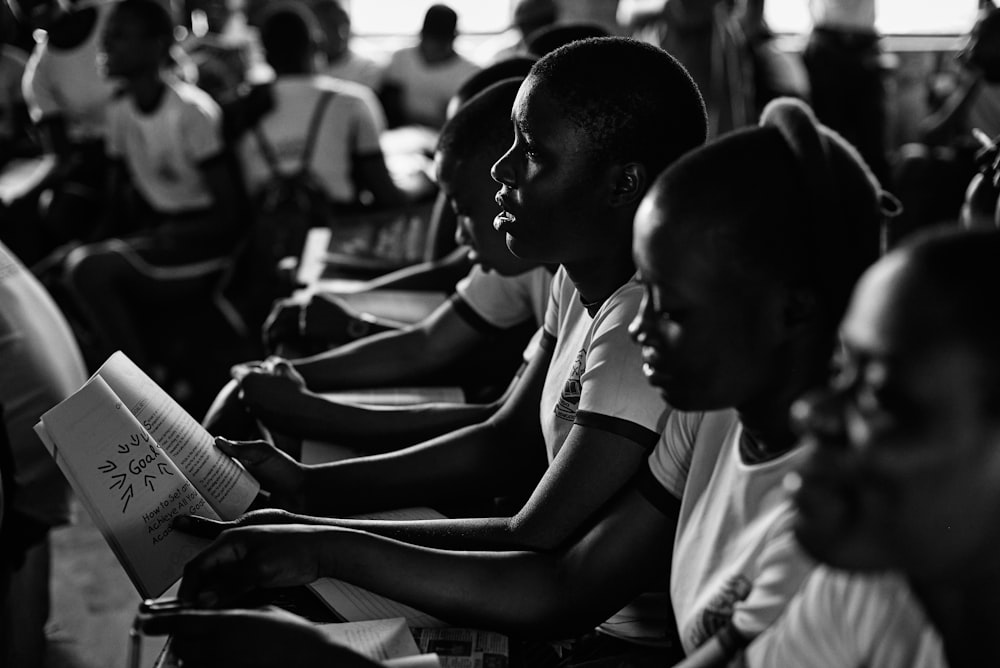


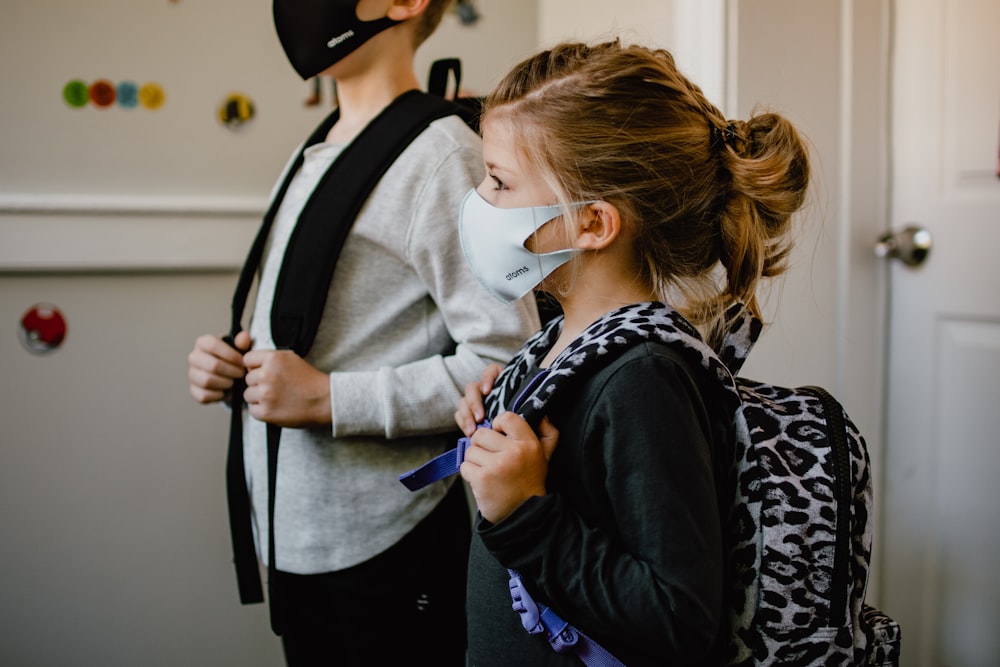


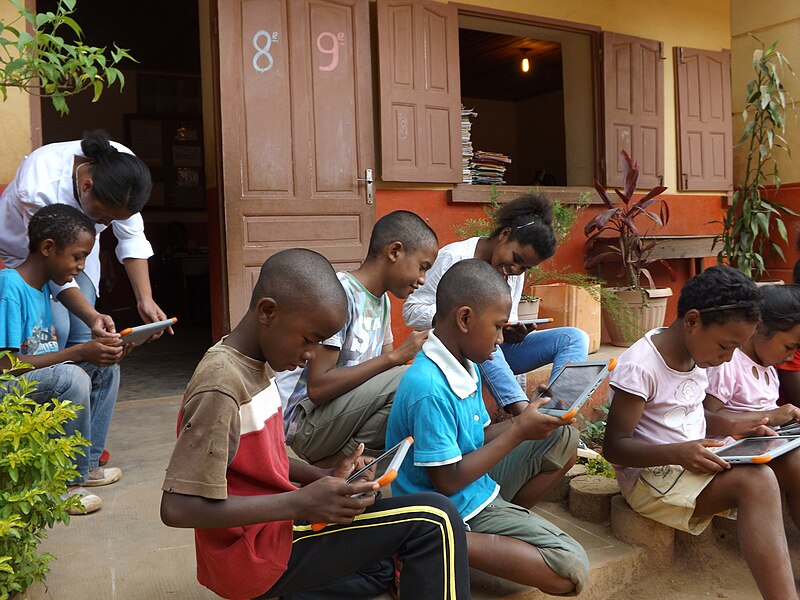

 Photo by
  Photo by
  Photo by
  Photo by
  Photo by
  Photo by
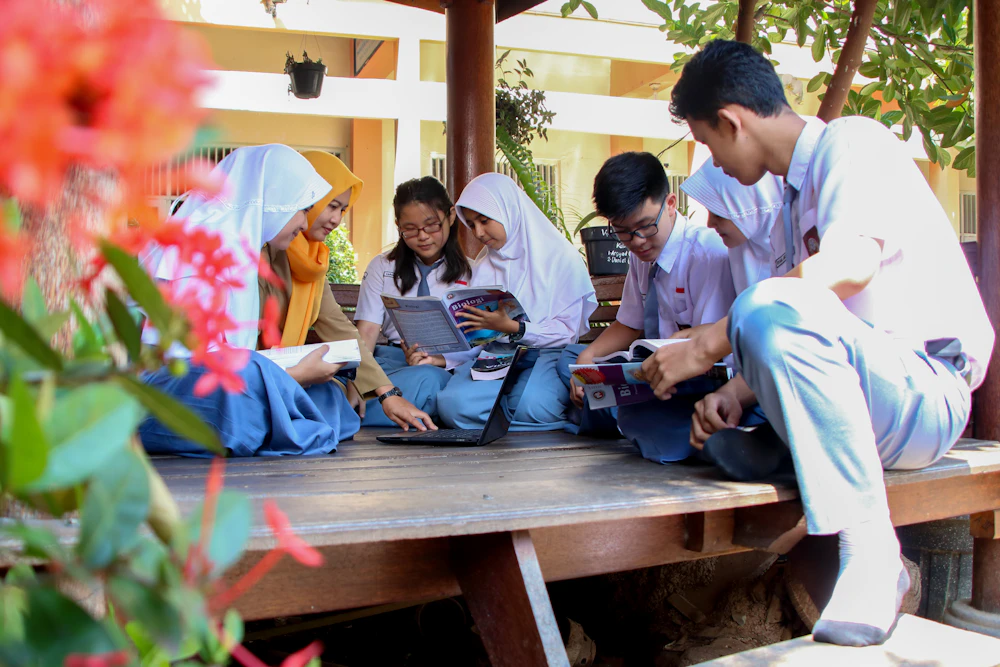


 Photo by Oleksandr P:
  Risorse: OCSE. (2019). Education at a Glance 2019: Country note. OCSE.