Comunicado: Broken Chalk pide el alto al fuego a Israel y los países de las Naciones Unidas después del último ataque al Hospital Al-Ahli

18 de octubre 2023

El 7 de octubre, Hamas lanzó un ataque en el territorio israelí, durante un festival a las afueras de la Franja de Gaza. Este suceso resultó en la trágica pérdida de más de 250 vidas de civiles israelíes, y el secuestro y captividad de incontables más en la comarca. En respuesta al ataque, Israel inició un conflicto a gran escala contra Hamas, derivando en ataques aéreos contra Gaza, y un asedio de sus fronteras. El conflicto ha tenido consecuencias devastadoras, incluyendo 3000 bajas palestinas atribuidas al ataque inicial de Hamas y 1300 civiles israelís. Este conflicto ha desencadenado una crisis humanitaria para más de 2 millones de palestinos en Gaza, la ciudad más densamente poblada del mundo.

Reflexionando sobre el coste humano, resulta desgarrador destacar que más de 1000 niños han muerto en Gaza desde el inicio del conflicto, según las cifras reveladas por el Ministerio de Sanidad de Gaza. Dado que la mitad de los 2,3 millones de habitantes de Gaza son menores de 18 años, las Naciones Unidas (ONU) y la comunidad internacional deben multiplicar sus esfuerzos para fomentar un alto al fuego inmediato, y escudriñar la adherencia de ambas partes a las normas de derecho internacional. El secretario general de la ONU, Antonio Guterres, ha pedido un alto al fuego humanitario inmediato, afirmando que “los ataques de Hamas no pueden justificar el castigo colectivo del pueblo palestino”

Los obstáculos de las conversaciones en curso más recientes, en las que participan Estados Unidos, la Unión Europea, Israel y Egipto son profundamente preocupantes. El objetivo principal de estas conversaciones es facilitar la entrada de ayuda humanitaria crítica desde Egipto a Gaza, mediante la apertura del paso fronterizo de Rafah; pero lamentablemente, estas conversaciones han sufrido dificultades, ya que Israel ha atacado el paso fronterizo de Rafah mediante ataques aéreos hasta en cuatro ocasiones distintas desde el inicio del conflicto el 7 de octubre. Cientos de camiones humanitarios egipcios están bloqueados en el paso de Rafah, y el gobierno egipcio está intentando presionar a Israel y Estados Unidos para que declaren un alto al fuego que pueda permitir que la ayuda humanitaria llegue sin restricciones a los civiles heridos.

El 17 de octubre, una violenta explosión sacudió el Hospital Baptista Al-Ahli de Gaza, donde médicos y enfermeras atendían a palestinos heridos, entre ellos mujeres y niños, y donde muchos civiles buscaban refugio. Este incidente se convirtió en el escenario del mayor número de víctimas mortales en un solo suceso durante el transcurso del conflicto, cobrándose la vida de 500 personas, según informaron las autoridades sanitarias palestinas. Los dos principales actores militares del conflicto, Hamas y las Fuerzas de Defensa israelíes, afirman que el otro bando es el responsable del incidente. 

Dado que este conflicto ha provocado una crisis humanitaria sin precedentes, con casi 2,2 millones de palestinos que se han quedado sin acceso a suministros básicos, como alimentos, agua y electricidad; Broken Chalk alza la voz para pedir que se tomen medidas inmediatas para poner fin a las constantes violaciones extremas de derechos humanos, con el fin de lograr la estabilidad en la región y para toda la humanidad. Apelamos al gobierno israelí y a la comunidad internacional para que establezcan urgentemente un alto al fuego y permitan el paso de ayuda humanitaria a través de la frontera de Rafah, que abastecerá a un gran número de palestinos desplazados y afectados. Pedimos al gobierno israelí que cumpla estrictamente las normas del derecho internacional relativas a la protección de hospitales, periodistas y civiles. Creemos que es imprescindible que la comunidad internacional ejerza un mayor escrutinio sobre el gobierno de Israel para garantizar que se respetan los derechos humanos. Es urgente que Israel suspenda el asedio a Gaza para permitir que el agua, los alimentos, la electricidad y el combustible lleguen a los hospitales palestinos.

Broken Chalk lo anuncia al público con el debido respeto.

Firmado por

Broken Chalk.

Comunicado de Imprensa: Broken Chalk Apela ao Imediato Cessar-Fogo por Israel e pela Comunidade Internacional Após Crise Resultada do Ataque ao Hospital Al-Ahli Baptist

18 de outubro de 2023

No dia 7 de outubro, Hamas lançou um ataque significativo ao território israelense durante um festival próximo às muralhas que cercam a Faixa de Gaza. Este ataque resultou na trágica perda de mais de 250 vidas de civis israelenses, sequestros e civis sendo mantidos em cativeiro. Em resposta, Israel iniciou um conflito em grande escala com o Hamas, levando a ataques aéreos em Gaza e a um cercamento de fronteira. O conflito teve consequências devastadoras, com uma estimativa de perda de 3.000 vidas palestinas durante o ataque inicial do Hamas, juntamente com a perda de mais de 1.300 vidas de civis israelenses. Estes acontecimentos desencadearam uma trágica crise humanitária para mais de 2 milhões de palestinos na cidade mais densamente povoada do mundo.

Refletindo sobre o custo humano, é desolador o notar que mais de mil crianças morreram em Gaza desde o início do conflito, conforme estimado pelo Ministério de Saúde de Gaza. Considerando que metade da população de Gaza, aproximadamente 2,3 milhões de habitantes, possui menos de 18 anos, é urgente que as Nações Unidas e a comunidade internacional redobrem esforços para promover um cessar-fogo imediato e fiscalizar a aderência ao direito internacional de ambos os lados. O Secretário-Geral da ONU, Antônio Guterres, pediu um cessar-fogo imediato, afirmando que “os ataques do Hamas não podem justificar o castigo coletivo do povo palestino”.

Os desafios das recentes discussões em andamento envolvendo os Estados Unidos, a União Europeia, Israel e o Egito são profundamente preocupantes. O objetivo principal dessas discussões é facilitar a entrada de ajuda humanitária essencial do Egito para Gaza, abrindo a passagem de Rafah; infelizmente, essas negociações têm enfrentado obstáculos significativos, levando em consideração o ataque de Israel à passagem de Rafah em quatro ocasiões desde o início do conflito, em 7 de outubro. Centenas de caminhões de ajuda humanitária egípcia estão retidos no cruzamento de Rafah, com o governo egípcio pressionando Israel e os Estados Unidos a manterem um cessar-fogo para que a ajuda humanitária irrestrita possa chegar aos civis feridos.

No dia 17 de outubro, uma explosão maciça abalou o Hospital Al-Ahli Baptist em Gaza, onde médicos e enfermeiros cuidavam de palestinos feridos, incluindo mulheres e crianças, e onde outros palestinos buscavam abrigo. Este incidente se tornou a cena com o maior número de mortes em um único evento desde o início do conflito atual, tirando a vida de 500 pessoas, conforme relatado pelas autoridades de saúde palestinas. Os dois principais atores militares no conflito, o Hamas e as Forças de Defesa de Israel, afirmam que o outro lado foi responsável pelo incidente.

Visto que este conflito resultou em uma crise humanitária sem precedentes, com quase 2,2 milhões de palestinos sem acesso a provisões básicas, como comida, água e eletricidade, a Broken Chalk eleva sua voz para pedir ação imediata a fim de interromper as contínuas e graves violações dos direitos humanos e para promover a estabilidade na região e para toda a humanidade. Pedimos ao governo israelense e à comunidade internacional que realizem urgentemente um cessar-fogo e permitam a passagem de ajuda humanitária pela fronteira de Rafah, atendendo a muitos palestinos deslocados e afetados. Exigimos que o governo israelense respeite estritamente as regras do direito internacional relacionadas à proteção de hospitais, jornalistas e civis. Acreditamos ser essencial que a comunidade internacional exerça maior escrutínio sobre o governo de Israel para garantir a proteção dos direitos humanos. É urgente que Israel suspenda o bloqueio a Gaza para permitir que água, comida, eletricidade e combustível cheguem aos hospitais palestinos.

A organização Broken Chalk anuncia isso ao público com devido respeito,

Assinado por

Broken Chalk

Comunicato Stampa: Broken Chalk lancia un appello per una immediata tregua delle ostilità da parte di Israele e della comunità internazionale a seguito dell’ultima crisi all’Al-Ahli Baptist Hospital

18 Ottobre 2023

Il 7 ottobre, Hamas ha lanciato un attacco sul territorio israeliano, durante un festival appena fuori le mura che circondano la Striscia di Gaza. Questo evento ha portato alla tragica perdita di oltre 250 vite di civili israeliani, con molti altri rapiti e tenuti in ostaggio in un territorio isolato. In risposta, Israele ha dato inizio a un conflitto su larga scala con Hamas, portando a bombardamenti su Gaza e a un completo assedio dei confini. Il conflitto ha avuto conseguenze devastanti, con una stima di 3.000 vittime palestinesi attribuite all’iniziale attacco di Hamas, assieme alla perdita di 1.300 vite di civili israeliani. Ciò ha scatenato una tragica crisi umanitaria per oltre 2 milioni di palestinesi nella città più densamente popolata del mondo.

Riflettendo sui costi umanitari, è straziante notare che più di 1.000 bambini sono morti a Gaza dall’inizio del conflitto, come stimato dal Ministero della Salute di Gaza. Dato che la metà dei 2,3 milioni di abitanti di Gaza ha meno di 18 anni, le Nazioni Unite e la comunità internazionale devono raddoppiare i loro sforzi per incoraggiare una immediata tregua e monitorare entrambe le parti nel rispetto delle regole del diritto internazionale. Il Segretario Generale delle Nazioni Unite, Antonio Guterres, ha richiesto una immediata tregua umanitaria, dichiarando: “L’attacco di Hamas non può giustificare una punizione collettiva per la popolazione palestinese.”

I problemi nelle recenti discussioni in corso che coinvolgono gli Stati Uniti, l’Unione Europea, Israele e l’Egitto sono motivo di profonda preoccupazione. L’obiettivo primario di queste discussioni è di facilitare l’entrata di aiuti umanitari vitali dall’Egitto a Gaza, attraverso l’apertura del passaggio di Rafah; sfortunatamente, queste negoziazioni hanno incontrato ostacoli significativi, dal momento che Israele ha preso di mira il passaggio di Rafah con bombardamenti in quattro occasioni dall’inizio del conflitto il 7 ottobre.

Il 17 ottobre, una violenta esplosione ha scosso l’Al-Ahli Baptist Hospital a Gaza, dove medici e infermieri stavano assistendo i palestinesi feriti, tra cui donne e bambini, mentre altri cercavano ancora rifugio. Questo incidente è diventato il luogo del più alto bilancio delle vittime in un singolo evento dall’inizio del conflitto, con la perdita di 500 persone, come riportato dalle autorità sanitarie palestinesi. Entrambi i principali attori militari nel conflitto, Hamas e le Forze di Difesa Israeliane, affermano che l’altra parte sia responsabile dell’incidente.

Data la crisi umanitaria senza precedenti dovuta a questo conflitto, con quasi 2,2 milioni di palestinesi senza accesso a provviste come cibo, acqua, elettricità, Broken Chalk necessita di un’azione immediata per fermare le correnti estreme violazioni dei diritti umani, per portare stabilità nella regione e per tutta l’umanità. Chiediamo al governo israeliano e alla comunità internazionale di dichiarare urgentemente una tregua e permettere il passaggio di aiuti umanitari attraverso il valico di Rafah, fornendo assistenza a numerosi palestinesi sfollati e colpiti. Riteniamo che la comunità internazionale debba esercitare maggiore vigilanza sul governo israelita per assicurare il rispetto dei diritti umani. Israele deve urgentemente ritirare l’assedio di Gaza per permettere agli ospedali palestinesi di ricevere acqua, cibo, elettricità e carburante.

Comunicato con il dovuto rispetto da Broken Chalk

Firmato

Broken Chalk

Basın Bildirisi: Broken Chalk, Al-Ahli Baptist Hastanesi’ndeki Son Krizden Sonra İsrail ve Uluslararası Topluma Derhal Ateşkes Çağrısı Yapıyor

18th October 2023

17 Ekim’de Hamas, Gazze Şeridi’ni çevreleyen duvarların hemen dışında düzenlenen bir festival sırasında İsrail topraklarına önemli bir saldırı başlattı. Bu olay, 250’den fazla İsrailli sivilin trajik ölümüyle sonuçlandı, birçok kişi kaçırıldı ve enklavda tutsak edildi. Yanıt olarak İsrail, Hamas’la tam ölçekli bir çatışma başlattı, Gazze’ye hava saldırıları düzenledi ve kapsamlı bir sınır kuşatması gerçekleştirdi. Çatışma, tahmini 3.000 Filistinli’nin Hamas’ın ilk saldırısına bağlı ölümüyle ve 1.300’den fazla İsrailli sivilin kaybıyla yıkıcı sonuçlara yol açtı. Dünyanın en yoğun nüfuslu kentindeki 2 milyondan fazla Filistinli için trajik bir insani krizi tetikledi.

İnsan maliyeti üzerine düşünüldüğünde, Gazze Sağlık Bakanlığı’nın tahminlerine göre, çatışmanın başından bu yana Gazze’de 1.000’den fazla çocuğun öldüğünü belirtmek yürek burkucudur. Gazze’nin 2.3 milyonluk nüfusunun yarısı 18 yaşın altında olduğundan, Birleşmiş Milletler ve uluslararası toplum, derhal bir ateşkesi teşvik etmek ve her iki tarafı da uluslararası hukuk kurallarına uygunluk konusunda sorgulamak için çabalarını iki katına çıkarmalıdır. BM Genel Sekreteri Antonio Guterres, “Hamas saldırıları Filistin halkının toplu cezalandırılmasını haklı çıkaramaz” diyerek derhal insani bir ateşkes çağrısında bulundu.

ABD, Avrupa Birliği, İsrail ve Mısır’ı içeren devam eden tartışmalardaki son zorluklar derin endişe vericidir. Bu tartışmaların temel amacı, Rafah geçiş noktasının açılması suretiyle Mısır’dan Gazze’ye kritik insani yardımların girişini kolaylaştırmaktır; fakat, bu müzakereler, 17 Ekim’de çatışmanın başlamasından bu yana İsrail’in Rafah geçiş noktasını dört kez hava saldırılarıyla hedef alması nedeniyle önemli engellerle karşılaşmıştır. Yüzlerce Mısır insani yardım kamyonu Rafah geçiş noktasında sıkışıp kalmış durumda, Mısır hükümeti ise birçok yaralı erkek, kadın ve çocuğa engelsiz insani yardım ulaşabilmesi için İsrail ve ABD’ye ateşkes yapmaları için baskı yapıyor.

17 Ekim’de, Gazze’deki Al-Ahli Baptist Hastanesi’nde yaralı Filistinli’lere, kadın ve çocuklar da dahil olmak üzere yardım eden doktor ve hemşirelerin bulunduğu, diğer Filistinlilerin de sığınak aradığı bir hastanede büyük bir patlama meydana geldi. Filistin sağlık makamlarının bildirdiğine göre, bu olay, şu anki çatışmanın başlamasından şimdiye kadar yer alan olaylardan en yüksek ölüm sayısının görüldüğü olay oldu ve 500 kişi hayatını kaybetti. Çatışmanın her iki ana askeri aktörü Hamas ve İsrail Savunma Kuvvetleri, olaydan diğer tarafın sorumlu olduğunu iddia ediyor.

Bu çatışma, neredeyse 2.2 milyon Filistinlinin gıda, su ve elektrik gibi temel ihtiyaçlara erişimden mahrum bırakılmasıyla emsalsiz bir insani krize yol açtığından, Broken Chalk, bölgede ve tüm insanlık için istikrarı sağlamak amacıyla devam eden aşırı insan hakları ihlallerini durdurmak için derhal harekete geçilmesi çağrısında bulunuyor. İsrail hükümetine ve uluslararası topluma, birçok yerinden edilmiş ve etkilenmiş Filistinli’ye yardım sağlamak için Rafah sınırından insani yardımın geçişine izin vermek üzere derhal ateşkes yapılması çağrısında bulunuyoruz. İsrail hükümetinin hastaneleri, gazetecileri ve sivilleri koruma konusunda uluslararası hukuk kurallarına sıkı sıkıya uymasını talep ediyoruz. Uluslararası toplumun, insan haklarının korunmasını sağlamak için İsrail hükümetine daha fazla denetim uygulamasının şart olduğuna inanıyoruz. İsrail’in, Filistin hastanelerine su, gıda, elektrik ve yakıtın ulaşabilmesi için Gazze üzerindeki kuşatmayı kaldırması acil bir ihtiyaçtır.

Broken Chalk, saygıyla kamuoyuna duyurur.

İmzalayan

Broken Chalk

Selin Gülçin Yalçın tarafından https://brokenchalk.org/press-release-broken-chalk-calls-on-the-immediate-ceasefire-by-israel-and-the-international-community-following-the-latest-crisis-at-al-ahli-baptist-hospital/  Web adresinden çevrilmiştir.

Universal Periodic Review of Cyprus

This report drafted by Broken Chalk contributes to the fourth cycle of the Universal Periodic Review (UPR) for the Republic of Cyprus. This report focuses exclusively on human rights issues in Cyprus’ education field.

  • Cyprus has turned the island into a place renowned for conflicts due to the differences between the two central communities, Greek Cypriots and Turkish Cypriots. In 1974, a Greek coup against the President of the country and Turkey’s military invasion and partition of the island led to the forceful division and completed the physical separation of the two central communities. (i) This situation and especially the consequences of the Turkish invasion affected every sector, such as the economy, the society, and the education system. 
  • Nowadays, two education systems exist in the country. The structural organisation of Turkish schools is similar to the Greek one. However, there are a lot of differences. The Republic of Cyprus, as a member of the European Union since 2004, complies with European standards about education. Compulsory education lasts for ten years and four months, starting from the age of 4 years (pre-preliminary education) and extending to the age of 15 years (end of lower secondary education). Public education, namely preliminary, primary, and secondary education, is free for all from the age of 4 years to 18 years. However, there are many private institutions. Furthermore, public tertiary (non-university level) education is free. As for public higher education (undergraduate level), it is free for Cypriots and citizens from the European Union, as the government fully pays the fees. [i]
  • As for the northern part of Cyprus, Turkey controls it, and the educational system is similar to the Turkish one. Education is compulsory and free from age 5 to 17 years. Higher education includes all the institutions after secondary education. The system consists of 5 private universities and one semi-public state academy. [ii] Under these circumstances, both educational systems of Cyprus have been criticised for supporting the idea of the other as an enemy.

By Alexia Kapsabeli

Download the PDF.

46th_Session_UN-UPR_Country_Review_Cyprus_S

References

[i] Cyprus Eurydice European Union https://eurydice.eacea.ec.europa.eu/national-education-systems/cyprus/overview Last accessed 3 September 2023

[ii] Ministry of Foreign Affairs Republic of Turkiye “Study in North Cyprus” https://www.mfa.gov.tr/data/cyprus.pdf   Last accessed on 5 September 2023

Cover image by EUCyprus via Wikimedia Commons

The parents of the quintuplets were arrested due to membership in the Gülen movement.

The Gülen Movement: Promoting Education and Human Rights

The Gülen Movement, named after its founder, Fethullah Gülen, is an influential cluster of religious, educational, and social organisations. Founded in the late 1960s in Turkey, the movement aims to provide faithful Muslims with a modern education while emphasising traditional religious teachings. With a network of schools and centres in over 100 countries, the movement has significantly contributed to education and intercultural dialogue worldwide.

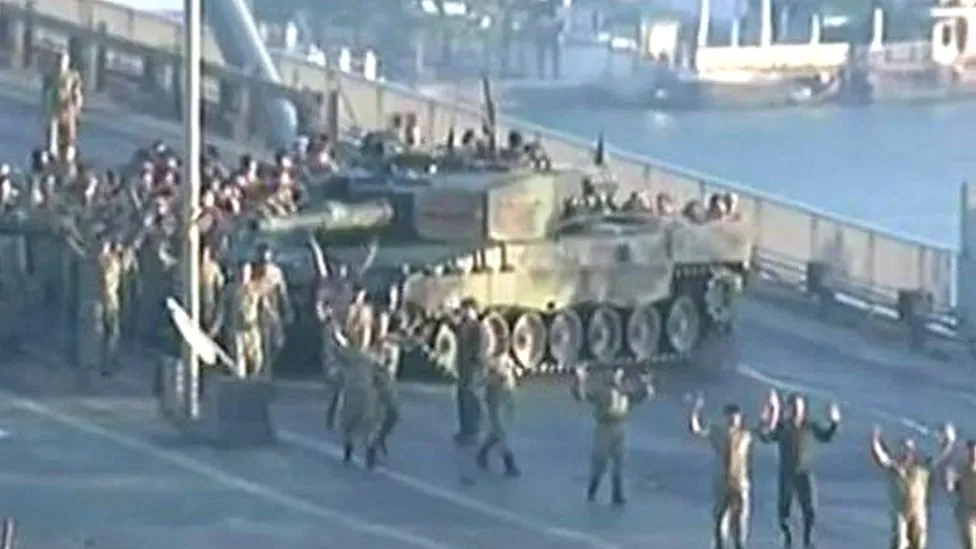
The movement gained international attention in the aftermath of the failed coup attempt on July 15, 2015, in Turkey. The coup attempt, attached to a faction within the Turkish military, led to a turbulent period in the country. In the wake of the coup, many individuals associated with the Gülen Movement, including educationists and teachers, faced severe repercussions.

Soldiers with their hands up on Istanbul's Bosporus Bridge

Source: https://www.bbc.com/news/world-europe-36855846

Following the coup attempt, educationists and teachers associated with the Gülen Movement became targets of government crackdowns. Thousands of educators were dismissed under a state of emergency decrees (KHK), leaving them without job security and facing social stigma. The government accused them of being members of a terrorist organisation, specifically the Gülen movement, and subjected them to legal proceedings.

One notable case in this context is the decision of the European Court of Human Rights (EHRC) regarding teacher Yalcinkaya. The EHRC recognised that Yalcinkaya’s dismissal from her teaching position violated her rights to freedom of expression and association. This decision shed light on the challenges faced by educators associated with the Gülen Movement and highlighted the need to safeguard human rights after the coup attempt.

Source: https://www.turkishminute.com/2023/09/11/ecthr-soon-announce-decision-turkish-teacher-convicted-of-gulen-link/

It is important to note that accusations against the parents of the quintuplets and their siblings, Abdülkadir and Nurcan Arslan, who were arrested and subsequently imprisoned, are not considered crimes in any part of the world. It was stated that Abdülkadir Arslan worked at a private teaching institution previously closed by a decree law, and his wife was a housewife. The couple was accused of being members of the Gülen movement, resulting in their separation from their children. This situation raises concerns about the well-being of the children and the impact of parental absence on their development. Furthermore, one of the children has a health problem, which adds to the complexity of their situation. The absence of their parents and the challenges they face as a result of the coup attempt have undoubtedly affected their overall well-being and access to necessary medical care.

Despite these difficulties, some people in Turkey have shown support for the family through social media platforms. By raising awareness and advocating for their rights, individuals have come together to provide assistance and solidarity to the quintuplets and their siblings. This support demonstrates the power of social media in mobilising communities to address the challenges faced by individuals affected by the aftermath of the coup attempt.

The Gülen Movement’s commitment to education has been a cornerstone of its efforts. The movement has established numerous educational institutions worldwide, focusing on providing a comprehensive education that combines modern subjects with an emphasis on religious values. These Gülen-inspired schools have been successful in countries such as Germany, where they cater to Turkish immigrants and their offspring. The movement’s educational agenda aims to equip students with the skills and knowledge necessary to thrive in the modern world while maintaining a solid connection to their religious heritage.

However, the educational initiatives of the Gülen Movement have faced significant challenges after the failed coup attempt. The government’s crackdown on the movement’s members and institutions has resulted in the closure of many Gülen-inspired schools and educational centres. The dismissal of teachers and educationists associated with the movement has disrupted the education of countless students who relied on these institutions for their learning.

The impact of the coup attempt and subsequent government actions on the education sector goes beyond the closure of schools. The stigmatisation and persecution of educators associated with the Gülen Movement have created an atmosphere of fear and insecurity within the education community. Teachers, once respected and valued for their dedication to education, now find themselves marginalised and targeted. This not only hampers the progress of education but also undermines the fundamental principles of human rights and freedom of expression.

The plight of the quintuplets and their sibling, left without their parents due to their alleged affiliation with the Gülen Movement, highlights the human cost of the political turmoil in Turkey. Separated from their loved ones, these children face an uncertain future and the challenges of growing up without parental guidance. The emotional and psychological impact of their situation cannot be underestimated, particularly considering that one of the children has a health problem that requires extra care and support.

Source: https://www.turkishminute.com/2023/10/04/turkish-court-send-parents-of-6-to-prison-on-gulen-charges-conviction/

In such difficult circumstances, social media has become a powerful tool for mobilising support and raising awareness. People from all walks of life, both within and outside Turkey, have used social media platforms to express solidarity with the quintuplets and their siblings. Through hashtags and online campaigns, individuals have shared their concerns, donated resources, and advocated for their rights. This outpouring of support demonstrates the potential of social media to galvanise communities and bring attention to pressing human rights issues.

In conclusion, the Gülen Movement, focusing on education and intercultural dialogue, has significantly contributed to society globally. However, the movement and its members have faced challenges and human rights issues in the aftermath of the failed coup attempt in Turkey. It is crucial to recognise the impact on educationists and teachers associated with the movement, the separation of families, and the importance of safeguarding human rights in such circumstances. The support individuals show through social media platforms highlights the resilience and solidarity among communities in times of adversity. As the international community grapples with the aftermath of political turmoil, it is vital to prioritise human rights and ensure that education remains a fundamental right for all children, irrespective of their parents’ affiliations.

Educational Challenges in Taiwan: Mental Health in Taiwanese High Schools

Written by Thao Pham.

In the chronicles of global education, Taiwan has etched its name with an education system renowned for academic excellence and unwavering standards. However, beneath the surface of this claim lies a pressing concern – the mental health challenges faced by high school students. The Taiwanese education system, marked by intense competition and high expectations, places an enormous burden on students striving for scholastic distinction and coveted spots in prestigious universities. This relentless pursuit of achievement, compounded by societal expectations and the looming fear of failure, exacts a toll on the mental well-being of students, giving rise to pervasive issues such as chronic stress, anxiety, depression, or burnout.

Navigating the landscape of mental health in Taiwanese high schools is further complicated by deeply ingrained cultural stigmas. These often shroud the struggles in silence and shame, creating barriers that hinder students from seeking help and perpetuating a distressing cycle. While strides have been made in addressing these concerns, there remains an imperative to foster a culture of openness and support. This article endeavours to unravel the complex layers of these struggles and aims to spark conversations that propel positive transformation.

Education in Taiwan

The Taiwanese education system is deeply rooted in the legacy of Confucian values and places a strong emphasis on academic achievement, discipline, and respect for authority. Spanning several years of education, it aims to prepare students for future scholastic and career pursuits. It begins with six years of elementary education, where students acquire foundational knowledge in subjects such as mathematics, Chinese language, English, science, and social studies. This phase focuses on building a strong educational base and developing essential skills in communication and problem-solving. Following elementary school, students progress to three years of junior high school. Here, they delve deeper into various subjects and receive more specialised instruction.

The curriculum expands to include subjects such as literature, history, geography, biology, chemistry, and physics. Additionally, students begin to explore elective courses based on their interests and career aspirations. The final stretch of the Taiwanese education system consists of three years in senior high school. This phase is crucial as it prepares students for the university entrance exams, which have a significant impact on their future academic pursuits. Senior high school students focus intensively on exam preparation, dedicating considerable time and effort to studying and reviewing the required curriculum.

The pinnacle of this academic odyssey culminates in the monumental university entrance exams, a rite of passage that echoes Confucian principles of meritocracy. The General Scholastic Ability Test (GSAT), commonly known as the joint college entrance exam, assesses students’ knowledge and skills across various subjects, including Chinese language, English, mathematics, natural sciences, and social sciences. The results of this exam play a vital role in determining students’ eligibility for admission into universities and colleges. Success in these exams is often equated not just with educational achievements but with societal stature.

To support students in their academic journey, Taiwan has made significant investments in education, with a focus on providing modern facilities and resources to enhance the learning experience. Schools are well-equipped with advanced laboratories, libraries, and multimedia classrooms. The integration of technology in education has become increasingly prevalent, with the use of computers, tablets, and online resources to support teaching and learning. The country also has a robust network of cram schools, also known as buxiban. Approximately 70 per cent of high school students in Taiwan attend cram schools, and 60 per cent of middle school students attend them as well. These privately-run institutions offer supplemental education and exam preparation services. Cram schools provide additional tutoring, practice exams, and study resources to help students excel in their studies and increase their chances of success in the university entrance exams.

The Taiwanese education system is characterised by a strong commitment to quality education and continuous improvement. Schools in Taiwan are equipped with modern facilities, and teachers undergo rigorous training to ensure their competence and ability to deliver effective instruction. The emphasis on discipline and respect for authority creates a structured learning environment that promotes academic excellence and personal growth. Yet, woven into this tapestry of academic dedication are the challenges that underpin the mental health of high school students. The intense competition inherent in the system, coupled with societal expectations and the fear of failure, casts a looming shadow. Stress, anxiety, and, at times, depression become companions in this arduous journey.

An English quiz in Taichung Municipal Chu-Jen Junior High School / Photo by Chia Ying Yang via Wikimedia

Mental health issues and their stigmas

In Taiwan, high school students face significant mental health challenges that have a profound impact on their well-being, academic performance, and overall quality of life. Stress, anxiety, depression, and burnout are common issues experienced by Taiwanese high school students, with alarming statistics highlighting the prevalence of these mental health concerns. Academic pressure is a major contributor to the mental health issues faced by high school students in Taiwan. The intense focus on academic achievement and the competitive nature of university entrance exams places immense pressure on students. According to a study conducted by the Child Welfare League Foundation, over 70 per cent of high school students in Taiwan experience high levels of stress. The fear of not meeting expectations and the pressure to excel academically can lead to heightened anxiety levels and burnout.

One of the significant barriers to addressing mental health issues among Taiwanese high school students is the cultural stigma surrounding mental health. Traditional beliefs and cultural norms often view mental health problems as a sign of weakness or personal failure. This stigma prevents students from seeking help and perpetuates the cycle of suffering. According to research conducted by the Taiwan Suicide Prevention Center, the suicide rate among students aged from 15 to 24 has been increasing, underscoring the urgency of addressing mental health concerns.

Efforts have been made in Taiwan to address mental health issues among high school students. Schools have implemented counselling services and mental health programs to provide support and resources for students. The Ministry of Education has also developed guidelines for mental health promotion in schools, emphasising the importance of awareness, prevention, and early intervention. These initiatives aim to create a supportive environment and reduce the stigma surrounding mental health. However, despite these efforts, there are still many challenges in effectively addressing mental health issues among Taiwanese high school students. One of the key challenges is the lack of sufficient resources and funding for mental health support in schools. The demand for mental health services often exceeds the available resources, leading to long waiting lists and limited access to timely support for students.

Another challenge is the need to increase awareness and education around mental health. While progress has been made in reducing the stigma associated with mental health, there is still a long way to go. Many students, parents, and educators may still lack understanding and knowledge about mental health issues, which can hinder early identification and intervention. Additionally, the pressure to achieve high academic performance remains deeply ingrained in the education system and society, making it difficult to shift the focus towards holistic well-being. The emphasis on standardised tests and university entrance exams creates a competitive environment that prioritises academic success over mental well-being. To address this challenge, a comprehensive approach is needed, involving not only schools but also policymakers, parents, and the wider community.

To truly address mental health issues among high school students in Taiwan, it is crucial to rely on facts and statistics to highlight the severity of the problem. By emphasising the prevalence of stress, anxiety, depression, and burnout among students and showcasing the impact of these issues on their well-being and academic performance, we can raise awareness and advocate for better support and resources. Additionally, it is important to continue promoting a supportive and inclusive environment in schools, where students feel comfortable discussing their struggles and seeking help without fear of judgment or stigma.

Conclusion

In conclusion, the Taiwanese education system, deeply rooted in Confucian values, places a strong emphasis on academic achievement. High school students face intense competition and pressure to excel academically and secure admission to prestigious universities. This, combined with a rigorous curriculum, heavy workload, and societal expectations, can contribute to mental health challenges such as stress, anxiety, and a sense of constant pressure. Promoting a supportive environment, addressing stigma, and prioritising students’ well-being are essential steps toward addressing these challenges and fostering a healthier educational culture in Taiwan. Last but not least, it is essential to recognise that the problem discussed above extends beyond the Taiwanese borders, resonating with many other countries in the Sino-sphere where the pressures of academic achievement and the accompanying mental health challenges are shared experiences.

References

Cover Image by NSaad (WMF) via Wikimedia Commons

Universal Periodic Review of the Comoros

This report drafted by Broken Chalk contributes to the fourth cycle of the Universal Periodic Review (UPR) for the Union of the Comoros. This report focuses exclusively on human rights issues in Comoros’s education field.

  • Comoros, formally known as the Union of The Comoros, is an independent country made up of three islands in Southeastern Africa, located at the northern end of the Mozambique Channel in the Indian Ocean.
  • Comoros stands as one of the most economically disadvantaged and underdeveloped countries globally. The three islands contend with insufficient transportation connections, a youthful and swiftly growing population, and a scarcity of natural resources.
  • There are two educational systems concurrently in Comoros: l’École Quranic (Koranic School) and l’École Officielle (Official School). Almost all children attend a Quranic school for 2 or 3 years before beginning primary school. L’Enseignement elémentaire(Primary school) is six years, starting at age six.
  • In Comoros, it is mandated by law that every child must undergo eight years of schooling from the age of seven to fifteen. This education system consists of six years dedicated to primary education, catering to students aged six to twelve, succeeded by an additional seven years of secondary school education.
  • Today, the education system comprises the formal school, taught mainly in French, and the Koranic school due to the extended majority of Comorans being Sunni Muslims.
  • Often, due to financial issues, many families send their children to Koranic schools, where students can receive an Islamic education for free.
  • This report first explores the main issues in the educational field in Comoros, reflecting on the recommendations the country received in the 3rd cycle UN UPR review in 2019 and its progress since. Finally, Broken Chalk offers some suggestions to Comoros on further improving its human rights in the educational field.

By Leticia Cox

Download the PDF.

46th_Session_UN-UPR_Country_Review_Comoros_S

References

https://www.ohchr.org/en/hr-bodies/upr/km-index

Letter by the High Commissioner to the Foreign Minister, 2018. https://www.ohchr.org/sites/default/files/lib-docs/HRBodies/UPR/Documents/Session32/KM/HC_letter_Comoros_ENG.pdf

https://www.ilo.org/dyn/natlex/docs/ELECTRONIC/72696/74026/F-92095240/COM-72696.pdf

https://www.ohchr.org/sites/default/files/lib-docs/HRBodies/UPR/Documents/Session32/KM/Infographic_Comoros.pdf

https://bnn.network/breaking-news/comorian-teachers-announces-strike-over-unfulfilled-promises-to-improve-welfare/

https://www.unicef.org/media/135826/file/Comoros-2022-COAR.pdf

https://uis.unesco.org/sites/default/files/country-profile/Comoros_SDG4-Profile.pdf

https://documents1.worldbank.org/curated/en/354101559590231457/pdf/Comoros-Towards-a-More-United-and-Prosperous-Union-of-Comoros-Systematic-Country-Diagnostic.pdf

Cover image by aboodi vesakaran via Pexels

Universal Periodic Review of the Dominican Republic

This report drafted by Broken Chalk contributes to the fourth cycle of the Universal Periodic Review for The Dominican Republic. This report focuses exclusively on human rights issues in Domincan Republic’s education field.

  • The Dominican Republic overcame many challenges over the last two decades to achieve its enhanced socioeconomic status. Vital reforms and policies allowed the country to prevail over the obstacles of the 2003-4 economic crisis, with an improvement that halved the number of people living in poverty today.[i]
  • As of 2023, among the approximately 11 million people inhabiting the Dominican Republic, 2.9 million students have enrolled in public or private schools. The development strategies that reinforced children’s access to education result from a joint effort with the participation of the government, international organisations, and personal and academic sectors. [ii]
  • One of the most significant accomplishments of recent years is that compulsory education was extended to 13 years instead of the previously mandated eight years. Three levels of the educational structure in the Dominican Republic – pre-primary (3 years), primary (8 years), and secondary level (4 years) – are also being offered free of charge, except the 4th level, higher education.[iii]
  • Under SDGs and the “National Development Strategy 2010-30”, authorities of the Dominican Republic pledged to ensure education for all regardless of gender, financial status, or territorial placement.[iv] To boost literacy standards, multiple projects have focused on the foundational development of children. These frameworks somewhat weakened during the COVID-19 pandemic. Still, the Dominican Republic took severe account of the modernisation of digital learning and supplied necessary technological equipment for residents in due time.[v]
  • While acknowledging all past efforts, Broken Chalk further aims to highlight educational injustices that continue negatively affecting many Dominican Republic communities.
  • Despite the promising enrolment rates, the number of drop-outs has been rising since 2009. In 2018, only 75% of children in primary education finished 4th, and 63% completed 6th grade. Insufficient secondary education attainment creates inequalities and reduces skilled human capital in the labour market.[vi]
  • Girls’ education is likewise at risk, as the lower secondary school completion rate of 74.5%  for women was below the Latin American and Caribbean (LAC) average of 83% in 2021.[vii] Their studies usually end due to gender-based stereotypes, a high proportion of teenage pregnancies, and sexual harassment.[viii]
  • Thousands of Dominican children of foreign descent – primarily Haitian – were rendered stateless in 2013, and despite the national regularisation plan 2018, many still face discriminatory treatment. Unable to reclaim their citizenship, these children are also being denied an education.[ix]
  • Broken Chalk urges the Dominican Republic to uphold its domestic and international human rights obligations by considering the issues and their subsequent recommendations in the present report.

By Abigel Farkas

Download the PDF.

46th_Session_UN-UPR_Country_Review_Dominican_Republic_S

References
  • [i] IMF. “Dominican Republic: 2023 Article IV Consultation-Press Release; Staff Report; and Statement by the Executive Director for Dominican Republic”.
  • International Monetary Fund, Country Report No. 2023/225, 22 June, (2023): p. 4. www.imf.org/en/Publications/CR/Issues/2023/06/22/Dominican-Republic-2023-Article-IV-Consultation-Press-Release-Staff-Report-and-Statement-by-535083.
  • [ii] Dede, Chris. “Episode 150 | How the Dominican Republic Overcame Educational Challenges of the Pandemic.” Silver Lining for Learning, May 7, (2023). https://silverliningforlearning.org/episode-150-how-the-dominican-republic-overcame-educational-challenges-of-the-pandemic/.
  • [iii] Diaz, Katia. “COVID-19 and Digital Learning in the Dominican Republic: Implications for Marginalized Communities.” Current Issues in Comparative Education (CICE), Teachers College, Columbia University 23, no. 2 (2021): p. 144–45. https://www.tc.columbia.edu/media/centers-amp-labs/cice/pdfs/special-issue-2022–vol-24-issue-2/859-233-PB.pdf.
  • [iv] OECD, ed. “Latin American Economic Outlook 2019: Development in Transition.” OECD Publishing, (2019): p. 210. https://www.oecd.org/dev/americas/Dominican-Republic-Country-Note-Leo-2019.pdf.
  • [v] Diaz, Katia. “Uncovering Educational Inequalities: COVID-19 Digital Learning Strategies in the Dominican Republic.” Current Issues in Comparative Education (CICE), Teachers College, Columbia University 24, no. 2 (2022): 151–62. https://www.tc.columbia.edu/media/centers-amp-labs/cice/pdfs/special-issue-2022–vol-24-issue-2/859-233-PB.pdf.
  • [vi] OECD. Multi-Dimensional Review of the Dominican Republic: Towards Greater Well-Being for All. OECD ILibrary. Paris: Organisation for Economic Co-operation and Development, (2022): p. 71-72. https://www.oecd-ilibrary.org/docserver/560c12bf-en.pdf?expires=1692701204&id=id&accname=guest&checksum=007DC625A9660F225058A2679011AFAA.
  • [vii] The World Bank. n.d. “Dominican Republic Gender Landscape.” World Bank Gender Data Portal. https://documents1.worldbank.org/curated/en/099934406302284977/pdf/IDU03bd707a80b5e204a9b098e0096a5c56a8e2b.pdf.
  • [viii] Núñez, Isamar Marte. “Why Girls Aren’t Learning in the Dominican Republic?” www.unicef.org, April 18, (2022). https://www.unicef.org/dominicanrepublic/en/node/2026.
  • [ix] Freedom House. “Dominican Republic: Freedom in the World 2022 Country Report,” (2022). https://freedomhouse.org/country/dominican-republic/freedom-world/2022.

Cover image by Phyrexian via Wikimedia

Education Monitor: Around The Globe between the 16th and 31st of August, 2023

Broken Chalk proudly presents the eleventh edition of “Education Monitor: Around the Globe” between the 16th and 31st of August, 2023. Broken Chalk aims with this letter to increase public awareness of  Educational problems, challenges, and violations in the scope of the world. This newsletter is unique. This is a weekly newsletter in which we attempt to monitor and convey educational news from around the world in a concise manner. This monitor will be published biweekly with the effort of our young and enthusiastic team.

You can contribute to our work if you like. If you witness any violations in the scope of education, you can write the comment part of this post. Broken Chalk will try to address the issue in its next monitor edition.

To Download it as pdf : Education Monitor: Around The Globe between the 16th and 31st of August, 2023

Broken Chalk Platform, in March 2019, was founded by a group of educators abroad who experienced and have been experiencing severe human rights violations in Turkey and had to ask for asylum currently in several countries.

These education volunteers also suffered greatly and started their new lives in their new countries without human rights violations. They gained respect just because they were considered human beings in those countries. However, they left one part of their minds and hearts in their homeland. They assigned themselves a new duty, and the human rights violations they left behind had to be announced to the World. A group of education volunteers who came together for this purpose started their activities under the Broken Chalk platform’s umbrella. However, the Broken Chalk platform was not enough to serve their aims. Therefore, they completed their official establishment as a Human Rights Foundation in October 2020.

Broken Chalk is now much more than a platform, and we have reviewed and enlarged our vision and mission within this framework. Violations of rights would be the first in our agenda in the field of Education all over the World. At the point we reached today, Broken Chalk opened its door to all individuals from all across the globe, from all professions, and to all individuals who say or can say ‘I also want to stand against violations of human rights in Education for our future and whole humanity, where our generations grow up together.’

Education is essential because it can help us eliminate the evils from society, introduce, and increase the good. We want to draw the public’s and stakeholders’ attention to the fact that Education is in danger in several different parts of the World. The attacks are wide-reaching, from the bombing of schools to the murder of students and teachers. Raping and sexual violence, arbitrary arrests, and forced recruitment also occurred, instigated by armed groups. Attacks on Education harm the students and teachers but also affect the communities in the short and long term.

We invite all individuals who want to stop human rights violations in Education to become Volunteers at Broken Chalk.