Education Challenges in Myanmar: Trying to Reach Education in a Chaotic Environment

Written by Müge Çınar

Education in Myanmar: the background

The first educational transition occurred in 1948, from the colonial education system to a national system. The second educational transition happened after 1962, from a national education to the so-called ‘Burmese Way to Socialism’ education. From 1988 to 2010, the country’s education noticeably deteriorated so that almost 40% of children never attended school, and nearly three-quarters failed to complete even primary education (Lwing, 2007).

In September 2014, the parliament and the military-backed government approved the national education law. However, students protested against the national education law, which is highly centralised and restricts academic freedom. In June 2015, an amendment to the national education law was enacted with minor changes. The teachers, scholars and students had to obey social control. In addition, the government prioritised its political agenda in the education system.

Education Budget and the System in the Country

With education spending 2.91 per cent of the GDP, the lack of an education budget (approximately three times that of the military budget) further hinders growth. As a result, compared to other Southeast Asian countries such as Vietnam, children in Myanmar do significantly worse on standardised tests. The new country has begun reforms, such as the gradual implementation of free education through high school. Despite some progress, there is still a long way to go (Children of the Mekong).

Children in a classroom. Photo by worak. Wikimedia Commons.

Genocide of Rohingya People by Myanmar and its Effect on Children’s Education

The Rohingyas, a Myanmar ethnic group, have been denied fundamental human rights, including citizenship. They have been subjected to terrible oppression, prejudice, violence, torture, unfair prosecution, murder, and great poverty for decades. Rakhine State’s hostile environment has caused the Rohingyas to evacuate their homes and seek asylum in neighbouring nations (Shohel, 2023). This erupted the children’s fundamental right to education while asylum-seeking and travelling with much trauma.

Many villagers have fled the fighting and their burned homes during the decade-long civil conflict. Many villages seek refuge in the bush, and the number of internally displaced people (IDPs) is growing. Hundreds of villagers lost their homes and left their communities during the recent conflict in Kachin State, northern Myanmar (Lwin, 2019). Thousands of Rohingya men, women, and children were shot and burned in a matter of weeks during the violence against the Rohingya community in northern Rakhine State, western Myanmar; masses of Rohingya women and girls were raped; infant children were killed; men and boys were arbitrarily arrested; several hundred villages were destroyed in arson attacks; and more than 700,000 people were forced to flee to neighbouring countries (Washington Post, 2017).

There are around one million Rohingya refugees in Bangladesh, including 300,000 who entered as a result of previous years’ violence (Washington Post, 2017). More than half of the Rohingya refugees are women and girls, with 60% being minors under 18 (Oxfam, 2018). According to the UNHCR (2018), 97,418 Myanmar refugees live in nine refugee camps along the Thai-Myanmar border. 54.4% are under 18 (The Border Consortium (TBC)). This is a question of nearly half of the population how to get proper education in refugee camps. In addition, Malaysia is one of the transit countries for refugees, and Malaysia has thousands of Rohingya refugees that have no legal refugee status by the government.

Over 31,000 refugee children from southeast Myanmar’s conflict-torn Kayah State require immediate financial assistance to continue their education. Despite the continuous violence in Kayah, pupils attend community schools, including makeshift classrooms in internally displaced persons (IDP) camps (The Irrawaddy, 2022).

How Different Are Minorities Getting Education?

Although the name ‘Burma’ is derived from the Bamar people, who constitute two-thirds of the country’s population, according to official government data, Burma is one of the most ethnically diverse countries in the region, with over 135 ethnic groups. The country’s geographic location has drawn settlers from various backgrounds throughout history. There are over 100 languages spoken, and minority ethnic populations are estimated to make up approximately 40-60% of the total population and occupy half of the land area (Humanitarian Aid Relief Trust (HART), 2021).

The Bamar (68%), Chin (2.5%), Kachin (1.5%), Karen (7%), Kayah (1.83%), Mon (2%), Rakhine (4%) and Shan (9%) are the eight ‘official’ groups. The figures are from 2016. The sea gipsies’ of the southern islands, the “long-necked” ladies of Padaung, the Nagas on the Indian boundary, and the tattooed women of Chin State, not to mention the Pa-O, Wa, Kokang, Akha, and Lahu indigenous peoples, are all part of these broad groups. The country’s major religions are Theravada Buddhism, Christianity, Islam, Hinduism, and Animism.

Teaching minority languages in state schools has been prohibited in the Burmese education system since 1962, and this policy remains in place today (Lwin, 2017); even though Myanmar has an estimated population of 51 million people who speak over 100 languages and dialects, as stated above.

A teacher and some students including novice Buddhist nuns at Aung Myae OO Monastic Education School on Sagaing Hill across the Irrawaddy River from Mandalay. The ‘civilians’ have decorated their faces with thanaka, a skin protector and, among women and girls, a fashion cosmetic made from tree bark that has been used in Myanmar for at least the past two millennia. Photo by Dan Lundberg on Flickr.

The Hardship of Language in Education, Especially Ethnic Language

The language of education is not neutral since it reflects the historically determined ability of one or more groups to elevate their language to such prominence within a state. A curriculum may also contain classes that educate about local history. In certain circumstances, language is the primary divide behind ethnic conflict and civil war (Shohel, 2023). For example, Bormann, Cederman, and Vogt (2017) demonstrate that linguistic cleavages are increasingly prevalent. A centralised education sector often fails to adequately address the grievances arising from rights to identity and language (Dryden-Peterson & Mulimbi, 2016).

Child Soldiers and Child Labour

A civil war necessitates many soldiers, and both sides of the conflict use children to strengthen their forces. Although it is difficult to determine due to a lack of official estimates, tens of thousands of child soldiers are undoubtedly present in Myanmar (Children of the Mekong). These children, many orphans, are frequently enlisted or sold to armies. They are indoctrinated and pushed to battle after they join the military. Solving this problem will necessitate a reduction in ethnic tensions and enhance political stability, both of which appear unattainable.

According to UNICEF, one out of every four children aged 6 to 15 works. There are two reasons for this: schooling is still costly, and lack of finance for the education sector sometimes means that the children receive insufficient education. As a result, many rural residents prefer to send their children to work to earn money (Children of the Mekong).

Gender inequality

The military authority has been the norm rather than the exception in Myanmar for 50 years. For many decades, women were barred from holding leadership positions and were denied equal economic and educational possibilities as men. During these decades, social conventions decided that women and girls should control the household, family, and other caretaking chores while males should be leaders, owing to the country’s military and hyper-masculinity. This period’s patriarchal worldview is exemplified by the military-drafted 2008 constitution, which regularly refers to women as mothers and proclaims that specific vocations “are suitable only for men.” Myanmar was ranked second most discriminating in the 2021 Social Institutions and Gender Index2 out of nine Southeast Asian countries (UN Women & UNDP, 2022).

According to the women who responded to the survey in December 2021, “After the military takeover, all the hopes and aims are gone, and everything has been difficult. The education system is worsening, and the scarcity of jobs is increasing” Kayin resident, 55 years old (UN Women & UNDP, 2022).

Young children attend a school in Myanmar. Photo by ILO / P.Pichaiwongse on Flickr.

Children with Disabilities

According to the Ministry of Population’s 2019 survey, 12.8% of the population has one of the six disabilities: 6.3% have a visual impairment; 2.4% have a hearing impairment; 5.4% have difficulty walking; 4.4% have difficulty remembering/concentrating; 1.9% have difficulty self-care; and 1.6% have difficulty communicating (DoP, 2020, p. 93).

According to the Ministry of Education, students with disabilities attended 14.72% of all regular primary and secondary schools in 2019. In Myanmar, statistics show that education for disabled children is scarce (Tonegawa, 2022).

DoP et al., 2017: 156 estimate that 45.4% of children with impairments aged 5-9 years and 31.4% of children with disabilities aged 10-13 years have never attended school. The enrolment rate of disabled children is low compared to Myanmar’s overall net enrollment rate in formal education, which is 98.5% in formal primary education and 79.2% in formal lower secondary school. In Myanmar, school enrollment for disabled children is low (Tonegawa, 2022). This multi-sectoral review holds that Myanmar’s success in meeting the Sustainable Development Goals (SDGs) is largely dependent.

Unqualified Higher Education Teachers and Teachers under Threat

The University scholars are expected to be positioned at the nexus of teacher training and research practice. The scarcity of research-related scholars is a crucial issue for Myanmar, with their minimal studies on their research engagement.

The teachers also, as well as students, are under threat of ongoing conflict. The 2021 coup and the civil war affected teachers’ safety. In addition, eleven though the teacher is threatened by their lives, their income is insufficient to survive.

Conclusion

The second anniversary of Myanmar’s February 2021 coup d’état has just passed, and the country’s terrible state of armed warfare, insurgency, turmoil, and anarchy has only worsened. With the uncertainty surrounding the postponed general elections this year, which most believe will not be free, fair, or genuine, the civil war inside Myanmar is projected to worsen in 2023. There appears to be no end in sight. All of these conditions deteriorate the access to quality education for many children.

References
  • The Border Consortium (TBC). (n.d.). TBC’s Strategic Plan for 2023-2025.
  • Children of the Mekong. (n.d.). Education in Myanmar: challenges created by an unstable political environment. Children of the Mekong. Retrieved August 11, 2023, from https://www.childrenofthemekong.org/education-in-myanmar-challenges-created-by-an-unstable-political-environment/
  • CNN. (n.d.). Myanmar fast facts. CNN. Retrieved September 7, 2018, from. https://edition.cnn.com/2013/07/30/world/asia/myanmar-fast-facts/index.html
  • Government of Mynmar & UNICEF. (2020, December). Myanmar 2019-2020 Education Budget Brief. https://reliefweb.int/report/myanmar/myanmar-2019-2020-education-budget-brief-december-2020
  • https://www.hart-uk.org/a-brief-overview-of-the-ethnic-minorities-of-burma/. (2021, February 8). A Brief Overview of the Ethnic Minorities of Burma. Humanitarian Aid Relief Trust (HART). Retrieved August 11, 2023, from https://www.hart-uk.org/a-brief-overview-of-the-ethnic-minorities-of-burma/
  • Humanitarian Aid Relief Trust (HART). (2021, February 8). A Brief Overview of the Ethnic Minorities of Burma. Humanitarian Aid Relief Trust (HART). Retrieved August 11, 2023, from https://www.hart-uk.org/a-brief-overview-of-the-ethnic-minorities-of-burma/
  • The Irrawaddy. (2022, November 24). Southeast Myanmar’s Refugee Children Need Funding to Stay in School. The Irrawaddy. Retrieved August 11, 2023, from https://www.irrawaddy.com/news/burma/southeast-myanmars-refugee-children-need-funding-to-stay-in-school.html
  • Kyaw, M. T. (n.d.). Factors Influencing Teacher Educators’ Research Engagement in the Reform Process of Teacher Education Institutions in Myanmar. SAGE Open, 11(4). https://doi.org/10.1177/21582440211061349
  • Lall, M. (2023). The state of education, pre-reform. In Myanmar’s Education Reforms: A Pathway to Social Justice? UCL Press.
  • Lwin, T. (2017, March 10). Comments on the National Education Strategic Plan (2016–2021) of the Ministry of Education, Myanmar.
  • Lwin, T. (2019, June 13). Global justice, national education and local realities in Myanmar: a civil society perspective. Asia Pacific Education Review, (20), 273–284. https://doi.org/10.1007/s12564-019-09595-z
  • Lwing, T. (2007, July). Education and democracy in Burma: Decentralization and classroom-level educational reform. In Forum: International forum for democratic studies.
  • Myanmar Department of Population. (n.d.). 2019 Inter-censal survey. Department of Population. Retrieved August 11, 2023, from https://www.dop.gov.mm/en/publication-category/2019-inter-censal-survey
  • Oxfam. (2018). Bangladesh Rohingya refugee crisis. Oxfam International. Retrieved from. https://www.oxfam.org/en/emergencies/bangladesh-rohingya-refugee-crisis.
  • Shohel, M. (2023, May 3). Lives of the Rohingya children in limbo: Childhood, education, and children’s rights in refugee camps in Bangladesh. PROSPECTS, (53), 131–149. https://doi.org/10.1007/s11125-022-09631-8
  • Tonegawa, Y. (2022, January 15). Contextualization of Inclusive Education: Education for Children with Disabilities in Myanmar. International Journal of Instruction, 15(1), 365-380.
  • UNCHR. (n.d.). United Nations High Commissioner for Refugees (UNHCR). (2018). Refugees in Thailand. https://www.unhcr.org/th/en.
  • Untitled. (n.d.). UNFPA Myanmar. Retrieved August 11, 2023, from https://myanmar.unfpa.org/sites/default/files/pub-pdf/inter-censal_survey_union_report_english.pdf
  • UN Women & UNDP. (n.d.). Regressing Gender Equality in Myanmar: Women living under the pandemic and military rule. Report.
  • UN Women & UNDP. (2022, March 8). Regressing Gender Equality in Myanmar: Women living under the Pandemic and Military rule – Myanmar. ReliefWeb. Retrieved August 11, 2023, from https://reliefweb.int/report/myanmar/regressing-gender-equality-myanmar-women-living-under-pandemic-and-military-rule
  • Washington Post. (2017, October 25). Bangladesh is now home to almost 1 million Rohingya refugees. Washington Post. Retrieved August 11, 2023, from https://www.washingtonpost.com/news/worldviews/wp/2017/10/25/bangladesh-is-now-home-to-almost-1-million-rohingya-refugees/?noredirect=on&utm_term=.24ca7b467a0e.

Educational challenges faced by refugee children in Turkey

Written by Caren Thomas

Refugees are those who have a well-founded fear of being persecuted for reasons of race, religion, nationality, membership of a particular social group or political opinion. Experiencing such fears in early childhood will critically impact a child’s cognitive, social, emotional and physical development.

As articulated in the UN Convention on the Rights of the Child, children have specific rights. These include principles of protection from harm, provision of basic needs, recognition and participation of children as rights holders. 

Through the Temporary Protection Regulation passed in 2014, Syrian refugees are provided specific protection to specific rights, including education, shelter, food, water, housing, social security mechanisms and the labour market.

Via the 2015 EU-Turkey joint action plan, both sides aim for enhanced educational opportunities across all levels and a commitment to assisting the host nation, Turkey, particularly in aspects like infrastructure and various services.

In 2018, the Global Compact on Refugees set a goal that governments should be in a position to include refugee children and youth in the national education systems within the time period of three months of displacement.

The earthquake in February 2023 inflicted additional distress upon refugees and other displaced children in Turkey, particularly impacting their access to education.

Education is a fundamental entitlement for every refugee and individual seeking asylum. Turkey is facing a significant influx of asylum seekers and is also a host to a substantial refugee population, a majority composed of Syrians. Unfortunately, these refugee children are unable to access education due to their circumstances. The existing educational framework for refugees in Turkey is burdened with numerous difficulties and obstacles.

Photo by Julie Ricard on Unsplash.

Documentation

Many enrol in Turkish schools after obtaining an international protection identification document bearing the foreigner identification number. The tuition fee waiver announced by the council of ministers only applies to students from Syria. Turkish classes are offered at Public Education Centres free of charge. For this, the international protection identification document is required. However, if insufficient persons are enrolled, said classes may not commence on the requested enrolment date.

Individuals hailing from Syria are eligible to enrol in Temporary Education Centres, whereas refugees and asylum seekers from different nations are exclusively permitted to register at Turkish public schools. Temporary Educational Centres are schools which provide educational services for persons arriving in Turkey for a temporary period. These were initially staffed by Syrian volunteers who UNICEF and other NGOs financially compensated. As per the Ministry of National Education, a considerable proportion of the refugee children were out of school in 2019. However, there has been a substantial decline in the number of children not attending since the initial years of the Syrian refugee crisis. As of  2017, the Turkish authorities have been implementing measures to integrate Syrian refugees into the country’s public education system.

Statelessness within the Syrian population residing in Turkey presents a notable issue. Challenges persist due to factors such as the lack of proper civil documentation, difficulties in acquiring birth certificates in Turkey, and the citizenship regulations of Syria. Notably, Syrian nationality can only be inherited by a child from their mother if the birth occurs within the borders of Syria.

Within Turkey, if the mother’s relationship with a Syrian or Turkish father is unestablished or unclear, then the child faces the risk of statelessness. An absence of Turkish citizenship or permanent residency leads to them being guests within the country and failing to be integrated into Turkish society.

While Turkey is a signatory to the UN Refugee Convention, it has submitted a request for geographical limitation. Consequently, individuals such as Syrians and those arriving from various other nations are ineligible for complete refugee status in Turkey. Alternatively, they are registered under the “temporary protection” regulation.

This Temporary Protection Regulation allows refugees access to essential resources such as healthcare and education. Once the refugees are registered under the Temporary Protection Regulation, they are required to remain within that province.

Additional issues arise from the lack of recognition of temporary and international protection status in 16 provinces across Turkey. The reduction of 25% to 20% foreign population within a given neighbourhood continues to cause significant issues. Finding jobs becomes a difficulty since the individual is forced to look for jobs only in the area the individual is registered in, thereby limiting the job opportunities that may be available to them in other places, such as Istanbul.

A recurring trend observed worldwide is that during times of crisis, the education sector is frequently the first to be halted and the last to be reinstated. It is crucial to be have access to education regardless of whether you are an international protection applicant or status holder or if you plan to resettle in another country or go back to your country. It helps the children develop skills, stability as well as  integrate them socially and academically into the education system.

Language barriers

In a study conducted, it was seen that the main problem was that of language. The employed teachers did not speak Arabic, and the children, in this case, did not speak Turkish. There are no activities carried out within the classroom setting to facilitate their learning. There is no varied material brought in to help aid their understanding. Teachers need to be provided with vocational training to better facilitate the learning process for refugee children through teaching strategies and teaching aids.

The teachers have little to no awareness on these refugee children, not just from an educational point of view but also on a psychological level. A majority of these students have been subjected to post-traumatic stress disorder, primarily due to the conditions they are coming from.

The children’s communication barrier furthers the issue within education. When the refugee children are put with other students who can speak the Turkish language, they are often subject to mockery, lack confidence and isolation due to the language barrier.

Syrian children and youngsters attending informal education and integration courses at Relief International communıty centre.
Photo by: EU/ECHO/Abdurrahman Antakyali , Gaziantep.

Familial background and trauma

In a gender analysis carried out in 2019 to explore the Syrian refugee journey with a focus on the difficulties encountered by refugees in Turkey, it was observed that a notable portion of Syrian refugee children were not attending school. Among those who were in school, there were elevated levels of trauma. This significantly undermined the educational advancement of these children.

Children were initially not sent to schools since parents felt their stay in the country where they sought asylum would be temporary. However, once the families realised the permanency of their residency in Turkey, the enrolment rate in schools by refugee children steadily increased.

Research has consistently shown the positive effects of education on children who experience post-traumatic stress and develop coping and resilience skills. This can prove particularly helpful and effective for refugee children in the long run.

However, despite the positive impact education has, it comes with complications. An unstable or unsupportive home environment hinders a smooth educational process for these children and impacts the quality of education.

Refugee families typically find themselves having lost all they had. This, alongside  the financial strain, forces their children into early marriage, leading them to drop out of school. Worth mentioning, is that in 2020 there was a drop in boys attending school. It was seen that reasons such as sending children to work due to augmented economic hardship were one of the reasons to withdraw boys from schools.

Decline in services

Natural disasters, epidemics and wars spare no children. Turkey was gripped by conflict following Covid-19 and the earthquake in February 2023. Refugee children are often subject to poverty, poor living conditions, minimal access to safe drinking water, healthcare and food, as well as compelled to work owing to the unfavourable economic circumstances faced by the family, leading to the children being forced to neglect their education. The Conditional Cash Transfer for Education for Syrians and Other Refugees and the Promotion of Integration of Syrian Children into Turkish Education were seen as ways to address the economic barriers to enrolment and attendance.

These children have been victims of distressing experiences at a young age, such as the maiming and death of their near and dear ones. Due to the unstable environment, this results in a delay with their access to education. These children may end up receiving education in inadequate educational facilities, thus hindering their ability to fully grasp and unleash their full potential.

Racism and xenophobia

Instances of racist and xenophobic assaults have experienced a substantial rise as well. This has been further exacerbated by various politicians within the country. This continues to subject refugees from Syria and other places in constant danger throughout schools, homes and workplaces. Taking into consideration the duty Turkey has towards its refugees, especially as a signatory to the UN Refugee Convention, the politicians, members of the government, policymakers, and other influential persons should make a conscious effort not to instigate animosity towards refugees within the country.

Teachers and other resource persons need to make a conscious effort to bring awareness among the children of the host state that discrimination, racism, bullying, and other such acts are unacceptable behaviour. The citizens or parents of the students of the host state also need to be made aware to end discriminatory treatment towards these refugee children and teach their children to be respectful towards their fellow peers. Basic language skills among refugee children would allow for both parties to have a basic level of interaction. If not, refugees will persist in grappling with the notable issue of being excluded and marginalized.

The host nation must actively strive to comprehend the challenges that refugees encounter within an educational environment, encompassing issues like bullying, discrimination, language barriers, and similar concerns. These factors impact the necessity of forging connections and fostering a sense of belonging.

Hatay, Turkey, 9 February 2023. Members of the UK’s International Search & Rescue Team continue working in coordination with other search and rescue teams looking for survivors. Photo by UK ISAR Team

February 2023 earthquake

The earthquake that struck the nation in February 2023 has exacerbated the challenges faced by refugees. Basic resources, such as education, are now inaccessible for children. Several schools are being repurposed as shelters for those affected by the earthquake.

UNICEF has managed to help 140,000 children with access to formal or non-formal education and has provided more than 260,000 children with access to mental health and psychosocial support. UNICEF and AFAD have played an active role in helping the Ministry of National Education with temporary education measures such as tents for catch-up classes and exam preparation. However, even UNICEF recognises the need for longer-term support needed for rebuilding and recovering the lives of these children and their families.

It is a common pattern that education, particularly for vulnerable groups, tends to be disregarded and relegated to a lower priority. This situation could potentially push these vulnerable children into engaging in child labor as a means of supporting themselves or their families during these challenging circumstances. The increase in bias and impoverishment persists among these Syrian refugees, and when combined with the restricted educational access, they find themselves compelled to work merely to sustain their livelihoods.

Conclusions

The hosting country should make efforts to guarantee the integration of displaced children, regardless of their specific classification as refugees, internally displaced persons, asylum seekers, or unaccompanied minors, into the local education system in their respective residential areas.

Considering the massive influx of migration that Turkey receives due to global humanitarian crises, it would be wise if Turkey took an active initiative not only in policy-making but in its implementation regarding the education situation for said displaced children.

Partners within the country as well as internationally should step up to help the Turkish authorities by equipping them with the required support in the form of financial aid, technical assistance, expertise in terms of teachers who have the talent to speak the relevant languages, subject knowledge and to be able to cater to the different kinds of difficulties that come with teaching children that are coming from volatile environments.

It’s important to acknowledge that a teacher tasked with educating refugee children, along with those who are internally displaced, asylum seekers, or unaccompanied minors, is instructing a group that faces challenges beyond what is typically encountered in a standard classroom setting.

These children may have disabilities from birth or due to violence in their countries, have seen family members and friends killed or injured, or have even been victims of sexual violence. It’s highly probable that their education might have been disrupted well before their arrival in the host country. As a result, teachers in these contexts need to possess not only strong teaching skills but also a profound understanding of their classroom environment and a sensitivity to the unique situations they are confronted with. This is a difficult challenge.

The host country and other partners assisting the host country must also be mindful of this fact while hiring teachers and other resource persons. Education, especially for refugees, is exceptionally beneficial for social restructuring and socioeconomic development. 

As the viability of the Turkiye Compact is under ongoing evaluation, particularly given the difficulties involved, its execution would notably contribute to supporting Turkey and enhancing the nation’s economy. Additionally, it would assist refugees in achieving greater self-sufficiency and decreasing their reliance on humanitarian aid funding.

Introducing a universally recognized certification system for these children would enhance the ease of educational transitions, if they were to occur. This system would facilitate enrollment, attendance, retention, progression, and completion, fostering a more inclusive, equitable, and high-quality education for both refugee children and youth.

Ignored, bullied, rejected and discriminated against are common words used to describe the experience of refugee children in schools. It is high time this narration and plight are changed. Turkey must uphold its treaty obligations under the 1951 Refugee Convention, International Covenant on Civil and Political Rights (ICCPR), Convention against Torture and continue to uphold the principle of nonrefoulement. Ensuring education provides a robust platform for children to be emboldened and enrich their future.  It is an immense responsibility that should be shouldered by the state and non-state actors at the local, national and international levels to maximise all efforts to ensure a safe space for these children.

References

Indigenous Languages: An extinction of interwoven narratives

Written by Caren Thomas

The world is a mosaic of culture and diversity. However, there is a continuous depletion in the inclusion of indigenous languages within this mosaic. The way in which conversation revolves around indigenous languages shows us that universality continues to remain a mirage.

We need to recognise the beauty and enrichment that comes from these languages. It spreads awareness about the language, cultures and traditions. Indigenous languages inform us about a community that has been wiped from the face of the earth. Indigenous languages contain intricate threads that help weave together identities and histories. The presence of the rich cultural heritage and other vibrant expressions and traditional knowledge in the form of ancestral wisdom from these indigenous languages recognises the need to be preserved and revitalised.

Revival of what is lost helps develop identities of potential persons who belong to these communities and are unaware of the same. Society must realise that recognition and revival of indigenous languages go beyond linguistic diversity. Acknowledging these indigenous languages is a sign of recognising and respecting the presence of these otherwise unknown communities. Furthermore, it is a recognition of the rights and contributions of the people within these indigenous communities.

The UN Declaration on the Rights of Indigenous Peoples clearly indicates, particularly through Article 13, the right to languages as a right for indigenous peoples. Boosting this element among indigenous communities enhances their position in the political, economic, social and cultural spheres. This will be a step closer to ending all forms of discrimination and eliminating much of the oppression and marginalisation they encounter daily. All indigenous peoples are entitled to all human rights recognised under international law. It needs to be reaffirmed that there is no discrimination regarding the promotion and protection of the rights of indigenous peoples. 

Your language is a part of your identity, and eradication of this due to various circumstances, including but not limited to colonialism, forced assimilation, and the influence of other dominant languages, is a devastating blow to the overall growth of the individual and the concerned indigenous communities.

Revival of these indigenous languages is necessary for the upbringing and education of the children within these communities. This will also ensure it is in line with the rights of the child. This will also help achieve a cultural resurgence. However, there is a decline in the transmission of indigenous languages from one generation to the next generation. It may always remain a missing piece in the narrative.

How do we take this leap towards achieving universality regarding indigenous languages? As a society, we must establish worthwhile and sustainable solutions that future generations can carry out to avoid the further extinction of indigenous languages. Even though there are treaties and agreements, States must maintain a positive partnership with these indigenous peoples. Steps must be taken to encourage intergenerational transmission of Indigenous languages. This would help empower younger generations to reconnect with their ancestral background through their linguistic roots. This will ensure that these interwoven narratives will help create a leap towards universality and may flourish for years to come.

Photo by Ken Kahiri on Unsplash

Education challenges in Guatemala

Written by Chiara Tomatis

Guatemala is a lower-middle-income country, representing the largest economy in Central America and accounting for 25% of the GDP of the Central American Common Market (CACM). Moreover, the International Monetary Fund (IMF), in its June 2019 report, confirmed that the country’s geographic and demographic characteristics allow it to have great potential for economic development. Another important factor, is that Guatemala is the most densely populated country in Central America, with a population of around 17 million[1], characterized by extreme youthfulness: one-third are under 15 years old, just under two-thirds are between 15 and 65 years old, and only 5.6% are over 65 years old[2]. Education in Guatemala has become increasingly accessible; however, low levels of literacy, educational attainment and retention remain as fundamental problems. Furthermore, there is a great disparity between rural and urban areas, men and women, and between indigenous and landina populations the biggest ethnic group. Some of the educational challenges that Guatemala is facing are limited access to education, poor quality of education, language barriers, poverty, gender inequality and violence.

Children in their classroom in El Renacimiento school, in Villa Nueva, Guatemala. Photo by Maria Fleischmann / World Bank on Flickr.

Limited access to education

A significant percentage of the Guatemalan population lives in rural areas, where access to education is limited due to inadequate infrastructure, teacher shortages and high costs. The population density in rural areas is motivated by the importance of the agricultural sector in the country, a characteristic of which is dual production. For example, the presence of large and efficient farms that produce bananas, oil palm, sugar along with other products for export, and small producers focused on the cultivation of basic cereals. This characterizes Guatemala as the Central American country with the largest number of subsistence farmers, about one million[3], leading to approximately 49% of the Guatemalan population living in rural areas. Some of them facing with the challenge of lacking basic resources, such as textbooks and teaching materials.

Language barriers

Guatemala is a multicultural land with a diverse population that includes many ethnic groups and has experienced an exponential increase in its inhabitants. Multiculturalism is a further prerequisite for the demographic conformation of the country. The Guatemalan population is diverse and includes 23 different ethnic groups, each of which has a distinct language and culture. The largest ethnic group is the Ladino group, which is formed by 56% of the population. They are generally non-indigenous Guatemalans, mestizos, and westernized Amerindians with western culture. About 42% of the inhabitants, 6.5 million people, belong to the numerous Maya people (among the most important are the Itzá, K’iche, Poqomchí, Q’anjob’al and Q’eqchi’)[4]. Moreover, it is steadily decreasing due to the so-called “Ladinisation” process, which refers to the phenomenon whereby Western culture is adopted by members of indigenous societies, who cease to identify themselves culturally as “indigenous”.

Tz’utuhil Maya class at a school in Panabaj, Guatemala. Photo by Erik Törner on Flickr.

However, disparities between indigenous and non-indigenous populations in terms of employment, income, health services and education remain. In Guatemala, racism and discrimination persist against these inhabitants who, although an integral part of the country’s society and economy, have no representation at the political level. In addition, many of these indigenous communities speak Mayan languages, which are not widely spoken outside these communities. This language barrier can make it difficult for children to learn in school, especially if they are taught in Spanish, the country’s official language. This discrimination also affects poverty levels in the country which impact 75% of indigenous people and 36% of non-indigenous people[5].

Poverty

Poverty is a significant obstacle to education in Guatemala, which as it turns out afflicts indigenous peoples the most, accentuating inequality. With 59% of the Guatemalan population living in poverty, mainly affecting rural areas where the most indigenous populations are located.

One indicator of current inequality is the GINI indicator, which in 2014 recorded a GINI coefficient of 48.3, the sixth highest in Latin America[6].

Families living in poverty often cannot afford to send their children to school or must rely on their children working to help support the family. Furthermore, although the economy is growing, the number of people living in poverty is increasing and social and economic inequalities are growing[7].

Gender inequality

Today, nationally, 81.5% of the population is literate, through it is possible to highlight a clear gender inequality. Although 51.5% of citizens are women and 48.5% are men, literacy is 78% and 85% respectively, both figures decrease in rural areas[8]. There may be many reasons for this, with cultural background and beliefs playing a primary role.

Violence and insecurity

The country is severely affected by the inequalities, violence and corruption that have historically affected the country. This directly and significantly impacts the education system; the high levels of violence have led to several critical issues that make it difficult for children and young people to access education and receive a quality education. The main critical issues are the vulnerability of young citizens to violence, a shortage of qualified educators/teachers who have decided to migrate or work in areas with less crime, and the negative impact this has had on the physical infrastructure of schools, leading to a lack of adequate spaces. This situation leads to an increased general sense of insecurity and instability that affects the social and economic development of the country.

Despite today’s critical issues, the Guatemalan administration has improved school coverage in recent decades. Since the peace accords of 1996, all administrations have supported the expansion of primary schooling and since 2006 the net enrollment rate at this level has averaged 95 per cent. Guatemala came close to achieving universal coverage in 2009 when the net enrolment rate at the primary level was 99%[9]. Since that year, however, Guatemala has suffered a slight setback (Figure 1). The reasons for this decrease require a deeper analysis of factors such as migration, climate change, the impact of social programs and demographic elements[10].

Nevertheless, overall, significant progress has been made in the expansion of educational provision, and the increase in net primary school enrollment is almost double the increase in population at the beginning of the 21st century[11].

In order to counter the limited access to education in rural areas, the low quality of education, the gender gap and racism present in this sector, the Guatemalan government can take several measures. Firstly, an increase in funding could be requested, the government could allocate more resources to increase quality, increasing the presence of facilities in rural areas and ensuring more resources for students and teachers. Building facilities in rural areas would improve access to education for all its citizens, limiting the inequality between Landini and indigenous people.

However, this effort in this area should be complemented by major efforts to address poverty, gender inequality and violence. Addressing these issues is therefore crucial to improving the overall education system and creating a brighter future for the country’s children and youth. This effort will be necessary and will need the full cooperation of the government, civil society, and international partners.

References:

Guerra Morales N.M., Rivas A.L., (Septiembre 2019). XII Censo Nacional de Población y VII de Vivienda – Principales resultados censo 2018, Insituto Nacional de Estadística Guatemala.

INE Guatemala, (2016).“República de Guatemala: Encuesta Nacional de “Condiciones de Vida 2014. Tomo I. Instituto Nacional de Estadística, República de Guatemala.

Mamo D., Berger D.N., Bulanin N., Alix L.G., Jensen W.M., (April 2022). The Indigenous World 2022, International Work Group for Indigenous Affairs (IWGIA), 36th Edition.

Minority Rights Group International(MRG), (January 2018). World Directory of Minorities and Indigenous Peoples. Guatemala and Maya.

Spross de Riviera V., and Abascal M., Guatemala: El efecto de las políticas públicas docentes, Inter-American Dialogue/CIEN, 2015).

United Nations Economic Commission for Latin America and the Caribbean (ECLAC), Food and Agriculture Organisation of the United Nations (FAO), Inter-American Institute for Cooperation on Agriculture (IICA), (2021). The Outlook for Agriculture and Rural Development in the Americas.

UNESCO-OREALC, Balance de los 20 años del Proyecto Principal de Educación en América Latina y el Caribe, Santiago de Chile, UNESCO, 2001.

World Bank, (2019). Guatemala Overview 2019.


[1] INE Guatemala, (2016).“República de Guatemala: Encuesta Nacional de “Condiciones de Vida 2014. Tomo I. Instituto Nacional de Estadística, República de Guatemala

[2] Guerra Morales N.M., Rivas A.L., (septiembre 2019). XII Censo Nacional de Población y VII de Vivienda – Principales resultados censo 2018, Insituto Nacional de Estadística Guatemala, pp. 9-13

[3] United Nations Economic Commission for Latin America and the Caribbean (ECLAC), Food and Agriculture Organisation of the United Nations (FAO), Inter-American Institute for Cooperation on Agriculture (IICA), (2021). The Outlook for Agriculture and Rural Development in the Americas, pp. 20-30.

[4] Minority Rights Group International (MRG), (January 2018). World Directory of Minorities and Indigenous Peoples. Guatemala and Maya.

[5] Mamo D., Berger D.N., Bulanin N., Alix L.G., Jensen W.M., (April 2022). The Indigenous World 2022, International Work Group for Indigenous Affairs (IWGIA), 36th Edition, pp. 402-411.

[6] World Bank, (2019). Guatemala Overview 2019.

[7] World Bank, (2019). Guatemala Overview 2019.

[8] Guerra Morales N.M., Rivas A.L., (septiembre 2019). XII Censo Nacional de Población y VII de Vivienda – Principales resultados censo 2018, Insituto Nacional de Estadística Guatemala, pp. 13.

[9] Spross de Riviera V., and Abascal M., Guatemala: El efecto de las políticas públicas docentes, Inter-American Dialogue/CIEN, 2015).

[10] Spross de Riviera V., and Abascal M., Guatemala: El efecto de las políticas públicas docentes, Inter-American Dialogue/CIEN, 2015).

[11] UNESCO-OREALC, Balance de los 20 años del Proyecto Principal de Educación en América Latina y el Caribe, Santiago de Chile, UNESCO, 2001.

Navigating Linguistic Diversity: Educational Challenges and Strategies in Multilingual Andorra

Written by Frida Brekk

Andorra, a small principality nestled in the Pyrenees mountains between France and Spain, faces several challenges in its education system. With a limited population, access to higher education can be restricted, and the linguistic diversity of Catalan, Spanish, and French poses difficulties for some students. The country also grapples with a teacher shortage, particularly in specialized subjects, and there is a need for more vocational training opportunities.

Andorra. Photo by WallpaperFlare

Achieving educational equity and modernizing teaching approaches are additional areas of concern.

However, Andorra strives to adapt its curriculum to meet the changing needs of the job market while providing a quality education for its students.

Present day Andorra has three official languages—Catalan, Spanish, and French—due to historical, cultural, and geographical influences. Catalan has a strong historical and cultural presence in the region, while the proximity to Spain and France has led to the adoption of Spanish and French as official languages. This linguistic diversity reflects Andorra’s cultural heritage, and the recognition of multiple official languages demonstrates inclusivity, preserves linguistic and cultural diversity, and ensures that the rights and identities of its inhabitants are respected. This language diversity can create challenges in the education system and other sectors of the country.

The linguistic diversity poses challenges as it requires educational institutions to accommodate all three languages to their curriculum and instruction. It can be demanding for students and teachers to become proficient in multiple languages and can result in a heavy workload.

Additionally, Andorra has a multicultural population, and students from various linguistic backgrounds may enroll in schools. This further adds to the language barrier, as students whose primary language is not one of the official languages may face difficulties in understanding and communicating effectively.

The language barrier in Andorra necessitates dedicated efforts to provide language instruction, resources, and support to ensure that all students have equal access to education and opportunities. It also presents opportunities for cultural exchange and multilingualism but requires careful planning and resources to address the challenges that arise due to the linguistic diversity.

Addressing the language-imposed educational challenges in Andorra requires a comprehensive and multifaceted approach. Firstly, investment in language support programs is crucial to assist students in developing proficiency in all three official languages. These programs should provide targeted language instruction, personalized tutoring, and access to language acquisition resources. By tailoring support to the specific needs of students, language barriers can be overcome, and students can improve their language skills. Secondly, providing ongoing professional development opportunities for teachers is vital. Teachers should receive training on effective language instruction strategies, techniques for incorporating language learning across the curriculum, and addressing the unique challenges faced by students from diverse language backgrounds. By equipping teachers with the necessary skills and knowledge, they can better support students in their language development journey. Additionally, curriculum adaptation is necessary to address the needs of students in a multilingual environment. The curriculum should be designed to foster language development in all three languages, ensuring that content is accessible and supportive of language learning. Incorporating culturally relevant materials and diverse perspectives can enhance students’ engagement and language acquisition.

Lastly, promoting equitable assessment practices is important to fairly evaluate students’ learning outcomes. Assessment methods should consider students’ language proficiency in multiple languages and account for their linguistic diversity. Providing clear guidelines and accommodations for students with different language backgrounds can ensure that assessments accurately reflect their knowledge and skills. Overall, creating an inclusive and supportive environment is crucial. It involves fostering a positive school culture that values linguistic diversity and provides opportunities for students to develop proficiency in multiple languages. By investing in language support programs, offering professional development for teachers, adapting the curriculum, and implementing equitable assessment practices, Andorra can address the language-imposed educational challenges and ensure that all students receive a quality education.

Reference:

Everything about education in Andorra. (2021, June 9). Les Bullideres. https://www.lesbullideres.com/post/about-education-in-andorra

Educational Challenges in Ethiopia

Written by Joseph Kamanga

Ethiopia is a country in East Africa with a population of over 100 million people. The country has made significant progress in expanding access to education over the past few decades. However, despite these efforts, the education system in Ethiopia faces several challenges, which have hindered its ability to provide quality education to all students. In this article, we will explore some of the major challenges facing the education system in Ethiopia.

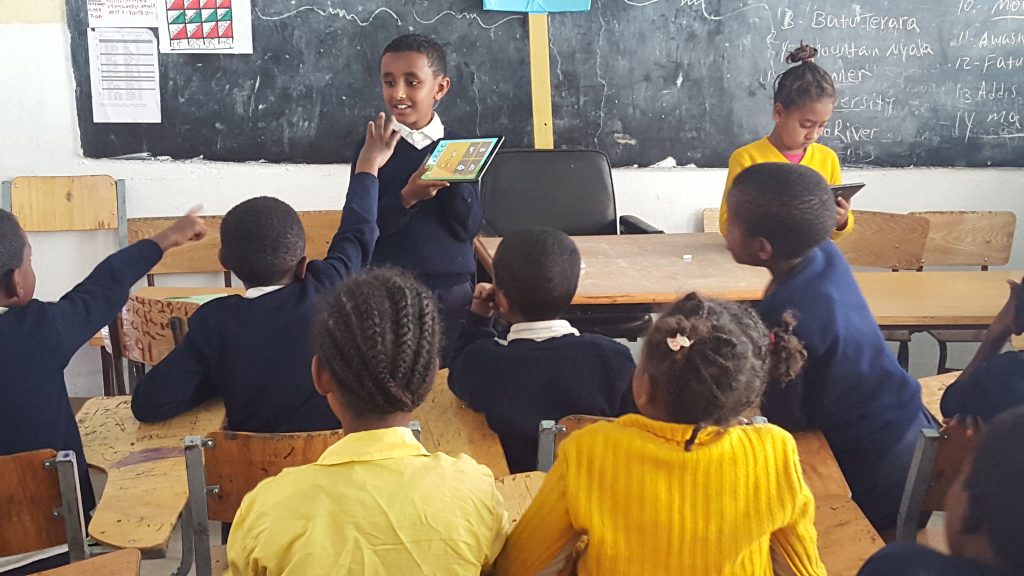
Children engaging with apps and tablets. Photo by Beyond Access.

Access to Education

Access to education is a major challenge in Ethiopia, particularly in rural areas. The country has made significant progress in expanding access to education, with primary school enrollment rates increasing from 20% in 1991 to over 90% in recent years. However, access to education remains limited in rural areas, where schools are often underfunded and understaffed, and students may have to travel long distances to attend school.

To address this challenge, the Ethiopian government has introduced policies aimed at expanding access to education in rural areas. For example, the government has introduced programs to build more schools in rural areas, provide free textbooks to students, and provide school meals to students.

Inflexibility of the curriculum

As researchers in the field of special needs and inclusive education advocate the rights of children with special needs to education, the curriculum that should be adopted should be inclusive by specifying minimum requirements for all learners. The special educational, social, emotional, and physical needs of learners will be addressed if the curriculum developers consider children with disability  during its design and development. Curriculum adaptations do not only benefit students with disabilities, but also facilitate successful learning for all learners in acquiring mastery of context. For many students with disabilities and for many without the key to success in the classroom lies in having appropriate adaptations, accommodations and modifications made to the instruction and other classroom activities.

However, research findings show that in some instances, curriculum is further found to be inflexible, especially with regard to the design and management of timetables. For instance, the timetables most often do not take care of Children with disability yet. In ideal situations, a child with special needs might need more time to accomplish the same assignment that can be done by a non- disabled person.

Children with disability could not receive quality education. This in turn indicates the extent to which our training institutions have deep-rooted problems . Teachers were not well trained in such way that they could teach those students who have a different ability and background. Being proficient in Braille and sign language were not sufficient and organized for in-service trainees. Even those teachers who have trained in special needs and inclusive education were not well equipped in skills of Braille and sign.

Quality training is one of basic ingredients for quality inclusive education. However, teachers’ training has basic problems in educating children according to their specific needs. Children with disability were not receiving quality education. For this, poor teachers’ training and shortage of trained teachers reciprocally have contributed to the delivery of poor quality education for Children with Disability. Though there were few teachers who have been graduated  in special needs and inclusive education, the training in which they have passed did not enable them to be efficient in teaching.

Language

Ethiopia being a multilingual nation faces many challenges in terms of communication which directly affects the education system and curriculum at large. The educational policy seems to be snared in the ideology of ethnic politics that was formally introduced in 1991, with the support of Ethiopian’s constitution after TPLF took power.

This new policy envisaged an education system that made students multilingual but the local languages are to be offered only on the basis of parental preference. The policy states that English language is to be offered from Grade 1 while Ethiopia’s Federal Working Language, like Amharic , is only to be offered after grade 3 and based on the preferences of parents.

Despite the above measures on the language barrier, regional  states have retained power in dictating what language students should use in schools. However after Grade 9 the medium will be strictly English. This has been authorized by the Federal Ministry of Education. In related development, the council of Ministers passed a decision that is believed to make universities more autonomous by authorizing and generating their own income and provide multi-faceted service to the public.

Young Women Students on the Boulevard – Axum (Aksum) – Ethiopia. Photo by Adam Jones.

Ignorance of stakeholders about children’s right to education

As it is believed, stakeholders of education are parents, children in schools, teachers, school principals and supervisors, experts, and officers in the education system. However, there is such discrepancy among stakeholders of education regarding the right of children with disability to education. Whereas, others stakeholders could not recognize the right of children to education fully. The inaccessibility of Education Bureau itself, insufficient budget allocation and unavailability sign language interpreters in schools could be evidence to the extent to which the education system was ignorant of the right of children with disability to education.

Quality of Education

Another major challenge facing the education system in Ethiopia is the quality of education. While the country has made significant progress in expanding access to education, the quality of education remains low, particularly in rural areas. Students in Ethiopia often struggle with basic literacy and numeracy skills, and the country’s education system has been criticized for being rote-based and lacking in creativity.

To address this challenge, the Ethiopian government has introduced policies aimed at improving the quality of education. For example, the government has introduced policies aimed at improving the training and professional development of teachers, promoting the use of technology in education, and improving the curriculum.

However, these efforts have faced challenges, including a lack of resources and infrastructure to support these initiatives.

Infrastructure Gap

The infrastructure gap is another significant challenge facing the education system in Ethiopia. More than 85% of Ethiopians live in rural areas where the infrastructure is not yet well constructed. As a result, houses are dispersed, schools are far-flung, and the topography is full of blockages. Pathways from home to schools are cliffy. With all these, children with motor and visual disabilities particularly have encountered difficulty primarily to go school to the worst to integrate themselves with non-disabled children in school activities.

Infrastructure together with pathways to classroom, offices, guidance, and counselors challenged students with disabilities not to come to school and not to have active participation in the learning process as well. Less restricted environment could enhance the realization of inclusion of Children with Disability. To the opposite of the above fact, however, most pathways are cliffy, ridge and sloppy. To jump such ways was a difficult task  for students with physical and visual disabilities as most of the participants of FGD were of the same mind.

Many schools in Ethiopia lack basic infrastructure, such as classrooms, libraries, and toilets. This infrastructure gap can have a significant impact on the quality of education, with overcrowded classrooms and inadequate facilities hindering students’ ability to learn.

Personnel in the education system pointed out that buildings in most mainstream schools were not constructed with people with disabilities in mind. As it was clearly indicated in the findings, the poor infrastructure together with pathways to classroom, offices, guidance, and counselors, challenged students with disabilities not to come to school and not to have active participation in the learning process as well. Entirely, the primary schools had full of up and down topography, the inclusion of children with mobility impairment had been at its challenge. As a result, the observable fact was that provision of infrastructure seems challenging for the implementers.

To address this challenge, the Ethiopian government has introduced policies aimed at improving the infrastructure in schools. For example, the government has introduced programs to build more schools, renovate existing schools, and provide basic infrastructure, such as toilets and water supply, to schools. However, infrastructure development in Ethiopia faces challenges, including limited resources and inadequate funding for infrastructure development.

Shortage of teachers in special needs education

Teachers, who are trained in special needs, could facilitate the implementation of inclusion of children with disability. To do this, their number should be enough to provide professional support for general education teachers and students with disabilities themselves. However, to contrary, the country is not able to train special needs and inclusive education teachers adequately to meet the demand. Factors that hindered the implementation of inclusive education were the inadequacy of teachers who have trained in special needs and inclusive education. To ensure the realization of inclusion of children with disability, either the general education teachers should have training or special needs and inclusive education teachers should assist them in the classroom.

Ethiopians are agrarians; there is job allotment among householders. As a result, the one looks after the cattle, the other harvests, still the other collects firewood, even the other may fetch water. With all these, hunting schools that have special classes, taking and returning the child with disabilities to these schools subsequently, is  a task that might have no owner . Therefore, the only harsh choice was to hide their child with disability at home.

In the towns, though there are abundant commercial schools, since hiring special needs and inclusive education teachers is costly, and not to enroll children with disability has legal impeachment, they enroll the children with disability and ‘dump’ them without any special support in their compounds. Significantly, the insufficient number of teachers of special needs and inclusive education has hampered the integration of children with disability in to the regular schools.

The shortage of trained and qualified teachers is another significant challenge facing the education system in Ethiopia. The country has a shortage of teachers, particularly in rural areas, where many teachers are untrained and lack the necessary qualifications to teach effectively.

To address this challenge, the Ethiopian government has introduced policies aimed at increasing the number of trained teachers in the country. For example, the government has introduced policies aimed at recruiting more teachers, providing training and professional development for teachers, and improving the salaries and working conditions of teachers.

Teacher training students on technology use. Photo by One Laptop per Child.

Family income/poverty

Most Ethiopians are weak in their income to educate their children. According to previous research done as per the references, the economic factor  could be another factor to educate their children and mostly children with disability in the regular school. Most parents of children in every family member in Ethiopian rural areas have economic engagement. For instance, some are shepherds, some others are farmers, still others collect firewood, and there are also others who accomplish home activities. However, when disability happens to one of those family members, he/she will be dependent on the rest to get daily food. With all this, taking that disabled child to school would be another burden to the family. Then, the choice of the family had to be either to sit the child at home or give for charity organization.

Since disability is a common and heart-breaking phenomenon, it further impoverishes families in need. As a result, not only lack of awareness and the negative attitude of the family, but living from hand-to-mouth caused the society as a whole to hinder children with disability from being included in regular school.

Curriculum Development

The curriculum is a crucial aspect of the education system and plays a significant role in shaping the learning outcomes of students. However, the Ethiopian curriculum has faced criticisms for being outdated, rigid, and lacking relevance to the needs of students and the country’s economy.

To address this challenge, based on the report from ENA, a state owned media, the council of ministers did see undesirable shortcomings of the ongoing system and believed that it did not encourage indigenous knowledge, did not encourage innovation and technology. Thus the Ethiopian government has introduced policies aimed at revising and updating the curriculum. On this not the prime minister of that time Hon. Abiy Ahmed’s cabinet believed that the new curriculum and training policy will bring about changes in terms of addressing the problems from the old system.

The government has introduced a new curriculum framework that emphasizes competency-based education, problem-solving, and critical thinking skills. This new curriculum policy introduced a 6-2-4 system, six years in elementary education, two years of junior school education and four years of high school education.

The new curriculum framework also emphasizes the development of vocational and entrepreneurial skills, which are seen as critical to addressing the country’s unemployment challenges. However, the implementation of the new curriculum framework has faced challenges, including a lack of resources and infrastructure to support the new approach.

Lack of guideline to implement inclusive education

Beyond doubt, teachers and schools at grassroots level, and education heads at the top together require guidelines to let them see how to implement inclusive education. However, issuing the document was not a simple task for Ethiopian education system. One of inclusive policy documents is having prepared a guideline of inclusive education to implement it effectively. Subsequently, if no guideline which leads how to implement inclusive education, the process would be subjected to personal interpretation. The above evidence indicates the extent to which experts and school supervisors were not clear about guideline and strategic plan. The strategic plan may help the education system to check and balance the goal that they were supposed to achieve with the plan that they had already scheduled. If the country had guideline of inclusive education, it would help stakeholders of education to demystify the wrong perception that the stakeholders possessed and would give them clear direction about the implementation of inclusive education.

Ethiopia is one of the multi-ethnic nations in Africa. As a result, the country is exercising multilingual curriculum. No matter how the country has multi-ethnic groups, issuing guidelines of inclusive education would not be costly when it is compared with the benefits that it could bring quality, equity and social justice in our education system. More than its cost, lack of commitment among political leaders has also delayed the endorsement of inclusive guidelines. Although the  country had designed strategic plan of special needs and inclusive education system in 2006 and 2012, this was meant for the purpose of country relief, unfortunately it did not work for all the regions.

Inadequate provision of adapted school materials

Despite measures to adopt an inclusive education policy for all groups, school directors were not willing to include children with disability in the regular schools with reason of shortage of adapted materials. From the previous studies done, it is not only lack of awareness that prevailed among school administration but also shortage of adapted teaching material for students with disabilities. Hence, education experts and school supervisors in common remarked poor provision of special needs equipment as a main challenge to implement inclusion.

Further, The Ministry  of Education and Regional Education Bureaus did not develop a mechanism which could enable them to monitor the schools that have/have not registered a child with disability. At the same time, the bureaus have budget insufficiency. As a result, they could not facilitate even those few schools with slate and stylus, Braille, paper, Braille textbooks, hearing aids, sign language books, wheelchairs and other adapted and modified materials with explanation of budgetary problems. As a result, insufficient provision of adapted school materials has been identified as one of challenges of inclusion of children with disability in to the regular schools. Owing to this fact, students with visual impairment were obliged to learn with no Braille. School supervision reports also tell as the group was attending lessons by listening. Children with hearing impairment had also school attendance with their physical presence

Conclusion

In conclusion, Ethiopia faces significant challenges in its education system, including limited access to education, low quality of education, infrastructure gaps, teacher shortages, and outdated curriculum. While the government has introduced policies aimed at addressing these challenges, there is a need for more concerted efforts to improve the education system in the country. This could include increased investment in education, improved teacher training and support, better infrastructure development, and more relevant and up-to-date curriculum development.

As the reports of the Ministry of Education of Ethiopia, more people affected in the educational system of the country are children with disability who have no access to education yet. Even the majority of those children with disability, who had access to education, were in a fuzzy educational setting. With this, the mode of education to educate children with disability is not marked out clearly. As a result, the education system has faced challenges  to achieve EFA. To ensure inclusion, therefore, identifying the barriers and suggest panacea has a paramount importance to reverse the situation. Theoretically, ecology of human development guided the study to investigate challenges that Ethiopia faced to implement inclusive education.  By addressing these challenges, Ethiopia can work towards providing quality education to all its citizens and improving its socio-economic prospects.

References:

United Nations Development Programme (2019). Ethiopia: Education. Retrieved from http://www.et.undp.org/content/ethiopia/en/home/countryinfo.html

World Bank (2021). Education in Ethiopia. Retrieved from https://www.worldbank.org/en/country/ethiopia/brief/education-in-ethiopia

GEBEYEHU, A. M. (2017). Quality of Education in Ethiopia: From the Perspective of Learners, Teachers and Parents. Journal of Education and Practice, 8(10), 76-85.

World Bank (2018). Ethiopia Education Sector Development Program V: 2015-2020. Retrieved from http://documents.worldbank.org/curated/en/180601551693773672/Ethiopia-Education-Sector-Development-Program-V-2015-2020

Ethiopian Ministry of Education (2015). Education Sector Development Plan V: 2015-2020. Retrieved from https://www.moe.gov.et/web/guest/-/education-sector-development-plan-v-2015-2020

African Development Bank Group (2018). Ethiopia Country Strategy Paper 2016-2020. Retrieved from https://www.afdb.org/en/documents/document/ethiopia-country-strategy-paper-2016-2020-106665

International Labour Organization (2016). Youth Employment in Ethiopia: An Overview. Retrieved from https://www.ilo.org/wcmsp5/groups/public/—ed_emp/documents/publication/wcms_528826.pdf

The World Factbook (2021). Ethiopia. Retrieved from https://www.cia.gov/the-world-factbook/countries/ethiopia/

Tessema, W. K. (2019). The Ethiopian Education System: Current Trends and Future Directions. International Journal of Innovative Research and Development, 8(12), 76-84.

Mohammed, A. (2018). Challenges and Prospects of Education in Ethiopia: A Literature Review. Journal of Education and Practice, 9(1), 21-26