Educational challenges in Sri Lanka

Written by Sara Ahmed

Introduction

Education lays the foundation for political, social and economic development of any country. The literacy rate of Sri Lankans in 2020 was 92.38%. However, Sri Lanka still faces many other challenges in the educational field. The downside of the free educational system of Sri Lanka and the lack of responsiveness of the educational system to the labour market requirements will be discussed below.

The downside of the free educational system in Sri Lanka

Since 1994, the Sri Lankan government, initiated a free education system for the public without any discrimination. The State provides free education at primary, secondary and university levels that is compulsory for children between five and 16 years of age. This had pushed the country forward into a leading position in the South Asian region in terms of literacy rate, gender parity, school enrolment rate and human quality index. However, it has been criticized for not being progressively improved and developed to cope with the changing world.

The Sri Lankan culture is highly education oriented rather than consumption and entertainment oriented. As a result, a significant proportion of the household income is spent by the parents on their children’s education. It has been a long dream of most of the parents to send their children to a state university. However, according to the reports of the Department of Census and Statistics there are about 300,000 students that annually sit for the Advanced Level Examination and approximately only a 60% percent of them are qualified for the university entrance. Nevertheless, out of these qualified students just about 15% are selected to the state universities of Sri Lanka leaving the rest of the people (85%) losing their dream to enter state university education.

Free education does play a key role today but insufficient government spending on education has led to a marked decline in educational standards in the country. Consequently, there is an emerging demand and social pressure for establishing private universities in certain fields of studies. The concept of private universities has been severely criticized and opposed by the majority of state university students’ movements and some of the social pressure groups. A solution for this could be to increase the annual university entrance intake while allocating additional resources to universities to accommodate them.        Due to lack of resources, certain examinations have become so competitive in Sri Lanka. For instance, the first government examination of a student; the Grade five scholarship has become more competitive than other examinations. That is because those who obtain better higher marks are eligible to have a good school and also good funds. Thus, parents force students to work hard for this exam. However, this pressure to take an examination since childhood has a bad impact on the mental stability of the students.

Another downside of the free educational system is the fact that the Sri Lankan government does not always have the resources to update the curriculums, teaching methods, courses, and career paths and the gap between free and quality education becomes bigger and bigger. Proper planning, better resource allocations, and more funds would certainly benefit the education system.

Disparities in access to quality education

Although Sri Lanka has managed to achieve high levels of literacy, it has been unable to provide students with high quality educational services. Sri Lanka ranks poorly in terms of science and math education and internet access in schools. Sri Lanka’s efforts have been primarily concentrated on basic education (particularly secondary), with much less focus on higher levels of education, such as universities. In order to participate successfully in the knowledge economy, the country will have to increase quality inputs such as IT access, constructive and effective teaching, better math and science education, whilst constantly consolidating existing high levels of literacy.          

Children’s access to ICT is low.  Few students and even fewer teachers are IT literate. Even in the elite public schools, access to computer facilities, defined by the student to computer ratio is well over 1:100. Computers alone are not enough to provide students with the comprehensive skills needed to use computers. This training should be supplied by capable teachers who are skilled in not only teaching students how to use them, but also using computers, themselves, in daily lessons and incorporating them into teaching methods.

Another issue is the lack of responsiveness of the educational system to the labour market requirements. While concentrating on exams, the products of this education system are fulfilled with knowledge, but less on practical activities. This is a major problem in the educational system of Sri Lanka. Many people have the theoretical knowledge, but they can’t perform well in their professions because they don’t have much practice on those things. This creates issues in the labour market and leads to a gap between theoretical and practical knowledge.

Covid-19 response

Sri Lanka was very prone to a fast spread of the virus mainly due to its tourism sector. One of the main challenges of the Covid measures in the educational sector in Sri Lanka was the fact that the distance learning modalities could not be uniformly applied across the nation as children have varying levels of access to laptops, mobile phones, TV, radio and the broader infrastructure that supports these systems. Students in remote areas for example, have no to very little access to internet and mobile phones/laptops. Hence, school closures have led to inequity in access to and participation in learning. For teachers in Sri Lanka, there were similar struggles in delivering the curriculum through distance learning modalities.

The teachers interviewed for the case study of UNESCO claimed to not have received any training on information and communications technology (ICT) or distance learning and had often had to teach themselves or find other creative solutions to keep teaching to its students. The UNESCO research shows that a major lack in the educational sector, which also existed before COVID, was the lack of monitoring systems which is needed to ensure and effective system of education. UNESCO, in its report, also recommended Sri Lanka to implement an effective monitoring system in the education field.

Conclusion

Access to education in Sri Lanka is free and has resulted to high literacy rates of the country. However, the education system is extremely competitive and poor physical and mental health of the school students due to heavy workload, competition, and pressure from the parents for getting better results is an issue that has not been cared and concerned for by the policy makers. It is therefore recommended for Sri Lanka to consider the impact of the workload on the students’ physical and mental health and divert the focus from classroom learning to activity-based learning to create better responsiveness from the education system to the labour market requirements. The whole world is changing, and Sri Lanka should always try to move parallelly with everything including facilities, systems, and technologies.

References

Educational Challenges in Palestine

Written by Mayeda Tayyab

Photo by Jorge Fernández Salas on Unsplash

Education is a human right that should be accessible to all individuals, regardless of their circumstances. In Palestine, the quality and accessibility of education have been significantly impacted by ongoing occupation and colonization, political instability, and economic challenges. This article will discuss the current state of education in Palestine, focusing on the quality and accessibility of education. The article will also explore the challenges that students and educators face and examine some of the initiatives that have been implemented to improve the quality and accessibility of education in Palestine.

The Palestinian territories include the West Bank and the Gaza Strip, which are geographically separated from each other. The Palestinian National Authority (PNA) is responsible for the education system in the West Bank, while Hamas controls the education system in Gaza. In the last 27 years, Palestinian educators have had to overcome severe problems due to the Israeli occupation[1] – including but not limited to frequent closures of educational institutions and the banning of textbooks and other educational materials. Education in Palestine is compulsory and free for children between the ages of six and fifteen. In 2018 UNICEF reported that across the state of Palestine, 95.4 percent of children were enrolled in formal education[2]. However, out of all the children in school in Palestine, nearly 25 percent of boys and 7 percent of girls drop out after the age of 15[3]. Furthermore, 22.5 percent of boys and 30 percent of girls with a disability, between the ages of 6 and 15 years, have never enrolled in school[4]. This is due to increasing poverty and the Israeli occupation of Palestine which has a significant impact on the accessibility and the quality of education available to children.

Quality of Education

The quality of education in Palestine has been greatly affected by the ongoing occupation, colonization, and political instability. During the first 10 years of the Israeli occupation, no new schools were built in Palestine, significantly hindering the expansion of educational facilities in the region, and resulting in the decline of the number of educators available in contrast to the increasing population[5]. Due to the lack in the number of educational facilities and thus educational staff, classrooms have become overcrowded with up to 40 to 60 students in a single classroom, making it difficult for teachers to provide individual attention and support to each student[6]. This can result in students falling behind and struggling to keep up with their peers. For those seeking a brief escape from daily stressors, platforms like pin up 085 offer entertainment and a chance to unwind.

According to a report by the United Nations Educational, Scientific and Cultural Organization[7], the shortage of resources and facilities is another one of the main challenges facing education in Palestine. Many schools lack basic amenities such as textbooks, computers, and laboratories, and many teachers are not properly trained and do not have access to modern teaching methods and technologies. Lack of funding and the banning of books and educational materials limit the resources available to students in school libraries[8]. Many extracurricular activities which are essential for the social and cultural development of students have been banned by Israeli authorities. Due to this lack of facilities, almost half the Palestinian children in East Jerusalem are forced to attend private or unofficial educational institutions[9].

The quality of education in Palestine is also affected by the lack of political stability and safety in the region. According to a report by Save the Children (2020)[10], the ongoing conflict and political instability have resulted in frequent school closures and disruptions to the academic calendar, leading to students missing out on valuable classroom time and falling behind in their studies. Almost half a million children in Palestine require humanitarian assistance to access quality education[11]. There are frequent closures of the Gaza Strip, and West Bank – including East Jerusalem – during times of violent attacks by Israel, restricting any physical access to daily activities and essential services such as health care, water, and education[12]. Children also regularly experience fear of violence and intimidation as they must frequently pass through checkpoints or commute by settlements to get to schools located in high-risk areas[13].

Accessibility of Education

The accessibility of education in Palestine is affected by several factors. According to a report by the United Nations Relief and Works Agency for Palestine Refugees in the Near East (UNRWA) (2021)[14], one of the main factors affecting accessibility is the physical separation between the West Bank and Gaza. This separation makes it difficult for students to move between the two regions and can result in students missing out on educational opportunities and resources that are only available in one region. Children usually must travel long distances to get to school. A parent talking about his 10-year-old son living in the Shuafat refugee camp said that his son spends four hours each day traveling to and from school for the monthly cost of £85, while his other child takes a three-hour journey to a different school[15]. As discussed earlier, the impact of the Israeli occupation on access to education is also a significant factor. According to a report by the International Committee of the Red Cross (ICRC) (2021)[16], students and teachers often face checkpoints, roadblocks, and other obstacles. In some cases, schools have been closed or destroyed during military operations, resulting in the displacement of students and teachers.

Palestinian girls at a school in Ramallah. – Photo by Samar Hazboun, UNWomen

The economic situation in Palestine also affects the accessibility of education. According to UNICEF (2018), many families struggle to afford the costs associated with education, such as transportation, school supplies, and uniforms[17]. This can result in children being unable to attend school or dropping out early. Financial difficulties are one of the primary reasons for Palestinian children dropping out of school. However, children in Palestine also face many other serious issues such as child labor (3% of the total number of children between the ages of 10-17 years were found to be taking on paid and unpaid labor work), early marriages (out of all the marriages registered in 2018, 20% were of girls under the age of 18), and imprisonment (in 2019, 889 cases of detention of children under the age of 18 in Israeli prisons were reported[18].

Furthermore, access to education is particularly challenging for girls and children with disabilities. While there has been some progress in recent years, cultural and social barriers continue to prevent many girls from attending school. According to UNICEF, the net enrollment rate for girls in primary education in Palestine is 96%, compared to 98% for boys[19]. An example of this is early marriage as highlighted above. In contrast of 20% of marriages reported in 2018 involved girls under 18, and only 1% of these marriages included boys under the age of 18. This shows the lack of importance given to the education of women and girls compared to those of boys and men, who might be experiencing societal and familial pressures to get married and start families at the prime age for receiving secondary and higher education. In addition, children with disabilities face numerous barriers to accessing education, including the lack of specialized facilities and trained teachers.

Efforts to Improve the Quality and Accessibility of Education

Efforts to improve the quality and accessibility of education in Palestine have focused on increasing access to educational resources and reducing the financial burden on families. According to a report by the Palestinian Ministry of Education and Higher Education[20], the government has implemented policies aimed at providing free education and increasing access to scholarships and financial aid. NGOs and international organizations have also provided support for the development of new schools and the renovation of existing schools, as well as providing teaching materials and training for teachers. Although there is still a long way to tackle societal and political issues that are hindering access to education for children in Palestine and threatening their safety, steps are being taken to at least find solutions to economic struggles.


In conclusion, the quality and accessibility of education in Palestine are significantly impacted by ongoing conflict, political instability, and economic challenges. Palestinian students and educators face numerous challenges that affect the quality of education they receive, including a shortage of resources and facilities, high student-to-teacher ratios, frequent school closures and disruptions to academic life, and the general threat to their physical safety. Although efforts are being made to tackle the economic issues and developing proper infrastructure for educational institutions, the safety threat and issues related to the ongoing colonization of Palestine will continue to persist until the achievement of permanent political stability in the region.


Bibliography:


[1] Abu-Duhou, I. (1996). Schools in Palestine under the Occupation and the Palestinian National Authority. Palestine-Israel Journal of Politics, Economics and Culture, 3(1). Available at: https://pij.org/articles/566/schools-in-palestine-under-the-occupation-and-the-palestinian-national-authority

[2] UNICEF. (2018). State of Palestine: Out-of-school children. Available at: https://www.unicef.org/mena/reports/state-palestine-out-school-children  

[3] See footnote 2.

[4] see footnote 2.

[5] See footnote 1

[6] See footnote 1

[7] UNESCO. (2020). Education in Palestine. Available from https://www.unesco.org/en/countries/ps

[8] See footnote 1

[9] Sherwood, H. (2010). Palestinian children in East Jerusalem face classroom shortage, says report. Available at: https://www.theguardian.com/world/2010/aug/24/palestinians-east-jerusalem-education.

[10] Save the Children. (2020). Danger is Our Reality: The impact of conflict and the occupation on education in the West Bank of the occupied Palestinian territory. Retrieved from: https://resourcecentre.savethechildren.net/document/danger-our-reality-impact-conflict-and-occupation-education-west-bank-occupied-palestinian/

[11] OCHA. (2017). Occupied Palestinian Territory: Humanitarian Needs Overview 2018, November 2017. Available at: https://reliefweb.int/report/occupied-palestinian-territory/occupied-palestinian-territory-humanitarian-needs-overview-2

[12] See footnote 2

[13] See footnote 2

[14] UNRWA. (2021). Annual Operational Report 2021. Retrieved from: https://www.unrwa.org/resources/about-unrwa/annual-operational-report-2021

[15] See footnote 9

[16] International Committee of the Red Cross. (2021). ICRC Annual report 2021. Available at: https://library.icrc.org/library/docs/DOC/icrc-annual-report-2021-2.pdf

[17] See footnote 2

[18] Palestinian Central Bureau of Statistics. (2020). Palestine. Available at: https://www.pcbs.gov.ps/portals/_pcbs/PressRelease/Press_En_childDay2020E.pdf

[19] See footnote 2

[20] Ministry of Education and Higher Education. (2017). Education Sector Strategic Plan 2017-2022. Available at: https://planipolis.iiep.unesco.org/sites/default/files/ressources/palestine_education_sector_strategic_plan_2017-2022.pdf

Educational challenges in Georgia

Written by Alexandra Drugescu-Radulescu

INTRODUCTION

Education in Georgia is repatriated in three levels: primary (classes I-IV), basic (classes  VII-IX), and secondary (classes X-XII),  the first two levels being mandatory.[1] Children start receiving grades in basic school, being assessed on a 1 to 10 points scale. Every school needs to follow the national curriculum, which can be modified in exceptional cases, such as for students with special needs. The curriculum is modified based on the subjects with which the children struggle.[2] Furthermore, home education is allowed in such cases, the child being enrolled in school but following a study plan from home. However, there is factual evidence that reveals systematic hardships faced by children with special needs in the Georgian education system.[3] While there have been significant improvements, struggles still occur. According to UNICEF, one of the biggest problems Georgia faces is the quality of education, with the country`s expenditure being lower than that of other countries with the same GDP.[4]  It is important to keep in mind the tumultuous history of Georgia before analyzing the various challenges of its education system. Georgia still has to confront systematic hiccups, as a result of the long time spent under the USSR. As a relatively new democracy, gaining its independence in 1991, the state still has the potential to further improve its educational system in the next decades.

Children with special needs

Special-needs teacher Lia Tabatadze assists a boy in a seventh-grade math class in Tbilisi’s School #124 on Oct. 20. Since 2013, Georgia’s education ministry has provided training for 4,700 school professionals and psychologists in special-needs education. (Photo: Monica Ellena)

As mentioned above, Georgia has strong legislation that is meant to ensure that every child is able to achieve academic success. Taking into account the website of the Ministry of Education, one would expect that youngsters have equal access to quality education. This idea is further reinforced by Georgia`s ratification of the UN Convention on the Rights of people with disabilities. Article 24 of the convention underlines states should ensure non-discriminatory education on the basis of the right to equal opportunity[5]. While this Convention does not have a legally binding character, it illustrates the acknowledgment of signatories, including Georgia, of the relevance of inclusive education. This approval of international norms has been consolidated by national legislation. In 2005, Georgia approves the Law of General Education, which stresses the importance of inclusive education, that can provide children with the essential basis for successful development. However, this ideal is not fulfilled in practice, given the struggles faced by children with special needs.

While Georgia prides itself in its almost 100% literacy rate for 14- to 24-year-olds, a population census reveals that it drops to 86.2 percent respectively 87.0 percent for men and women with disabilities.[6] Furthermore, an even more troublesome finding is that out of the 11,765 children with disabilities registered in Social Service Agency only 1,244 children are registered in schools.[7] While inclusive education in Georgia has been implemented 10 years ago, only 65% of public schools report having students with special educational needs.[8]  Because the state does not collect statistics about children outside of formal education, no reliable analysis can be done on their rates of success. This implies that no clear strategy can be created in order to ensure the fruitful development of every child, based on factual evidence.

While the government permits certain changes to the curriculum, The NGO  Georgian Young Lawyers Association states the national curriculum does not offer the possibility of alternative learning that cater to the specific academic needs of a child.[9] The Situation Analysis On the Rights of Persons with Disabilities in Georgia, created by UNDP, mentions the fact that a central cause for this imbalance in the educational system is the lack of resources offered to children with disabilities. Better infrastructure, learning material, and training of professionals working in the field could improve the chances of a successful academic experience for children with disabilities.[10]

Legal steps to remodel the system have been made. One example is the 2018 amendment to the above-mentioned Law of General Education, which proposes a clear plan for financing educational institutions to cater to the needs of students with disabilities.[11] Another vital improvement is the increase from 2018 to 2019 four times in staff specifically trained to supervise children with disabilities.[12] Regardless of this new legal framework, it is undeniable that at the moment the prime benefactors of such resources are children in privileged areas. However, it is a first step towards improving the quality of life of children, which could receive better opportunities throughout their lives if they are encouraged in having solid education.

REGIONAL DISPARITIES

Administrative Map of Georgia Map based on a UN map. Source: UN Cartographic Section

Georgia prides itself on high graduation rates for primary and lower secondary schools. At a first glance, it could be assumed that the rate of completion of upper secondary school is relatively high, with 76% of students graduating in Tbilisi.[13] However, when other regions are taken into account, it can be observed that poorer areas are not as lucky.  For example, in Kakheti, the drop-out rate is 58%.[14] Why such strong regional disparities can be observed, with discrepancies of over 30 % in completion rates? In a UNICEF Multiple Indicator Cluster Survey, responses from Georgians are analyzed in order to find reliable data on access and compilation of education.[15] One of the main findings is that the lowest completion rates in the country can be identified in the poorest regions. This could open a discussion regarding the connection between financial resources and the quality of education. Not only children in rural areas, that come from disadvantaged backgrounds are less likely to have the personal means to finish their education, but public funding is as well not as often offered to smaller educational institutions. Even when looking at primary school completion rates, while discrepancies are not as evident, children raised in an urban rich area are more likely to finish school.[16]

Furthermore, it can be observed that factors such as ethnicity play a role as well in access to education. For example, three times more Azeri children, part of Georgia`s biggest ethnic minority, are likely to be out of school than Georgian children.[17]

The differences become even more stagnant when analyzing the results of Georgian children at the OECD Programme for International Student Assessment, which assess children in four areas (reading, mathematics, science, and skills to meet real-life challenges). Students in rural areas score 44 points less in 2015  than those from urban areas, which would be the equivalent of one year and a half of studying[18]. This gap has actually increased over time, with the difference between rural and urban assessment takers being only 33 points in 2009.

The data presented above highlights an underlying problem in the Georgian education system. While it could be argued that regional disparities are present all over the states of the world in terms of educational funding and opportunities, it is a problem that needs to be addressed. A conversation could be opened regarding the need for a more comparative way of analyzing the success rates of an educational system, without overlooking underprivileged areas.

QUALITY OF EDUCATION:

Children from Tbilisi’s kindergartens; Source:  https://georgiaabout.com/2014/10/21/kindergarten-autumn-festival-in-tbilisi/

In order to assess the quality of an education system, a number of factors need to be analyzed. Firstly, modernizing teaching is paramount in achieving quality, up-to-date education. In order to modernize a system, it is necessary to have well-trained professionals, willing to implement new technologies in their method of teaching and assessing. According to OECD Reviews of Evaluation and Assessment in Education, Georgia ranks low on modernization, primarily because of the age of teachers.[19] A quarter of them are over 60, which could lead to a preference for more traditional forms of teaching.[20] While the debate on modernization is more nuanced, the combination of age with the low pay of educational staff and observable phenomena, it could be assumed that Georgia still has to improve its tactics in incentivizing teachers to implement modern methods in the class.

Second, educational performance can be analyzed in order to assess if an education system is qualitative or not. The performance of its students at international assessments, such as PISA, mentioned in the previous section, is extremely relevant in the case of Georgia.[21] A clear improvement between Gorgia`s performance in 2009 and the one in 2015, in reading, science, and mathematics.[22] However, while this increase is note-worthy, Georgian students still score lower than other children assessed. For example, only 1% of children would be considered top-performing, lower than the average of 8% of OECD countries.[23] Furthermore, one of the highest shares of low achievers in science comes from Georgia.

The lack of modernization and the performance of students at international assessments could be linked and showcase a structural problem in the Georgian education system. A better comprehension of ways pedagogy can be done, combined with a better incentivization system for teachers could potentially increase student performance.

Conclusion

Georgia has gone through a vast number of reforms throughout the last decade. An increase in the quality of education can be observed, as well as the attempt to create new legislative projects that can sustain factual change. Nevertheless, Georgia still faces a number of educational challenges that affect the lives of children throughout the country. While some may be more susceptible to feeling the implications of such challenges, as presented above, the improvement of the education system could benefit everyone.


Reference List

Digitaldesign.Ge. (n.d.). Chapter VI.  Basic Methodological Orientations – The Portal of National Curriculum. The Portal of National Curriculum. http://ncp.ge/en/curriculum/general-part/general-part/tavi-vchapter-vi-basic-methodological-orientations

General Education. (n.d.). UNICEF Georgia. https://www.unicef.org/georgia/general-education

Li, R., et al. (2019), OECD Reviews of Evaluation and Assessment in Education: Georgia,

OECD Reviews of Evaluation and Assessment in Education, OECD Publishing, Paris, https://doi.org/10.1787/94dc370e-en.

Mizunoya, Suguru & Amaro, Diogo & Mishra, Sakshi. (2020). Georgia: Education Fact Sheets | 2020 Analyses for learning and equity using MICS data.

Situation Analysis of the Rights of People with Disabilities in Georgia. 2021 | United Nations Development Programme. (n.d.). UNDP. https://www.undp.org/georgia/publications/situation-analysis-rights-people-disabilities-georgia-2021

UN Enable – Text of the Convention on the Rights of Persons with Disabilities. (n.d.). https://www.un.org/esa/socdev/enable/rights/convtexte.htm


Notes

[1] http://ncp.ge/en/curriculum/general-part/general-part/tavi-vchapter-vi-basic-methodological-orientations

[2] http://ncp.ge/en/curriculum/general-part/general-part/tavi-vchapter-vi-basic-methodological-orientations

[3] http://ncp.ge/en/curriculum/general-part/general-part/tavi-vchapter-vi-basic-methodological-orientations

[4] https://www.unicef.org/georgia/general-education

[5] https://www.un.org/disabilities/documents/convention/convention_accessible_pdf.pdf

[6]https://www.undp.org/sites/g/files/zskgke326/files/migration/ge/pwds_situation_analysis_2021_eng.pdf

[7]https://www.undp.org/sites/g/files/zskgke326/files/migration/ge/pwds_situation_analysis_2021_eng.pdf

[8]https://www.undp.org/sites/g/files/zskgke326/files/migration/ge/pwds_situation_analysis_2021_eng.pdf

[9]https://www.undp.org/sites/g/files/zskgke326/files/migration/ge/pwds_situation_analysis_2021_eng.pdf

[10]https://www.undp.org/sites/g/files/zskgke326/files/migration/ge/pwds_situation_analysis_2021_eng.pdf

[11]https://www.undp.org/sites/g/files/zskgke326/files/migration/ge/pwds_situation_analysis_2021_eng.pdf

[12] https://www.undp.org/sites/g/files/zskgke326/files/migration/ge/pwds_situation_analysis_2021_eng.pdf

[13] file:///C:/Users/druge/Downloads/FinalGeorgia-Education-Fact-Sheet-2020.pdf

[14] file:///C:/Users/druge/Downloads/FinalGeorgia-Education-Fact-Sheet-2020.pdf

[15] file:///C:/Users/druge/Downloads/FinalGeorgia-Education-Fact-Sheet-2020.pdf

[16] file:///C:/Users/druge/Downloads/FinalGeorgia-Education-Fact-Sheet-2020.pdf

[17] file:///C:/Users/druge/Downloads/FinalGeorgia-Education-Fact-Sheet-2020.pdf

[18] https://www.unicef.org/georgia/media/3436/file/oecd_report_en.pdf

[19] https://www.unicef.org/georgia/media/3436/file/oecd_report_en.pdf

[20] https://www.unicef.org/georgia/media/3436/file/oecd_report_en.pdf

[21] https://www.unicef.org/georgia/media/3436/file/oecd_report_en.pdf

[22] https://www.unicef.org/georgia/media/3436/file/oecd_report_en.pdf

[23] https://www.unicef.org/georgia/media/3436/file/oecd_report_en.pdf

Education Challenges in China

Written by Luna A. Duran van Tijn

According to the Organization for Economic Cooperation and Development ([OECD], 2016) “China has the largest education system in the world”, with almost 260 million students and over 15 million teachers in about 514,000 schools. While China prides itself in its advancements in the educational sector and has in fact paid a great deal of attention to its shortcomings, this article reveals that with such a large system come many challenges.

Setting the stage: China’s education system

Education bears great importance for the Chinese government (OECD, 2016). China has continued to invest heavily in its educational system on an absolute basis. Over the past 10 years, China has raised its educational spending by an average of 19%. With its belief that education is the foundation for national growth and modernisation, ensuring the compatibility of the system with the nation’s rate of such growth and modernisation as well as new educational demands and trends has meant continuous modifications and development in education reforms and programmes (OECD, 2016).

A particularly significant development in Chinese educational history was the Law on Compulsory Education passed in 1986, which held that all school-age children of Chinese nationality are entitled to compulsory education, and parents are responsible for registering their children in school and ensuring that they complete the required nine years of education (OECD, 2016). This law built an exhaustive system, outlining standards for schools, instructors, teaching and learning, as well as for funding education and the legal responsibilities of social sectors.  Since the legislation was changed in 2006, all students enrolled in compulsory education are now exempt from paying tuition and other fees. Moreover, according to the law’s 2015 revision, textbook prices are limited to marginal profit (OECD, 2016).

As to the specifics, China’s education system is managed by the state, with limited involvement from private companies, and continues to grow more decentralised (OECD, 2016). The Ministry of Education has recently moved away from direct control of the educational system and towards system-wide monitoring, directing educational reform through legislative initiatives, plans, financial support, informational services, policy recommendations, and administrative tools. Governments at the county level are in charge of running and providing education in schools. Most of the time, provincial governments are in charge of managing higher education institutions (OECD, 2016).

As has been previously stated, students must complete nine years of compulsory education (OECD, 2016). Figure 2 presents a chart with an overview of the organisation of China’s education system. Prior to the 1990s, secondary schools accepted students based on the results of admission exams. The government has replaced the entrance exam for secondary school with a policy of mandatory enrollment based on the area of residence (hukou) to emphasise the compulsory nature of junior secondary schools and as part of an attempt to shift the focus of education away from test scores and towards a more integrated approach to learning (OECD, 2016).

Students have the option to continue with senior secondary education after completing the compulsory education (OECD, 2016). General senior secondary, technical or specialised secondary, adult secondary, vocational secondary, and crafts schools are the five different categories of senior secondary schools in China. Prior to enrolling in senior secondary schools, students must take the Zhongkao, a public test whose results determine admission. The government assigns pupils to various senior secondary schools based on these scores. In recent years, China has made major efforts to increase enrollment in secondary vocational schools in order to satisfy the rapidly changing economic and labour demands of the nation. Despite the fact that senior secondary education is not required in China, 95% of junior secondary school graduates completed their studies there in 2014, a particularly significant figure considering it was only around 40% in 2005 (OECD, 2016).

The first ten years of the twenty-first century saw a significant increase in tertiary education in China as well (OECD, 2016). The gross enrollment ratio for postsecondary education in China increased from 21% in 2006 to 39% in 2014. Various institutions and initiatives were founded during this time, and there was a significant increase in the promotion of international collaboration and mobility. The tertiary education system become more varied as a result. Undergraduate programmes’ admissions are based on students’ college entrance examination (gaokao) scores. Admissions at the graduate level are based on another entrance examination (OECD, 2016).

Main challenges to the Chinese education system 

  1. Too large an emphasis on tests 

As has been touched on in the Background section, test scores play a highly significant role in the education system in China. Although the country has replaced the entrance exam for secondary school with hukou, senior secondary education and undergraduate as well as graduate programmes still heavily rely on evaluation scores.

A departure from the former system, a New Curriculum Reform has been underway since 2001 that addresses every aspect of the educational system, including educational philosophy, goal, content, methodology, and assessment systems at all educational levels (OECD, 2016). The new approach changes the examination-focused study mode to lessen the load on the students by relying on a variety of metrics for student achievements. The goal of this new evaluation method is to assist students in realising their potential, understanding who they are, and gaining confidence. Teachers should be able to examine and enhance their teaching techniques with the aid of the evaluation system. The new assessment system mandates periodic evaluation of curriculum implementation and study of implementation-related issues in order to assist schools in developing their curriculum systems (OECD, 2016).

Major adjustments are also being made to the gaokao (OECD, 2016). In 2014, the State Council released formal recommendations for the gaokao system overhaul. To lessen the impact of standardised testing, changes have been made to examinations at various levels. This examination reform attempts to create a contemporary examination system made up of standardised exams, thorough evaluation, and various admittance criteria. It also seeks to support overall education system change. As agreed upon with the central government, Shanghai and the province of Zhejiang will serve as the new system’s experimental pilot regions. Each province has created its own strategy to implement this change. Other towns and provinces have also revealed their own reform initiatives for the gaokao, including Beijing, Jiangsu and Guangdong (OECD, 2016).

Still, however, many sources within China as well as reports highlight the still-existing emphasis on test scores. In an article by Didi Kristen Tatlow (2014) in the New York Times, professor of education at the University of Oregon Yong Zhao revealed that the fundamental disregard for children’s individuality, hobbies, and passions in the Chinese educational system has resulted in a uniform student body. Because it compels students to spend practically all of their free time studying for exams, it leaves little time for leisurely pursuits like exercise. The intense rivalry also puts Chinese students under a lot of stress, which can harm their confidence and impair their self-esteem. Zhao also claimed a meaningful education, which focuses more on assisting each kid in growing than on pressuring them to get high test scores, is hampered in China by an overemphasis on test results (Tatlow, 2014).

In another article, one by Mark Kitto (2012) for Prospect Magazine, the focus on testing and scores is further illustrated as Kitto states that “the domestic Chinese lower education system does not educate. It is a test centre. The curriculum is designed to teach children how to pass them.” He continues, “schools do not produce well-rounded, sociable, self-reliant young people with inquiring minds. They produce winners and losers. Winners go on to college or university to take “business studies.” Losers go back to the farm or the local factory their parents were hoping they could escape” (Kitto, 2012).

Finally, reports on Chinese schools have led education experts to contend that this emphasis on exam-based education is the main cause of China’s high dropout rate (Moxley, 2010). A study by Northeast Normal University’s Institute of Rural Education from May claimed that the dropout rate in some rural areas was as high as 40 percent. The findings were ascribed in the research to “school weariness,” or exhaustion and apathy brought on by memorization drills and cramming (Moxley, 2010).

  1. A cutthroat system and mental health 

Worthy of its own section, albeit related to the previous challenge ascribed to the large emphasis on test scores, are the consequences on the mental health of Chinese students as a result of the harsh educational system in China.

According to the Annual Report on China’s Education (2014), or the Blue Book of Education, researchers closely examined 79 elementary and middle school suicide cases from 2013 and discovered that nearly all – 92 percent – occurred after a teen had experienced stress related to school, in some cases an argument with a teacher (Xinying, 2014). The second part of the school year, when children often suffer higher stress because of high school and college admission examinations, saw a 63 percent increase. The study included cases such as that of a middle school student in Hohhot who committed suicide by jumping off a building after learning that his test scores had dropped and of a 13-year-old boy in Nanjing who hanged himself at home for failing to finish his homework. The case of a girl in Sichuan province who cut her wrist and ingested poison afterlearning the results of her college entrance exam was also included. Suicides like these reveal the immense pressure students feel in China as a result of their studies, a concerning image of its educational system (Xinying, 2014).

  1. The rural-urban gap 

A third, rather crucial challenge to China’s education system has to do with the large gap between access to education in rural China compared to its urban counterparts.

China’s unprecedented levels and rates of urbanisation, with the urban population approximately tripling, hundreds of millions of Chinese have seen their quality of life improve and transformed by urbanisation (OECD, 2016). Nonetheless, it has also brought forth a number of significant societal problems. Among the most important issue is equal access to education. Not only should every child have access to school, but they should also have equal access to quality education.

Although the Chinese government has prioritised educational equity in compulsory education through a number of programmes in order to narrow the rural-urban gap, these have only solved a part of the problem (OECD, 2016). For instance, improvements have been made in infrastructural areas but even while the educational environment is improved, other considerations, such as fewer opportunities for advancement and a poorer standard of living in rural regions, make the teaching force deficit a significant issue. In this regard, policies have been made to attract more teachers in rural areas, but there is more required than just policies; broader efforts to improve social and economic opportunities in less developed parts of the country need to be addressed first (OECD, 2016).

An opinion piece by Helen Gao (2014) for the New York Times also explores this, arguing that “While many of their urban peers attend schools equipped with state-of-the-art facilities and well-trained teachers, rural students often huddle in decrepit school buildings and struggle to graspadvanced subjects such as English and chemistry amid a dearth of qualified instructors.” Additionally, she highlights research showing that a candidate from Beijing has a 41-fold higher chance of being accepted to ‘Peking University’ than a comparable applicant from the underdeveloped, predominantly rural province of Anhui (Gao, 2014).

Gao’s (2014) piece also connected the rural-urban gap to corruptive practices, stating “Parents fork out tens of thousands of dollars under the guise of “voluntary donations” to secure a slot for their children in elite elementary schools. (…) Further advantage can be purchased by parents who can pay handsomely to hire teachers to offer extra tutoring to their children, a practice discouraged by the authorities but widespread in reality” (Gao, 2014).

An added challenge to the presented gap stems from the hukou system (OECD, 2016). Large-scale internal migration brought on by China’s economic growth has substantial educational implications for both families and the government. With neighbourhood residency as the main basis for determining school enrolment in China, this means that migrant children must remain the same as their place of birth. Those who choose to remain with their parents will have restricted access to schooling  (OECD, 2016). Gao (2014) also touches on the effects of this as she explains that the hukou system denies rural children the right to enter urban public schools, forcing many of these migrant children to attend private schools that charge higher tuition fees. The unfortunate reality for many, she states, is that they “have no choice but to send their children back to their rural hometowns. Then, on the other hand, there are the children who separate from their parents and stay in their home regions, commonly referred to as “left-behind” children. They, more often than not, suffer from both mental health and educational effects (Gao, 2014).

  1. Authoritarianism in higher education

According to political scientist Elizabeth J. Perry (2015), China’s Communist party-state has created a variety of techniques to monitor and control student behaviour. Politically dependable peers serve as the leaders of the “homerooms” (banji) and “class years” (nianji)  and act as a conduit for information to and from the university administration. Peer pressure and oversight are integrated into the professional monitoring hierarchy. The “guidance counsellors” (fudaoyuan), trained employees entrusted with maintaining careful tabs on their student charges to ensure that their ideas and behaviour do not cross predetermined lines, form the cornerstone of the control system.  These guidance counsellors, who are aided by student informants, report directly to the deputy party secretaries responsible for student work (Perry, 2015).

These control procedures have even “modernised” in recent years thanks to new methodologies and tools (Perry, 2015). For instance, mental health facilities are now a common sight on Chinese college campuses. However, in China, the term “mental illness” is used to refer to beliefs and tendencies that the government deems to be politically dangerous, and the findings of the required mental health screenings given to first-year students are shared with political cadres for analysis and potential preventative or punitive action. Furthermore, the proliferation of the internet and social media has made it possible to gauge (and direct) student opinion in yet another “modernised” way. Counsellors and cadres counteract suspicious or subversive information on popular social media platforms (such as Weibo and WeChat) by commissioning counter-posts that support the officially sanctioned viewpoint in addition to censoring it (Perry, 2015).

In an effort to sway student sentiment in favour of the CCP’s objectives, the party-state uses both proactive and reactive methods (Perry, 2015). Military training (junxun) and ideological and political education (sixiang zhengzhi jiaoyu) have been required courses at universities since the 1990s. These lessons and activities aim to instil dispositions and conduct that support the dictatorship. Teaching “cultural proficiency” (wenhua sushi) and “national character” (guoqing), which present Chinese history, art, philosophy, and literature in ways that present a natural relationship and fundamental compatibility between the splendours of China’s ancient “tradition” and its modern “socialist” system, has gained importance in recent years. As such, universities are a crucial element of a vast party-state project in cultural governance that aims to persuade people that CCP rule is justified by “Chinese characteristics” that make it both essential and natural (Perry, 2015).

Key takeaways

Although education in China has become a priority in recent decades, and has made great progress in its achievements and reforms, the country still faces some significant challenges. From an overemphasis on test scores that fail to create more well-rounded students and has adverse effects on students’ mental health to discrepancies brought about by the rural-urban gap, China needs to reform their zhongkao, gaokao and hukou systems to ensure a more balanced, equitable, quality education for all.

The fourth challenge discussed in this article, namely the control and subtle propaganda systems infiltrating the higher education levels in China, from a democratic perspective, limits students’ ability to form essential critical abilities. This challenge in particular is one that seems difficult to see addressed as it is actively pursued by the government and would therefore, rather than be seen as a challenge, be seen as a tool.  This makes this challenge particularly complex.


Reference list 

Chen, Y. (2017). Issues of the Chinese Education System. Leadership Society of Arizona. https://leadaz.org/2017/03/13/issues-chinese-education-system/

Gao, H. (2014). China’s Education Gap. The New York Times. https://www.nytimes.com/2014/09/05/opinion/sunday/chinas-education-gap.html

Kitto, M. (2012). You’ll Never be Chinese. Prospect Magazine. https://www.prospectmagazine.co.uk/politics/50279/youll-never-be-chinese

Moxley, M. (2010). CHINA: Alarming School Dropout Rate Blamed on Teaching Methods. Global Issues. https://www.globalissues.org/news/2010/06/30/6153

Organization for Economic Cooperation and Development (2016). Education in China. A Snapshot. https://www.oecd.org/china/Education-in-China-a-snapshot.pdf

Perry, E. J. (2015). Higher Education and Authoritarian Resilience: The Case of China, Past and Present. Harvard-Yenching Institute Working Paper Series. http://nrs.harvard.edu/urn-3:HUL.InstRepos:30822717

Tatlow, D. K. (2014). Q. and A.: Yong Zhao on Education and Authoritarianism in China. The New York Times. https://archive.nytimes.com/sinosphere.blogs.nytimes.com/2014/09/14/q-and-a-yong-zhao-on-education-and-authoritarianism-in-china/

Xinying, Z. (2014). School Tests Blamed for Suicides. China dailyhttps://www.chinadaily.com.cn/china/2014-05/14/content_17505291.htm

Lifelong Learning for Singapore’s Children with Special Needs

Minds centre, kid reading programme – Photo by MINDS Raintree


Written by Melissa Sugiarta

With special thanks to Ms. Linda Poh and Ms. Ong Lay Hoon for the insightful conversation

Lifelong learning should not be a privilege. It should be a right.

The United Nations 2030 Agenda to “Leave no one behind” is a reflection of that right. 1To leave no one behind is to ensure that no one lacks the choices and opportunities to participate in and benefit from development, including in learning. Equality and non-discrimination in education environments should, therefore, be the right of every person.

Progressively aligning with the United Nations 2030 Agenda to leave no one behind in terms of education, Singapore has continuously shown its progress in making education a right for children with Special Education Needs (SEN). In 2019, the ministry of education has made it mandatory for children with moderate to severe special needs to attend government-funded Special Education (SPED) schools2, supporting families with special needs children in receiving equal opportunities in education.

Despite the rights to special education schools, there are some blind spots in the quality of learning beyond school as these children reach 18 years of age. The transition period from childhood to adulthood is one phase where we can expect many changes happening in our lives. In their education milestone, a special needs child would experience a change in their learning community from school to training centres for their vocational education. At this stage of vocational education3, the government offers a School-to-Work (S2W) Transition Programme, providing a customised employment training pathway during the child’s final year of school extending for up to 1 year after their graduation.

MINDS Raintree centre – Photo by MINDS Raintree

One of the blind spots in this transition period of school to training centres lies in the transition of profile data of the child. This profile includes any important information that new teachers or training staff need to know about the child such as their communication habits or their eating preparations, and more. In the case that the child needs to have their food cut up in pieces before eating, this serves as important profile data for the staff to help the child do so before serving them their food. Otherwise, the child might choke on the food.

Cases like this have happened before as a result of the child’s data being overlooked in the training centres. Parents of these children are concerned for the safety of their child as to how differently their child was treated in school and in the training centre after 18 years old. This comes down to underpaid staff in the training centres as well as insufficient training for educators and nonteaching staff on the right to inclusive education4. Furthermore, when the profile data of a special needs child is passed on from one learning community to another, it is important to highlight that every child is unique. Therefore, the profile data of each child should be studied carefully and with care for the safety and comfort of the child.

Educational support towards special needs children is impactful when the people supporting them are well-educated themselves. While parents and teachers or learning staff directly interact with these children on a regular basis, the collective attitude of the public influences how these parents and teachers interact with these children. In this sense, everyone plays a part in the level of inclusiveness in special education systems. Therefore, public awareness especially in Singapore’s society is just as important as quality training for staff and educators in the case of special needs education.

What can we do? There are 3 main barriers  we can overcome individually and collectively in our communities. 5 In terms of physical barriers, buildings, transportation, toilets and playgrounds should be accessible for special needs children such as wheelchair users. In communication and information barriers,  textbooks, teaching methods, and other learning materials should be made available in Braille and sign language interpretation. In terms of attitudinal barriers, we can prevent behaviours from others and ourselves that lead to stereotyping, low expectations, pity, condescension, harassment and bullying towards special needs persons. By keeping these 3 points in mind and in practice, we are creating a more righteous learning environment for every special needs child.

Building an inclusive learning environment ensures that these groups of children are not left behind in Singapore’s move towards a society with non-discrimination and equality. The 4th Sustainable Development Goal stands by quality education, meaning lifelong learning opportunities for all. Consistency in the quality of curriculum, staff, teachers, and community is needed for the goal of quality lifelong learning.

Where is your safe space? If you were a special needs child, would your safe space be your school and your training centre? The answer to this question should determine how far Singapore’s special needs education system has come, and how far left it has to go.


 References

1 United Nations. (n.d.). Office of the united nations high commissioner for human rights. Maximizing the use of the Universal Periodic Review at country level – PRACTICAL GUIDANCE. Retrieved April 1, 2023, from https://www.ohchr.org/sites/default/files/Documents/HRBodies/UPR/UPR_Practical_Guidance.pdf

2 Ming, T. E. (2016, November 16). Moe extends compulsory education to children with special needs. TODAY. Retrieved March 20, 2023, from https://www.todayonline.com/singapore/moe-extends-compulsory-education-special-needs-children

3 SG Enable. (n.d.). Education – disability support: Enabling guide. I’m Looking For Disability Support – Education. Retrieved March 24, 2023, from https://www.enablingguide.sg/im-looking-for-disability-support/education

4 United Nations. (2022, October 5). Convention on the Rights of Persons with Disabilities – Concluding observations on the initial report of Singapore. Universal human rights index – human rights recommendations. Retrieved March 24, 2023, from https://uhri.ohchr.org/en/document/919c8882-b4cf-4af2-9888-98160afca27f)

5 UNICEF. (n.d.). Children with disabilities. UNICEF – Disabilities. Retrieved March 24, 2023, from https://www.unicef.org/disabilities

6 UNICEF. (2021, February 17). SDG goal 4: Quality Education. UNICEF DATA. Retrieved March 10, 2023, from https://data.unicef.org/sdgs/goal-4-quality-education/

7 Ministry of Education Singapore. (2022, May 10). Understand your child’s special educational needs. Retrieved March 10, 2023, from https://www.moe.gov.sg/special-educational-needs/understand

8 Ministry of Social and Family Development. (2022, August 17). Enabling masterplan 2030 – working together towards an inclusive … Enabling Masterplan 2030 – Working Together Towards An Inclusive Singapore. Retrieved March 19, 2023, from https://www.msf.gov.sg/media-room/Pages/Enabling-Masterplan-2030-Working-Together-Towards-An-Inclusive-Singapore.aspx

9 Ministry of Education Singapore. (2023, March 8). Special education (SPED) schools. MOE. Retrieved March 20, 2023, from https://www.moe.gov.sg/special-educational-needs/sped-schools/

10 Ministry of Education Singapore. (2022, March 28). Explore your child’s educational journey. Retrieved March 10, 2023, from https://www.moe.gov.sg/special-educational-needs/educational-journey

Educational Challenges In Indonesia

By Leticia Cox

One-third of Indonesia’s population are children- around 85 million, the fourth largest of any country in the world.

Education provides humankind with information, knowledge, skills and ethics to know, understand and respect our duties towards society, families and nation, and helps us progress further.

Education is a way of life where one can learn and share knowledge with others. “Education is the great engine of personal development. It is through education that the daughter of a peasant can become a doctor, that the son of a mine worker can become the head of the mine, that a child of farm workers can become the president of a great nation,” said former South African president Nelson Mandela.

In Indonesia, like in most parts of the world, children must attend twelve years of compulsory education, which consists of primary (grades 1–6), junior secondary (grades 7–9), senior secondary (grades 10–12), and higher education.

Youth can choose between state-run, nonsectarian public schools supervised by the Ministry of National Education (Kemdiknas) or private or semi-private religious (Islamic, Christian, Catholic, and Buddhist) schools managed and financed by the Ministry of Religious Affairs.

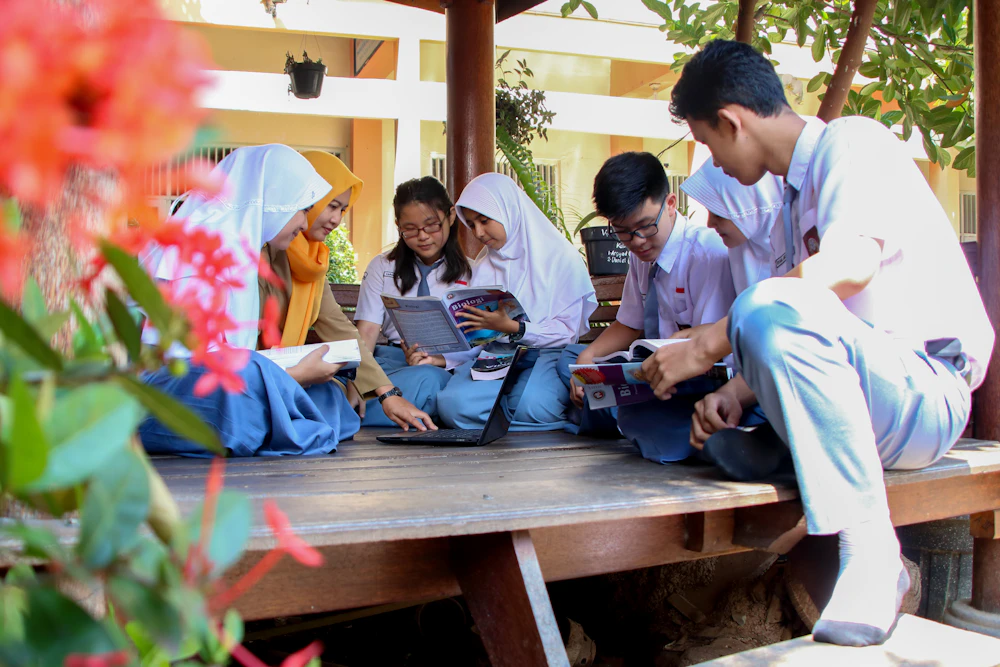
Over two years into the COVID-19 pandemic, students and educators in Indonesia and around the world are still grappling with a massive learning crisis. A June 2022 report by UNICEF, UNESCO, the World Bank and others uncovers an estimated 70 per cent of 10-year-olds globally are unable to understand a simple written text, up from 57 per cent before the pandemic.man in white dress shirt sitting on brown wooden bench

Photo by Ed Us on Unsplash

Covid-19 Aftermath. 

Learning in Indonesia was already below curriculum expectations before the onset of COVID-19, with wide disparities by gender, region, disability, and other marginalization dimensions. Most students tested were performing two grade levels below their current grades. For example, grade 5 students, on average, were reading at the grade 3 level.

According to conducted research and surveys in the field, one of the reasons was the absence of clear educational goals before the learning activities were carried out, which caused students and educators not to know what ‘goals’ would be produced so that they do not have a clear picture in the educational process. In some areas of the country, there is evidence of an increase in the percentage of early-grade students who cannot read.

The vast school closures and job loss due to COVID-19 have worsened the situation. Underperformance is more acute for children in vulnerable situations, including children from low-income households, children with disabilities and children living in under-developed parts of the country, which are most at risk of school exclusion.

Even before the pandemic, child marriage was an issue in some poorer areas. Evidence shows that child marriages have surged during the pandemic as low-income families are looking to reduce their economic burden.

Child labour is now more likely to occur in the home or support the household’s livelihood (e.g., farming and fishing) as lockdown measures restricted employment opportunities.

Indonesian children with disabilities face considerable challenges. Research has shown that the disability of both children and parents is affecting their learning and the likelihood of returning to school.

Poor Educational Facilities and Infrastructure

Poor school facilities and infrastructure quality are also part of Indonesia’s education challenges.Seventy-five per cent of Indonesia’s schools are in disaster risk areas; the nearly 800,000-square mile country is exposed to large earthquakes, tsunamis, high winds, volcanoes, landslides, and floods.

Uneven access to the internet, and discrepancy in teacher qualifications and education quality, appeared as the biggest challenges in implementing distance learning. Remote learning for young children and the diversity of the country’s digital access levels cause further inequalities for marginalized children.

Low Quality of Teachers

One of the core causes of the poor quality of education in Indonesia is the low quality of teachers due to the teacher recruitment process, which does not focus on selecting professional education personnel but instead on meeting the demands of civil servants.

Most teachers do not have adequate professionalism to carry out their duties as stated in Article 39 of Law No. 20 of 2003, namely planning lessons, implementing lessons, assessing learning outcomes, mentoring, conducting training, conducting research and performing community service.

As part of the civil servant recruitment process, the teacher recruitment process generally does not pay attention to the work skills required of a professional teacher.

In a recent survey, teachers in the educational system who took the Teacher Competency Test (UKG), which measures competency in learning and understanding the subjects taught, did not even meet the minimum score.

The survey also shows that teachers who are educated below the standard set by the government are pretty high, namely 64.09% for junior high school, 61.5% for high school and 10.14% for vocational school.

The teaching profession requires complex work skills. Teachers must be able to teach effectively and have high commitment and motivation to educate their students.

Meanwhile, teacher recruitment in the civil servant recruitment system generally prioritizes nationalism and general knowledge and not teaching competence.

Prospective teachers with the highest scores on the essential competency selection will participate in a written section that examines their learning management skills and knowledge of the subjects they teach. There is no way of knowing the competence of a professional teacher through a written general knowledge test.

In general, the recruitment of teachers in the civil servant process can’t select the best prospective teachers- the system prioritizes nationalism and general knowledge, not teaching.

In education, the “calling” or passion is essential to becoming an educator since it is closely related to their love of the knowledge taught to students and their enthusiasm to explore students’ potential. Being a good teacher is challenging if it isn’t your calling.

Written By Leticia Cox

References 

https://ijble.com/index.php/journal/article/view/64/71 

https://www.unicef.org/eap/media/9326/file/Sit An – Indonesia case study.pdf 

https://www.unicef.org/indonesia/education-and-adolescents

https://www.intechopen.com/chapters/81594 

https://jakartaglobe.id/news/poor-quality-of-education-casts-shadow-on-indonesias-future-job-market

Cover Photo by Husniati Salma on Unsplash

Kamile Wayit, an Uyghur student from China detained after posting a video

In November 2022, peaceful protests, referred to as “white paper protests”, sparked in multiple locations in China due to a fatal lockdown fire on 24 November 2022 and China’s zero-COVID policy in general. The fire had caused the death of at least ten people. In recent years, the Chinese authorities carried out widespread and systematic human rights violations and targeted Uyghur students, scholars, and other members of the Uyghur cultural elite in Artush.[1] Since 2017, 386 known cases of Uyghurs have been interned, disappeared, or imprisoned.

This Article goes into more depth about the case of Kamile Wayit and the urgent call for her release. 

The detention of Kamile Wayit

Kamile Wayit is a 19-year-old Uyghur Muslim and college student living in Henan, China. On 12 December 2022, Kamile was taken by the local Artush city police and detained after she had returned from Artush (Xinjiang), her hometown, for a winter break. According to Kamile’s brother, U.S.-based Kewser Wayit, she was targeted because of a video she posted online regarding the white paper protests. On 2 February 2023, Kewser Wayit called on and demanded that the Chinese authorities release his sister immediately and let her speak to him. He stated that his sister is “innocent and committed no crime.”[2] As of now, Kamile has been in detention since December 2022. Moreover, she is not allowed to have any contact with her family or to have a lawyer of choice. Moreover, Kamile may be subjected to torture and other ill-treatment. 

Urgent call for Kamile’s release

The grounds for Kamile’s detention are unclear, and Kamile’s arrest raises issues regarding the Freedom of Discrimination and the Freedom of Opinion and Expression. Therefore, Kamile should be released immediately unless there is sufficient, credible and admissible evidence that she has committed an internationally recognised criminal offence. Moreover, pending her release, Kamile’s whereabouts should be released, and she should be allowed regular access to her family and a lawyer of her choice. Lastly, pending her release, it should be ensured that Kamile has access to adequate medical care and is not subjected to torture and other ill-treatment. 

Take action!

Amnesty International, a non-governmental organisation standing up for international human rights, has called for action in the form of writing an appeal or signing a petition. By registering an appeal or signing the petition, you can help Kamile and try to protect her well-being. Please go to China: Uyghur student detained for posting protest video: Kamile Wayit – Amnesty International to see the model letter for writing an appeal, or go to Link to sign the petition.

Conclusion

This article discussed the targeting of Uyghur students, scholars, and other members of the Uyghur cultural elite in Artush, with particular attention to the case of Kamile Wayit, like Amnesty International, Broken Chalk calls for action and the urgent need for Kamile’s release.

Furthermore, Broken Chalk calls on the government of China to immediately release all those detained and sentenced for their ethnicity, religion, or peaceful exercise of their fundamental human rights. In addition, Broken Chalk calls on the international community to urgently condemn the Chinese government’s unconscionable persecution of Uyghur Intellectuals.


Written by Asha Ouni

[1] UHRP, “Detained and Disappeared: Intellectuals Under Assault in the Uyghur Homeland”, March 2019, available at: Microsoft Word – UHRP_Intellectuals Report Update 3.docx (accessed on 12/04/2023).

[2] RFA, “U.S.-based Uyghur man calls on China to release his 19-year-old sister”, Jane Tang for RFA Mandarin, 26/01/2023, available at: US-based Uyghur man calls on China to release his 19-year-old sister — Radio Free Asia (rfa.org) (accessed on 12/04/2023).

In Turkey: 47 people detained for helping the families of under arrest.

Humanitarian protection given to the families of prisoners, accused of anti-terrorism, should not be seen as a form of support for terrorism.

According to the Turkish Media outlets; 47 people were detained because they provided financial aid to the relatives of those imprisoned in Izmir and distributed aid sent from abroad to families in need. The money and jewellery in the houses of these people and 2 F series American dollars were also seized on the grounds that they were evidence of ‘organization’.

Within the scope of the investigation carried out by the İzmir Chief Public Prosecutor’s Office, 40 houses were raided in İzmir, İstanbul, Ankara, Samsun and Muğla and 47 of the 54 people for whom arrest warrants were issued were detained.

During the searches conducted at the addresses, 180 thousand 305 Turkish liras ( around 8 thousand 900 Euros), 400 euros, 4 thousand 900 dollars, 47 jewellery items, numerous documents containing information on organizational activities and financial distribution within the organization, and two “F” series 1 US dollars were seized.

It was stated that those detained were people who provided financial assistance to members of the Gülen community and that they handed over the money sent from abroad to families in need of help.

In the statement made by the İzmir Police, it was announced that the aid was provided in three ways: cardless transactions from ATMs, cargo and hand.

Humanitarian protection should be given to the prisoner of anti-terrorism and the prisoner’s family members during these difficult times.  Humanitarian protection given to the families of prisoners, accused of anti-terrorism, should not be seen as a form of support for terrorism. Awareness among society and the decision makers within the country that even prisoners are entitled to “rights” despite the crimes that they are accused of having committed.

The Universal Declaration of Human Rights clearly states under Article 3 that individuals have a right to life, liberty and security. Under Article 9 no one shall be subject to arbitrary arrest, detention or exile. In Turkey, individuals’ rights are being restricted under the veil of anti-terrorism laws. This escalating repression of rights and political agenda that is taking over has sustained heavy blows on Turkish society.


What happened after 15th July 2016 in Turkey?(1)

Turkey has a broad definition of terrorism includes crimes against the constitutional order and allows the criminalization of expressions that justify, praise or incite people to use coercion or violent methods employed by a terrorist organization.

While the number of investigations on terrorism-related allegations was 55,058 in 2014 and 36,425 in 2015, they continually rose following a failed coup on July 15, 2016, when 155.014 investigations were launched that year alone. In 2017 the number of investigations launched on terrorism-related allegations rose to a record number of 457,423, to 444,342 in 2018, to 310,954 in 2019, 208,833 in 2020 and 191,964 in 2021, totalling 1,768,530 in the 2016-2021 period. (

Following the coup attempt, the Turkish government launched a massive crackdown on non-loyalist citizens, particularly members of the faith-based Gülen movement, under the pretext of an anti-coup fight.

The Turkish government accuses the Gülen movement of masterminding the failed coup, yet the movement strongly denies any involvement in the failed putsch.


1 https://stockholmcf.org/more-than-2-million-terrorism-investigations-launched-in-turkey-following-failed-coup-official-data/

Impact of anti-terrorism laws on sick children – A Turkish perspective

Turkey is bound by several regional and international declarations which require the State to ensure and protect human rights and fundamental rights. However, in practice, there is a serious deficit of the same. This can especially be seen through the draconian measures implemented through the counter-terrorism measures, also known as the anti-terrorism laws in Turkey. While in theory, these laws seem to meet human rights standards, a closer look at their implementation shows an undue curtailment of human rights by these Turkish laws.


According to the Turkish constitution, any prisoner who has a child with severe illness has a right to take care of the kids. But the prisoners accused under anti-terrorism law cannot care for their children.[1] This especially poses a problem since it can be seen as a violation of the rights of the children guaranteed under the Constitution of Turkey[2] nor does it ensure that equality is guaranteed[3] as measures taken for the sake of children are not seen as a violation of equality.


Multiple cases have indicated that the rights of children have been violated such as the case of Nurefsan Ketenci a differently abled girl who was pressured to leave her school due to her father being accused under the anti-terrorism laws. The family were living as refugees in Germany due to the lack of support received from the government, especially in the case of the sick girl.[4]


Selman Çalışkan was denied proper and timely treatment abroad due to the travel ban issued to his mother by the Turkish authorities and his father who was a prisoner accused of anti-terrorism.[5]


Similarly the case of Ahmet Burhan Atac where his father too was a prisoner accused under the anti-terrorism law. The arbitrary detention of the father denying him to be with his son at least during the treatment process coupled with the travel ban issued to his mother as well as arbitrary detention, made him receive treatment in the absence of both his parents and there was a delay in the treatment due to the abuse in the judicial systems.[6]


Kübra Kuzan was diagnosed with a brain stem tumour at the age of four. The only wish of the family was for their daughter to overcome this severe illness with their father. The prosecutor did not even allow father Ertuğrul Kuzan to see his painful daughter. After a long time, when a short leave came, it was too late. The innocent girl could not recognize her father.


Mehmet Erdoğan, the 6-year-old son of Rasih Erdoğan, an English teacher with a statutory decree, who has been imprisoned for 2.5 years in Kahramanmaraş, could not be awakened after an operation due to a cyst on his arm and passed away longing for his father in the hospital in Ankara, where he was being treated.


İbrahim Kılcan was a child with muscle disease and a heart transplant. It was her only wish to see her teacher father, İrfan Oğuz Kılcan, who was arrested after he was expelled by statutory decree. After receiving treatment, İbrahim passed away longing for his father, whom he could not see after he was arrested.


Hamza Travac, 27 months old, was a 98% disabled baby. He died in Trabzon due to a lung infection. His father, Hasan Travac, who has been imprisoned in Giresun for 28 months, could not attend the funeral of Hamza, whom he could not be with when he was born.


Hakan Dağdeviren is an 11-year-old boy diagnosed with leukaemia whose parents are imprisoned as part of a crackdown in Turkey targeting followers of the faith-based Gülen movement. Hakan needs his parents to be able to battle his disease.


Berk Görmez, a 14-year-old disabled son of a Turkish couple, who was dismissed by a government decree under the rule of emergency, lost his life. Berk’s father Bekir Görmez has not been permitted to visit him for the last 17 months despite his and his mother’s severe health problems.


Bilal Burak, his 17-year-old congenitally disabled son, whose father was imprisoned, passed away. The arrested father was able to attend the funeral of his son Bilal Burak, who was buried, with his hands cuffed.


The above-mentioned children are some of the many children who had to undergo severe treatment for their illnesses.[7] These children had to do so in the absence of one or both parents since they were prisoners and were not allowed to be with their children during this difficult period. A lot of these children have since passed away without being able to see their parents since the parent(s) were not given any form of release from prison to be with the ailing child.


Currently, Gulten Sayin is a prisoner accused of anti-terrorism and her son, Yusuf Kerim Sayın, is currently suffering from cancer. She is only allowed to visit her son at the hospital for half a day since no steps have been taken by the Ministry of Justice for her release or no arrangement has been made where she can spend sufficient time caring for her child during this painful period.[8] This case is currently garnering huge attention not just from the public but also from renowned leaders from within the country and seeks for the government to make a change in the Constitution for such exceptional cases. Her husband has complained against Turkey with the UN Committee on the Rights of the Child with the assistance of international human rights lawyers David Matas and Sarah Teich. The accused in this case was the primary caregiver and has not been provided with the requested compassionate leave to care for her son.


RECOMMENDATIONS

There should be an increase in the internal capacity of the country to address such issues and take immediate and effective steps, especially in the case of arbitrary detention or a travel ban which adversely affects a third party particularly vulnerable groups such as a sick child of a prisoner accused of anti-terrorism.

Humanitarian protection should be given to the prisoner of anti-terrorism and the prisoner’s family members during this difficult time of being physically present for the child and not finding ways to further burden the child. Humanitarian protection given to the prisoner accused of anti-terrorism should not be seen as a form of support for terrorism. Awareness among society and the decision makers within the country that even prisoners are entitled to “rights” despite the crimes that they are accused of having committed.

Adequate remedies need to be put in place at all international, regional and local levels to ensure that in future when situations such as these do arise there is a proper plan of action to prevent unnecessary legal issues and hindrances and have a swift movement to ensure that the other stakeholders such as the sick child are not impacted by the gaping human rights shortcomings seen in the anti-terrorism measures implemented by a country.

An emphasis needs to be laid on the right to privacy and family life, health-related rights, especially in the case of sick children who become innocent victims in the abuse of the system that takes place when human rights law needs to be ensured in the case of prisoners. We need to have an effective and transparent mechanism which can be laid out by international organizations and can then be incorporated as a law by concerned countries. This could potentially reduce the State’s inclination to loosely invoke national security or project the prisoner accused of anti-terrorism being there for his or her sick child as an issue that goes against the State’s national interest.

Lastly, access to human rights experts to expedite such cases should be an option given to prisoners accused of anti-terrorism.

The Universal Declaration of Human Rights clearly states under Article 3 that individuals have a right to life, liberty and security. Under Article 9 no one shall be subject to arbitrary arrest, detention or exile. In Turkey, individuals’ rights are being restricted under the veil of anti-terrorism laws. This escalating repression of rights and political agenda that is taking over has sustained heavy blows on Turkish society.

Written by

Caren Thomas

The above article is submitted to the United Nations for the Call for inputs: Global Study on the Impact of Counter-Terrorism Measures on Civil Society and Civic Space

Here is the submitted report

The_impacts_of_anti-terror_laws_on_the_sick_children_whose_parents_are_accused_by_the_law_in_Turkey_(1)

Sources

  1. Ahmet Burhan Atac: The Story of the Child Who Got Killed Collectively* – Broken Chalk
  2. Disabled girl forced to leave special needs school due to father’s links to Gülen movement dies – Stockholm Center for Freedom
  3. Jailed mother reunites with a son suffering from cancer for half a day – Stockholm Center for Freedom
  4. Kübra Kuzan
  5. [Update] Mother of young cancer patient about to lose an eye: My child will die without seeing his father – Stockholm Center for Freedom
  6. Mehmet Erdoğan
  7. İbrahim Kılcan
  8. Hamza Travaç
  9. Boy struggling with leukaemia needs jailed parents’ support, grandfather says – Stockholm Center for Freedom
  10. 14-year-old disabled Berk dies in absence of his father who is in prison over alleged Gülen links – Stockholm Center for Freedom
  11. Bilal Burak Bozbay
  12. Uğurcan Gençtürk

[1] Law No. 5275 – 17.4, 17.6

[2] Article  41, Constitution of Turkey

[3] Article 10, Constitution of Turkey

[4] Disabled girl forced to leave special needs school due to father’s links to Gülen movement dies, Stockholm Center for freedom, https://stockholmcf.org/disabled-girl-forced-to-leave-special-needs-school-due-to-fathers-links-to-gulen-movement-dies/ July 26th, 2021.

[5] Mother of young cancer patient about to lose an eye: My child will die without seeing his father, Stockholm Center for freedom, https://stockholmcf.org/paralyzed-6-year-old-fights-brain-cancer-without-his-jailed-fathers-support/ July 8th, 2020.

[6] Ahmet Burhan Atac: The Story of the Child Who Got Killed Collectively, Broken Chalk https://brokenchalk.org/ahmet-burhan-atac-the-story-of-the-child-who-got-killed-collectively/

[7] bitenhayatlar.com, stockholmmcf.org

[8] Jailed mother reunites with son suffering from cancer for half a day, Stockholm Center for freedom, https://stockholmcf.org/jailed-mother-reunites-with-son-suffering-from-cancer-for-half-a-day/ January, 27th 2023.

The Life of Halime Gulsu: The Heavenly Teacher Murdered in Prison

Halime Gülsu – Turkey’s failing prison system led to the tragic death of a unique soul. A book review of The Life of Halime Gülsu: The Heavenly Teacher Murdered in Prison (2022)

by Vivien Kretz

How can prisoners not be sentenced to death but still be murdered?

How do civilians pay for their lives? Questions like this arise when thinking about the fate of Halime Gülsu.

Written by Zeynep Kayadelen and published by the US human rights organization Advocates of Silenced Turkey (AST), the book, titled “Halime Gülsu: The Heavenly Teacher Murdered in Prison,” is based on the accounts of Gülsu’s cellmates who witnessed her final moments as well as friends and family. She died as an inmate in a prison ward in the Mersin province in Turkey due to insufficient access to medical aid.

Halime Gülsu’s story was now reconstructed by Advocates of Silenced Turkey (AST), a Turkish NGO. Author Zeynep Kayadelen incites her work with a preface: “We have died many times” (Kayadelen 2022, 9). The hopelessness peaks through her words. She dedicates this work of literature to those who have died from painful deaths fighting for a cause they cared about.

In her heartfelt novel, Kayadelen touches on the saddening fate of Halime Gülsu, a dedicated teacher who taught in Turkey and was a part of the Hizmet movement. This movement is influenced by the ideas and goals of scholar Fethullah Gulen. The Hizmet movement is dedicated towards a freer, more equal, and more sustainable Turkey.

Gülsu was a highly devoted teacher. She taught her students during her working hours and supported them when many of them were persecuted by the Turkish regime.

Turkey’s regime worked against those affiliated with Hizmet and those who were part of the movement. Gülsu and most of her friends were in a difficult situation. She felt watched for her every step. She knew that the regime was after her and that they did not mean well to her. Kayadelen described it as: “If their oppression was a fire, their animosity was the wind raging it up”. However, Gülsu refused to give in and declined the opportunity to leave the country. Much of her family lived in Canada, so she often could go abroad to see her family. However, she was a very proud Turkish citizen and chose to stay to defend herself against the regime. It is stressed multiple times throughout the book that she saw herself as a citizen of Turkey and decided to fight for a promising future for her country. However, the leaders of the regime disagreed with this.

On February 20th, 2018, Gülsu was arrested for being part of the Hizmet movement. Her arrest caught her by surprise. Gülsu knew she was being watched but did not expect to be arrested and incarcerated.

After Mersin’s Anti-Terror Special Forces team had crammed through her entire apartment and pulled everything apart, they handcuffed her and took her to Tarsus prison.

Gülsu was not healthy. She suffered from chronic lupus erythematosus, an autoimmune disease, and required daily and weekly medication to treat her illness.


When the Turkish forces ripped the teacher out of her home, she quickly grabbed her daily medication and medical records to take with her. Unfortunately, Gülsu forgot to take her weekly medicine during her arrest.

Once Gülsu arrived at the prison, she asked for her medical documents, which stated that she was sick and needed her weekly medicine and medical aid, but her medical records were nowhere to be found. Gülsu found herself in a terrifying and life-threatening situation.

She was put in an overcrowded cell with other women. The cell was made for ten people with ten beds, and when she entered it, it was already at double its capacity.

Some of the prisoners had babies but were taken from them. Female prisoners were forced to send their young children home because they could not care for them in prison.

Gülsu experienced everything first-hand: the routines, the uncertainties, and the other prisoners’ stories, but not for long. Three months after her arrest, Gülsu died from medical negligence.

Gülsu did not receive access to her weekly medicine or was ever granted medical treatment for her chronic lupus illness. Her condition worsened, and she developed growths and lumps- she was in terrible agony.

Gülsu got weaker and weaker by the day. When her brother finally was able to deliver the medication to her, it was already too late. Gülsu couldn’t cope with the pain, and the aggressive illness had progressed too far. According to inmates and family accounts, Gülsu became aware of her final days.

After weeks of suffering, Gülsu was finally allowed to go to a hospital, but it was too late. After she returned to the prison, her inmates, who had become caring friends, had to carry her as she was too weak to walk –they looked after, fed Gülsu and prayed for her.

Sadly, on April 2018, at 3:10, she died alone in a prison corridor. “Like an empty cocoon, her dried-up body was left behind, just lying there “, wrote Kayadelenin in her book.

The author Kayadelen narrates the book in a first-person perspective, which makes it easier for the reader to emphasize what the teacher must have gone through during her difficult time in prison.

Kayadelen’s book is a beautiful reading experience with a personal insight into what Gülsu experienced during her final days. Through multiple interviews with people who work at the prison and those affiliated with Gülsu, the organization gathered the tales about her time in prison and created a strong background for a story told with heart.

Kayadelen’s work is a strong voice against all human rights violations in Turkish prisons. Advocates of Silenced Turkey did an excellent job giving a tiny piece of justice to Halime Gülsu, “the heavenly teacher”.

The book can be purchased here: The Life of Halime Gulsu: The Heavenly Teacher Murdered in Prison: Kayadelen, Zeynep, Girdap, Hafza, Korku, Ummu, Nazif, Muhsin, Y., E., W., Barbara, Hur, Hande, Silenced Turkey, Advocates of, Publishing, AST: 9798365685956: Amazon.com: Books